

@Falcon Finance For years, DeFi has had a familiar problem: liquidity arrives in bursts, then leaks away into isolated pools with their own rules and incentives. Builders try to solve it with more pools, more rewards, more clever routing. Users learn the hard way that “deep liquidity” can mean “deep until next week.” So when people start talking about a “liquidity layer,” I hear a request for stability more than novelty. They want a common dollar-like building block that apps can rely on, so lending markets don’t splinter into ten incompatible dollars, each with its own quirks, risks, and fragile liquidity.
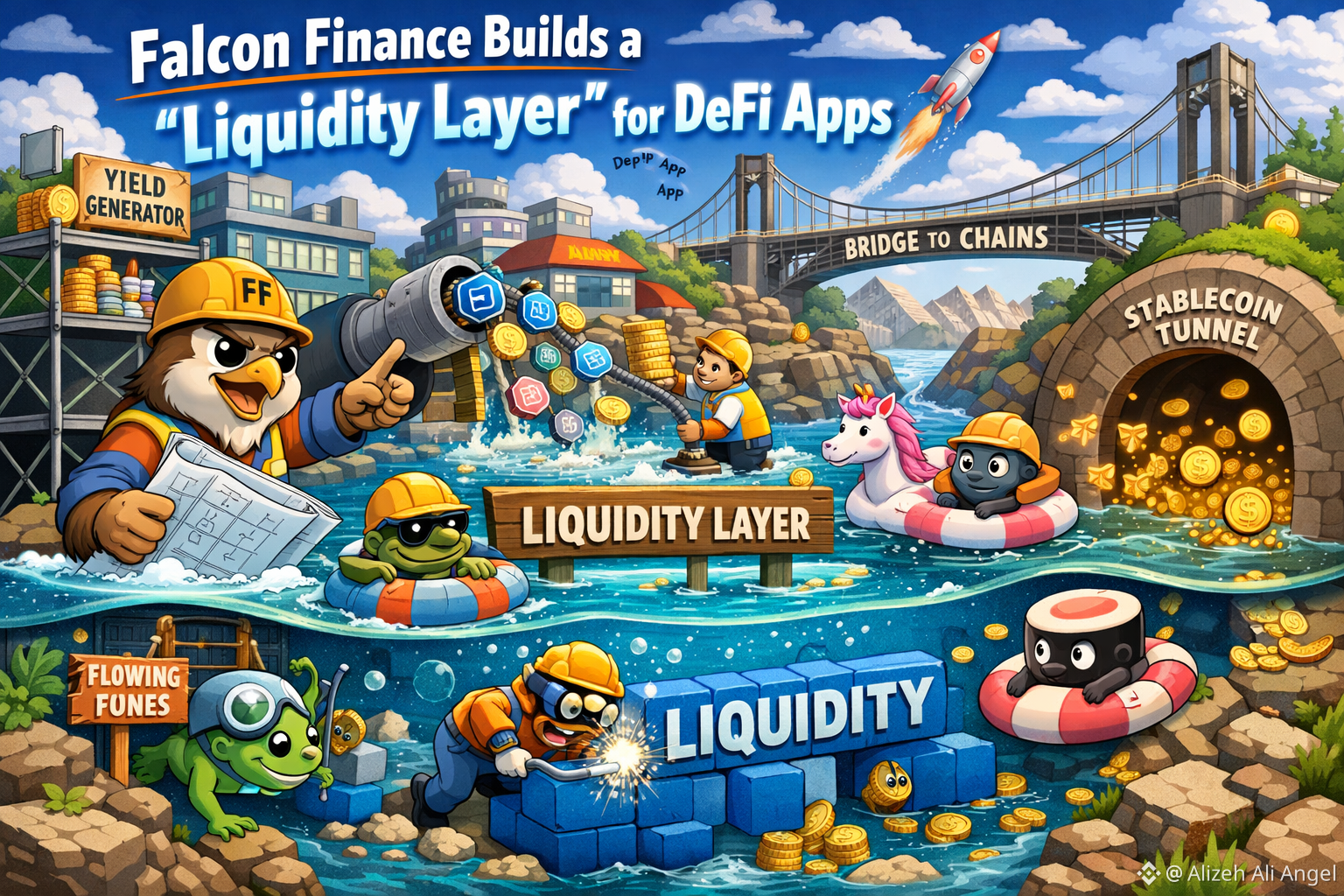
Falcon Finance is one of the projects attempting to fill that role. It revolves around USDf, an overcollateralized synthetic dollar minted when users deposit eligible assets, and sUSDf, a yield-bearing token users receive by staking USDf through an ERC-4626 vault mechanism. In principle, that gives builders a single “dollar rail” to integrate, while Falcon handles collateral selection, minting, redemption, and yield accrual under the hood. If you’re an app developer, that sounds like fewer integrations and fewer incentives campaigns just to bootstrap basic liquidity.
This is trending now for reasons that have less to do with slogans and more to do with fatigue. After the 2022 era of collapses, the market’s patience for “trust me” pegs and incentive-only yield shrank. At the same time, the menu of assets people hold has expanded. Liquid staking tokens, restaking positions, and tokenized representations of offchain exposures are becoming common. Those assets can be productive, but they’re awkward to spend without selling. The moment you want to post margin, smooth a treasury’s cash flow, or hedge risk, you either liquidate or you borrow against collateral that may not be accepted everywhere.
Falcon’s design starts by putting a buffer between volatile collateral and the dollar token. In the whitepaper, eligible stablecoin deposits mint USDf at a 1:1 USD value ratio, while non-stablecoin deposits like BTC and ETH mint USDf using an overcollateralization ratio above 1 that is calibrated to an asset’s volatility and liquidity. The paper also describes redemption behavior that determines how that buffer is returned under different price conditions. That sounds like accounting, but it’s where synthetic dollars earn confidence or lose it, because redemptions are what people run to when the mood turns.
The more contentious question is what happens after minting, because a liquidity layer only matters if the system can survive different market regimes. Falcon argues that relying on a narrow trade like positive funding-rate arbitrage can fail when funding flips, and it proposes a diversified set of yield strategies. That includes negative funding-rate arbitrage, cross-exchange price arbitrage, and staking-based returns depending on the collateral mix. I’m of two minds here. Diversification can broaden the sources of return, but it also introduces a question of governance, execution quality, and tail risk. If strategy complexity sits behind the curtain, the protocol’s operational discipline becomes part of the product.
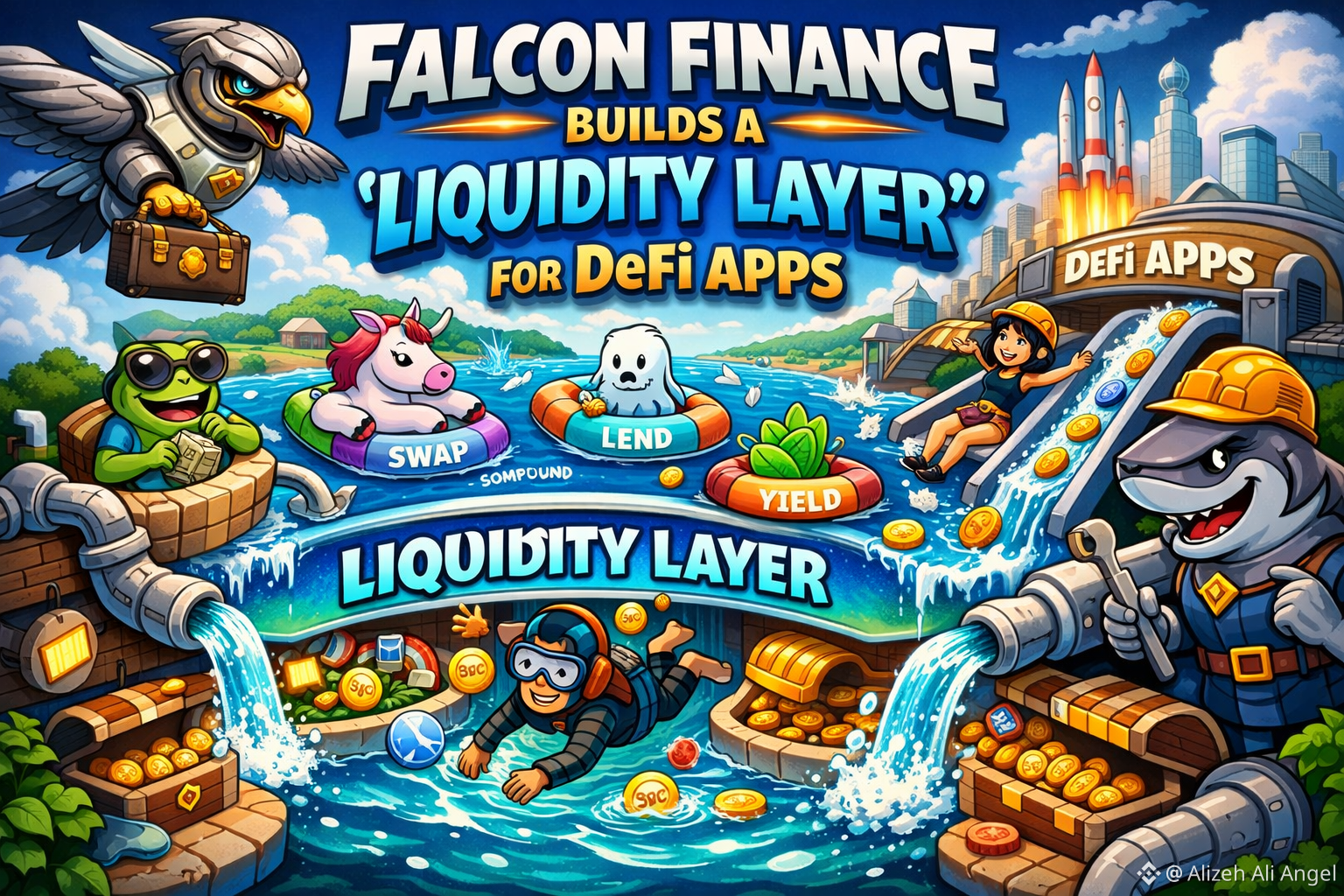
To its credit, Falcon emphasizes transparency and controls rather than pretending risk doesn’t exist. The whitepaper points to real-time dashboards, weekly reserve disclosures, quarterly ISAE3000 assurance reports, and an onchain insurance fund intended to buffer rare periods of negative yields and act as a last-resort bidder for USDf in open markets. None of that is a magic shield, but it’s the kind of “boring” infrastructure DeFi used to skip. Seeing it treated as core product work is genuinely heartening, especially after years where transparency was promised and rarely delivered.
There are signs of progress beyond a paper design. A July 2025 report said Falcon surpassed $1 billion in USDf circulating supply and framed the protocol as a programmable liquidity layer for both institutional treasuries and decentralized applications. Falcon has also announced an integration with AEON Pay aimed at enabling USDf payments across a large merchant network, tying the story back to settlement rather than screenshots. Meanwhile, industry reporting has highlighted Falcon’s effort to use tokenized equities as collateral, hinting at a larger ambition to make more assets usable without forcing liquidation. Decrypt’s July update described plans for a modular real-world asset engine and further tokenized equities, along with institutional reporting expectations, in the run-up to 2026 next year.
Still, the phrase “liquidity layer” comes with a warning label. If DeFi begins leaning on a small number of synthetic dollars as core plumbing, the stakes of their risk management grow sharply. Composability is powerful, but it concentrates failure modes. The real test for Falcon won’t be a launch week or a glossy dashboard. It will be a dull year, a volatile week, and a long stretch where nobody is paying attention and the system still behaves as promised. If it can do that, “liquidity layer” stops sounding like a slogan and starts sounding like infrastructure.

