
Nearly two and a half trillion dollars have evaporated from the market in less than a year. While retail investors continue to frantically look for signs of a future “altseason,” the capitalization of digital assets has fallen by more than half over the past eight months—from a record $4.3 trillion in October 2025 to the current $2 trillion.
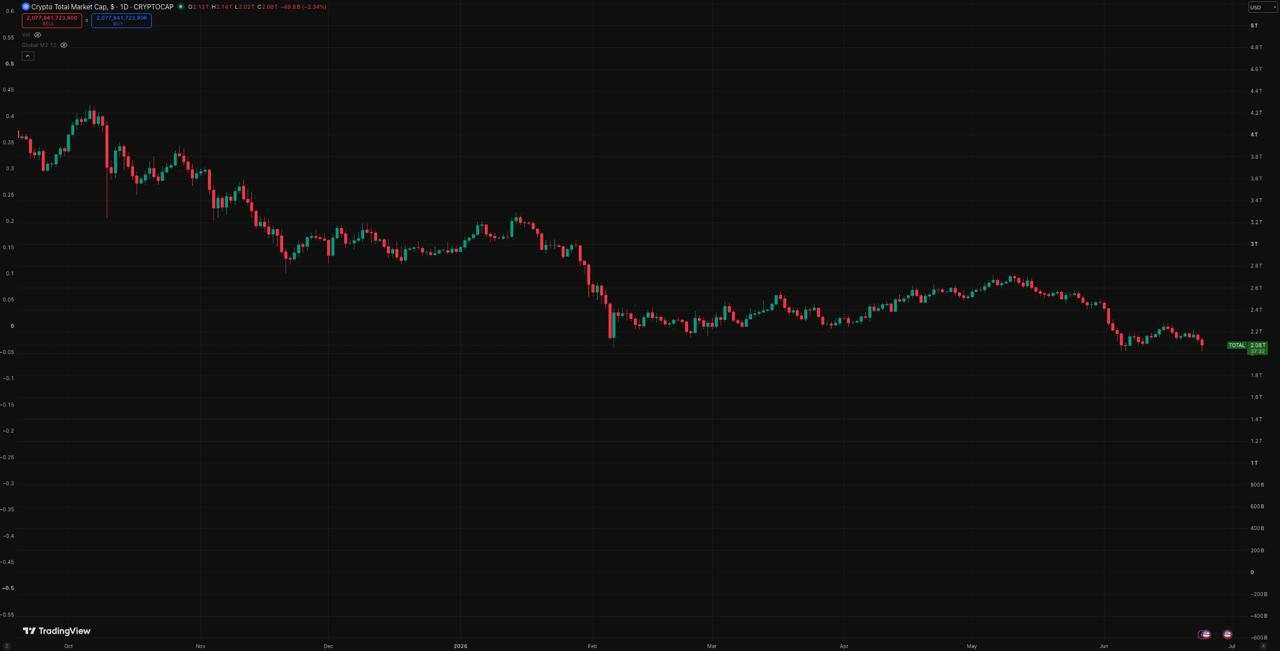
This is one of the largest drops in the entire history of the crypto industry.
Euphoria that cost a fortune
In October 2025, the market was in a state of absolute madness. The main digital asset $BTC hit a new all-time high at the $126,200 mark, while spot ETFs were pulling in billions of dollars from U.S. institutional players. However, the first half of 2026 showed a completely different scenario.
Bitcoin fell by 53%, Ethereum dropped by 67%, and the industry’s total capital lost more than $2.2–2.3 trillion. The causes of this prolonged nosedive were tough macroeconomic factors: tighter U.S. monetary policy, higher tariffs, and geopolitical tension. All that “institutional premium” that had been built after the 2024 U.S. elections was completely nullified by capital outflows.
A prolonged nosedive for infrastructure
The consequences of this collapse are already being felt across the entire infrastructure. Shares of major crypto companies, like Coinbase or MicroStrategy ($MSTRB ), have lost a significant portion of their value since the beginning of the year. Huge amounts of liquidity have returned to traditional instruments—while the Nasdaq 100 index and oil, on the contrary, are showing steady growth.
👉 If you want to survive in this market and assess the situation soberly without rose-tinted glasses, subscribe to @MoonMan567 , where reality is dissected without censorship and marketing fairy tales.
Capital is flowing in large volumes into assets directly tied to real economic activity and profitability, leaving digital currencies alone with their internal problems. Many startups that were launched in the late-2025 hype are now on the brink of survival due to an acute funding shortage.
Author’s observation
The funniest part of this situation is how quickly the rhetoric of the many “experts” in my Binance Square feed changes. The same people who eight months ago were promising Bitcoin at a quarter of a million dollars and an endless inflow of money from traditional hedge funds are now drawing charts of a global industry scam.
Actually, we’re seeing the classic work of the four-year crypto cycle, where the market bottom, according to all the rules, is expected to be around October 2026. This massive capital drain is a great reminder that Wall Street has no religious feelings about decentralization. They move in to grab liquidity during the euphoria and are the first to push for the exit when the macroeconomic wind changes. The current harsh cleanup of the market from casual players and outright shitcoin debris is the only way to set the stage for a healthy accumulation in the future. The market hasn’t died—it just returned to sober reality.
Did you lock in losses on altcoins during this drop, or are you riding out the storm in stablecoins that are currently showing the maximum stability?