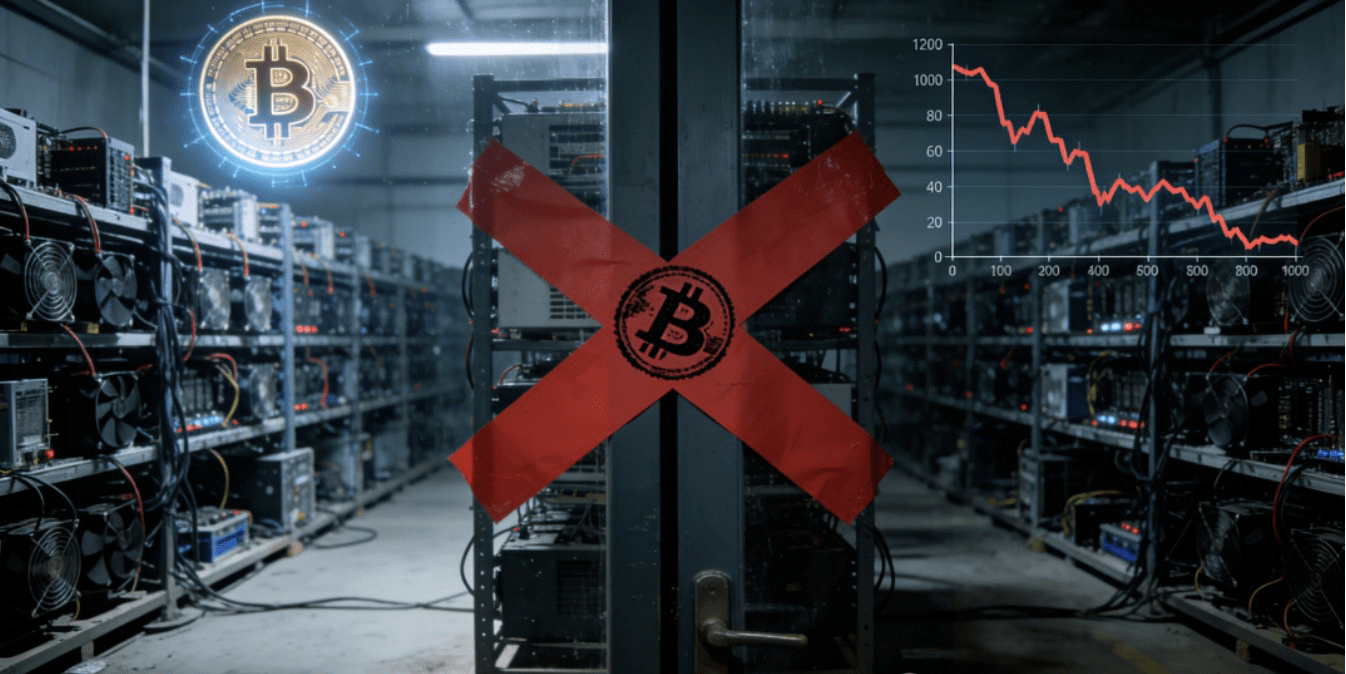
According to Brother Qiang, 400,000 mining machines have stopped, and the number of machines seized and sealed is no less than 100,000!
From 'power paradise' to 'regulatory heavy ground'
Xinjiang mining machines collectively lost power, marking the true 'endgame' for mining.
First, the conclusion:
This time it's not 'the wind is tight', but the power switch was directly pulled. Xinjiang mining is basically declared over.
1. Hashrate earthquake: it's not a correction, it's 'being unplugged'.
In mid-December, the total network hashrate of Bitcoin plummeted from nearly 1200 EH/s to about 836 EH/s within 24 hours, a decline of nearly 30%.
This is not market volatility, but a centralized shutdown.
The industry generally confirms:
👉 Many mining sites in Xinjiang have been uniformly cut off from power
👉 200,000—400,000 mining machines simultaneously shut down
👉 According to mainstream mining machines, directly withdrawing hundreds of EH/s level computing power
The true state of Brother Qiang's mining friends can be summed up in one sentence:
Yesterday was still calculating the payback, today the data center is sealed, and the loan remains.
Second, why Xinjiang? Because the 'gray low electricity price' has come to an end
Xinjiang was once seen as a 'power paradise' by miners, and there is only one reason: cheap electricity.
• 60%–70% of mining costs are electricity fees
• Xinjiang has abundant coal, electricity, and wind resources
• Outsourcing is restricted, resulting in 'pressure on electricity consumption'
• Gray period:
• Disguised data centers
• Filling idle data centers
• Using low-cost electricity to exchange for cash flow
But this set of logic has now been completely strangled.
What is reality?
👉 Mining is an obsolete industry
👉 Electricity is no longer a 'resource that nobody wants'
👉 Energy storage, scheduling, and the national energy system have already taken over
Indicates an attitude [Electricity will no longer be freely mined.]
Third, this time is different: from 'rectification' to 'eradication'
The only difference from 2021 is:
This time it's a 'normal cross-departmental linkage'.
• Central Bank: Finance, anti-money laundering, funding chain
• National Development and Reform Commission & Energy System: Electricity approval, energy consumption monitoring
• Local execution:
• Power outage
• Withdrawal
• Punitive electricity prices
• Credit punishment
⚠️ No need for prior notice, just directly cut the power.
What's worse is:
• AI energy consumption models can accurately identify mining machine characteristics
• The cost of 'disguised data centers' is extremely high
• Once involved in stealing electricity or subsidizing, it goes directly to the legal level
Gray space has basically been sealed off.
Fourth, the so-called 'computing power returning to China' has been revealed for what it is
In the past year, the market has had a persistent illusion:
'Has China's computing power returned?'
Now the answer is very clear:
👉 It's not a return, it's shadow arbitrage
👉 It relies on idle electricity + data center depreciation + betting on policy windows
👉 The essence is a short-term cash flow game
This model has only one characteristic:
Rapid expansion leads to quicker demise.
This time the centralized withdrawal in Xinjiang precisely exposed the essence of the problem:
Computing power is highly concentrated; once the power is cut, the entire network collapses.
Fifth, subsequent impacts: it's not about price, it's about structural changes
Short term:
• Cash flow for miners has broken
• Migration costs for mining machines have skyrocketed
• Custody and electricity party risk preferences have plummeted
Medium term:
• Bitcoin difficulty adjustment → Remaining miners' profits improve
• Computing power is migrating overseas & to more decentralized areas
• Large-scale mining sites within China have almost no survival space
Key point:
Bitcoin can self-heal, but mining in China will not revive.
Final judgment (core view)
This time the power cut in Xinjiang did not impose a 'deadline for rectification' on the mining industry, but rather:
Final ruling.
It's not about how much computing power has dropped,
But rather clearly tells everyone:
• Gray mining ≠ compliant industry
• Low-priced electricity ≠ permanent arbitrage
• As long as the power switch is in the hands of the state, miners will always be in a passive position
This time in Xinjiang is just a preview of the conclusion.