

When the U.S. Senate begins deliberation on the (Cryptocurrency Transparency Act) in January 2026, most media coverage will focus on political maneuvering and market reactions. However, for developers actually building in the crypto space, the truly important questions are technical: how will this landmark legislation change the content we build and the ways we build it? Once the legal boundaries between 'securities' and 'commodities' are clearly defined, what new smart contract models will emerge? Most importantly, what kind of technical infrastructure is needed to comply with the first comprehensive crypto regulatory framework in the U.S.? Let's go beyond the headlines and delve into the actual technical requirements of the (Cryptocurrency Transparency Act) and their specific implications for protocol architects and decentralized application developers.

Source: LinkedIn
From legal texts to technical specifications
The core value of the (Cryptocurrency Transparency Act) lies in transforming vague regulatory expectations into clear technical requirements. The most crucial breakthrough of the bill is that it defines for the first time, at the legal level, classification standards for digital assets as 'securities' or 'commodities.' From a technical implementation perspective, this means that developers need to embed verifiable classification identification mechanisms when designing token economics. For example, security tokens representing company equity may need to implement specific transfer restriction functionalities, while commodity tokens used as payment tools need to ensure sufficient liquidity. This classification is not just a simple label but needs to be reflected in the logic layer of smart contracts, affecting the technical implementation of token issuance, transfer, governance, and other aspects.
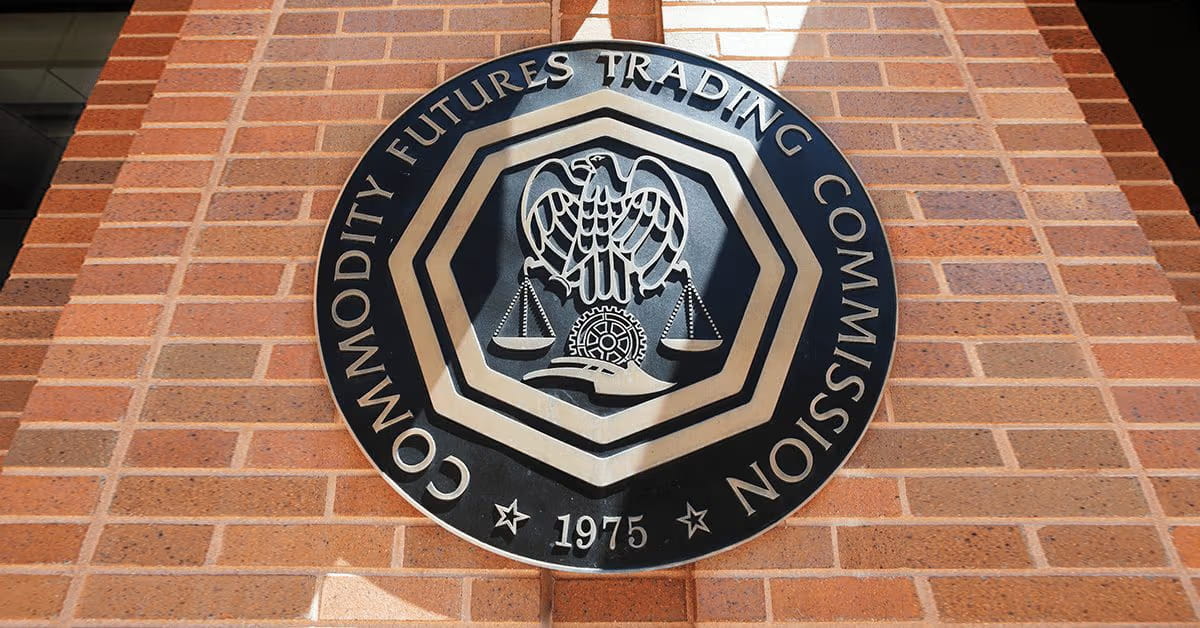
The bill requires clear delineation of regulatory responsibilities between the Securities and Exchange Commission and the Commodity Futures Trading Commission, which translates into dual compliance requirements at the technical level. Developers may need to design system architectures that can simultaneously meet the reporting requirements of both regulatory agencies. For example, trading platforms need to record investor information according to SEC requirements while also reporting derivatives trading data according to CFTC requirements. This dual compliance architecture requires new data models and API designs to ensure the same transaction can generate compliance reports according to different regulatory standards.
Technical implementation solutions for asset classification
The bill's distinction between security tokens and commodity tokens will directly impact the design patterns of smart contracts. From a technical perspective, security tokens may need to implement the following features: transfer restriction logic (based on qualified investor identity or holding period), automated dividend distribution, voting rights management mechanisms, and technical verification that complies with exemptions like Reg D or Reg A+. These functionalities need to integrate identity verification systems and compliance check modules.
In contrast, the design focus of commodity tokens will be different: emphasizing payment efficiency and cross-platform interoperability, which may need to follow unified token standards (such as extensions of ERC-20) to achieve fast settlement and low-fee transactions. The technical challenge lies in how to support these two different types of assets within the same infrastructure while maintaining system simplicity and security. Developers may need to adopt modular designs, treating compliance logic as a pluggable component that dynamically loads the corresponding regulatory module based on asset type.
Compliance design framework for smart contracts
The implementation of the (Cryptocurrency Transparency Act) will give rise to a new generation of 'compliance-native' smart contract design patterns. The core characteristics of these patterns include: transparent permission management, auditable transaction logs, and built-in regulatory reporting functionalities. For example, contracts may need to implement transaction pause mechanisms that can temporarily freeze specific functionalities when suspicious activities are detected; or need to integrate real-time monitoring modules that automatically flag transaction patterns that may violate regulatory requirements.
From a technical architecture perspective, this may mean a significant evolution of smart contract development frameworks. Existing development tools such as Hardhat and Truffle may need to add compliance testing suites to help developers verify whether contracts meet regulatory requirements before deployment. At the same time, a new middleware layer may be required to handle the integration of on-chain activities with off-chain regulatory systems, such as synchronizing transaction data in real time to monitoring platforms authorized by regulatory agencies. These technical requirements will drive the shift of smart contract development from a 'function-first' paradigm to one that balances 'compliance and functionality.'
Source: Blockworks
The technical automation requirements for regulatory reporting
The compliance reporting required by the bill will impose a significant technical burden on crypto projects. Regulatory reports in traditional finance are usually processed through dedicated systems, but in decentralized environments, reports need to aggregate data from distributed networks. Technical solutions may include: standardized event log formats to ensure that all relevant transactions are correctly captured; cross-chain data aggregation protocols to generate complete reports when projects involve multiple blockchains; and privacy-preserving technologies that protect users' sensitive information while meeting reporting requirements.
Developers may need to build dedicated regulatory reporting engines that can automatically collect data from blockchains, oracles, and project databases, generate reports in the format required by regulators, and submit them to the relevant agencies through secure channels. This is not just an upgrade of backend systems; it may also give rise to new open-source tools and standardized protocols that help projects meet compliance requirements consistently. With the implementation of the bill, we may see the emergence of domain-specific languages or configuration frameworks specifically designed for crypto regulatory reporting.
Compliance path selection for DeFi protocols
For decentralized finance protocols, the (Cryptocurrency Transparency Act) poses unique technical challenges. Fully compliant DeFi may need to implement traditional financial-level user identity verification and transaction monitoring, which conflicts with the anonymity and permissionless principles of DeFi. Technical teams face several possible pathways: one is to build a 'compliance layer' that implements KYC and monitoring at the front end while maintaining the openness of the smart contract layer; the second is to use geofencing technology to restrict access for users in specific jurisdictions; the third is to explore entirely new architectures, such as zero-knowledge proof technologies, that demonstrate compliance while protecting privacy.
Each option has its technical complexities. The compliance layer requires sophisticated access control mechanisms and real-time monitoring systems; geofencing requires reliable user location verification and access restrictions at the smart contract level; privacy-preserving compliance rules require innovative cryptographic applications. These technical decisions not only affect the protocol architecture but also relate to the long-term scalability of the project and user experience. Developers need to find the right balance between technical feasibility, regulatory compliance, and the principles of decentralization.
Technical coordination challenges of cross-chain regulation
In an increasingly multi-chain crypto ecosystem, the implementation of the (Cryptocurrency Transparency Act) faces additional technical complexities. When assets and liquidity are distributed across multiple blockchains like Ethereum, Solana, and Base, how can a unified compliance status be ensured? Technical solutions may involve cross-chain identity systems that allow users to use the same compliance identity across different chains; cross-chain transaction tracking protocols that can follow the flow of assets between different chains; and a unified compliance status synchronization mechanism.
These technical requirements may drive further development of cross-chain technology, especially cross-chain standards related to compliance. For example, it may be necessary to define a cross-chain compliance message format that allows the compliance status of one chain to be verified on another chain. At the same time, cross-chain bridges and aggregators may need to increase compliance check functionalities to verify the compliance status of relevant parties during asset transfers. These technological advancements will ensure that cross-chain interactions consider not only security and efficiency but also regulatory compliance.
The evolution direction of the crypto technology stack in 2026
The passage of the (Cryptocurrency Transparency Act) will reshape the technology stack adopted by U.S. crypto projects. Developers may need to master new tools and frameworks: compliance smart contract development libraries, regulatory reporting generators, real-time transaction monitoring systems, and institutional-level key management solutions. The development of these tools will follow several clear directions: first, standardization, establishing unified compliance interfaces and data formats; second, automation, reducing manual compliance work; third, modularization, allowing projects to combine compliance functionalities as needed.
Particularly noteworthy is the integration of regulatory technology with blockchain technology. We may see oracle networks specifically designed for crypto compliance, providing real-time updates and explanations of regulatory rules; the evolution of smart contract auditing tools that check not only for security vulnerabilities but also assess compliance risks; and the enrichment of developer education resources to help builders understand and implement compliance requirements. These technological developments will bring a more professional and institutionalized development ecology to the crypto industry.
Proactive technical preparation of builders
For technical teams, now is a wise strategy to prepare for the (Cryptocurrency Transparency Act). First, it is necessary to establish a deep understanding of the technical requirements of the bill, especially regarding the specific impacts on smart contract design. Second, they should assess the compliance gaps in the existing architecture, identifying parts that need enhancement or reconstruction. Third, they can explore emerging compliance technology solutions and participate in relevant open-source projects or standard-setting.
Specific technical preparation measures may include: implementing a more modular smart contract architecture to facilitate the future addition of compliance functionalities; establishing a comprehensive transaction logging and audit tracking system; exploring privacy-preserving compliance technologies to prepare for future potential requirements; and strengthening collaboration with compliance technology providers. Teams that can proactively integrate compliance considerations into technical designs will gain significant competitive advantages once the regulatory environment becomes clear.
As the Senate's review in January 2026 approaches, the framework for U.S. crypto regulation is becoming clearer. The (Cryptocurrency Transparency Act) is not only a political legislation but also an important turning point in the development of crypto technology. It requires builders to think about technical implementation in a more rigorous and systematic way, elevating compliance to a level of importance equal to security and functionality. For developers who can adapt to this shift, it is not only a challenge but also an opportunity to drive industry maturity and professionalism.