
In the Polkadot ecosystem, RWA (real-world assets) is moving from a 'frequently mentioned concept' to a 'truly practical application direction.'
Over the past period, we have seen more and more projects starting to focus on tokenized assets: some are responsible for bringing real-world assets on-chain, while others begin to think about how these assets should be truly used, held, and allocated.
Joinn Finance is a new project that recently joined the Polkadot ecosystem. It does not attempt to redefine the concept of RWA but instead chooses a more direct question: how to allow ordinary users to truly access and use these tokenized financial assets?
In this conversation, we will learn how the Joinn project joined Polkadot, its current status, and the problems it is solving!
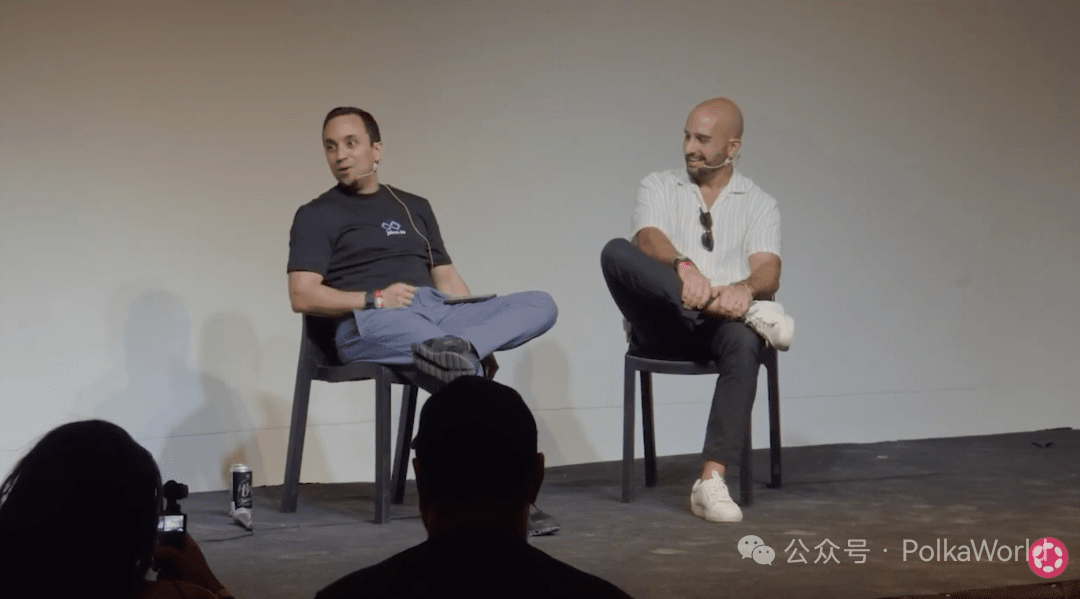
Joinn will officially launch its product in the first quarter of next year.
Dave: In the next five to ten minutes, we will have a conversation with a new member of the Polkadot ecosystem—Joinn Finance. With me is Leo, the COO of Joinn. So Leo, why don't you introduce yourself first? What is your personal background, and how did you join Joinn?
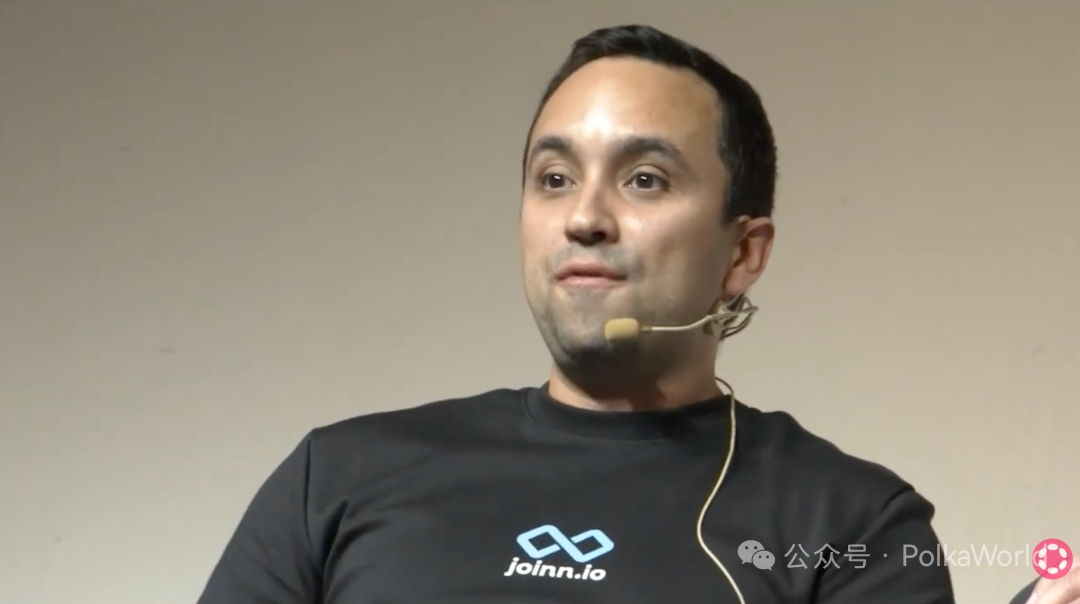
Leo: Okay. I come from Venezuela, studied in the UK, and returned to my country to develop after graduating. Around 2011-2012, I officially entered the cryptocurrency industry and founded Venezuela's first compliant cryptocurrency exchange.
Many people may not realize that Venezuela has long been in a state of hyperinflation, and cryptocurrency happened to provide a viable solution to this reality at that time.
During that time, I also successfully obtained the third cryptocurrency card project license issued by MasterCard in Latin America. Promoting such a project in a country under international sanctions sounds simple, but the actual operation is extraordinarily difficult.
At the same time, I also built and operated the largest cryptocurrency mining farm in Latin America. At its peak, the farm could produce 2.1 bitcoins per day, which was already at the top level of the industry at that time. But the good times didn't last long; the government intervened and took over all the assets, forcing me to start over from scratch.
It was during this extremely difficult period that I met our current CEO—Brian. At that time, he was the head of Binance for the Latin America region and provided a lot of support while I was operating the exchange. Later, he invited me to join the Joinn team.
Currently, I serve as the Chief Operating Officer (COO) at Joinn. Our core mission is to open up investment channels for Latin American users to access high-quality 'tokenized financial assets' globally.
Dave: That's amazing, what an interesting experience! I know you got in touch with the Polkadot ecosystem through Scytale Digital and then participated in the accelerator project. As Max just mentioned, you also received investment from HIC in the latest round. Why don't you explain this process systematically—how did you enter the Polkadot ecosystem and gradually become a part of it?
Leo: Looking back, this experience has been truly wonderful, and it just happens to be exactly a year.
A year ago, Brian went to Bangkok, where he met Mark, and they hit it off. Subsequently, in March of this year, we were invited to join Polkadot's accelerator program and successfully selected. At Demo Day, I met Mario, a great person, and it was also when I got to know Max. We also particularly thank Scytale Digital for providing us with a lot of support and help throughout the accelerator period. After that, we officially entered the Polkadot ecosystem, and both Mario and Max have been very supportive of us.
Currently, everything is progressing smoothly, and we have also joined the DeFi Builders Program (this project should be managed by Nico). If all goes well, we plan to officially launch the product in the first quarter of next year.
Build a simple and user-friendly RWA platform
Dave: Great. Latin America has always been a highly active market for cryptocurrency—currencies continue to devalue, people heavily use stablecoins, and banking services are limited. From the perspective of ordinary users, what core problems does Joinn Finance want to solve for Latin American users?
Leo: Our observations are actually quite different from many people's intuitions.
Latin American users do not have a 'non-existent financial system'. Most of them have internet access, bank accounts, and can use financial services. The real problem is: they cannot access high-quality financial assets.
Platforms like Binance (which is also present today), Bybit, OKX have a massive user base in Latin America—registered users reach as high as 200 million. But for many users, they are actually participating in a kind of 'crypto casino': prices are highly volatile, ups and downs rely on guesses, making it almost impossible to use for long-term personal financial planning.
Since the first time I bought Bitcoin, I firmly believe that the true value of crypto technology lies in: empowering people with more choices and possibilities. Since entering this industry in 2011, my most profound realization is that it can break down borders and achieve the free flow of assets.
Based on this philosophy, we have set up the company's compliance entity in Germany, creating a one-stop platform that gathers high-quality tokenized assets from around the world and brings these assets to global users.
Taking Argentina as an example, we have already connected with local fiat deposit and withdrawal service providers. Users deposit Argentine pesos → the system automatically converts to USDC → seamlessly enters the Joinn platform. The entire process is transparent, simple, and imperceptible to users. No need to understand blockchain, no need to grasp crypto principles, and no complex operations are required.
What you just mentioned about 'consumer-grade products' is exactly what we are doing.
What we are building is a retail financial platform as simple as using an email or a bank account.
And this is not 'a plan to do', but something that has already been done.
Soon, we will launch an extremely user-friendly product experience:
You have a MasterCard, but it essentially operates on-chain
You don't need to know that it's on-chain
You deposit pesos → automatically converted to USDC → balance is denominated in dollars
You can both spend in local stores
and directly purchase Vanguard's ETF
Mainly focus on tokenized financial assets
Dave: That's fantastic, really impressive. You have almost abstracted away all the complexities of blockchain.
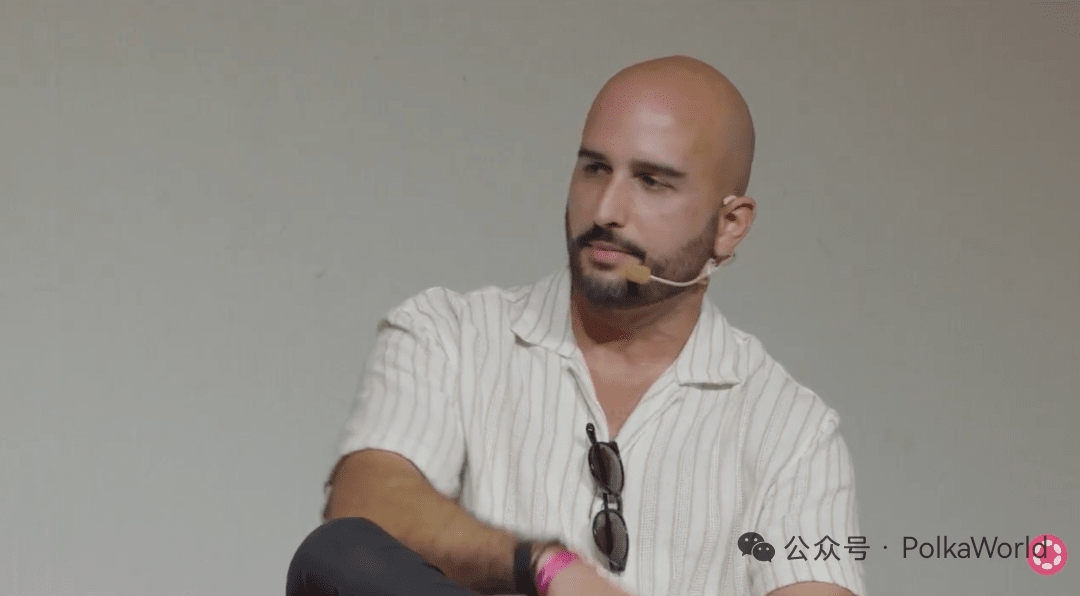
In Latin America, many people actually have bank accounts and can deposit cash, but the real problem is: they find it very difficult to plan for retirement or long-term financial goals. Joinn brings these tokenized assets to the platform—whether it's S&P index funds or tokenized gold, it makes long-term investment accessible for the first time.
I find it particularly interesting that across the entire Polkadot ecosystem, projects like Mandala Chain, Hydration, etc., are already working on tokenized gold as a fundamental asset.
In the future, these assets can fully integrate with Joinn Finance, becoming tools that your users can invest in for asset allocation and long-term portfolio diversification.
This is exactly what I think makes Polkadot very unique, with different teams in the ecosystem playing their respective roles—some are responsible for bringing real assets 'on-chain', while others are responsible for distributing those assets 'to users'. This collaborative model is truly the beginning of going global, making each project's value proposition clearer.
If we talk about RWA (real-world assets), this is a very broad concept—from real estate to gold, it seems almost anything can count. So in your view, what is Joinn really focusing on in the direction of RWA?
When promoting these assets to Latin American users, what excites you the most? Especially, how to guide users to break out of the fixed mindset of 'just putting money in the bank'?
Leo: In fact, we don't really use the term 'RWA' because its scope is too broad—it seems almost anything can be classified under it, such as contracts, notes, etc.
What we focus on is a very specific and fundamental type of asset: tokenized financial assets, such as ETFs, treasury bills, and REITs.
Friends from Brazil in the audience might resonate with this; Brazil's sovereign bond yields are as high as 15%. A 15% yield on government bonds is very rare globally. If you can tokenize such assets and bring them to Europe or Asia, they remain an extremely safe investment—because they are sovereign bonds, there is almost no default risk unless extreme global events occur. At the same time, Brazil is also a major global food producer, and the country's economic fundamentals are very solid. This means you can achieve double-digit annualized returns, and the funds themselves are very secure.
In the long run, you can fully plan to achieve a stable annual return of 15% over the next ten years, with the principal not shrinking but definitely growing, and all of this does not require complex financial knowledge.
If we introduce some artificial intelligence to help you automatically plan your monthly or weekly investment strategies, then you essentially have a fully automated personal financial advisor, and you won't have to worry about anything.
Dave: That's right. Just like the Vault model of Hydration, you are essentially encapsulating the core capabilities of professional financial advisors directly into the product. Users only need to invest in preset strategies, and Joinn integrates these complex capabilities, which in itself is a very cool and valuable function.
Leo: The key is that almost everyone is now 'investing'—I have friends who invest in real estate and sometimes flip cars, but during the buying and selling process, losses are almost inevitable. To put it more directly, holding the local currency is itself a form of gambling. If people want to be more rational, they often choose to switch to dollars. But the problem is that the dollar itself is also subject to the erosion of inflation.
What if we could really solve the inflation problem? If every penny you save is no longer gradually eaten away by inflation—this means the wealth you can actually accumulate would be much greater than it is now.
Let everyone start taking responsibility for their money
Dave: Great. As the last question, can you share your insights at this moment? It can be one sentence or an inspiration that has deeply impacted you recently.
Leo: Okay. Nowadays, people are increasingly concerned about health and quality of life, but the reality is that very few people seriously understand their bank account situation. What we want to do is change this—let people take more responsibility for their financial situation.
I have always remembered a quote from American investor Alex Hormozi, which is also one of Joinn's mottos:
"Responsibility is the only form of self-respect."
Only when you are willing to take responsibility for yourself will you truly take responsibility for your work and your life. It's that simple.
Dave: I really like this quote. Let's conclude our conversation here today! Thank you all for watching, and I wish you a pleasant evening.
Original video: https://www.youtube.com/watch?v=_ifwuQXAwN4&t=10s
PolkaWorld Telegram group: https://t.me/+z7BUktDraU1mNWE1
PolkaWorld Youtube channel:
https://www.youtube.com/c/PolkaWorld
PolkaWorld Twitter:
@polkaworld_org


