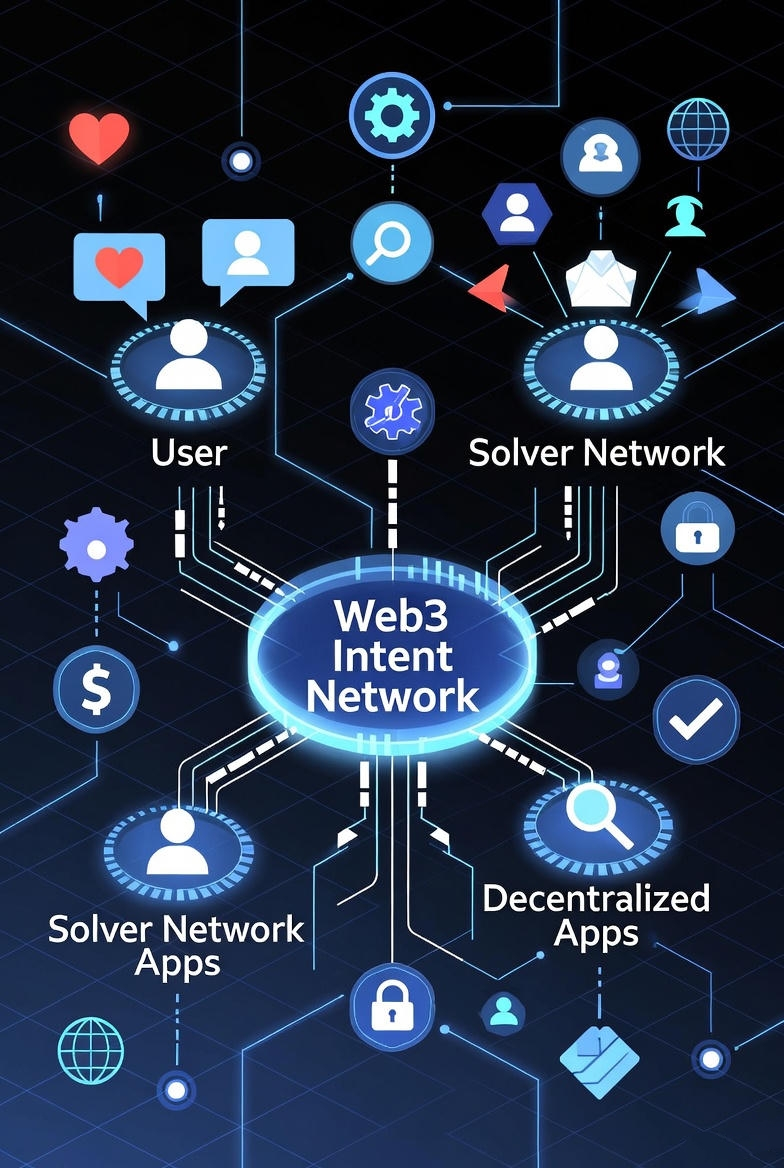
As we approach the end of 2025, Intent-Centric Networks have become the hottest paradigm shift in the crypto world. It completely overturns traditional interaction methods.
Users no longer need to manually specify each step of the trading path (such as routing, bridging, gas optimization), but simply declare "the result I want"—for example, "exchange 1 ETH for the most USDC, with slippage not exceeding 1%, and instant cross-chain settlement." A decentralized Solver network will compete fiercely to find the optimal execution path, providing a faster, cheaper, and safer experience.
2. The next battleground for value accumulation
The underlying public chain and core DeFi applications have gradually been commoditized, becoming 'thin layer' infrastructure, while the intent layer is wildly capturing order flow, MEV returns, and fee sharing by abstracting complexity and improving efficiency. Imagine this: the MEV value originally extracted by seekers is now mostly returned to users and the Solver network, forming a powerful flywheel—more intent traffic → more intense competition → better user experience → explosive growth.
3. Real data witnesses the explosion
Taking NEAR Intents as an example, this intent-driven cross-chain trading framework rose strongly in 2025. Cumulative trading volume has surpassed $4.5 billion, with cumulative fees exceeding $8.2 million; in just the past 7 days, weekly trading volume reached $1.1 billion, and last month’s trading volume was $2.5 billion. In November, weekly trading volume was nearly $1 billion, with daily fees reaching new highs, and daily trading volume at one point exceeding $200 million. This is not an isolated case, but a microcosm of the entire intent track—the competition among Solvers makes cross-chain swaps, payments, and AI agent trading seamless, attracting a massive influx of users.
4. How is value accumulated?
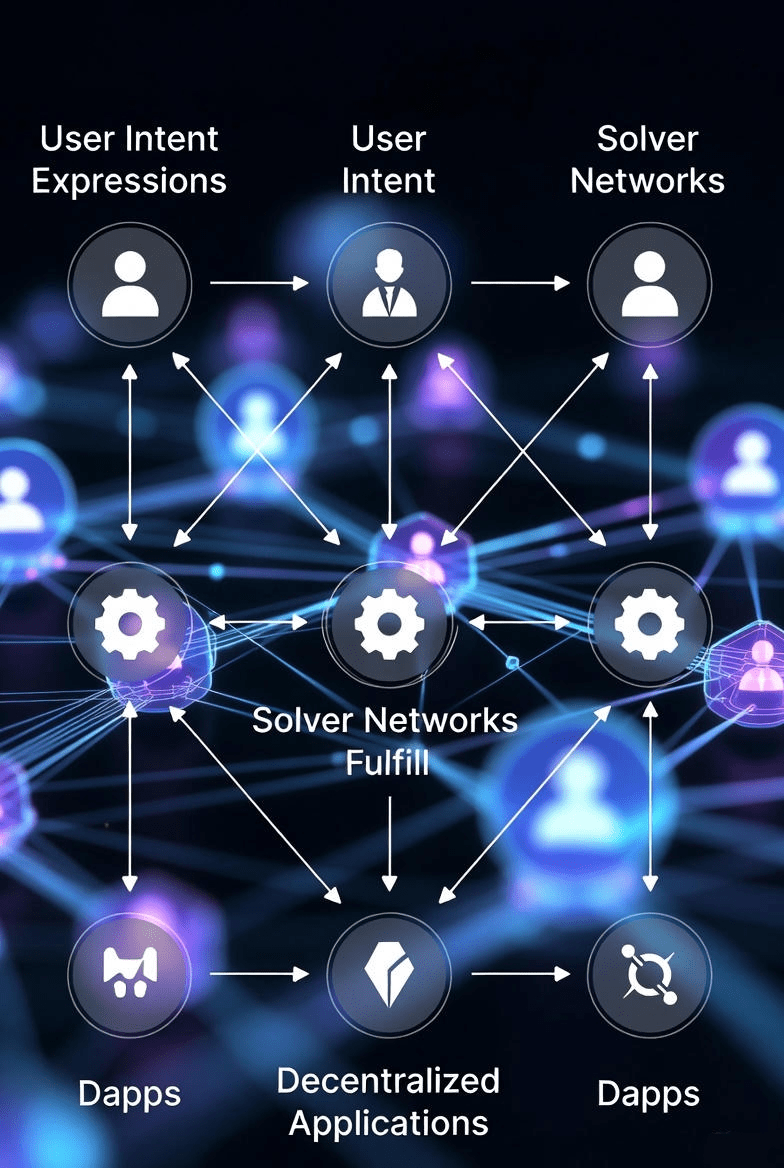
The core lies in the Solver network: they earn sustainable profits through spreads, tips, and MEV recapture. Standardized protocols like ERC-7683 are promoting a universal Solver ecosystem, avoiding the island effect. The entry layer (such as wallets and AI front-ends) controls order flow, with generous sharing; the settlement layer (the underlying chain) is becoming thinner, with only gas fees remaining. After integrating AI, it further unlocks automated scenarios: agents automatically rebalance portfolios, manage risks, or facilitate privacy cross-chain payments (e.g., Zcash integrating NEAR Intents, averaging $15 million in privacy transactions per day).
5. Leading players shine
Anoma builds a universal intent OS, emphasizing privacy and cross-chain settlement; SUAVE (Flashbots) focuses on decentralized MEV, shifting value from extractors to users; Across dominates intent bridging, with Relayer competition fulfilling cross-chain intents; dappOS serves as the execution network, valued at $300 million; UniswapX, CoW Swap, and others are pioneers in the DEX field, launching gas-free, no-failure fee swaps.
6. Why is now the peak of the intent era?
Multichain fragmentation makes traditional interactions painfully difficult, and the intent layer solves this in one fell swoop: the public threshold drops dramatically, the efficiency flywheel turns, and AI agents integrate seamlessly. Institutions like Bitwise predict that intent trading volume may exceed $10 billion by 2026. It is not only a technological upgrade but also a revolution in user experience—finally making Web3 as intuitive, convenient, and ready for mass adoption as Web2.
In this cycle, value is no longer tilted towards 'fat protocols' or 'fat applications,' but is rushing towards the 'fat intent' layer: whoever can efficiently match and fulfill user desires will take the biggest slice of the cake. 2025 has proven that the intent network is not a fleeting phenomenon, but a necessary path to the next trillion-dollar ecosystem. Are you ready to express your intent???#NEAR🚀🚀🚀 $NEAR #solv