
Global central bank monetary policies are diverging; Japan's counter-cyclical interest rate hike did not trigger market panic, and the cryptocurrency market welcomed capital inflows after expectations were digested in advance.
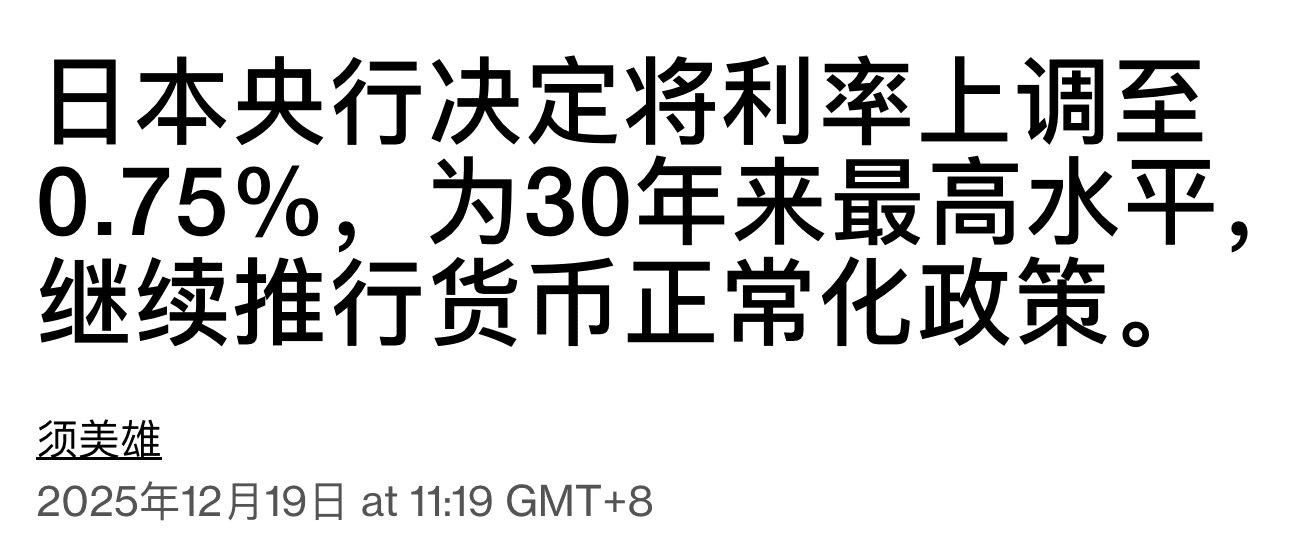
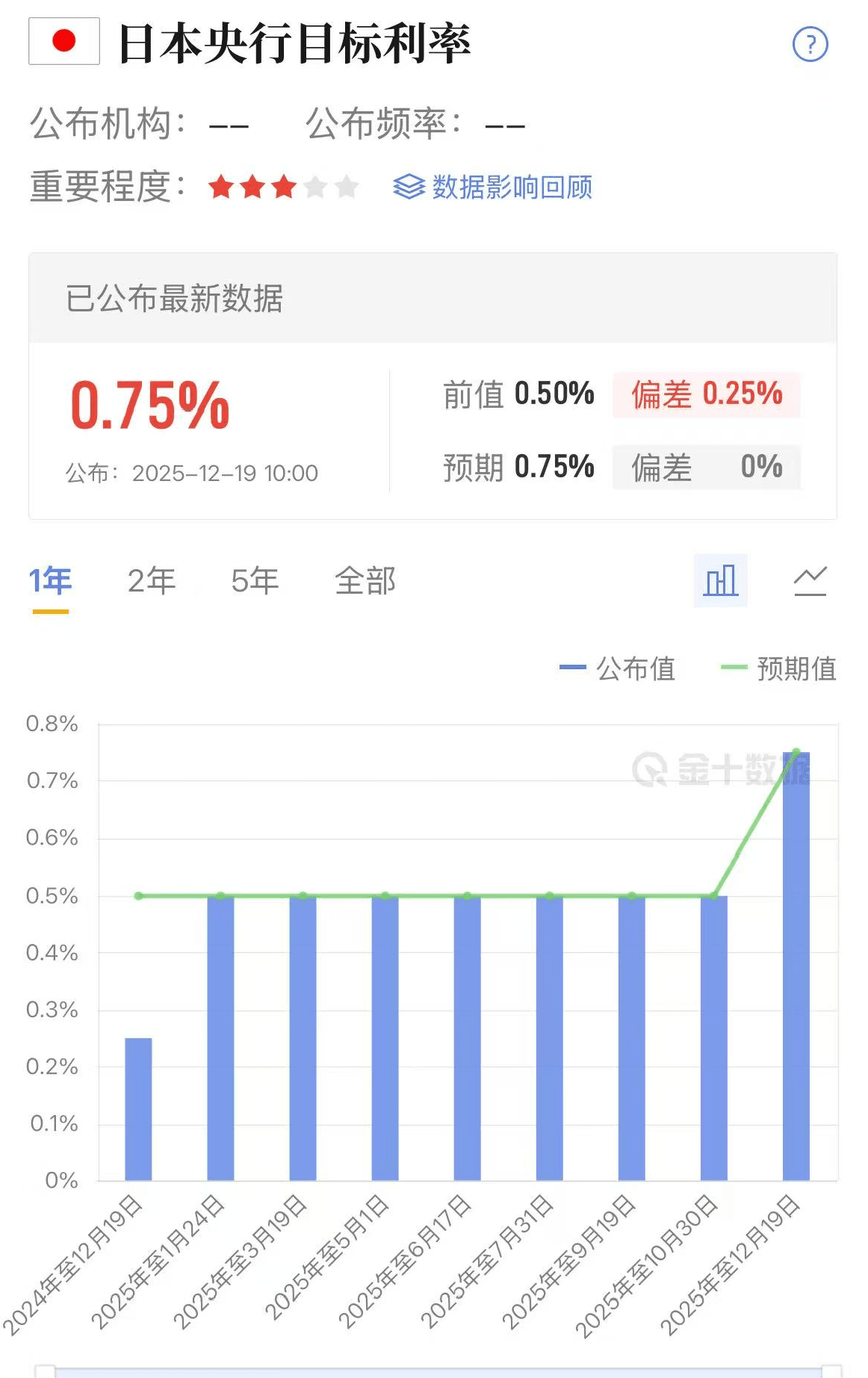
On December 19, the Bank of Japan passed a resolution with a unanimous 9:0 vote to raise the benchmark interest rate from 0.5% to 0.75%, marking a new 30-year high since 1995. This news instantly went viral in the crypto community, with economists like Professor Lang interpreting it, and the market was filled with anxiety about 'liquidity retreat.'
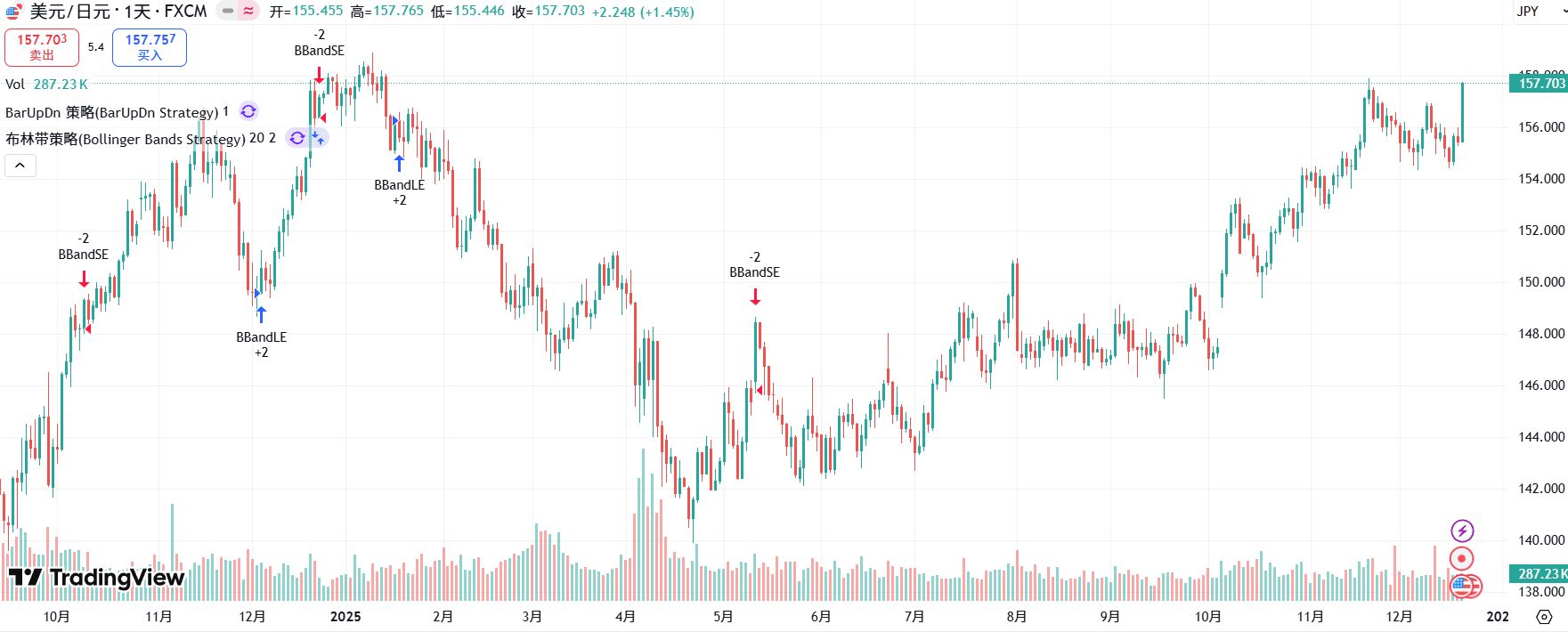
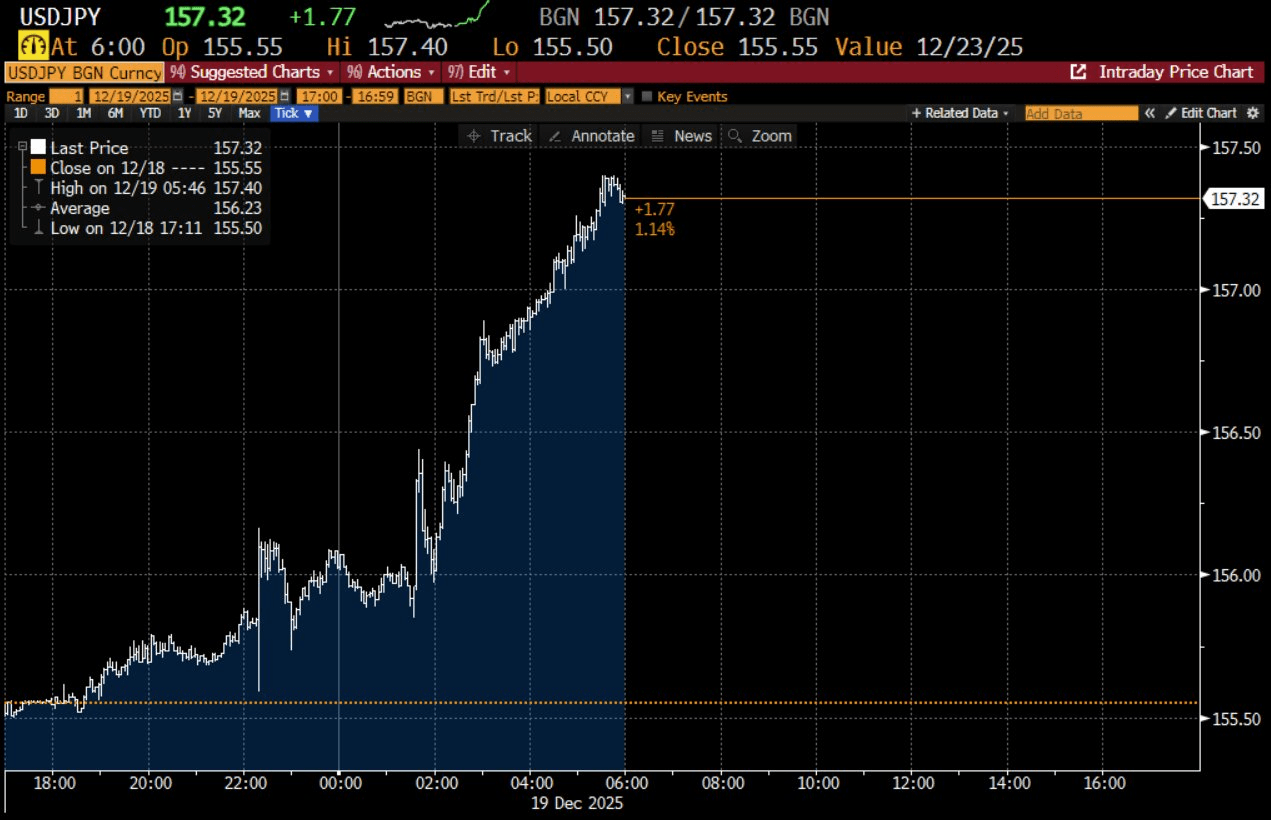
But strangely, after the interest rate hike took effect, the yen not only did not strengthen, but the USD/JPY instead rose sharply, breaking through 157 and reaching a one-month high; Bitcoin rose by 1.6% to $86,994.64, while Ethereum increased by 3.3% to $2,920.9.
The average cash holding rate in global fund managers' portfolios has dropped from 3.7% in November to 3.3%, the lowest level since the survey began in 1999.
On December 18, the crypto market recorded a net inflow of $457.3 million, the largest single-day fund inflow for the U.S. spot Bitcoin exchange-traded fund since November 11.
On one side are the bearish expectations of "global cheap capital pool tightening," and on the other side is the market's counteraction. What impact does Japan's interest rate hike have on the crypto market? Why is everyone paying attention? Are the circulated data that "interest rate hikes must fall by 20%+" reliable? Today, we will clarify this matter with the latest data and in-depth logic.
01 Why can Japan's interest rate hike stir up the global market?
To understand the impact of this matter, one must first grasp Japan's unique role in the global financial system—over the past 30 years, Japan's near-zero interest rate policy has created the world's largest "cheap capital pool."
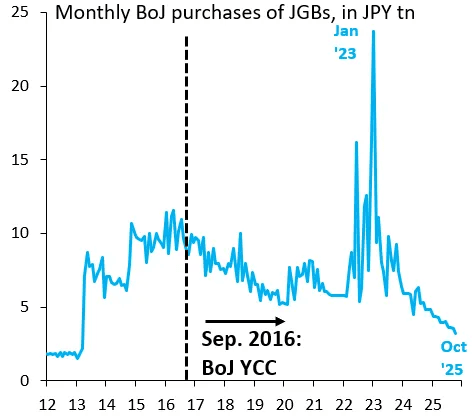
Global capital giants and hedge funds will borrow low-cost yen and convert it into dollars to invest in U.S. Treasuries, U.S. stocks, cryptocurrencies, and other risk assets (this is called "carry trade"). The market worries that once Japan raises interest rates, the cost of borrowing will rise, and these funds will sell off overseas assets to return to Japan, draining liquidity from global risk assets.
This is also the core reason why the recent interest rate hike has garnered so much attention—it is not merely a local monetary policy adjustment, but could potentially influence global liquidity like a "butterfly's wings."
02 The Divergent Landscape of Global Central Banks.
Last week, the monetary policy chessboard of major global central banks showed a rare divergence. The Federal Reserve and the Bank of England continue to maintain an accommodative stance, both announcing a 25 basis points rate cut this month, while the Bank of Japan increased rates by 25 basis points to 0.75%, the highest level in 30 years.
This divergence in monetary policy is not coincidental. It directly reflects the differences in the economic fundamentals and policy objectives of various countries.
In November, the U.S. consumer price index rose by 2.7% year-on-year, a decline from 3% in September, and below the market expectation of 3.1%. The easing of inflation pressures provides space for the Federal Reserve to continue lowering interest rates. In the UK, due to a "significant unexpected drop in the November inflation rate," it slowed from 3.6% in October to 3.2%, while the economy continues to shrink, prompting the central bank to continue lowering rates.
In contrast, Japan's core consumer price index rose by 3.0% year-on-year in November, marking the 44th consecutive month above the 2% target set by the Bank of Japan. Although Finance Minister Katsunobu Kato stated that "there is no disagreement between the government and the Bank of Japan in assessing the economic situation," the persistent inflation pressure still drove the central bank's decision to raise interest rates.
03 The real impact of Japan's interest rate hike.
When the market has already digested expectations of Japan's interest rate hike, the actual announcement led to a sigh of relief from investors. After the interest rate hike news was announced on December 19, the yen exchange rate in the foreign exchange market remained stable with little fluctuation.
Why is the market reaction so muted? The reason is that this rate hike had already been perceived by the market as a predetermined route, and the magnitude of the rate hike was within the forecast range; the market had already digested it.
An interesting phenomenon is that the USD/JPY exchange rate briefly rose to 156.37 after the interest rate hike and then further reached 156.89, hitting the highest level since December 10. This indicates that even if the Bank of Japan raises rates by 25 basis points, the yen has not been able to strengthen and continues to depreciate.
Why is it difficult for interest rate hikes to prevent the depreciation of the yen? Even if Japan's policy interest rate rises to 0.75%, it is still far below the "neutral interest rate" (1%~2.5%) that the Bank of Japan itself recognizes. This keeps the real interest rate at a very low level, making it difficult to attract a large-scale return of funds to Japan.
Analysts point out that Japan's balance of payments and trade demand also limit the appreciation space of the yen. By 2025, Japan's balance of payments is expected to be in a basically balanced state, with exports and imports roughly equal. Investors' cautious attitude toward the yen stems from concerns about potential U.S. tariff increases and weak consumption.
04 Actual reactions in the crypto market.
Unlike the traditional foreign exchange market, the crypto market's response to Japan's interest rate hike shows a more complex situation. Against the backdrop of divergence in monetary policies of major global economies, the prices of major cryptocurrencies like Bitcoin and Ethereum remain relatively stable, and even saw slight increases after the announcement.
According to the latest data, Bitcoin's price rose by 1.6% to $86,994.64 after the announcement, while Ethereum rose by 3.3% to $2,920.9. This performance contrasts sharply with the market's widespread concern that "capital inflow would lead to the sell-off of risk assets."
On December 18, the U.S. spot Bitcoin exchange-traded fund recorded a net inflow of $457.3 million, the largest single-day inflow since November 11. Among them, the Fidelity Wise Origin Bitcoin Fund led with an inflow of $391.5 million, while the iShares Bitcoin Trust under BlackRock also performed strongly, recording an inflow of $111.2 million.
The resilience of the crypto market reflects investors' reassessment of the global liquidity environment. Although the Bank of Japan has raised interest rates, it emphasizes that "real interest rates remain at significantly low levels," and promises that the accommodative financial environment will continue to support economic activity. This "hawkish yet dovish" policy signal alleviates market concerns over a sharp contraction in global liquidity.
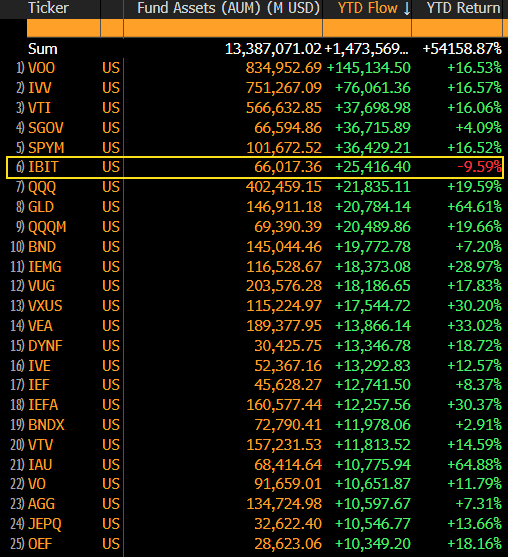
05 Divergence in behavior between institutions and retail investors.
As the cryptocurrency market matures, the behavioral differences between institutional and retail investors are becoming increasingly apparent. Recent data shows that institutional funds are allocating cryptocurrency assets in ways that differ from retail logic.
The cash holding rate of global fund managers has dropped to a historical low of 3.3%. Investors are putting funds into stocks and commodities. This low cash allocation means that the "ammunition" in the hands of professional investors has become limited, which may affect the market's ability to withstand future shocks.
Meanwhile, 42% of surveyed fund managers revealed that they increased their holdings in global stocks, the highest proportion since 2022. This overly optimistic sentiment has led some market participants to worry about potential shocks from negative events. Charles Schwab's macro chief, Gordon, stated that this "continuously strengthening optimistic sentiment" will make the market "more susceptible to severe corrections when negative news arises."
In the crypto market, the behavior of institutional investors also shows characteristics different from those of retail investors. Bitcoin's dominance has risen to 60%, reaching the highest level since November 14. This indicates that during market volatility, funds tend to flow towards the relatively stable Bitcoin rather than the higher-risk altcoins.
06 Answering three major questions to clarify market fog.
Will the RMB continue to fall against the US dollar?
In the long run, there is a tendency for the RMB to gradually depreciate against the US dollar. The core judgment basis is the policy direction: the current state is still tightening capital outflow controls (such as raising thresholds for foreign remittances and cracking down on cryptocurrency assets), rather than loosening the entry threshold for foreign capital. If the strengthening of the RMB is a long-term trend, it should theoretically be accompanied by capital opening to attract global funds, but the current actions contradict this appearance.
Short-term volatility does not require excessive attention; the core significance of allocating dollars is not to save in the bank for interest but to go out and allocate global assets—this is also the key to Japan maintaining economic security during its "lost 30 years."
Will Binance's Alpha platform crush Virtual?
From the perspective of the launch platform, Virtual has no technical threshold, and its first-mover advantage is difficult to sustain. However, the core value of Virtual lies not in its launching function, but in its ACP protocol and the AI economy formed around the protocol. If a complete economy based on AI Agents can be built, its threshold and potential will far exceed that of a simple launch platform—this is also the core development direction of the entire AI+Crypto track.
What does it mean that global fund managers' cash allocation has hit a record low?
The latest data shows that the global fund managers' cash ratio has fallen to 3.3%, the lowest level in history. The upside is that this indicates a continuous inflow of funds into risk assets, recognizing the current market environment; the downside is that the "bullets" for institutions to actively increase positions have run out, and future market rises will rely more on the rebalancing of existing funds or retail investors entering.
This also explains why BTC is currently sensitive to negative news: institutions lack cash support, and slight negative news can easily trigger passive sell-offs, but such volatility does not change the long-term allocation logic.
07 Forecasting future market trends.
Looking ahead to 2026, the divergent pattern of global monetary policies may continue, and its impact on the crypto market will become more complex and diverse. Understanding these trends will help investors formulate more informed allocation strategies.
The OECD report points out that the major global economies have limited space for further interest rate cuts and are expected to end the rate cut cycle by the end of 2026. As a countercurrent in the "global easing tide," Japan's monetary normalization is expected to continue, but the outlook for interest rate hikes faces a complex situation.
Analysts believe that the Bank of Japan may continue to raise interest rates next year, with the terminal rate possibly around 1%-1.25%. However, the uncertainty of Japan's economic growth prospects may limit the pace of rate hikes. Potential risk factors include the impact of U.S. tariff policies, weak consumption, and contraction in manufacturing activity.
For the crypto market, the Federal Reserve's policies will still be the main factor affecting prices. Citigroup recently set a target price of $143,000 for Bitcoin's "fundamental situation," emphasizing that $70,000 is a key support level. This prediction is based on the recovery of ETF demand and optimistic market expectations.
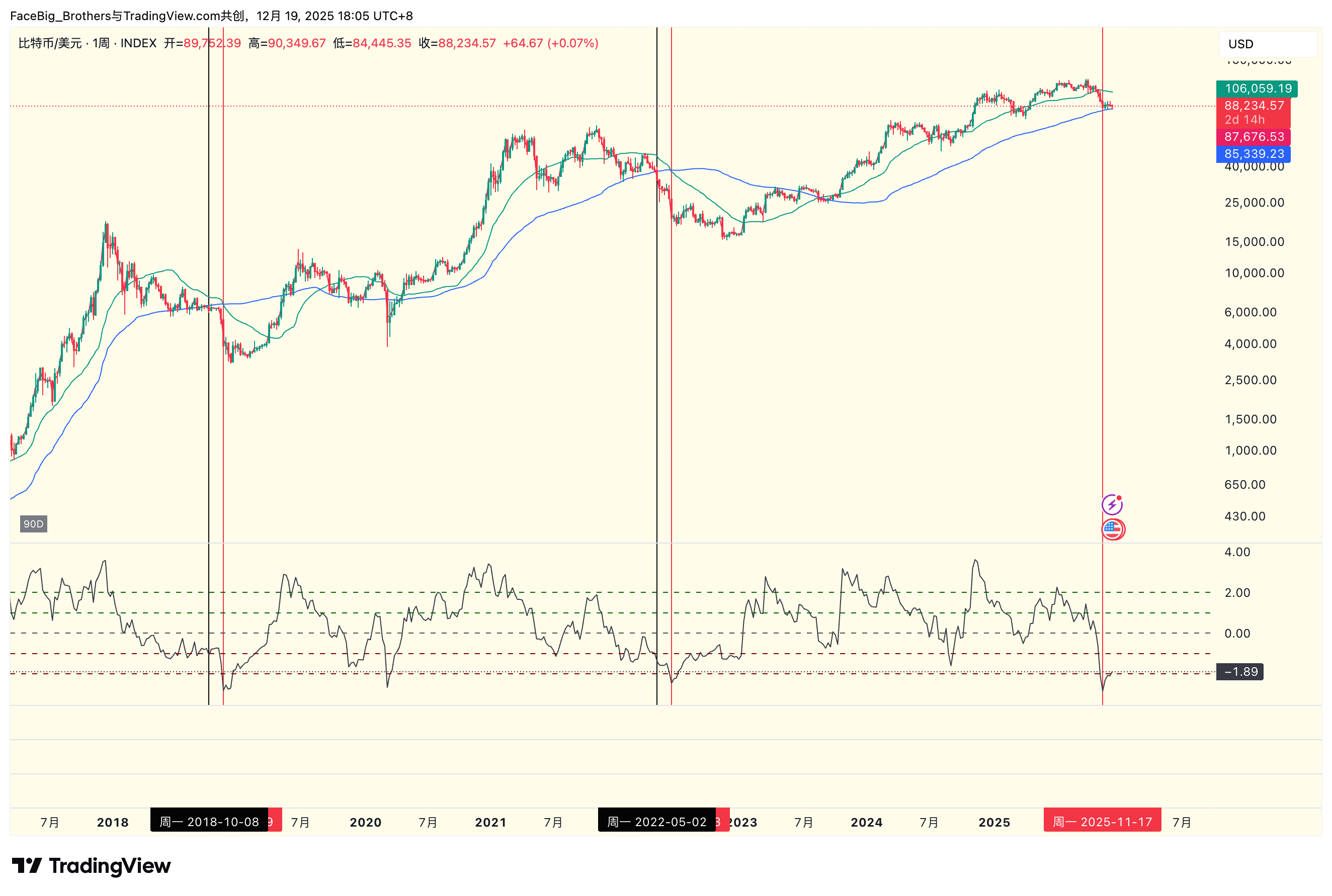
From a technical analysis perspective, Bitcoin has entered the statistically extreme panic zone of Z-Score-2, but the RVWAP spot cost line has not yet been breached, which is different from the typical bear market patterns of 2018 and 2022. This "panic first, no breach" pattern may indicate that the market adjustment is nearing its end rather than the beginning of a bear market.
Do not be swept away by anxiety; focus on the core contradictions!
The bearish impact of Japan's interest rate hike has been exaggerated; a single rate hike has limited impact on the crypto market, and dovish rate hikes can still continue to facilitate carry trades, with low liquidity shock risk.
The core contradiction in the market is "virtual money collapses, real money holds." The liquidation of leveraged funds triggered short-term panic, but the institutional RVWAP defense line has not been breached, indicating a high probability of rebound and repair.
Operation suggestion: Maintain a wait-and-see approach before Christmas week. The BTC pullback can be monitored for regular investments, and Q1 will focus on favorable developments regarding structural legislation in cryptocurrency.
Japan's 10-year government bond yield has reached 2% for the first time since 2006. Meanwhile, the Nikkei 225 index rose slightly after the interest rate hike decision was announced, increasing by about 1.16%.
Cryptocurrency analysts are closely monitoring the key level of 152 in the USD/JPY exchange rate. As long as the exchange rate does not fall below this level, the yen is still considered to be in a weak range, meaning that borrowing yen remains relatively cheap, and global capital may continue to use the yen as a financing currency to invest in high-risk assets.
Disclaimer: This article does not constitute investment advice. Please view it rationally and comply with relevant laws and regulations.

