

Money in crypto never just bounces around at random. It chases liquidity. Bitcoin and Solana show this in action—they mark two different stops on the road where capital moves. If you want to get why funds shift from BTC to SOL, you need to see how these liquidity cycles play out.
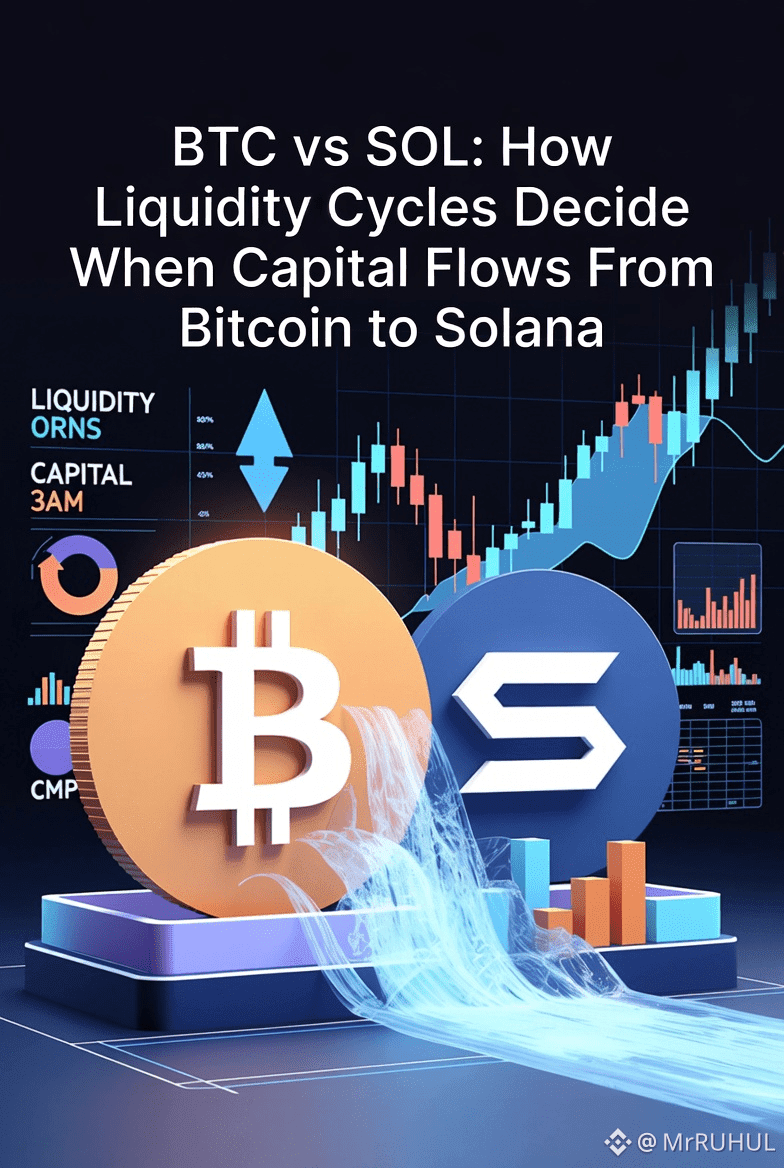
Let’s start with Bitcoin. It’s the anchor. When the market heats up, or when things feel shaky in the broader economy, most of the money lands in BTC first. Why? It’s the most liquid, people trust it, and it doesn’t swing as wildly as other coins. Big players—institutions, funds, cautious investors—usually step in through Bitcoin ETFs, straight BTC, or derivatives. This early flood of money builds a kind of base layer. After a big run, Bitcoin settles into a range. The price stops moving so much, volatility drops, and suddenly, there’s a lot of cash looking for the next big return.
To put it simply, Bitcoin is where the money parks while it waits for a better opportunity.
So, when does the money move? Two things need to happen. First, Bitcoin’s dominance—the share of total crypto market cap—stops climbing. That’s the first sign that new money isn’t just piling into BTC. Second, Bitcoin gets boring: less volatility, less risk. Traders and funds start itching for something with more upside. Now, Bitcoin isn’t the final destination. It’s the source of liquidity for everything else.
This is when Solana steps into the spotlight. During these rotations, SOL shines. It’s liquid enough for big moves, it’s got strong narratives behind it, and it’s riskier (which means higher potential returns—“beta” in trader-speak). Unlike some tiny altcoins, Solana has real depth: thick order books, busy derivatives markets, an ecosystem buzzing with DeFi, NFTs, and all kinds of apps. It’s fast and scalable. So, when investors want more action but aren’t ready to gamble on microcaps, they often land on SOL.
Once capital starts flowing into SOL, things snowball. Rising prices boost confidence. On-chain activity jumps—more DEX trades, NFTs flying, DeFi numbers up. The narrative gets stronger, which pulls in even more money. This feedback loop can make SOL run circles around BTC, especially in the middle of a bull cycle. Historically, that’s when SOL outperforms Bitcoin by a wide margin.
But these cycles don’t last forever. Money flows back to Bitcoin when people get nervous, the macro picture gets rough (think rate hikes, new regulations, or sudden liquidity shocks), or when altcoins start looking way too expensive. In those moments, Bitcoin becomes the safe harbor again. SOL and other high-beta coins usually take bigger hits on the way down.
So, what’s the real takeaway? BTC and SOL aren’t rivals—they’re stages in the flow of capital. Bitcoin soaks up the first wave, calms the market, and then, when things are ready, the rotation starts. Solana catches the next surge, fueled by speed, growth, and a strong story.
If you’re an investor or trader, timing matters. Load up on BTC when fresh liquidity hits crypto. Start rotating into SOL when Bitcoin dominance stalls and volatility drops. Get a handle on these liquidity cycles, and you’ll have a roadmap—not just for understanding what happened, but for spotting where the money’s headed next.$BTC $SOL #Write2Earrn

