
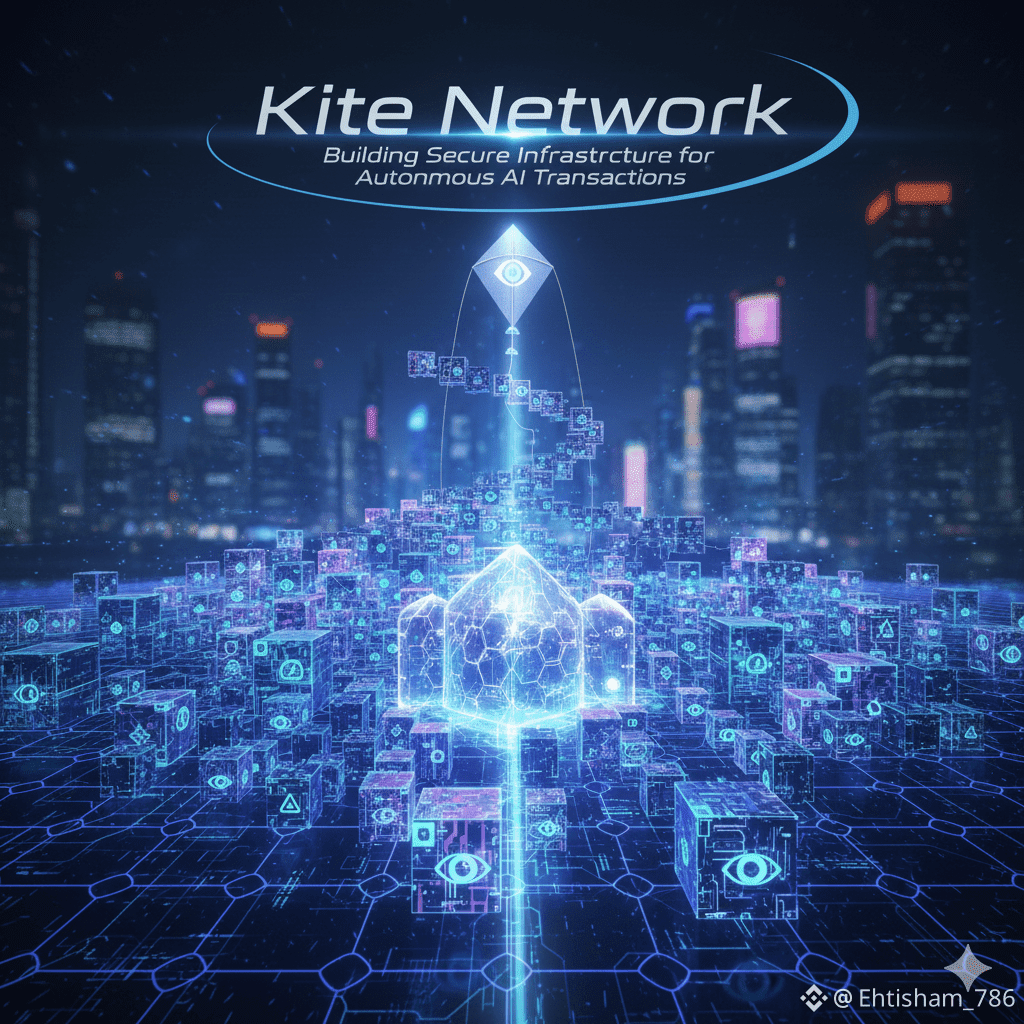
As artificial intelligence moves toward autonomy, the need for secure, verifiable, and programmable payment systems becomes critical. Kite is addressing this challenge by developing a blockchain platform specifically designed for agentic payments, where autonomous AI agents can transact independently while remaining accountable on-chain.
The Kite blockchain is an EVM-compatible Layer 1, enabling seamless integration with existing Ethereum tooling and smart contracts. What sets Kite apart is its focus on real-time coordination and execution, allowing AI agents to interact, pay, and settle transactions efficiently without the delays common in traditional blockchain environments. This makes the network well-suited for use cases such as automated services, AI-to-AI commerce, and decentralized agent networks.
Security and control are central to Kite’s design. The platform introduces a three-layer identity framework that clearly separates human users, AI agents, and active sessions.
This structure allows users to deploy and manage agents without exposing full account permissions. Sessions can be limited in scope and duration, ensuring that agents operate only within predefined boundaries, reducing risk while maintaining autonomy.
At the heart of the ecosystem is KITE, the network’s native token. KITE’s utility is launching in two strategic phases. The first phase focuses on ecosystem growth through participation incentives and network engagement.
The second phase expands the token’s role to include staking, governance, and transaction fees, giving token holders a direct role in securing the network and shaping its future direction.
By combining AI-native infrastructure, layered identity, and a phased economic model, Kite is positioning itself as a key player in the emerging autonomous agent economy.
As AI agents increasingly require trustless payments and governance, Kite’s blockchain could become a foundational layer for intelligent, self-operating systems in Web3.

