
Original: Jay Zhou | 3-point blockchain
In today's world where information explosion intertwines with the wave of Web3, the survival logic of super individuals is no longer the traditional competition of 'learning multiple skills and taking on multiple projects.' Opening Discord and Twitter (X), one is flooded with self-recommendations like 'Full Stack Web3 Developer' and 'Web3 Project Consultant'; scrolling through industry updates, the Solidity syntax just learned may become outdated with chain upgrades; when connecting with projects, one is either rejected by DAO organizations due to vague positioning or overwhelmed by demands due to a lack of understanding of on-chain collaboration rules, ultimately leading to a hasty conclusion and loss of reputation.

As an observer deeply involved in the Web3 freelance and super-individual field, I've seen too many contrasting cases: some people are proficient in contract development, community operation, and white paper writing, yet they only take on low-priced, piecemeal jobs year after year; some people focus solely on "compliant writing of Web3 project white papers," taking on only 12 projects a year, yet their income far exceeds that of all-rounders; some people build collaborative processes from scratch for each project, becoming so exhausted that they give up; some people standardize and productize their services, and even integrate on-chain incentive mechanisms, not only delivering efficiently but also encouraging customers to make repeat purchases and bring new members to their DAO organizations.
The core difference lies in this: for super-individuals in the Web3 era to gain a foothold in the information deluge and decentralized ecosystem, the key is to "productize and on-chain" their capabilities and services—transforming from a vague "skills provider" into a clear "Web3 scenario solution provider."
Productization gives services a clear positioning, standardized processes, and predictable deliverables; on-chain technology, through smart contract collaboration, token incentives, and on-chain endorsement, reduces trust costs and expands value boundaries. The combination of the two enables customers to quickly identify value and allows for efficient implementation, ultimately forming a positive cycle of "precise positioning - on-chain customer acquisition - high-quality delivery - tokenized repeat purchases".
This article will take the unique perspective of a Web3 super-individual and combine six real-world cases (all native Web3 scenarios) to break down the complete path of "positioning - productization - on-chain customer acquisition - execution - repeat purchase". It will tell you how to do your job well in the information-saturated Web3 era, take on high-quality projects, and implement them efficiently, so as to keep DAO organizations and traditional customers satisfied.
PART.01
Positioning: Amidst information overload and the on-chain ecosystem, find your "irreplaceable value anchor".
In the Web3 era, with greater information transparency and a wider range of choices, customers (especially DAO organizations and on-chain projects) need "precise positioning" more than in the traditional market. The first lesson for super-individuals is not learning new on-chain skills, but rather "simplification + anchoring to Web3 scenarios"—finding their own "narrow track" in the fiercely competitive decentralized ecosystem, so that when customers see you, they immediately understand "what on-chain/cross-chain pain points you can solve for them".

Core positioning: Not "full-stack all-rounder," but "deeply rooted in specific Web3 scenarios."
Many Web3 super-individuals are caught in a "skills anxiety" crisis, feeling they need to master contract development, community management, cross-chain bridge usage, and white paper writing simultaneously to take on projects. But the reality is: DAOs hire specialized on-chain audit experts for contract audits; they hire Web3 project writers who understand Web3 terminology; and they hire community managers familiar with Discord/Telegram rules. No one is willing to pay a high price for someone who "knows a little bit about everything," and even less willing to entrust important on-chain asset-related projects to someone who is "a jack of all trades, master of none."
The essence of Web3 positioning is to occupy customers' "on-chain mental perception." For example, when it comes to Web3 copywriting, the positioning of "Web3 copywriting" is unmemorable, but "DeFi protocol white paper compliance writing expert," "Web3 project community communication planner," and "Dapp on-chain customer acquisition and growth consultant" can make DAO organizations and on-chain projects instantly recognize "this is exactly the person I need."
Case 1: From "General Web3 Operations" to "Web3 Project Cold Start Expert," Order Value Tripled. A Zhe (pseudonym) was once a freelance Web3 operations manager, handling DeFi project promotion, DApp community operations, and Web3 event planning, earning a stable monthly income of 12,000-15,000 yuan. However, he always felt overwhelmed: each project had different on-chain rules (such as the interaction logic of different public chains), requiring him to relearn each project; client needs were diverse, some requiring cold start and new user acquisition, some requiring increased community activity, and some requiring cross-chain promotion, often leading to rework due to mismatched needs. In 2024, he discovered that many small and medium-sized Web3 projects (especially DeFi protocols and utility DApps) shared a common pain point: difficulty in cold start. They either struggled to attract initial community members or experienced low user engagement. Furthermore, there were very few dedicated individuals specializing in Web3 cold starts; most were transitioning from traditional operations and lacked understanding of the "decentralized collaboration logic" and "on-chain incentive mechanisms" of Web3 communities. A Zhe decided to focus on "Web3 project cold starts," targeting specific, general Web3 scenarios:
Abandon all general Web3 operation orders, spend 2 months delving into the entire Web3 cold start process, study the cold start strategies of high-quality projects on Ethereum and Polygon, and learn about Discord community incentive mechanisms, Twitter (X) topic marketing, and on-chain tool traffic generation logic;
Target audience: Small and medium-sized Web3 projects on the Ethereum/Polygon blockchain (utility DApps, vertical DeFi protocols, with an initial target of 500-2000 users).
The core value is summarized as follows: "7-day cold start, building a 500-person active Discord community, helping to complete 30% of the core function interaction volume, and providing on-chain data tracking reports" (based on preliminary test data).
On-chain endorsement: Compiling his success stories into verifiable on-chain reports and minting them into NFT tokens allows holders to enjoy a 20% discount on subsequent services, enhancing trust. After adjusting his positioning, although his order volume decreased, the price per order increased from 2,000-4,000 yuan to 8,000-15,000 yuan. Because of his precise positioning, most clients found him through Web3 communities (such as Web3Dev DAO and the DeFi Chinese Community) and referrals from friends, with clear needs and low communication costs. He only needs to take 3-4 orders per month, and his monthly income can be stabilized at over 30,000 yuan. Moreover, he no longer needs to deal with a wide variety of demands, significantly improving execution efficiency.
Three methods to pinpoint your location amidst the noise of Web3 information.
For Web3 super-individuals to position themselves effectively, the core strategy is to "identify on-chain/cross-chain pain points, match their own strengths, and avoid red ocean competition." The following three methods will help you quickly pinpoint your niche.
Method 1: SWOT + Web3 scenario cross-analysis. Take out a piece of paper, write your "Strengths (S)" and "Weaknesses (W)" on the left, and "Web3 market opportunities (O)" and "On-chain customer pain points (T)" on the right, and find the intersection.
Advantages: Your strongest Web3 skills (such as "proficient in Web3 white paper writing", "understanding Discord community operation", "ability to assist in Solidity contract auditing"), and you can do them better than 80% of people;
Disadvantages: Web3-related tasks that you are not good at or do not want to do (e.g., "not good at public chain underlying development" or "don't want to do high-frequency retail orders").
Opportunities: Areas in Web3 where there is demand but insufficient supply (e.g., "cold start of Web3 projects", "user education for DeFi protocols", "compliance documentation for Web3 projects").
Pain points: Problems that on-chain clients repeatedly complain about and that are difficult to solve even with money (such as "difficulty in attracting new users for Web3 cold starts", "low activity in DeFi protocol communities", and "unclear white paper logic failing to pass exchange review"). For example, A Zhe's intersection: Advantages (strong community operation capabilities, understanding of Web3 incentive logic) + Opportunities (high demand for Web3 cold starts) + Pain points (difficulty for project teams to start cold starts) = positioning as "Web3 project cold start expert".
Method 2: Web3 Competitive Analysis, Finding "Differentiation Gaps" In the Web3 field you want to enter, find 10 super entities of the same type (you can search on Discord, Twitter (X), Mirror platforms), analyze their positioning, service content, pricing, and customer reviews, and find the gaps they have not covered.
For example, while others are doing "Web3 community operations", you can do "Web3 community cold start + on-chain user incentive full-process service";
While others are doing "Web3 copywriting," you can do "Web3 project white paper compliance writing + exchange review guidance";
While others focus on "contract development," you can offer "contract auditing assistance for small to medium-sized Web3 projects + vulnerability remediation advice." Differentiation isn't about "starting from scratch," but about delving deeply into specific Web3 needs. In the Web3 era, clients don't need "more choices," but rather "choices that best fit their on-chain scenarios."
Method 3: Small-scale on-chain testing to verify the feasibility of location services. Location services are not static and need to be verified through actual on-chain orders. You can:
We will provide some services free of charge to 3-5 target Web3 clients (such as helping Web3 projects build a basic Discord community for free, or writing a 1-page white paper outlining the core logic for free) and collect their feedback.
Publish positioning-related content on Web3 vertical platforms (such as writing "3 core steps for Web3 cold start" on Mirror, or sharing "A guide to avoiding pitfalls in writing a Web3 white paper" in the Discord community) and see if target customers proactively inquire.
Adjust the positioning based on feedback (for example, if the customer feels that "7 days for a cold start is too fast and more on-chain data is needed to support it", the cycle can be adjusted to 10 days and one on-chain interaction data review session can be added).
Positioning: A "Web3 One-Sentence Formula" for Instantly Understanding Your Value to Customers
Ultimately, your positioning should be summarized in a "one-sentence introduction," enabling you to quickly deliver value in Web3 social scenarios. The formula: I am a core on-chain service expert for your target Web3 audience, helping you solve specific on-chain pain points and achieve quantifiable on-chain results. My service features are differentiated advantages + on-chain endorsement.
for example:
A Zhe: I am a cold start expert for small and medium-sized Web3 projects on the Ethereum/Polygon chain. I can help you solve the problems of difficulty in attracting new users to your community and low user interaction. I can help you build an active community of 500 people in 7 days and complete 30% of the core function interaction. The features of my service include on-chain incentive design, providing on-chain interaction data tracking reports, and NFT endorsement for successful cases.
Web3 White Paper Compliance Expert: I am a white paper compliance writing expert for small and medium-sized Web3 projects looking to list on exchanges. I can help you solve problems such as logically flawed white papers that fail to pass exchange review, and help your white paper pass the initial review of the exchange on the first try. The service features include interpretation of exchange review standards, one free revision, and provision of compliance case references.
This statement should include "Who are your Web3 customers, what on-chain services do you provide, what on-chain results do you deliver, how are you different from others, and on-chain trust endorsement," allowing customers to see your value at a glance in the complex information landscape of Web3.
PART.02
Productization: Transforming your capabilities into standardized, blockchain-based service products.
Once your positioning is clear, the next step is "productization"—transforming your vague Web3 skills and experience into standardized, replicable, and predictable service products, while integrating on-chain elements to reduce trust costs. The biggest pain point for Web3 super-individuals is that "taking on each on-chain project requires completely re-engineering the cross-chain collaboration process," leading to low efficiency, error-proneness, and poor customer satisfaction. Productization + on-chain integration can solve this problem: providing services with fixed processes, clear deliverables, and transparent pricing, while making collaboration more transparent and trust simpler through smart contracts and stake tokens.
The core of productization: "Standardization + Modularization + On-chainization"
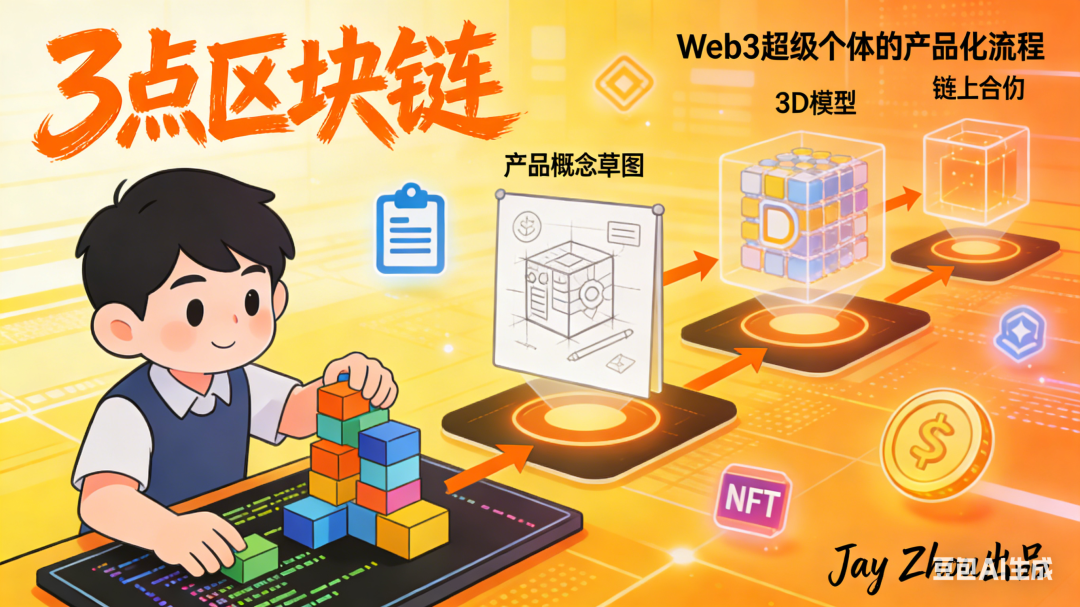
Productization is not a "one-size-fits-all" approach, but rather "retaining appropriate flexibility on the basis of standardization, and adding on-chain empowerment." The core is to break down the Web3 service process, turning each step into a "module" that customers can choose according to their needs; at the same time, it integrates on-chain tools, such as using smart contracts to specify delivery nodes and using equity tokens as service guarantees, which reduces communication costs and enhances trust.
Case 2: A Web3 copywriter productizes and on-chains her copywriting services, handling 6 orders a month without confusion. Xiaoyu (pseudonym) is a freelance Web3 copywriter. Previously, client requests were varied: "Write a Web3 project tweet," "Write a DeFi protocol white paper," "Write a set of Discord community scripts." Each request required significant time to communicate on-chain requirements and confirm the Web3 language style. Misunderstandings of requirements often led to rework, and she only handled 3-4 orders a month at most, leaving her exhausted. In 2024, she productized her Web3 copywriting services, launching 3 standardized packages + 1 on-chain customized module, while also integrating smart contract collaboration.
At the same time, she outlined the service process as "standardized + on-chain":
Requirements Confirmation: After the client places an order, fill out the (Web3 Copywriting Requirements Form) (including project public chain, target audience, core value, on-chain scenario requirements, and reference cases).
Smart contract signing: After both parties confirm their needs, a simple smart contract is deployed to stipulate delivery nodes, payment amounts, and default clauses (such as deducting 10% of the cost per day for late delivery).
Communication and coordination: Complete one 15-minute Discord voice communication within one business day to confirm details;
First draft delivery: First drafts will be delivered on schedule, and clients will provide feedback on revisions via Discord within 24 hours;
Modifications and optimizations: Free modification attempts are provided as per the package agreement; additional attempts will be charged at 800 RMB per attempt.
Final Delivery: An editable document and usage suggestions are provided, triggering the smart contract for final payment and issuing service rights certificates (NFTs). After productization and on-chain implementation, Xiaoyu's communication costs have significantly decreased—customers can clearly understand their needs through the package, eliminating repeated back-and-forth; execution efficiency has improved—standardized processes mean she doesn't need to re-examine them every time; and trust costs have decreased—smart contracts and rights certificates give customers greater peace of mind. She can now consistently handle 6-8 orders per month, increasing her monthly income from 18,000 yuan to 40,000 yuan, while reducing the rework rate from 45% to 8%.
5 Key Steps to Productizing Web3 Hyper-Individuals
Step 1: Deconstruct the Web3 service process and identify the "standardizable and on-chain links". Break down your Web3 service into specific steps according to the "front-end - middle-end - back-end" process. Identify the links that do not require personalized adjustments and make them into standard processes. At the same time, identify the links that can be optimized through on-chain tools and integrate on-chain elements.
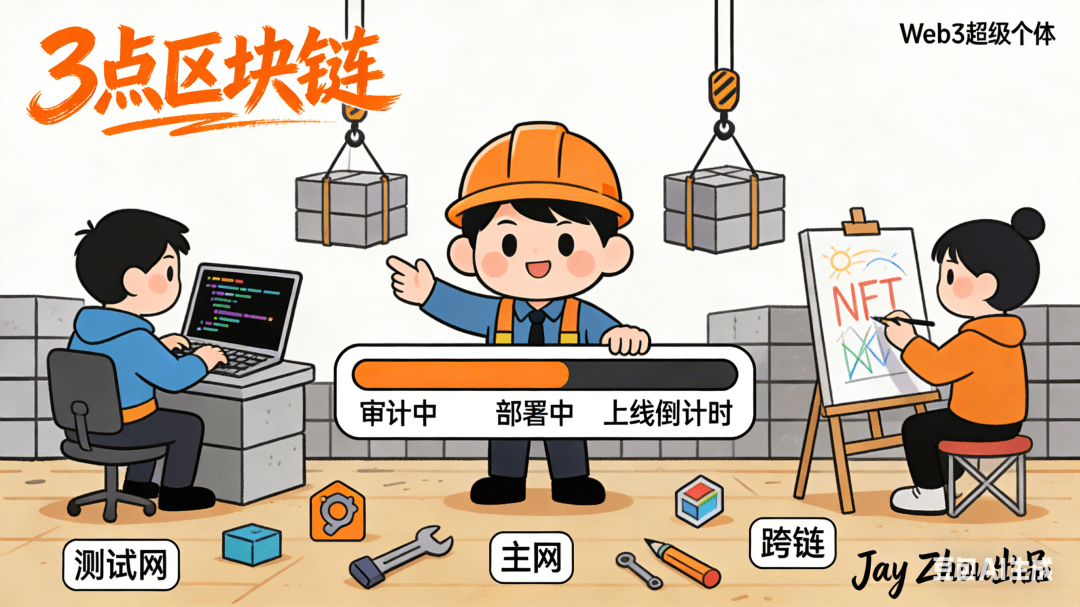
Preliminary stage: Requirements gathering (designing a unified Web3 requirements form, including information on public chains, on-chain scenarios, etc.), communication and coordination (fixed communication duration and format, with priority given to Discord), smart contract signing (standardized contract templates that can be modified on OpenZeppelin).
Mid-term: Execution and progress (setting milestones, such as "delivery time of the first draft of the core logic of the white paper" and "on-chain data review time"), quality control (own review standards, such as Web3 copywriting without contextual errors and accurate on-chain terminology);
Post-delivery: Organizing deliverables (uniform file format and naming rules), after-sales follow-up (fixed after-sales feedback timeframe, such as "free on-chain consultation within 7 days of delivery"), and on-chain incentives (issuing service rights certificates NFTs for repurchase discounts). For example, the standardized + on-chain process for Web3 community operation services: Requirements form completion → Smart contract signing → Community setup (3 days) → 1 free optimization → Final delivery (Community Operation SOP + Service Rights Certificates NFTs).
Step 2: Clearly define Web3 deliverables to make customers "see the on-chain value." After paying, customers are most concerned about "what they will get." Therefore, each product package must clearly define the deliverables, and these deliverables must be specific, actionable, and ideally reflect on-chain value, avoiding vague statements such as "providing Web3 consulting services" or "providing optimization suggestions."
Incorrect example: "Provide Web3 community operation services" → Correct example: "Provide Web3 Discord community setup (including role settings and channel planning) + 7-day cold start operation + 1 on-chain community activity data report + service rights certificate NFT";
Incorrect example: "Provide Web3 project consulting" → Correct example: "Provide 1 Web3 project cold start diagnostic report + 3 on-chain customer acquisition solutions + 1 Discord community operation SOP + 1 one-hour on-chain tool usage guide." Deliverables should ideally be "reusable, verifiable, and traceable on-chain," such as reports, SOP documents, on-chain data tables, and service rights certificates (NFTs), making clients feel they are getting "great value for money."
Step 3: Web3 Pricing Strategy, Balancing "Value + On-Chain Incentives" Web3 super-individual pricing cannot be based on intuition; it must consider "cost + on-chain value + market conditions." Simultaneously, pricing should be used to filter high-quality customers—low-priced orders often have unclear and numerous requirements, while higher-priced orders tend to have customers who clearly understand their needs, resulting in lower communication costs. Furthermore, on-chain incentive mechanisms can be integrated to increase customer repurchase intentions. Pricing Formula: Price = (Your hourly wage × Estimated time) × 1.5 (Risk premium, to accommodate changes in on-chain rules) + Web3 value premium + On-chain incentive cost
Hourly wage: Determined based on your Web3 skills, experience, and market rates (e.g., 150 RMB per hour for a junior Web3 copywriter, and 400 RMB per hour for a senior Web3 white paper writer).
Estimated time consumption: including the total time for communication, execution, modification, and on-chain tool operations;
Risk premium: To address unforeseen circumstances in the Web3 market (such as service process adjustments due to public chain upgrades, or issues with on-chain assets of project teams);
Web3 Value Premium: The additional value brought by your unique Web3 advantages (such as "knowledge of multiple public chain scenarios" or "successful Web3 cold start cases").
On-chain incentive costs include: issuing service rights certificates (NFTs), gas fees for deploying smart contracts, etc.
Additionally, you can set up "tiered pricing + on-chain repurchase incentives":
Basic version: Meets customers' core Web3 needs, with a lower price, attracting first-time customers;
Advanced version: Meets customers' deep Web3 needs, moderately priced, and is the main package;
Flagship version: Provides comprehensive Web3 services, priced higher, and serves high-value clients;
On-chain repurchase incentives: Customers holding service rights certificates (NFTs) can enjoy a 20% discount on repurchases or receive an additional free on-chain data review service. For example, A-Zhe's pricing:
Basic version: Web3 community cold start (excluding on-chain incentive design) → 8000 yuan/set;
Advanced version: Web3 community cold start + on-chain incentive design → 12,000 yuan/set;
Flagship Edition: Web3 Cold Start Full Process (Community Building + New User Acquisition + On-Chain Incentives + Interaction Data Review) → 20,000 RMB/set;
On-chain repurchase incentives: Customers holding flagship service NFTs will enjoy a 25% discount on repurchases and will have priority access to ecosystem collaborations for future high-quality projects.
Step 4: Set up “Web3 Flexible Module” to address personalized on-chain needs. Standardization is not “rejecting personalization”, but rather providing selectable Web3 flexible modules on the basis of standardization, which can meet the customer’s special on-chain needs without disrupting your execution rhythm.
For example, the flexible modules of the Web3 copywriting service include: multi-public chain copywriting adaptation (+30% fee), expedited delivery (+50% fee), and on-chain data visualization reports (+1000 yuan/report).
For example, flexible modules for Web3 community operations include: cross-platform community collaboration (Discord + Twitter (X), +40% fee), on-chain community activity incentive program design (+1500 RMB/set), and multilingual community adaptation (+2000 RMB/time). Flexible modules should be clearly priced to avoid clients making unexpected additional on-chain requests, forcing you to work overtime or rework.
Step 5: Create a "Web3 Product Manual" to facilitate quick order placement. Compile your product packages, service processes, deliverables, pricing, on-chain incentive rules, case studies, and frequently asked questions into a "Web3 Product Manual" (which can be a Mirror article, PDF, or Notion page). Send it directly to customers when they inquire to reduce communication costs. The product manual should highlight Web3 features. For example, showcase on-chain data achievements in the case study section ("After a Web3 project's cold start, on-chain interaction reached 60%, and community activity consistently ranked among the top 3 in its category"). Explain the usage of smart contracts and staking tokens in the service process section, allowing customers to intuitively experience the advantages of Web3 services.
Common Misconceptions about Web3 Productization: Don't sacrifice on-chain flexibility for standardization.
The core of productization is "improving efficiency, ensuring quality, and reducing trust costs," not "mechanical execution." The following two misconceptions should be avoided:
Myth 1: Over-standardization, rejecting all Web3 personalization needs. If a client's personalization needs are within your capabilities and they are willing to pay extra, you can absolutely accommodate them—flexible modules are designed to address this situation.
Myth 2: Over-reliance on on-chain tools increases customer usage costs. For example, small and medium-sized Web3 projects do not need to deploy complex smart contracts. Simple on-chain credentials or third-party Web3 collaboration platforms (such as Gnosis Safe) are sufficient, avoiding customers abandoning cooperation due to operational complexity.
PART.03
Chapter 3 Customer Acquisition: In the Web3 decentralized ecosystem, let high-quality customers find you.
After productization, the next step is "customer acquisition"—making target customers aware of you, trust you, and choose you within the Web3 decentralized ecosystem. Web3 Super Individuals don't require large-scale promotion; the core is "on-chain content traffic generation + DAO word-of-mouth referrals + decentralized collaboration": conveying your value on the Web3 platform where target customers gather; selecting high-quality projects through the trust endorsement of DAO organizations; and reducing customer acquisition costs by leveraging decentralized collaboration tools.

Customer acquisition core: "On-chain content traffic generation + DAO word-of-mouth referrals", low cost and high conversion rate.
In the Web3 era, customers have more decentralized channels for obtaining information, but they still trust "content on professional blockchains" and "recommendations within DAO organizations" the most. Super-individuals' customer acquisition strategies should revolve around these two points, attracting targeted customers without spending money on advertising.
Case Study: An independent Web3 developer secured 8 high-quality projects in a year by leveraging "a long technical article on Mirror, open-source on GitHub, and DAO endorsement."
Lao Yang (pseudonym) is an independent Web3 backend developer, specializing in "API interface development for small and medium-sized Web3 projects + cross-chain data synchronization expert." He has not done any traditional marketing; all his clients come from endorsements through Mirror technical articles, GitHub open-source projects, and DAO organizations.
Mirror Technical Articles: One Web3 technical article is updated weekly, focusing on "avoiding pitfalls in API interface development for small and medium-sized Web3 projects", "cross-chain data synchronization solutions", and "Solidity rapid development practice", such as (Mastering Web3 project API interface development in 3 days, with complete code and on-chain testing tutorial) and (Two core solutions for cross-chain data synchronization, suitable for small and medium-sized Web3 projects).
GitHub open source: Open source three utility projects that I developed (such as "Web3 project API interface testing tool" and "cross-chain data synchronization lightweight tool"), with detailed usage documentation and on-chain test cases to attract the attention of other developers and DAO organization leaders;
DAO endorsement: Join 3 Web3 developer DAOs (such as Dapp-Labs DAO, Web3Dev DAO), actively share technical insights and answer other members' questions within the DAO, and after accumulating a good reputation, the DAO organization will actively recommend him to projects that need his services.
Referral program: After each project is delivered, we will provide the client with one month of free on-chain technical support. We will respond to any issues within two hours. Once the client is satisfied, we will proactively recommend them to other DAO organizations in the same industry.
In 2024, he secured eight projects through this method, with an average price of 120,000 yuan per project, resulting in a total annual income of 960,000 yuan. Moreover, his clients all had precise needs—they knew he needed Web3 API interface development or cross-chain data synchronization, recognized his technical capabilities, and the communication costs were low, leading to a smooth execution process.
Three low-cost Web3 customer acquisition channels, directly used by super-individuals
Channel 1: Drive traffic through on-chain content and establish "professional endorsement" on Web3 vertical platforms.
Content serves as a "free on-chain business card" for Web3 super-individuals, allowing you to stand out in the decentralized information ocean. The core logic is: on Web3 platforms where target customers congregate, share "practical content that solves on-chain pain points," build a professional image, and attract customers to proactively inquire.
Web3 content creation techniques:
Focus on on-chain pain points: Each article addresses only one Web3 customer pain point, such as "difficulty in attracting new users during Web3 cold starts" or "difficulty in visualizing on-chain data of DeFi protocols," to avoid overly broad content;
Provide practical on-chain information: Provide specific Web3 methods, tools, and on-chain operation steps so that customers can directly implement them, such as "Use these two free tools to quickly achieve cross-chain data synchronization";
Embed Web3 value: Naturally mention your positioning and services in the content, such as "If you feel that developing Web3 project API interfaces is too time-consuming, you can contact me. I can produce a draft in 3 days and provide on-chain testing support."
Maintain frequency: Update 1-2 articles per week. Consistent output is essential to building a presence in the decentralized ecosystem.
Channel 2: DAO word-of-mouth referrals, allowing existing customers and DAO organizations to bring in new customers for you.
The best customer acquisition channel for Web3 super-individuals is referrals from existing customers and DAO organizations. Existing customers have already recognized your services, DAO organizations provide decentralized trust endorsement, and new customers referred by DAO organizations have high matching needs, high trust levels, and fast transaction speeds. To get existing customers and DAO organizations to refer you, the core is "exceeding expectations + on-chain incentives".
How to exceed expectations?
Provide more on-chain value upon delivery: For example, after delivering the Web3 cold start service, A Zhe will provide the customer with an additional "on-chain interaction data tracking sheet" to teach the customer how to use Dune Analytics to monitor user behavior;
Pay more attention to after-sales service: For example, after delivering Web3 copy, Xiaoyu will follow up with the client 7 days later to check on the "effect of the copy spreading on the chain" and provide one suggestion for on-chain promotion optimization;
Prompt response to on-chain issues: For example, if a client encounters a cross-chain data synchronization problem after project delivery, Lao Yang will respond within 2 hours and provide remote assistance to resolve it.
How to proactively encourage referrals and provide on-chain incentives?
Direct invitation + on-chain reward after delivery: "If you think the service is good, and you have friends or DAO organizations that need XX service, you are welcome to recommend it. After a successful referral, I will provide you with one free on-chain data review service or reward you with 100 USDT stablecoins."
Set up DAO referral incentives: Partner with Web3 DAO organizations, and if a customer referred by a DAO makes a purchase, the DAO organization will receive a certain percentage of the revenue (e.g., 10%), or a portion of the revenue will be donated to the DAO ecosystem.
Establish a customer DAO: Bring satisfied customers into an exclusive DAO community, regularly share Web3 industry insights, on-chain tools, and benefits (such as priority access to high-quality Web3 project ecosystem collaboration opportunities), and encourage customers to recommend each other within the DAO.

Channel 3: Web3 community operations, precisely reaching out to users in vertical communities.
Web3 vertical communities (such as DeFi communities, developer communities, and project communities) are "gathering places" for target customers, offering high precision and low cost in customer acquisition. The core approach is to "provide on-chain value first, then promote appropriately," avoiding the negative reaction to hard-sell advertising.
Web3 Community Management Techniques:
First, observe from the bottom: Understand the community rules and the on-chain needs of members. For example, in the DeFi community, project teams often discuss "cold start" and "user incentives," and you can provide help around these topics.
Actively share on-chain value: For example, answer other members' questions in the community, such as, "Is it difficult to attract new users when starting a Web3 community? You can use the XX on-chain tool. I used this tool to help a client fill a 500-person community in 7 days, with an interaction rate of 30%."
Promote yourself appropriately: Occasionally share your Web3 case studies and product manuals in the community, such as "I recently helped a Web3 project on the Polygon chain to do a cold start, and the on-chain interaction volume reached 60%. If you are interested, you can DM me."
Avoid frequent spamming: promote once or twice a week. The key is to provide on-chain value and let people recognize your professionalism.
Client screening: Only accepting "high-quality matching Web3 projects" to avoid on-chain risks.
Web3 super-individuals have limited time and energy, and on-chain projects carry certain risks (such as project teams running away with funds or smart contract vulnerabilities). Therefore, choosing the wrong project not only fails to generate income but may also expose them to risks. When acquiring clients, it's crucial to learn how to "screen clients" and only accept projects that meet the following three conditions:
Needs matching: The customer's needs are within the scope of your product services. For example, if you are positioned as "Web3 cold start", you should not take on "DeFi contract development" projects.
Budget matching: The client's budget should match your pricing. For example, if your basic package costs 8,000 yuan, don't keep negotiating with a project owner whose budget is only 3,000 yuan.
Risks are manageable: The project team has a clear on-chain entity and compliance plan, and is willing to sign a smart contract to stipulate rights and responsibilities, avoiding projects with "anonymous project teams" and "no on-chain endorsement".

Three questions to ask when screening clients, which can be asked at the beginning of the communication process:
What are the core on-chain issues you are currently encountering? (Assessing if the requirements match)
What is your approximate budget for this project? (Assess whether the budget is appropriate)
What are the project's public blockchain choices and compliance plans? (Assess whether the risks are controllable)
If a client's response does not meet your requirements, refuse decisively—only by giving up low-quality, high-risk projects can you free up time to take on high-quality, low-risk projects.
PART.04
Chapter 4 Execution: How Web3 Super Individuals can efficiently implement projects and satisfy clients.
Execution Overview
After taking on a project, the most crucial aspect is "implementation." Web3 super-individuals lack team support and must handle all the work themselves. Furthermore, on-chain projects involve complex aspects such as public chain rules, smart contracts, and cross-chain collaboration. Poor execution can not only lead to client dissatisfaction but also potentially trigger on-chain risks. The core of efficient execution lies in "on-chain process management + efficient communication + risk control," ensuring projects are completed on time and to a high standard.
Core execution strategy: Drive the process using "Web3 project management thinking" to avoid confusion.
Web3 super-individuals executing projects are most prone to falling into the trap of "doing whatever comes to mind," leading to missed on-chain steps, delays, and customer dissatisfaction. The correct approach is to "manage each project as a small Web3 project," using on-chain and visual methods to drive progress.
Case Study: Web3 Designers Use "On-Chain Kanban Boards + Smart Contract Milestones" to Simultaneously Advance Three Projects Without Chaos
Linlin (pseudonym) is a freelance Web3 UI designer, positioned as a "UI design expert for small and medium-sized Web3 projects." After productization, she launched three packages: "Basic Version (Dapp interface design)," "Advanced Version (Dapp + ecosystem component design)," and "Flagship Version (full-case UI design + interaction suggestions)." She manages projects using "on-chain dashboards + smart contract milestones," managing up to three projects simultaneously without ever being late, achieving a client satisfaction rate as high as 96%.
Her execution process:
Requirements Confirmation Phase (1 day): The client fills out the (Web3 UI Design Requirements Form), communicates the style, target audience, on-chain scenario requirements, and reference cases, and outputs the (Requirements Confirmation Document), which is confirmed by both parties through a smart contract;
Prototyping phase (2 days): Design a low-fidelity prototype based on requirements, communicate with the client via Discord to confirm page logic and functional layout, output (prototype confirmation document), and trigger the first milestone payment of the smart contract (30% of the total amount).
Visual design phase (3 days): Design a high-fidelity interface based on the prototype, send it to the client for feedback, and provide 1 free revision;
On-chain testing phase (1 day): Adapt the design draft to the on-chain display scenario, test the compatibility of different devices, and output a test report;
Final delivery phase (1 day): Output design source files (Figma/PSD), sliced images, and design specification documents. After the client confirms that everything is correct, the smart contract will be triggered to make the final payment (70% remaining) and issue the service rights certificate NFT.
She built an "on-chain project dashboard" using Notion, with each project having five columns: "To Start," "Requirements Confirmed," "In Progress," "Pending Feedback," and "Completed." Each task is marked with a deadline and on-chain milestone, such as "Prototype Design (Complete by March 10th, triggering 30% payment)." She spends 10 minutes each morning reviewing the dashboard to clarify the core tasks for the day; and she synchronizes progress with clients once a week via Discord to keep them informed of the project's progress.
Five tools and methods for efficient execution of Web3 super-individuals
Method 1: Use on-chain Kanban tools to visually manage project progress.
Recommended tools: Notion (can embed on-chain data), Trello, Lark Kanban. Their core function is to "break down Web3 projects into tasks, clearly defining the person in charge, deadline, on-chain milestone node, and status of each task" to avoid omissions.
Steps to build an on-chain Kanban board:
Create a new project dashboard and name it "XX Project (Client Name + Public Chain)";
New columns: Pending Start, Requirement Confirmation, In Progress, Awaiting Feedback, Completed;
Task Breakdown: Break down the project process into specific tasks and label them with relevant on-chain information, such as "Requirements Collection", "Prototype Design (Triggering 30% Payment)", "Visual Design", "On-Chain Testing", and "Final Delivery (Issuing NFTs)".
Add task details: Each task should include a deadline, deliverables, and on-chain milestone rules, such as "Prototype design (deliver a low-fidelity prototype by March 10th, triggering the smart contract 30% payment)";
Daily Updates: Once a task is completed, it is moved to the corresponding column, synchronized with the client, and triggers the corresponding on-chain milestone.
Method 2: Set smart contract milestones to protect the rights and interests of both parties.
In Web3 project execution, clients are most worried about "spending money but making no progress," while you are most worried about "completing the work but the client not paying." Therefore, it's essential to set "milestone nodes" through smart contracts early in the project. Each node should have clearly defined deliverables and payment percentages, automatically triggering payments to protect the rights of both parties.
For example, Lao Yang's milestone nodes and smart contract settings:
Node 1 (Day 1): Requirements confirmation + technical solution formulation, delivery (API interface development technical solution), after customer confirmation, triggering the smart contract for 20% payment;
Node 2 (Day 3): Complete the initial draft of the API interface, deliver the interface documentation and preliminary test cases, and trigger the smart contract to make 30% payment;
Node 3 (Day 5): Complete on-chain testing and vulnerability fixing, deliver test report, and receive customer feedback for modifications;
Node 4 (Day 7): Final delivery (API interface source code + complete test report + user tutorial). After the customer confirms that everything is correct, the smart contract is triggered to make 50% payment and NFT service rights certificates are issued.
Smart contracts can be modified using OpenZeppelin's standard templates, which is simple and convenient, requiring no complex development skills. If the customer does not understand smart contracts, you can help them deploy them and give a simple explanation of how to use them.

Method 3: Effective Web3 communication to avoid misunderstandings of requirements
Communication is the core of execution. Many Web3 projects require rework and result in customer dissatisfaction due to inadequate communication. The principle of Web3 super-individual communication is "proactive communication + clear expression + on-chain written confirmation".
Proactive communication:
Don't wait for customers to ask before you tell them. Update them on the progress regularly. For example, "I finished the initial draft of the API interface today. I'm sending you the interface documentation. Please check if it meets your expectations. Once you confirm, 30% payment will be triggered."
Communicate promptly when encountering on-chain issues, such as, "The gas fees on the Polygon chain your project chose have been fluctuating significantly recently. Have you considered adjusting some functions to reduce user costs?"
We respond promptly to customer feedback. For example, if a customer requests modifications, we reply within 24 hours, "Received, will complete the modifications within 3 days."
Clear expression:
Use structured language to communicate, for example, "Regarding the cold start of the Web3 project, I have three questions I need you to confirm: 1. Core functionality of the project; 2. Target audience; 3. On-chain incentive budget."
Avoid vague statements, such as saying "I will finish it as soon as possible" instead of "I will finish the first draft within 3 days".
On-chain written confirmation:
All important communications (requirements, modification suggestions, progress) should be recorded in writing. For example, if a customer verbally suggests modifications, you should reply, "Received. You want to optimize the API interface response time to within 1 second. I will complete the modification within 3 days."
Key documents (requirements confirmation documents, milestone confirmation documents) should be confirmed by both parties via Discord or email to avoid future disputes.
Method 4: Improve efficiency and save time using Web3 tools
Web3 super-individuals need to learn to use tools to replace repetitive tasks and spend their time on core tasks.
Tool usage principles:
Don't pursue "more and more". Choose 1-2 core tools to master. For example, copywriters should only use ChatGPT + Grammarly, and designers should only use Figma + Web3 Design System.
Tools are "assistants," not "replacements." For example, after generating a draft copy using ChatGPT, it needs to be revised based on the client's needs and your own professional abilities; it cannot be delivered directly.

Method 5: On-chain risk control to proactively avoid potential problems.
Web3 projects are riskier than traditional projects. It's crucial to anticipate potential risks in advance to avoid problems during the project. Common risks and solutions:
Risk type
Coping methods
Client changes requirements at the last minute
Clearly define the "requirement change rules" in the early stages, such as "if the customer changes their requirements after the project starts, they will have to pay an additional 50% fee and the cycle will be extended by 3 days", and write it into the smart contract;
Changes in public blockchain rules (such as upgrades, soaring gas fees)
Before the project started, we confirmed with the client that "if the public chain rules change, the plan needs to be adjusted, and the cost and timeline will be negotiated separately."
Unexpected situations (such as illness or emergencies)
Allow 1-2 days for each project to avoid delivering right on deadline; for important projects, communicate with the client in advance that "alternative solutions will be arranged in case of unforeseen circumstances";
Customer delays in providing feedback
Clearly define the "customer feedback time limit" in the early stage, such as "after the first draft is delivered, the customer must provide feedback on modifications within 24 hours, and failure to do so will be considered as default approval", and write it into the smart contract;
Smart contract vulnerabilities
Before deployment, have a professional conduct a simple audit or use a mature contract template to avoid financial losses due to contract issues.
Key to Execution: Details Determine Customer Satisfaction
Often, customer satisfaction depends not on "whether you completed the task," but on "whether you paid attention to the details in the Web3 context." For example:
Deliverable naming convention: Name the final deliverables as "Client Name-Project Name-Deliverable Type-Date-Public Chain", such as "XX Web3 Project-Dapp Interface Design-Source Files-20240315-Polygon", to facilitate client search;
Provide on-chain usage instructions: After delivering the design source files, provide the client with an "on-chain display usage instruction", which tells the client "which designs are suitable for mobile on-chain wallet display and which are suitable for PC DApps";
Proactively provide follow-up suggestions: After the project is completed, give the client a "chain optimization suggestion", such as "the position of the payment button in the Dapp can be adjusted to improve the on-chain interaction conversion rate. You can contact me at any time if you have any questions".
These details may seem small, but they can make customers feel your professionalism and care, thereby increasing satisfaction.
PART.05
Chapter 5 Repeat Purchases and Word-of-Mouth: Ensuring Customers Continue to Choose You and Creating a Positive Cycle
The long-term survival of Web3 super-entities depends not on "acquiring more new customers," but on "ensuring repeat purchases from existing customers." In the Web3 era, customers have many choices, but switching service providers is also costly—if customers are satisfied with your service, they will prioritize you whenever they have new needs. The core of repeat purchases is "continuously providing on-chain value + establishing long-term connections."
The core of repeat purchases: making customers feel that "you are a long-term ecosystem partner, not a one-time service provider".
Many super-individuals believe that "when a project ends, the collaboration ends," but in reality, the needs of Web3 projects are continuous—DeFi protocols iterate their functions and need to update their white papers; DApps expand their ecosystems and need new community operations; Web3 projects are deployed across chains and need to adapt to services on multiple public chains.
To encourage repeat purchases, we need to transform from a "one-time service provider" into a "long-term ecosystem partner" for our customers, continuously focusing on their on-chain needs and providing long-term value.
Case 5: Web3 cold start consultants rely on "long-term ecosystem services" to get clients to repurchase for 3 years.
Zhao Xue (pseudonym) is a Web3 cold start consultant, positioned as an expert in "cold start + on-chain growth for small and medium-sized Web3 projects". After productization, she launched "cold start setup package", "community operation package" and "cross-chain growth package".
Her clients are mostly utility DApps and vertical DeFi protocols, and many of them have been repeat customers for three years. The core reason is that she "continuously provides long-term on-chain value."
Regular follow-up: Send one (Web3 project growth monthly report) to existing clients every month, sharing the latest industry cases and on-chain tool tips, such as "This month's DeFi protocol hit growth strategy: on-chain task incentives + DAO community collaboration, 50,000 more interactions in 3 days";
Proactively connect with ecosystem resources: If you see ecosystem resources that are suitable for your clients, proactively recommend them, for example, "A certain public chain is doing an ecosystem support program, and your DApp is very suitable. Do you need me to help you connect?"
Offer long-term discounts: Set up "repurchase discounts" for existing customers, such as "enjoy a 10% discount on the second purchase and a 20% discount on the third purchase";
On-chain ecosystem collaboration: Invite existing customers to join your ecosystem DAO, give them priority in participating in collaborations on high-quality projects, and share on-chain traffic.
One of her DApp clients started working with her in 2022. Initially, it was just for cold start, but later they repurchased services such as community operation, cross-chain growth, and white paper updates, with a cumulative consumption of more than 150,000 yuan over 3 years.
The client said, "Zhao Xue is not only professional, but she also pays close attention to the development of our on-chain ecosystem. She is the first person we think of when we have new needs."
4 ways to get customers to make repeat purchases
Method 1: Establish a "Web3 Customer Profile" to track customers' long-term on-chain needs.
Create a file for each customer, recording the following information:
category
Record content
Basic Information
Client Name, Project Type, Public Chain, Scale, Contact Person, Contact Information
Project Information
Collaboration projects, deliverables, satisfaction levels, unresolved on-chain issues
Long-term demand
Potential future on-chain needs from clients include, for example, "A DeFi protocol, planned for cross-chain deployment in 6 months, requires cross-chain growth services," or "A DApp, iterating its features twice a year, requires copywriting updates and community operations."
Regularly review customer profiles, such as sending a message to customers every 3 months to ask, "Do you have any cross-chain deployment plans recently? Do you need my help to develop a cross-chain growth plan?" or "After a feature iteration, do you need to update the white paper or community messaging?" Proactively remind customers of your presence and stimulate repeat purchase demand.
Method 2: Offer a "Web3 Long-Term Service Package" to bind customers.
For customers with long-term needs, we offer "long-term service packages," such as:
Web3 project team: "Annual Growth Package", 1 cold start + 4 community operations + 2 white paper updates + full year on-chain data review, priced at 150,000 yuan (single purchase requires 180,000 yuan, package discount of 30,000 yuan).
DeFi protocol provider: "Quarterly Operation Package", 3 months of community operation + 3 on-chain incentive activities + 1 monthly growth report, priced at 50,000 yuan (purchasing 3 event planning sessions at once costs 36,000 yuan, the package includes community operation, which is more cost-effective).
Dapp project team: "Annual design package", 10 page designs + 2 iterations of optimization + 1 design specification, priced at 80,000 yuan (a single purchase of 10 pages costs 100,000 yuan, the package offers a discount of 20,000 yuan).
Advantages of long-term packages:
For customers: more favorable prices, no need to communicate and compare prices again every time there is a need;
For you: Focus on long-term customer needs, ensure stable income, and reduce customer acquisition costs.
Method 3: Continuously deliver on-chain value to make clients feel that "you are very professional and worthy of long-term cooperation".
Repeat purchases are predicated on "customers recognizing your professionalism," so you need to continuously deliver on-chain value to customers, making them feel that "you are constantly improving and can help them solve new on-chain problems."
Specific steps:
Provide exclusive content to existing clients: For example, Zhao Xue sends existing clients (Monthly Report on Web3 Project Growth), and A Zhe sends existing clients (New Techniques for Web3 Cold Start);
Share your new case study: For example, "I recently helped XX client achieve cross-chain growth, increasing cross-chain interaction volume by 80% in 3 days. I'd like to share the optimization strategy with you."
Inform your customers about new services: If you launch a new product package, inform your existing customers immediately. For example, "I recently launched the 'Web3 Cross-Chain Growth Service,' which can help you quickly expand your user base across multiple public chains. Existing customers can enjoy a 20% discount."
Method 4: Handle customer complaints and turn "dissatisfaction" into "repurchase opportunities".
It's inevitable to encounter situations where customers are dissatisfied, such as deliverables not meeting expectations or project delays. How you handle customer complaints directly impacts whether a customer will repurchase—handling them well may increase customer trust; handling them poorly may lead to complete customer loss.
The "Three-Step Method" for Handling Customer Complaints:
Apologize first, then listen: Don't argue, apologize to the customer first, "I'm sorry for the bad experience," and then listen carefully to the customer's complaints, such as, "You feel that the on-chain incentive design for Web3 cold starts is not attractive enough to users, right?"
Propose on-chain solutions: Based on customer dissatisfaction, provide specific solutions, such as "I will redesign the on-chain incentive scheme within 2 days and provide you with 2 versions to choose from";
Additional on-chain compensation: To make up for the customer's losses and provide additional value, such as "This modification is free, and I will also conduct an on-chain user survey for you."
For example, Linlin's design adaptation was delayed by two days due to a public chain upgrade. Her solution was:
Apologize to the customer immediately and explain the situation;
We shortened the project cycle by one day and worked overtime to complete the adaptation.
As compensation, we will provide the client with an additional set of Web3 ecosystem component designs.
The client was not angry at all; in fact, they thought she was very responsible and chose her again when they had new needs later.
Reputation building: Turn satisfied customers into your "on-chain advocates"
Word-of-mouth is an "intangible asset" for Web3 super-individuals. In the information-saturated Web3 era, customer word-of-mouth is more effective than any advertising. The core of building a good reputation is to "get customers willing to share your services."
Method 1: Proactively invite customers to leave on-chain reviews
After the project is completed, proactively invite clients to leave reviews on your Web3 social platforms (such as Mirror, Twitter (X)), for example, "If you are satisfied with the service, could you leave a review under my Mirror article and share the growth effect of your on-chain project?"
To encourage customers to leave reviews, we can offer small perks, such as "a 10% discount on your next collaboration after leaving a review" or "one free on-chain growth consulting service after leaving a review."
Method 2: Turn customer case studies into "on-chain success stories"
Compile your successful customer case studies into detailed "on-chain success stories," including "customer's on-chain pain points + your solutions + final on-chain results," and publish them on your social media platforms and product manuals.
For example, A Zhe's case story: "XX tool-type Dapp had less than 100 on-chain interactions per day before its cold start, and only 50 community members; through a 7-day cold start service, a community of 500 active members was built, the on-chain interaction volume increased to 500 times per day, and the number of users exceeded 2,000 within 30 days."
Success stories allow potential customers to see your value directly, increasing trust, while also giving existing customers a sense of accomplishment, making them more willing to recommend you.
Method 3: Participate in Web3 industry events to expand word-of-mouth influence.
Participate in Web3 industry exhibitions, online sharing sessions, and DAO-organized events to share your case studies and experiences, expanding your reputation and influence. For example:
Web3 Developer Conference: Share "Practical Case Studies of Web3 Project API Interface Development" and get more project teams to know you;
DeFi Ecosystem Salon: Sharing "Cold Start Techniques for Small and Medium-Sized DeFi Protocols" to Attract DeFi Project Clients;
Online DAO Sharing Sessions: Share your expertise and build a reputation on Web3Dev DAO.
PART.06
Summary: The core logic for the productization and implementation of Web3 super-individuals
In the information-saturated Web3 era, the survival strategy for super-individuals is not "learning more skills and taking on more projects," but rather "precise positioning + capability productization + on-chain empowerment + efficient execution + long-term repeat purchases." By transforming one's capabilities into standardized, replicable service products, and leveraging on-chain tools to reduce trust costs, one can enable customers to quickly identify their value amidst the information deluge, while also improving execution efficiency and ensuring service quality. Ultimately, this creates a positive cycle of "precise positioning - on-chain customer acquisition - high-quality delivery - word-of-mouth repeat purchases."
Let's review the core logic of this article:
Positioning: Focus deeply on the narrow Web3 market and use on-chain endorsement to make customers instantly understand your value;
Productization: Turn skills into standardized packages and on-chain modules to reduce communication and execution costs;
Customer acquisition: Relying on on-chain content to drive traffic and DAO word-of-mouth referrals to accurately reach high-quality customers;
Execution: Drive the project using Web3 project management thinking, and ensure delivery through smart contracts and Kanban tools;
Repeat purchases: Continuously provide long-term on-chain value, turning customers into long-term ecosystem partners.
The productization and implementation of Web3 super-individuals is not something that can be achieved overnight; it requires continuous adjustments to positioning, product optimization, and service improvement in practice. However, as long as you adhere to the principle of "centering on customer on-chain needs and focusing on value delivery," and strive for excellence in every project, you can gain a foothold in the information-exploding Web3 era and achieve the goal of "accepting high-quality projects, earning reasonable income, and living a free life."

Finally, a word of advice to all Web3 super-individuals: In the information-saturated Web3 era, instead of pursuing "omnipotence," it's better to achieve "unreplaceable in a specific on-chain scenario"; instead of busy taking on more orders, it's better to deepen and thoroughly understand existing orders, so that customers will proactively seek you out and continue to choose you.


