
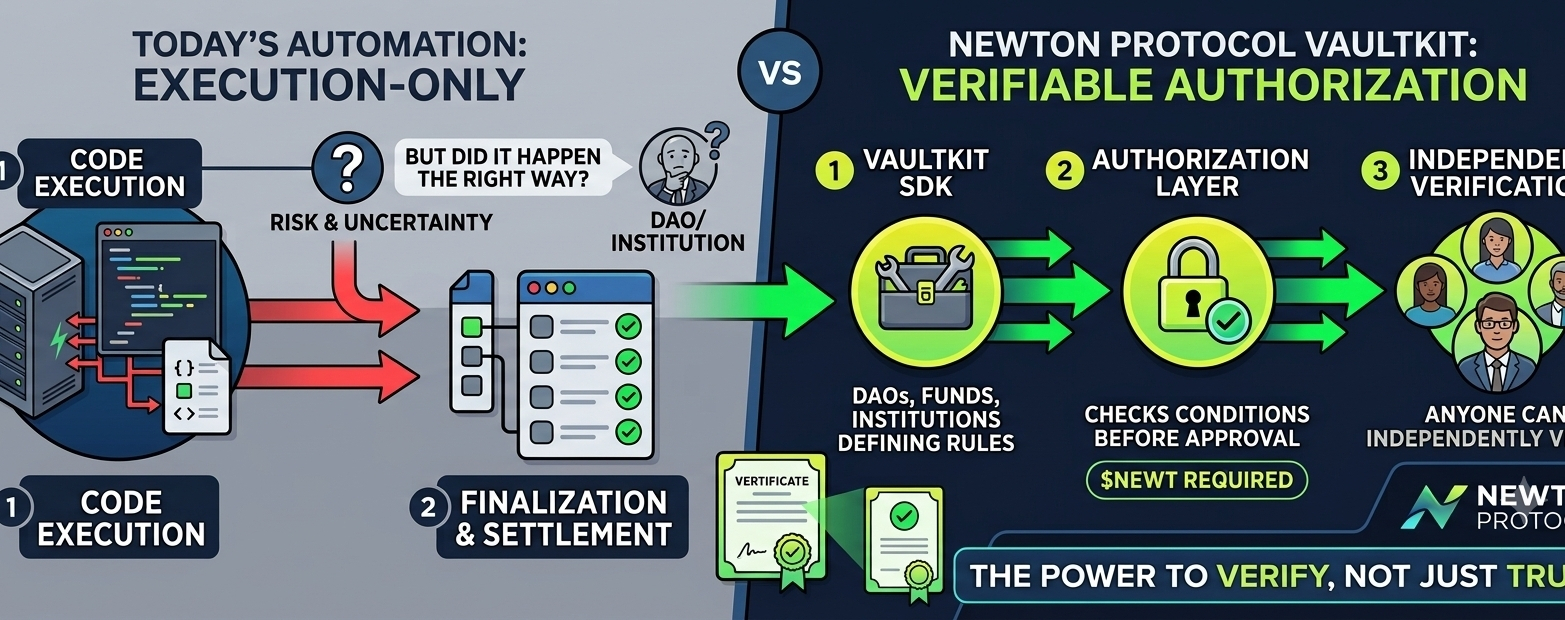
I keep coming back to one question that bothers me. Most people think automation becomes trustworthy the moment it's moved on-chain. I don't know why they think that. I really don't. Maybe it's the seduction of the tech. Or maybe it's just easier to believe than to question. But I'm not sure that's true. Let me be honest. Code can execute. Smart contracts can finalize. But that doesn't mean every action follows the rules we initially agreed to. And that gap between it happened and it happened the right way is where things get dangerous. As financial systems become more programmable the real challenge isn't just speed. It's accountability. That sounds obvious, but in practice, we're not treating it like the priority it is. Institutions, DAOs, funds, even individual users like you and me, we're all relying on automated infrastructure to manage assets that matter. But when a vault behaves unexpectedly, and it will, proving the rules were followed becomes surprisingly hard. Without verifiable enforcement, automation creates efficiency but silently creates uncertainty. And uncertainty is just risk wearing a mask. So here's what caught my attention. @NewtonProtocol Newton Protocol. With their mainnet beta launch they introduced VaultKit. It's an SDK designed to make vault policies directly enforceable on-chain. I know, I know, another SDK. But this one's different. Instead of assuming transactions follow predefined rules, the network checks them before settling. Once verified it creates a signed certificate that anyone can independently verify. Not just the developer. Not just the team. Anyone. That's the part that stuck with me. Because the idea is that participants can verify rather than simply trust that the logic is being followed. This shifts the entire conversation. We stop asking Did it complete and start asking Did it complete according to the agreed-upon rules? Those are two very different questions.@NewtonProtocol $NEWT #Newt $NEWT