


Brothers, today I don’t want to talk about big claims like “AI Agents will change everything in the future.” If you hear that too much, your ears get calluses—and your wallet is easier to revolt against.
I’ve been looking at @NewtonProtocol and Newton Mainnet Beta these days. The point that really made me pause and take a closer look is actually very simple: as more and more on-chain automation comes online, if AI Agents really are going to do things for users, who’s going to manage their hands?
Don’t laugh—this question is more practical than “Can AI be smart?”
A lot of projects talk about Agents these days, and the default assumption is: you give it a goal, and it finds the path, drafts the protocol, signs the transactions, and runs the execution by itself. It sounds awesome—like hiring a 24/7 worker for your wallet. The problem is, on-chain isn’t office software. If you click the wrong button, you can’t simply undo it. Once an on-chain execution goes wrong, many times it’s just: “Bro, welcome to an irreversible world.”
So I don’t plan to ask first whether Newton Protocol’s Mainnet Beta can tell a big story. I’ll ask three down-to-earth questions:
First: are there boundaries before an Agent executes?
Second: is this boundary verifiable on-chain?
Third: after something goes wrong, can you clearly see what rules were used to allow execution at that time?
These three questions don’t sound very sexy, but they’re absolutely critical.
The core of Newton’s Mainnet Beta isn’t simply pushing out an AI concept, and it’s not just repackaging a tool that “automatically operates for you.” It’s more like adding an authorization and policy-check layer before execution on-chain: whether a transaction can pass isn’t based on “trust this bot.” Instead, it must first satisfy preset conditions. In the future, things like price, identity, risk, compliance, limits, time, and address status can all become pre-execution check items.
That’s interesting.
In earlier DeFi automation, many execution logics leaned toward “post-event explanations.” The transaction had already been sent, the funds had already moved. Then users go check logs, contracts, and the robot’s records—like archaeology. What Newton wants to do is move some of the judgments to before execution: check first, then execute. This change in order may look small, but it’s pretty crucial for institutions, vaults, DAOs, multisigs, and automated strategies.
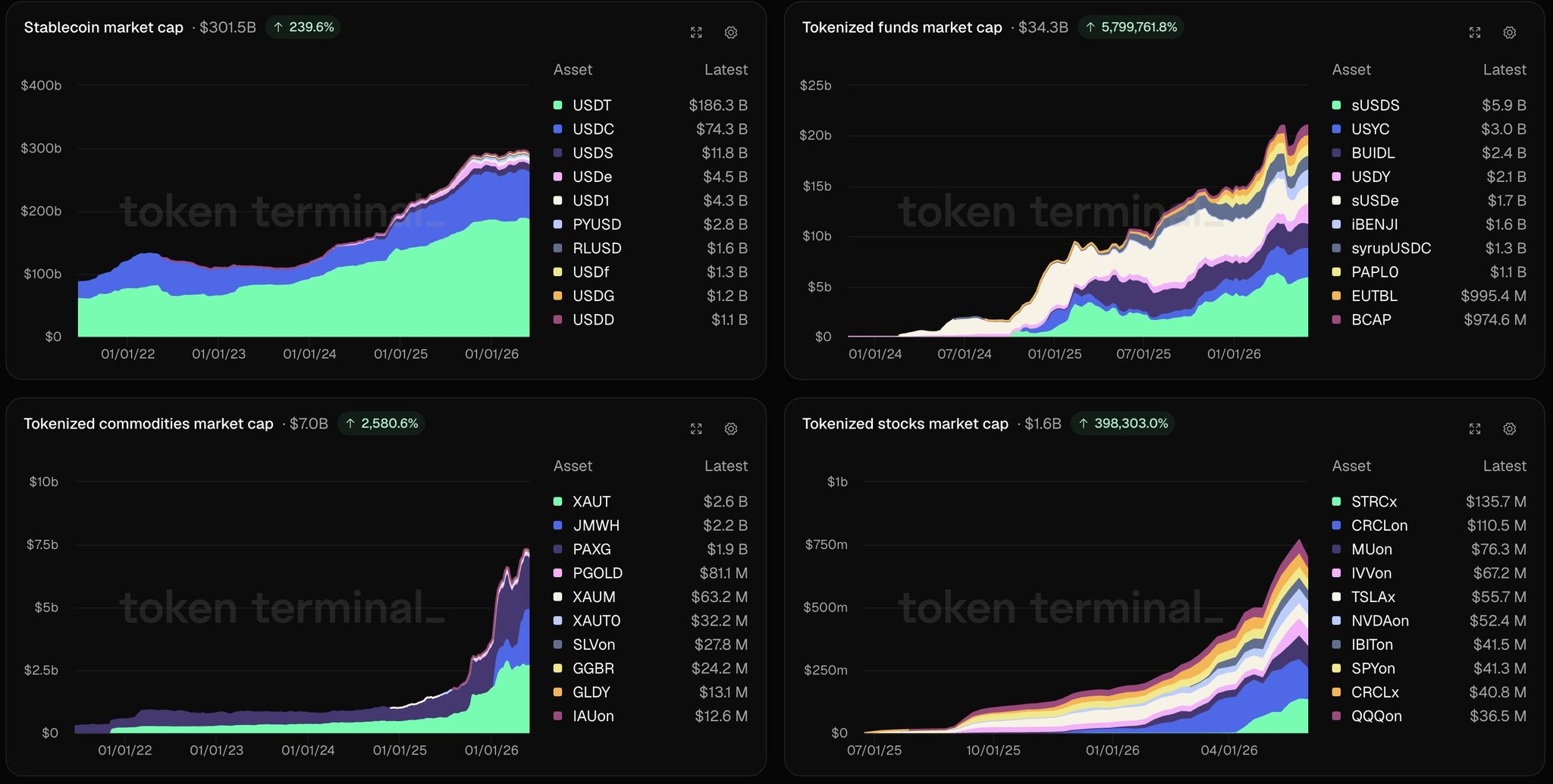
Especially now that the scale of on-chain assets isn’t like the small-time self-entertaining circles from earlier years. Newton’s official website mentions that the stablecoin market size has already exceeded 300 billion USD, and the monthly transfer volume is at the trillion-dollar level. Against this backdrop, if you still expect all automation to rely on things like “the script author is trustworthy” and “the robot should be fine,” it’s a bit like writing only one line on the airplane pre-flight checklist: “The pilot’s in a good mood today.”
Brothers, this doesn’t work.
What I care more about is Newton Mainnet Beta treating the “authorization layer” as a standalone thing. Because in the future, the hardest part for Agents won’t be whether they can call tools—it’ll be whether they can be constrained. If an Agent can only chat, the problem isn’t big; at worst it can blabber nonsense. But if an Agent can rebalance portfolios, sign, operate cross-chain, move in and out of vaults, and execute strategies, then every action it takes should have boundaries.
This boundary can’t be put only in the front-end UI.
The front-end prompts are friendly, but the front-end isn’t the final judge. What’s truly valuable is that rules can be recognized by the on-chain execution layer—conditions must be satisfied for it to proceed; if they aren’t satisfied, it gets blocked. Newton’s policy engine is heading exactly in this direction: check conditions before executing a transaction, and only continue when the policy passes.
Let me say something a bit unpleasant: the AI Agent space will definitely get more and more crowded over time. If all you hear is “I’m smarter,” “I can execute multi-step,” “I connect more tools,” sooner or later everyone will get aesthetic fatigue. What may truly remain are the infrastructures that let users dare to hand over permissions.
Daring to grant permissions is far harder than just shouting slogans.
Because permissions—once you put them on-chain—can’t be solved by just a couple of lines of “safe and reliable” written by a product manager. What users will truly ask is: can you prove it? can you restrict it? can you replay it? can you explain why this transaction was allowed? If an Agent oversteps its authority, where is the boundary of responsibility?
Newton Protocol’s Mainnet Beta makes me think it’s worth observing—especially because it didn’t stop at “making Agents better at doing work,” but started addressing the issue of “getting reviewed before an Agent actually does things.”
Look at how data partners like RedStone participate, and you can also see that Newton isn’t trying to build a closed little system. Strategy checks don’t judge out of thin air—they need trustworthy data inputs. For example, price fluctuations, collateral ratios, market status, and asset risk: the quality of these external data will directly affect the strategy’s allow/deny result. In plain terms, even if the policy is beautifully designed, if the data you feed it isn’t stable, the execution layer could still open the wrong door.
So for Newton Mainnet Beta, I’ll watch two lines:
One is whether the strategy layer can be flexible enough. Can developers, institutions, and vault operators write real business constraints into it—not just a few toy-level conditions?
The other question is whether the data and identity layer can keep expanding. Price data, KYC/identity, address reputation, compliance status, social identity, and on-chain history—if these can gradually be brought in, then Newton’s authorization layer will have a chance to turn from “sounds good as a concept” into “actually usable.”
Of course, I don’t want to say it with full certainty. In the Mainnet Beta stage, the name already includes “Beta,” which indicates it’s still early and in a validation period. Saying it has already solved all Agent security problems is like the wine hasn’t even been opened—you’d already be getting yourself drunk. A more rational view is: Newton has at least moved the problem to a fairly tough position—not piling on AI narratives, but tackling the most troublesome parts of automated execution: authorization, rules, verifiability, and traceability.
Personally, I approve of this direction.
Now look at the market data, especially $NEWT . For third-party platforms, the market cap they provide is still roughly in the tens of millions (USD) range, and 24h trading volume is in the few million USD range. Different platforms use different definitions for circulating supply. At this stage, don’t just look at price volatility—volatility happens every day, and candlestick charts are more abstract than my daily routine. What’s more worth watching is whether, after Mainnet Beta, there are real developer integrations, whether use cases like VaultKit keep expanding, and whether policy enforcement has produced reusable examples.
My current take on Newton is simple:
But if, in the future, on-chain Agents are only there to help users “press buttons,” then the bar isn’t that high—anyone can do it.
But if, in the future, Agents truly have to manage strategies, execute trades, service vaults, and connect institutional funds, then the authorization layer becomes a foundational issue. Without bounded automation, you’re basically automating risk. Only automation that has rules, verification, and records has a chance to move into serious use cases.
Newton Protocol, this time Mainnet Beta—I won’t treat it as the finish line. It’s more like a test run at the table: does the market actually need a dedicated authorization layer that constrains Agents and on-chain transaction execution?
I lean toward the answer being yes. But whether it can really run and hold up depends on later real usage volume, developer adoption, expansion by data partners, and whether strategy execution genuinely survives complex scenarios.
Brothers, don’t just stare at the words “intelligent” along the AI Agent line. When money starts moving for real, whether it’s smart or not actually comes second. First ask whether it has brakes.