
The price of Bitcoin has been fluctuating sideways for most of December, causing frustration for both bulls and bears. Despite significant short-term volatility, the overall structure remains in a range as the market approaches the end of the year.
Bitcoin has risen about 5% over the past 30 days but has remained basically flat over the last week. This lack of directional movement indicates hesitation. However, recent on-chain data suggest that certain aspects are changing, especially in the spot market. Buying pressure has surged, raising a critical question. Can this shift in demand ultimately help Bitcoin break through its strongest short-term resistance (wall)?
Whales and exchange outflows indicate that buying pressure is rising.
In the past few days, two on-chain signals have stood out: whale behavior and exchange outflows.
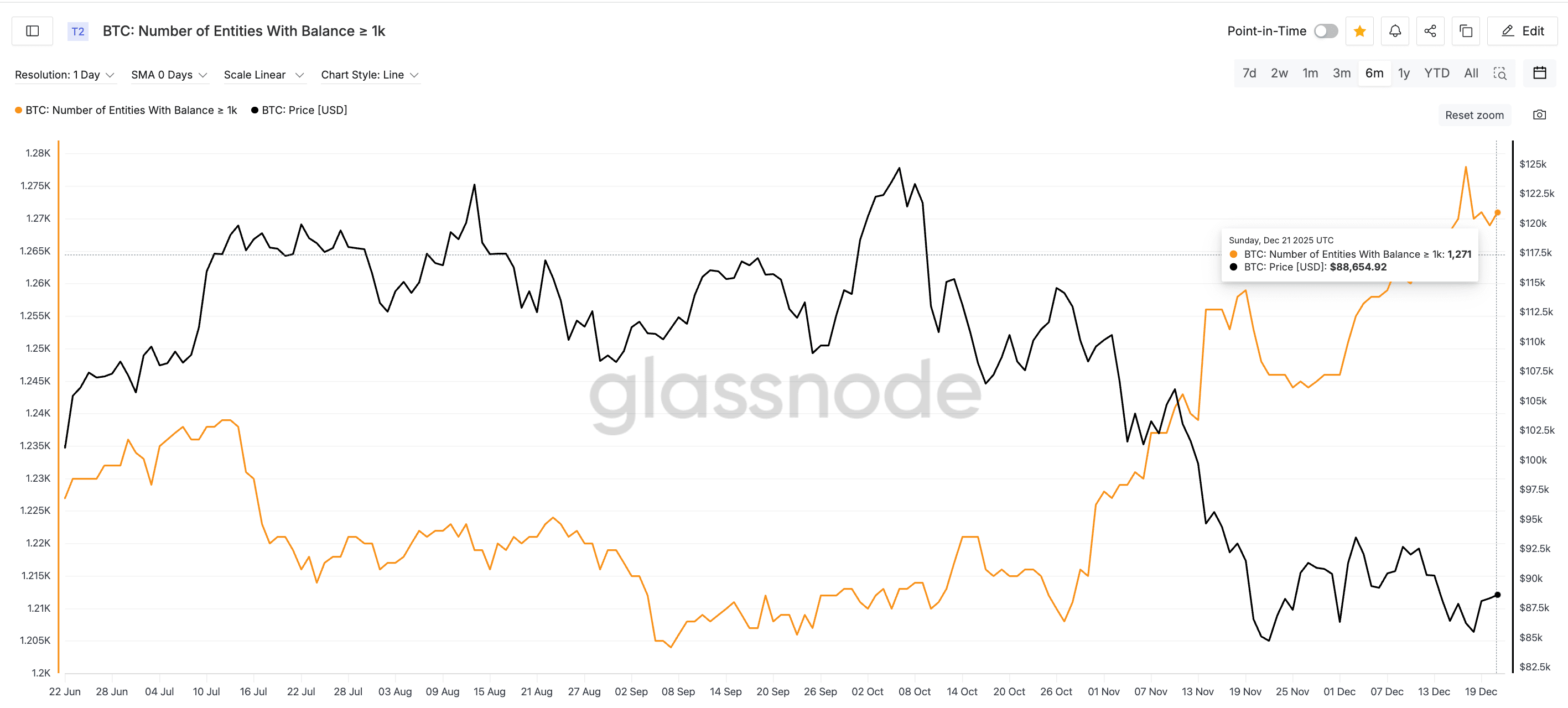
First, the number of entities holding at least 1,000 BTC began to rise again after a sharp decline on December 17. This metric tracks large holders, commonly referred to as whales. When this number increases, it indicates that larger players are accumulating rather than distributing.
Since December 20, the number of these large entities has gradually increased. Although still slightly below the recent six-month high, the direction is significant. As BTC prices stabilize, whales are cautiously increasing their exposure.
Second, changes in net positions at exchanges show a significant increase in buying activity. This metric measures how many coins are in circulation on centralized exchanges. When more coins leave exchanges, it typically means buyers may be transferring Bitcoin into self-custody, thereby reducing immediate selling pressure.
As of December 19, the outflow from Bitcoin exchanges was approximately 26,098 BTC. By December 21, the outflow surged to 41,493 BTC. The net outflow increased by 59% over these two days.
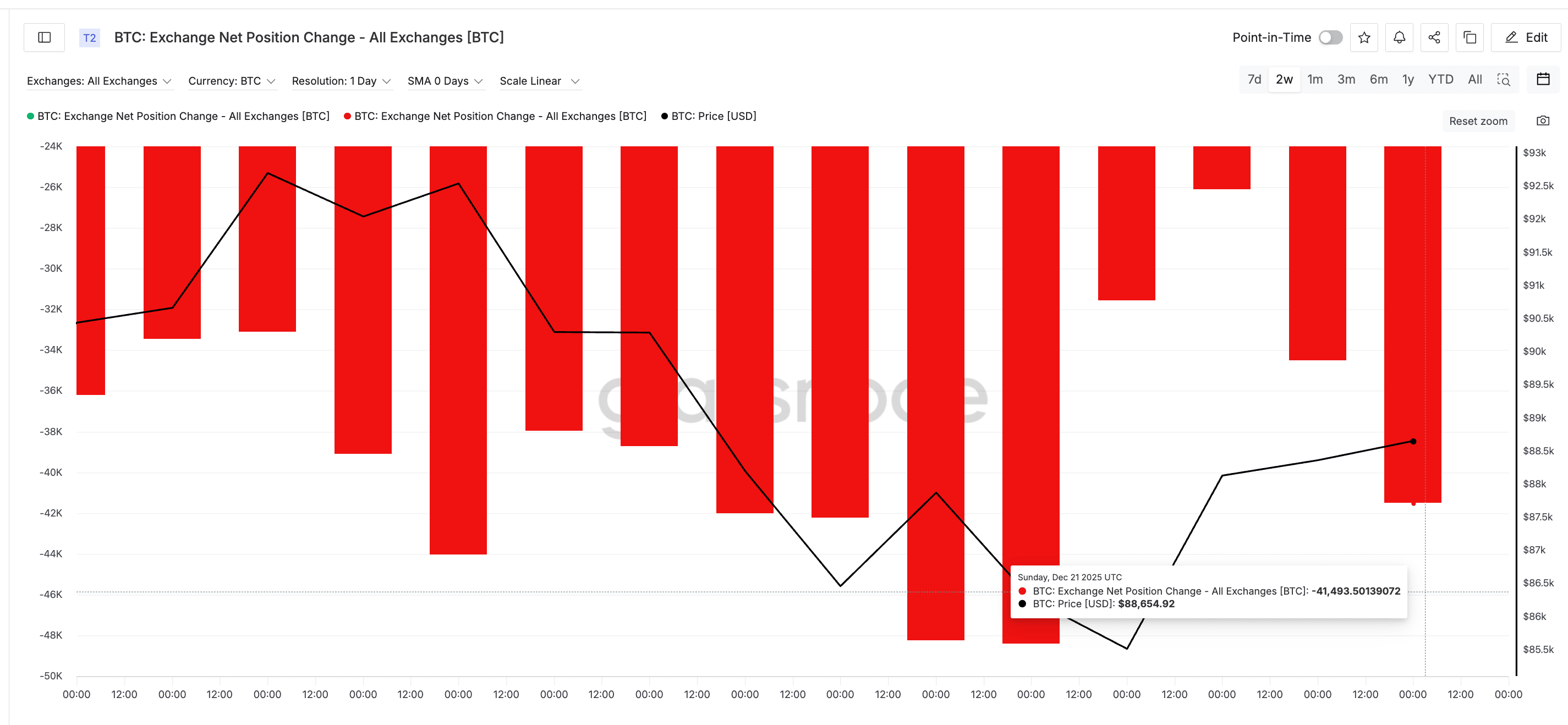
This gap is important. The accumulation of whales is steady but limited. However, the speed of outflows from exchanges is much faster. This indicates that retail and mid-sized buyers are also likely entering alongside whales, driving growth in market spot demand.
These signals collectively indicate that spot buying and selling pressure is rising, even though prices have not yet broken through.
What are the price levels of Bitcoin that will determine the next steps?
Whether this buying pressure is significant now hinges on key levels of Bitcoin prices.
The most important resistance (wall) is around $89,250. This level has restricted upward movement since mid-December and corresponds with multiple failed attempts to break through. Unless Bitcoin's closing price remains firmly above this level, the market remains within a range.
If buyers successfully reclaim $89,250, Bitcoin may attempt to surge towards $96,700, one of the strongest upper resistance areas on the chart. This level has repeatedly rejected prices and will be the next major test.
On the downside, $87,590 remains a key short-term support. A clean break below this support would expose $83,550, and if selling accelerates, the risk would increase to $80,530.
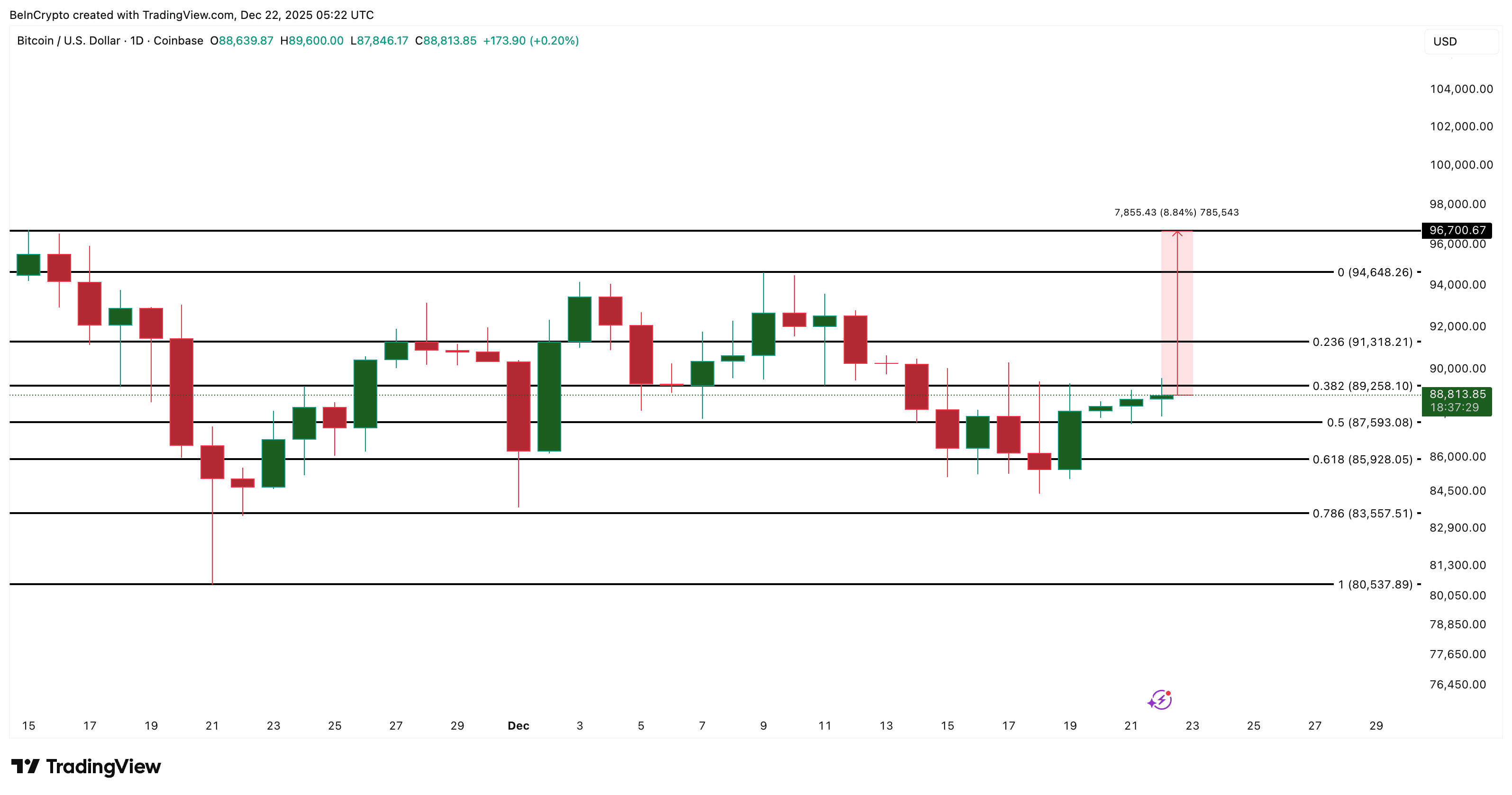
In short, Bitcoin is tightening between the rising buying pressure and persistent resistance walls. Whales are cautiously accumulating, outflows from exchanges are accelerating, and prices are approaching a decision point. Whether Bitcoin will rise now depends on one factor: can this wave of demand ultimately break through $89,250, or will this series continue into the new year?
