
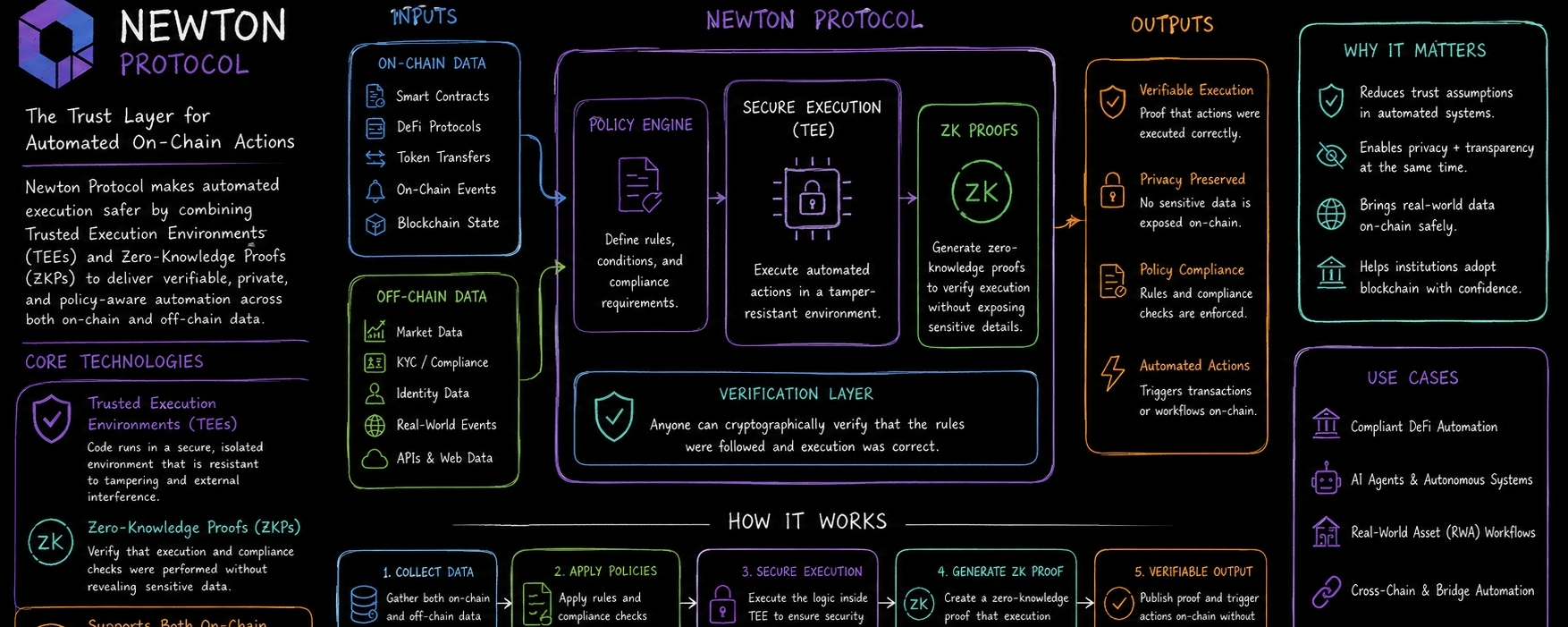
The more I read about Newton Protocol, the more one thing stands out to me: Rhinestone.
What I like is that it allows a Newton policy to work across different smart accounts without building a separate integration for every wallet. That kind of modular approach saves a huge amount of development effort and makes the whole ecosystem easier to scale.
On paper, it sounds exactly like the type of infrastructure users shouldn't even notice.
But that's also where my biggest question starts.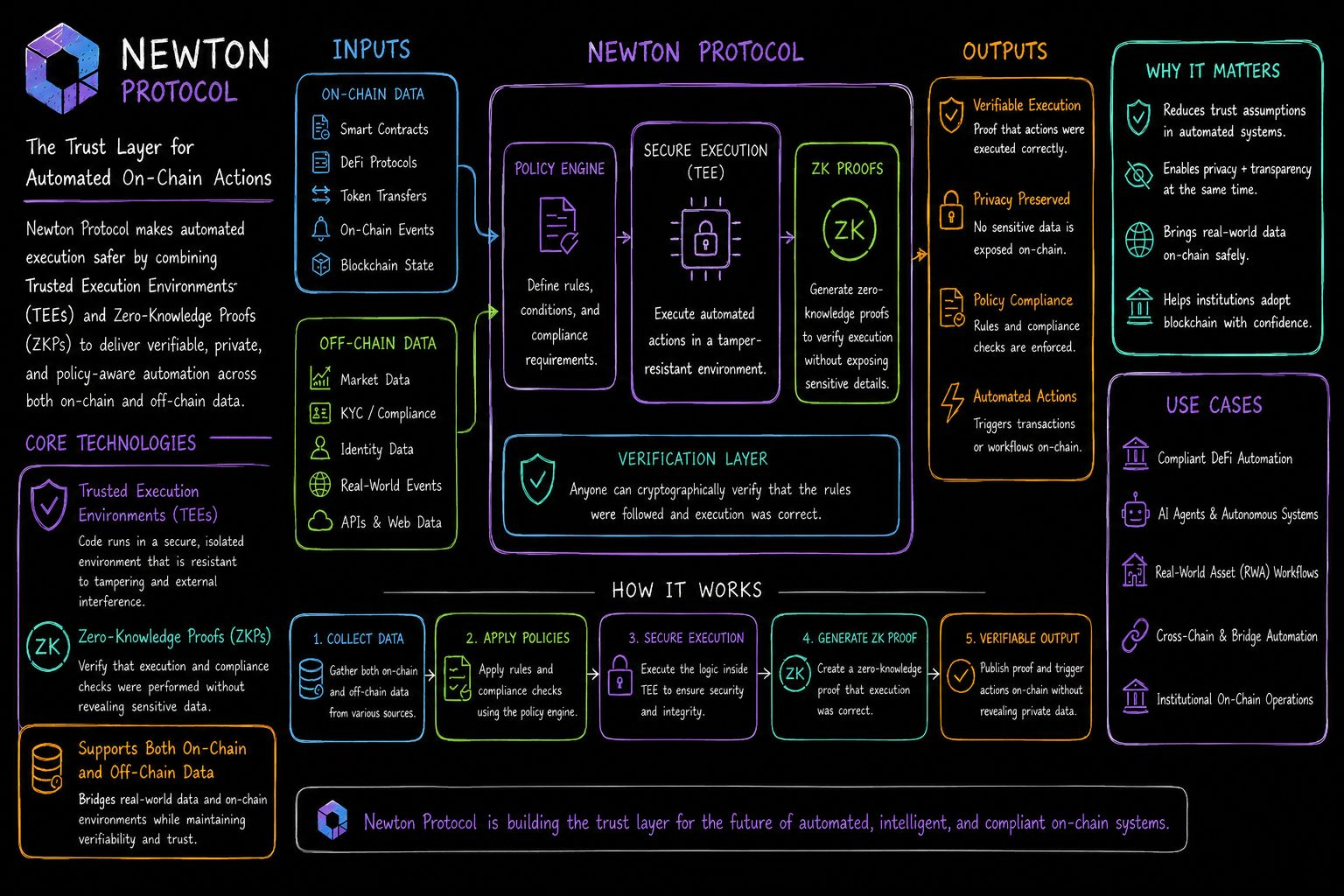
Whenever you introduce a translation layer between two systems, you also introduce another place where something can fail. Not because the idea is flawed, but because real-world environments are always more complicated than documentation or whitepapers.
If Rhinestone is processing transactions every day across different wallets, networks, and account setups, then edge cases will naturally surface. Bugs get discovered, fixes are deployed, and confidence grows over time. That's how reliable infrastructure is built.
If adoption is still limited, though, there may be scenarios that simply haven't been tested yet. Those unknowns don't automatically mean there's a problem—they just mean the infrastructure hasn't faced enough real-world pressure.
That's why I don't think reliability can be judged by architecture alone.
For me, the real indicator will be production usage. A modular execution layer handling thousands of live transactions every day earns trust very differently from one that's only active in a handful of integrations.
The design may already be solid. But long-term confidence comes from proven execution, not diagrams or whitepapers.
I'll be watching transaction history and real adoption more closely than technical promises. In infrastructure, usage is what ultimately validates the design.