Hello Family❤️
If you follow gold or geopolitics, your news feed was probably lit up recently with headlines about China discovering Asia's largest offshore gold deposit. I dove into the reports, official announcements, and expert analysis to separate the facts from the hype. What I found is more than just a lucky strike—it's a clear piece of a much larger national strategy.
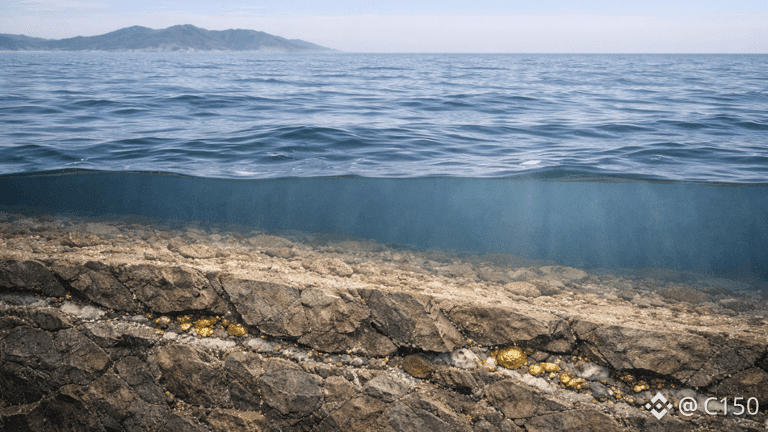
The Headline Discovery: Gold Under the Waves
The core news is verified and significant. In December 2025, Chinese authorities announced a major offshore gold find in the waters near Laizhou City, a part of Shandong Province already famous for its gold. State media reported that this discovery helped push the total gold reserves of the Laizhou region to over 3,900 tonnes.
That's a staggering figure. To put it in perspective, it means this single region now holds roughly one-quarter of China's entire national gold reserves and has cemented its status as the country's top gold resource holder.
The Bigger Prize: A Record-Breaking Find on Land
But here's what really made me look twice—the offshore news somewhat overshadowed an even bigger announcement from just a month earlier. In November 2025, China's Ministry of Natural Resources revealed the discovery of a "super-large" gold deposit in Liaoning Province.
This isn't just another mine. Official reports state it contains an estimated 1,444 tonnes of gold. Experts and financial analysts have been clear: this is the largest single gold deposit discovered in China since 1949. The in-ground value at today's prices? Some estimates put it close to a mind-boggling $192 billion. The government's goal is to turn this single site into a "world-class gold production base.
Why Is China Suddenly Swimming in Gold?
You might wonder, is China just getting incredibly lucky with a drill bit? The truth is more strategic. This is the result of a deliberate, well-funded push.
For the past several years, China has been on a mission to secure its own supply of critical minerals. They've poured nearly $62 billion (450 billion yuan) into mineral exploration since 2021. Finding all this gold isn't an accident; it's the payoff from a massive national investment. Geologically, they're exploring in the right places—regions with a known history of gold formation—but the scale of recent finds points to a systematic, government-driven search.
The "Producer vs. Holder" Puzzle and What It Means
This brings us to the most fascinating part of the story, which really shows China's long game. Look at these two facts side-by-side:
· Fact 1: China is already the world's #1 gold producer, mining hundreds of tonnes every year.
· Fact 2: Despite all that mining, China's official central bank gold holdings (around 2,300 tonnes) have historically been much smaller than other major economies like the United States, Germany, or Italy.
There's a clear gap between what they dig up and what they keep in their national vaults. That's why this discovery phase is so critical. The thousands of tonnes announced in Laizhou and Liaoning are "resource reserves." They're not mined yet; they're a confirmed, bankable resource for the future.
For a nation focused on financial security and de-dollarization, this is perfect. It provides a huge domestic pipeline to feed the central bank's ongoing gold-buying spree (they added another 15 tonnes just in September 2025) without having to buy every ounce on the international market. It’s about building strategic depth from within.
The Bottom Line for Watchers
So, is the news real?
Absolutely. The offshore discovery near Laizhou is a genuine and impressive feat of modern exploration.
But the real story isn't just one underwater deposit. It's about China executing a coherent, well-funded strategy to lock down vast domestic gold resources. They are systematically converting their geological wealth into future financial and strategic security. The discoveries in Laizhou and Liaoning aren't just new mines; they're foundational pieces being laid for China's economic future.