The core accusation is not just that it's 'losing money'.
Author: June
Source: Deep Tide TechFlow
In January 2025, the meme coin market is at its frenzied peak. With U.S. President Trump releasing the TRUMP coin, an unprecedented speculative frenzy has swept in, with the myth of 'hundredfold coins' capturing the market's attention.
At the same time, a lawsuit against the Pump.fun platform is quietly starting.
Fast forward to recent days.
Alon Cohen, co-founder and COO of Pump.fun, has not spoken on social media for over a month. For someone like Alon, who is usually active and always online 'surfing and catching up', this silence is particularly striking. Data shows that the weekly trading volume of Pump.fun has plummeted from a peak of $3.3 billion in January to the current $481 million, a drop of over 80%. Meanwhile, the price of PUMP has fallen to $0.0019, down about 78% from its historical high.
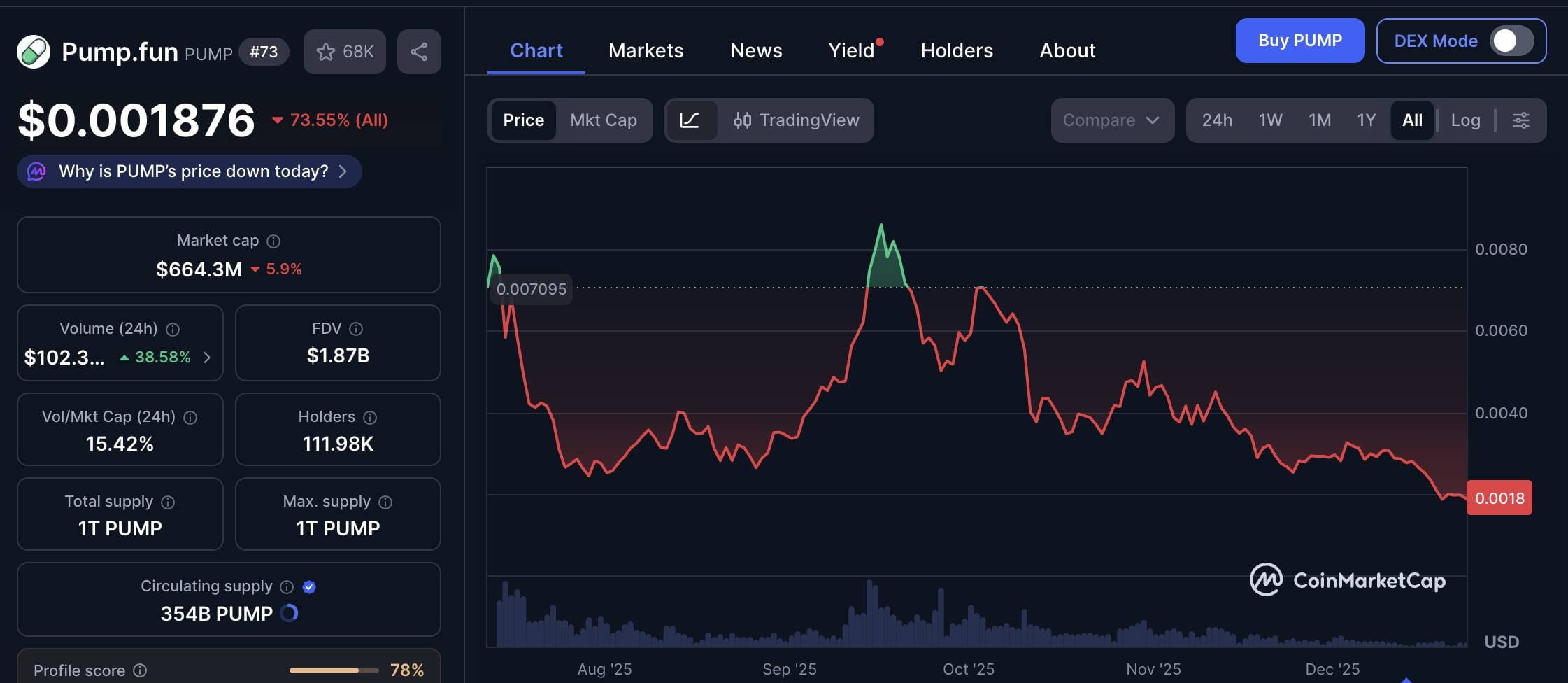
Looking back to July 12, several months ago, the situation was completely different. Pump.fun's public sale was issued at a uniform price of $0.004 per token and sold out within 12 minutes, raising about $600 million, pushing sentiment to a peak.
From the bustling atmosphere at the beginning of the year to the current calm, market attitudes have formed a stark contrast.
Amid all these changes, the only thing that hasn't stopped is the buyback plan. The Pump.fun team continues to carry out the daily buyback plan step by step. As of now, the total buyback amount has reached $216 million, digesting about 15.16% of the circulating supply.
Meanwhile, that lawsuit, which was ignored during the market frenzy, is now quietly expanding.
Everything started with the loss of $PNUT.
The story begins in January 2025.
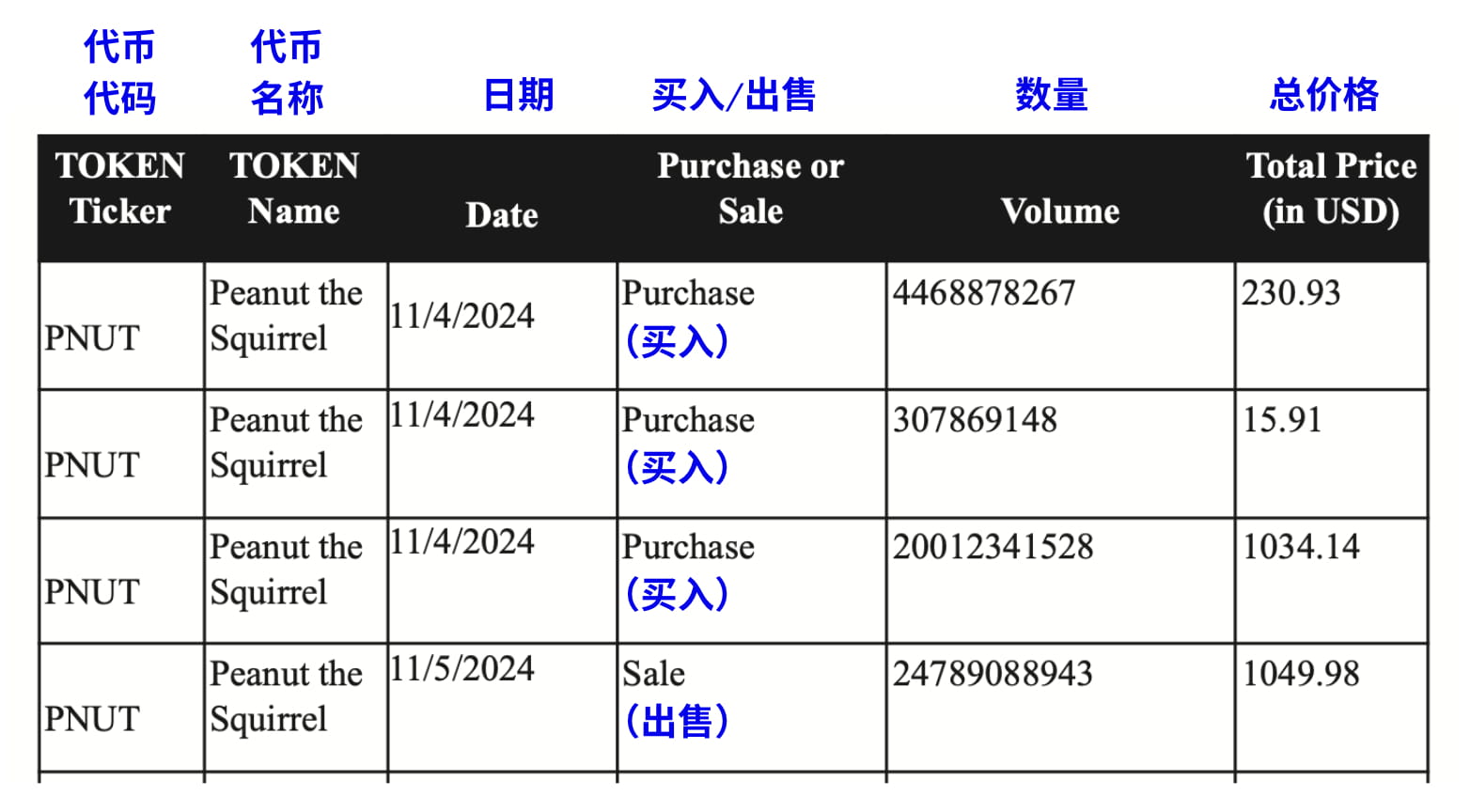
On January 16, investor Kendall Carnahan was the first to file a lawsuit in the Southern District of New York (case number: Carnahan v. Baton Corp.), directly targeting Pump.fun and its three founders. Carnahan's demand was clear: he suffered losses after purchasing the $PNUT token on the platform and accused Pump.fun of selling unregistered securities, violating the U.S. Securities Act of 1933.
According to the lawsuit documents disclosed, the actual loss amount for this investor was only $231.
Just two weeks later, on January 30, another investor, Diego Aguilar, filed a similar lawsuit (case number: Aguilar v. Baton Corp.). Unlike Carnahan, Aguilar purchased a wider variety of tokens, including $FRED, $FWOG, $GRIFFAIN, and several other meme coins issued on the Pump.fun platform. His lawsuit has a broader scope, representing all investors who purchased unregistered tokens on the platform.
At this point, the two cases are proceeding independently, with the defendants being the same group of people:
The operating company of Pump.fun, Baton Corporation Ltd, and its three founders, Alon Cohen (Chief Operating Officer), Dylan Kerler (Chief Technology Officer), and Noah Bernhard Hugo Tweedale (Chief Executive Officer).
The two cases are merged, and a loss of $240,000 makes the chief plaintiff.
The two independent lawsuits quickly caught the court's attention. Judge Colleen McMahon, in charge of the case in the Southern District of New York, identified a problem: both cases target the same group of defendants, the same platform, and the same illegal behavior. Why should they be tried separately?
On June 18, 2025, Judge McMahon directly questioned the plaintiffs' legal team:
Why are there two independent lawsuits targeting the same issue? She asked the lawyers to explain why these two cases should not be merged.
Initially, the plaintiff's lawyers attempted to argue that they could maintain two independent cases, one specifically targeting the $PNUT token and the other targeting all tokens on the Pump.fun platform, and suggested appointing two chief plaintiffs separately.
However, the judge clearly did not buy it. This 'divide and conquer' strategy not only wastes judicial resources but may also lead to contradictory judgments in different cases. The key point is that all plaintiffs face the same core issue, accusing Pump.fun of selling unregistered securities and claiming to be victims of the same fraudulent system.
On June 26, Judge McMahon ruled to formally merge the two cases. At the same time, the judge appointed Michael Okafor, who suffered the largest loss, as the chief plaintiff, according to the provisions of the Private Securities Litigation Reform Act (PSLRA) (according to court records, Okafor lost about $242,000 in transactions on Pump.fun, far exceeding other plaintiffs).
At this point, the originally independent investors have formed a united front.
The focus shifts to Solana Labs and Jito.
Just one month after the case merger, the plaintiffs threw out a bombshell.
On July 23, 2025, the plaintiffs submitted the 'consolidated amended complaint,' dramatically expanding the list of defendants. This time, the focus no longer solely pointed at Pump.fun and its three founders but directly targeted the core participants of the entire Solana ecosystem.
The new defendants include:
Solana Labs, Solana Foundation, and its executives (Solana defendants): The plaintiffs accuse Solana of not merely providing blockchain technology. According to the lawsuit documents, there is close technical coordination and communication between Pump.fun and Solana Labs, far exceeding the typical developer-platform relationship.
Jito Labs and its executives (Jito defendants): The plaintiffs believe that it is Jito's MEV technology that allows insiders to pay extra fees to ensure their transactions are executed first, thus buying tokens before ordinary users and achieving risk-free arbitrage.
The plaintiffs' strategy is clear: they are trying to prove that Pump.fun, Solana, and Jito are not operating independently but have formed a close community of interests. Solana provides blockchain infrastructure, Jito provides MEV tools, and Pump.fun operates the platform, collectively building a seemingly decentralized system that is, in fact, manipulated.
The core accusation is not just as simple as 'losing money.'
Many may think this is just a group of investors acting out of anger after losing money in trading coins. But a careful reading of the hundreds of pages of court documents reveals that the plaintiffs' accusations point to a carefully designed fraud system.
First charge: Sale of unregistered securities
This is the legal basis of the entire case.
The plaintiffs believe that all meme tokens issued on the Pump.fun platform are essentially investment contracts that, according to the Howey Test, meet the definition of securities. However, the defendants have never submitted any registration statements to the U.S. Securities and Exchange Commission for public sale of these tokens, violating Section 5, Section 12(a)(1), and Section 15 of the Securities Act of 1933.
When the platform sold tokens through the 'bonding curve' mechanism, it did not disclose necessary risk information, financial status, or project background to investors, all of which are required information when issuing registered securities.
Note: The Howey Test is a legal standard established by the U.S. Supreme Court in the 1946 SEC v. W.J. Howey Co. case, used to determine whether a specific transaction or scheme constitutes an 'Investment Contract.' If it meets the test criteria, the asset is considered a 'security' and must be regulated by the U.S. Securities and Exchange Commission (SEC) and comply with the registration and disclosure requirements of the Securities Act of 1933 and the Securities Exchange Act of 1934.
Second charge: Operating an illegal gambling enterprise
The plaintiffs define Pump.fun as a 'Meme Coin Casino.' They point out that users investing SOL to purchase tokens are essentially 'betting,' with outcomes largely dependent on luck and market speculation, rather than the actual utility of the tokens. The platform acts as the 'house,' taking a 1% fee from each transaction, just like a casino does.
Third charge: Telecom fraud and false advertising
Pump.fun superficially promotes 'Fair Launch', 'No Presale', and 'Rug-proof', giving the impression that all participants are on the same starting line. But in reality, this is a complete lie.
The lawsuit documents point out that Pump.fun secretly integrated Jito Labs' MEV technology. This means that those who know the 'insider' information and are willing to pay extra 'tips' can use 'Jito bundles' to buy tokens ahead of ordinary users' transaction executions, and then immediately sell at a profit after the price rises, which is known as front-running.
Fourth charge: Money laundering and unlicensed remittance
The plaintiffs accuse Pump.fun of receiving and transferring large amounts of money without obtaining any remittance licenses. The lawsuit documents claim that the platform even assisted the North Korean hacking organization Lazarus Group in laundering funds. A specific case involved hackers issuing a meme token named 'QinShihuang' on Pump.fun, mixing 'dirty money' with legitimate trading funds from ordinary retail investors through the high traffic and liquidity of the Pump.fun platform.
Fifth charge: Complete lack of investor protection
Unlike traditional financial platforms, Pump.fun has no 'Know Your Customer' (KYC) processes, anti-money laundering (AML) protocols, or even the most basic age verification.
The core argument of the plaintiffs can be summarized in one sentence: this is not a normal investment affected by market fluctuations, but a fraudulent system designed from the outset to cause retail investors to lose money while insiders profit.
This expansion means a fundamental shift in the nature of the lawsuit. The plaintiffs are no longer satisfied with accusing Pump.fun of acting alone; instead, they describe it as part of a larger 'criminal network.'
One month later, on August 21, the plaintiffs further submitted the 'RICO case statement,' formally accusing all defendants of constituting a 'racketeering group' that operates a manipulated 'Meme Coin Casino' through the seemingly 'fair launch platform' Pump.fun.
The plaintiffs' logic is clear: Pump.fun does not operate independently; behind it is Solana providing blockchain infrastructure and Jito providing MEV technology tools. The three parties form a close community of interests, collectively defrauding ordinary investors.
But what evidence does the plaintiff actually have to support these accusations? The answer will be revealed months later.
Key evidence, the mysterious informant and chat records.
After September 2025, the nature of the case underwent a fundamental change.
Because the plaintiffs obtained solid evidence.
A 'confidential informant' provided the plaintiff's legal team with the first batch of internal chat records, totaling around 5000 messages. These chat records are said to come from the internal communication channels of Pump.fun, Solana Labs, and Jito Labs, documenting technical coordination and business exchanges between the three parties.
The appearance of this batch of evidence has made the plaintiff party feel like they've struck gold. Previously, all accusations regarding technical collusion, MEV manipulation, and insider trading were still at the level of speculation, lacking direct evidence.
These internal chat records are said to prove the 'conspiracy relationship' among the three parties.
One month later, on October 21, this mysterious informant provided a second batch of documents, with an even more astonishing number exceeding 10,000 chat records and related documents. These materials are said to detail:
How Pump.fun coordinates technical integration with Solana Labs
How Jito's MEV tools are embedded into Pump.fun's trading system
How the three parties discuss how to 'optimize' trading processes (the plaintiffs believe this is a euphemism for market manipulation)
How insiders exploit information advantages for trading
The plaintiffs' lawyers stated in court documents that these chat records 'reveal a carefully designed fraud network,' proving that the relationship between Pump.fun, Solana, and Jito goes far beyond the superficial 'technical partnership.'
Application for the second amended complaint.
Faced with such a vast amount of new evidence, the plaintiffs need time to organize and analyze. On December 9, 2025, the court approved the plaintiffs' request to submit the 'second amended complaint,' allowing them to incorporate this new evidence into the lawsuit.
But here comes the problem: over 15,000 chat records need to be reviewed, filtered, translated (some may be non-English content), and analyzed for their legal significance, which is a massive workload. Coupled with the upcoming Christmas and New Year holidays, the plaintiff's legal team clearly lacks enough time.
On December 10, the plaintiffs submitted a motion to the court requesting an extension of the deadline for submitting the 'second amended complaint.'
Just one day later, on December 11, Judge McMahon approved the extension request. The new deadline was set for January 7, 2026. This means that after the New Year, a 'second amended complaint' possibly containing more explosive accusations will be presented in court.
Case Status
As of now, this lawsuit has been ongoing for nearly a year, but the real battle has just begun.
On January 7, 2026, the plaintiffs will submit the 'second amended complaint' containing all new evidence, at which point we will see what those 15,000 chat records reveal. Meanwhile, the defendants have been surprisingly quiet. Pump.fun co-founder Alon Cohen has not spoken on social media for over a month, and executives from Solana and Jito have also made no public response to the lawsuit.
Interestingly, despite the expanding scale and influence of this lawsuit, the cryptocurrency market seems unconcerned. The price of Solana has not experienced drastic fluctuations due to the lawsuit, and while the price of the $PUMP token continues to decline, it is more due to the collapse of the overall meme coin narrative rather than the influence of the lawsuit itself.
Epilogue
This lawsuit, triggered by losses in trading meme coins, has evolved into a class action lawsuit against the entire Solana ecosystem.
The case has already surpassed the scope of 'a few investors losing money and seeking justice.' It touches on the core issues of the cryptocurrency industry: Is decentralization real or a carefully packaged illusion? Is a fair launch truly fair?
However, many key issues remain unresolved:
Who is that mysterious informant? A former employee? A competitor? Or an undercover agent from the regulatory agency?
What exactly is contained in those 15,000 chat records? Is it conclusive conspiracy evidence or simply normal business communication taken out of context?
How will the defendants defend themselves?
In 2026, with the submission of the 'second amended complaint' and the progress of the case, we may get some answers.