

Original Title: Stablecoin Payments from the Ground Up
Original Source: Artemis
Original Compilation: Deep Tide Techflow
This report empirically analyzes the usage of stablecoin payments, covering transactions between individuals (P2P), businesses (B2B), and between individuals and businesses (P2B/B2P).
This report conducts an empirical analysis of stablecoin payment usage, studying transaction patterns between individuals (P2P), businesses (B2B), and between individuals and businesses (P2B/B2P). We utilize the Artemis dataset, which provides metadata for wallet addresses, including geographic location estimates, institutional ownership tags, and smart contract identifiers. By examining the characteristics of sender and receiver wallets, we classified the transactions. The analysis focuses on the Ethereum network, which hosts approximately 52% of the global stablecoin supply.
We primarily studied two mainstream stablecoins: USDT and USDC, which together account for 88% of the market share. Despite a significant increase in the adoption and regulatory attention to stablecoins over the past year, one key question remains unanswered: How does the actual use of stablecoins in payments compare to other activities? This report aims to reveal the main drivers of stablecoin payment adoption and provide insights for forecasting future trends.
1. Background
In recent years, the adoption rate of stablecoins has significantly increased, with supply reaching $200 billion, and the monthly total of original transfers has exceeded $4 trillion. Although blockchain networks provide fully transparent transaction records, and all transactions can be analyzed, conducting transaction and user analysis remains challenging due to the anonymity of these networks and the lack of information regarding the purposes of transactions (e.g., domestic payments, cross-border payments, trading, etc.).
Moreover, using smart contracts and automated transactions on networks like Ethereum further complicates the analysis, as a single transaction may involve interaction with multiple smart contracts and tokens. Therefore, an unresolved key issue is how to assess the current use of stablecoins in the payment space compared to other activities (such as trading). While many researchers are working to address this complex issue, this report aims to provide additional methods to evaluate the use of stablecoins, particularly for payment purposes.
Overall, there are two main methods for assessing stablecoin usage (especially for payment purposes).
The first method is the filtering approach, which uses raw blockchain transaction data and employs filtering techniques to remove noise, thereby providing a more accurate estimate of stablecoin payment usage.
The second method involves surveying major stablecoin payment providers and estimating stablecoin activity based on their disclosed payment data.
Visa, in collaboration with Allium Labs, developed the Visa Onchain Analytics Dashboard using the first approach. They reduced noise in the raw data through filtering techniques to provide clearer information on stablecoin activity. The study showed that after filtering the raw data, the total monthly stablecoin transaction volume dropped from approximately $5 trillion (total transaction volume) to $1 trillion (adjusted transaction volume). If only retail transaction volume (transactions with amounts below $250) is considered, the transaction volume is only $6 billion. We adopted a filtering method similar to that of the Visa Onchain Analytics Dashboard, but our approach focuses more on explicitly labeling transactions for payment purposes.
The second approach is based on company survey data, which has been applied in the (Fireblocks 2025 Stablecoin Status Report) and (Zero to Stablecoin Payments Report). These two reports utilize disclosure information from major companies in the blockchain payment market to estimate the direct use of stablecoins in payments. Specifically, the (Zero to Stablecoin Payments Report) provides an overall estimate of stablecoin payment transaction volume and categorizes these payments into B2B (business to business), B2C (business to consumer), P2P (peer to peer), etc. The report indicates that as of February 2025, the annual settlement total was approximately $72.3 billion, the majority of which was B2B transactions.
The main contribution of this study lies in applying data filtering methods to estimate the use of stablecoins in on-chain payments. The findings reveal the usage of stablecoins and provide more accurate estimates. Additionally, we offer researchers guidance on processing raw blockchain data using data filtering methods, reducing noise, and improving estimates.
2. Data
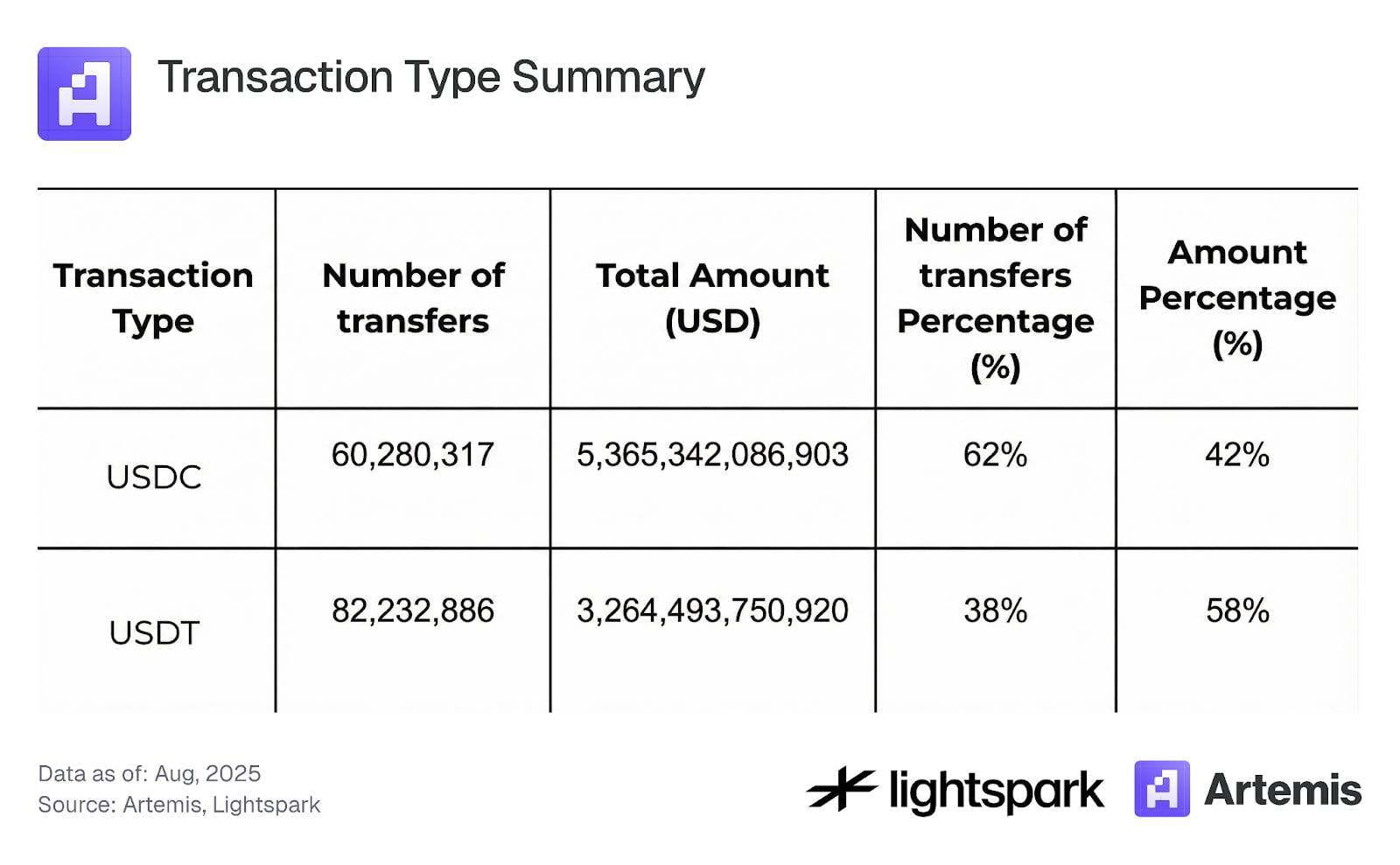
Our dataset covers all stablecoin transactions on the Ethereum blockchain from August 2024 to August 2025. The analysis focuses on transactions involving the two main stablecoins USDC and USDT. These two stablecoins were chosen due to their high market share and strong price stability, which reduces noise in the analysis process. We only focus on transfer transactions, excluding minting, burning, or cross-chain bridge transactions. Table 1 summarizes the overall situation of the dataset used in our analysis.
Table 1: Summary of transaction types
3. Methods and Results
In this section, we detail the methods used to analyze the usage of stablecoins, focusing on payment transactions. First, we filter the data by distinguishing transactions involving interactions with smart contracts from those representing transfers between EOAs (external accounts), classifying the latter as payment transactions. This process is detailed in Section 3.1. Subsequently, Section 3.2 explains how to use the EOA account label data provided by Artemis to further classify payment transactions into P2P, B2B, B2P, P2B, and internal B-type transactions. Finally, Section 3.3 analyzes the concentration of stablecoin transactions.
3.1 Stablecoin Payments (EOA) vs. Smart Contract Transactions
In the decentralized finance (DeFi) space, many transactions involve interactions with smart contracts and combine multiple financial operations within the same transaction, such as exchanging one token for another through multiple liquidity pools. This complexity makes it even more challenging to analyze the use of stablecoins specifically for payment purposes.
To simplify the analysis and enhance the capability to label payment transactions on stablecoin blockchain, we define stablecoin payments as any ERC-20 stablecoin transaction from one EOA address to another EOA address (excluding minting and burning transactions). Any transactions not labeled as payments will be classified as smart contract transactions, including all transactions involving interaction with smart contracts (mainly DeFi transactions).
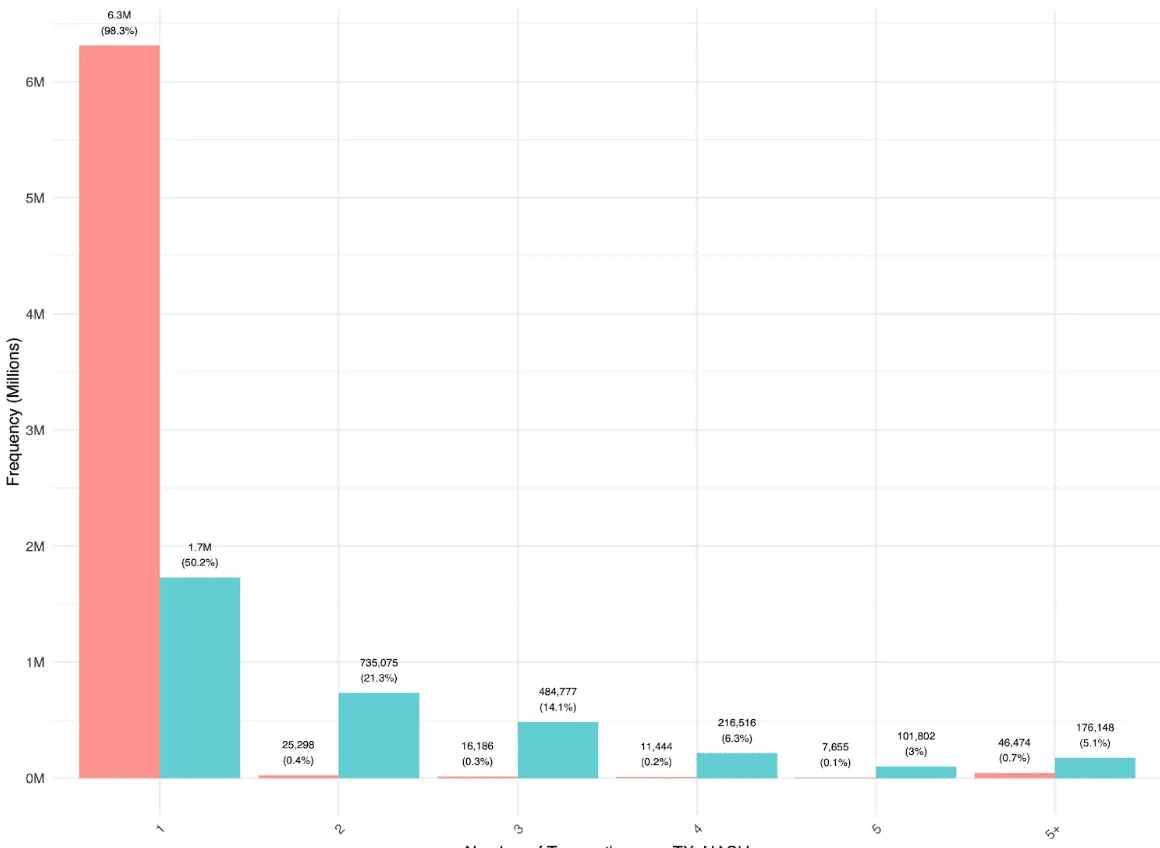
Figure 1 shows that most payments (EOA-EOA) between users are completed directly, with each transaction hash corresponding to a single transfer. Some multiple EOA-EOA transfers within the same transaction hash are primarily completed through aggregators, indicating that the use of aggregators in simple transfers remains relatively low. In contrast, the distribution of smart contract transactions is different, containing more multiple transfer transactions. This suggests that in DeFi operations, stablecoins often flow between different applications and routers before eventually returning to EOA accounts.
Figure 1:
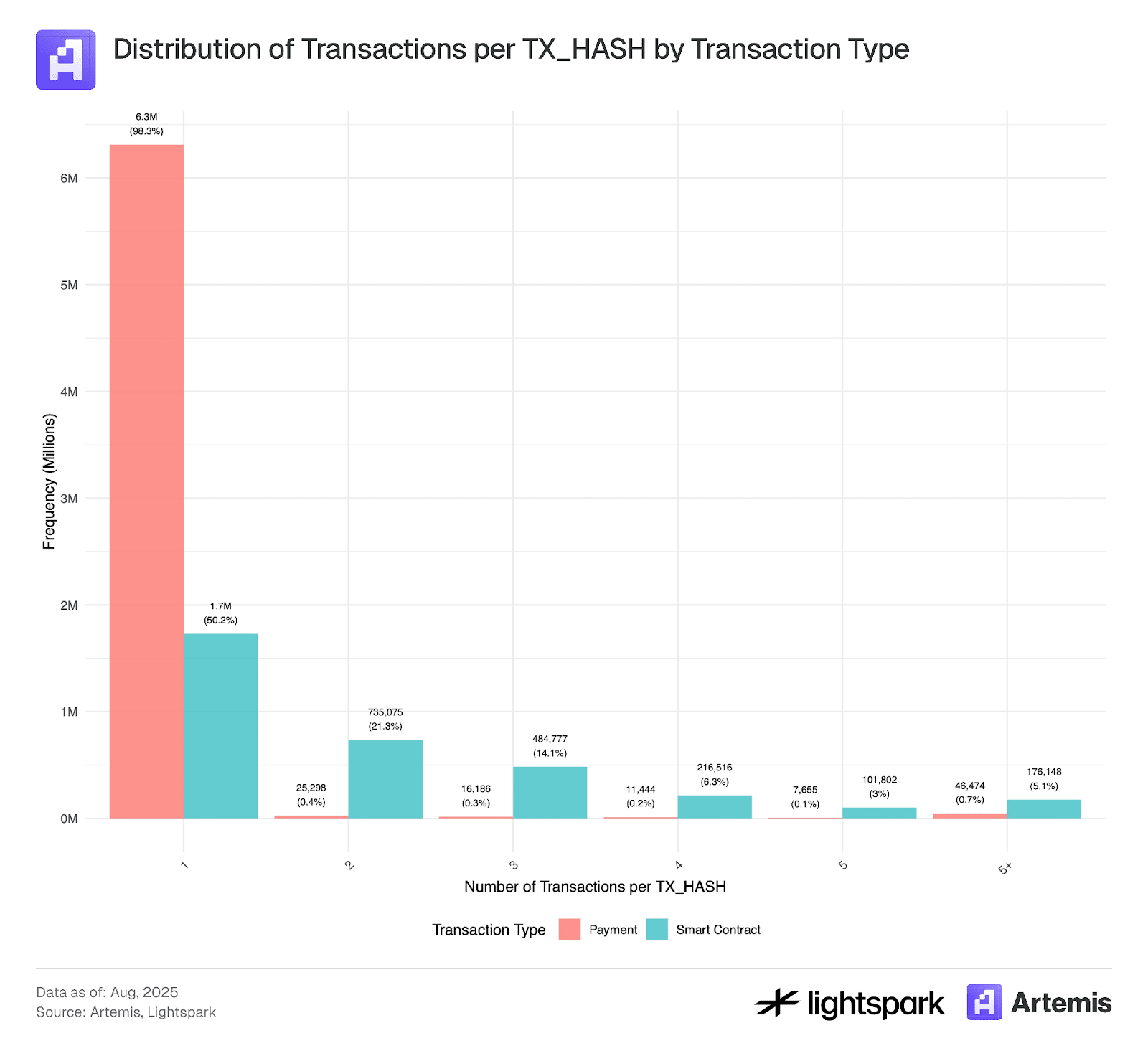
*The sample data for this analysis covers transactions from July 4, 2025, to July 31, 2025.
Table 2 and Figure 2 show that, in terms of transaction count, the ratio of payments (EOA-EOA) to smart contract transactions (DeFi) is approximately 50:50, while smart contract transactions account for 53.2% of transaction volume. However, Figure 2 indicates that the volatility of transaction volume (total transfer amount) is greater than that of transaction count, suggesting that the fluctuations are mainly driven by large EOA-EOA transfers from institutions.
Table 2: Summary of transaction types
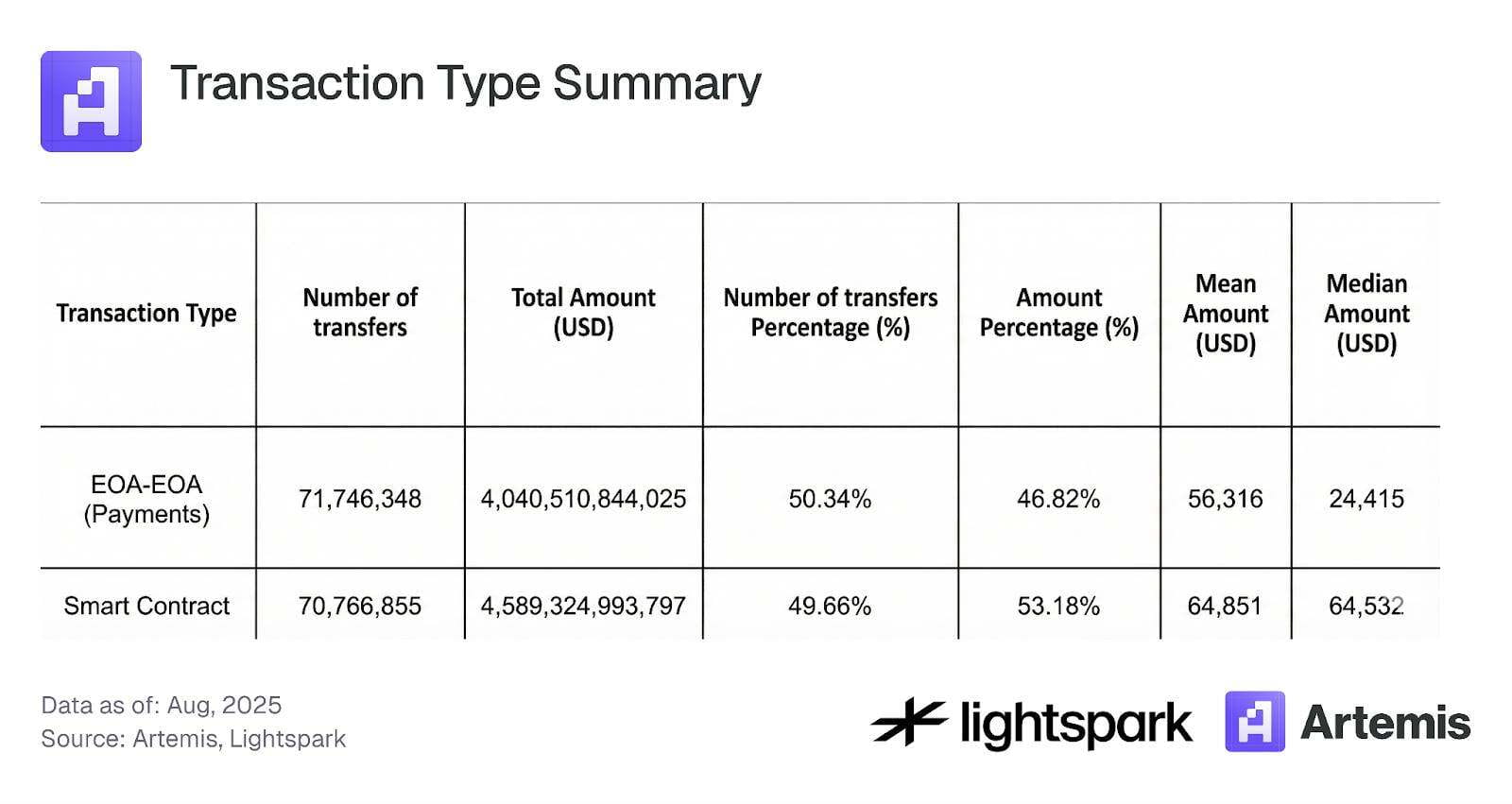
Figure 2:
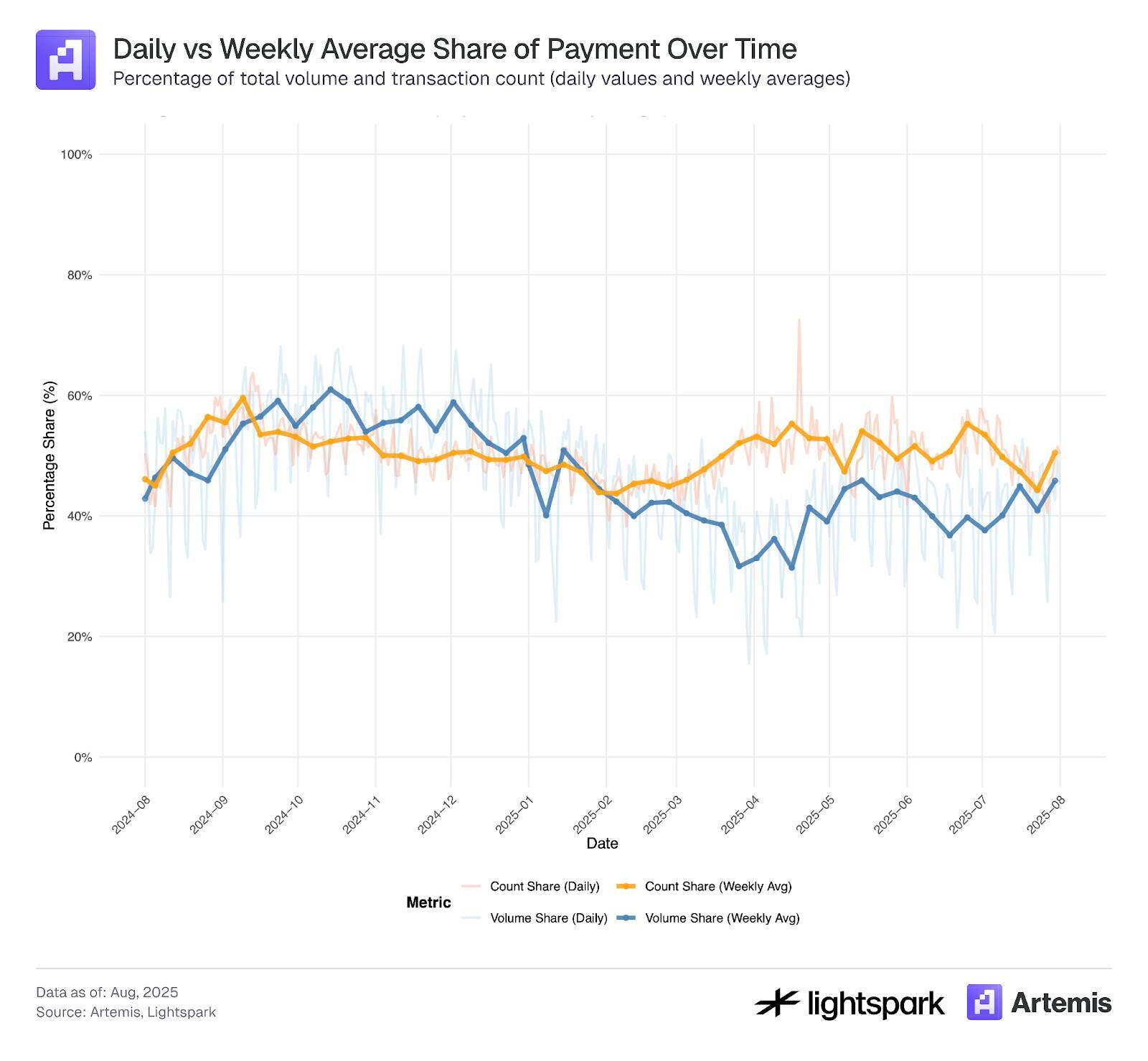
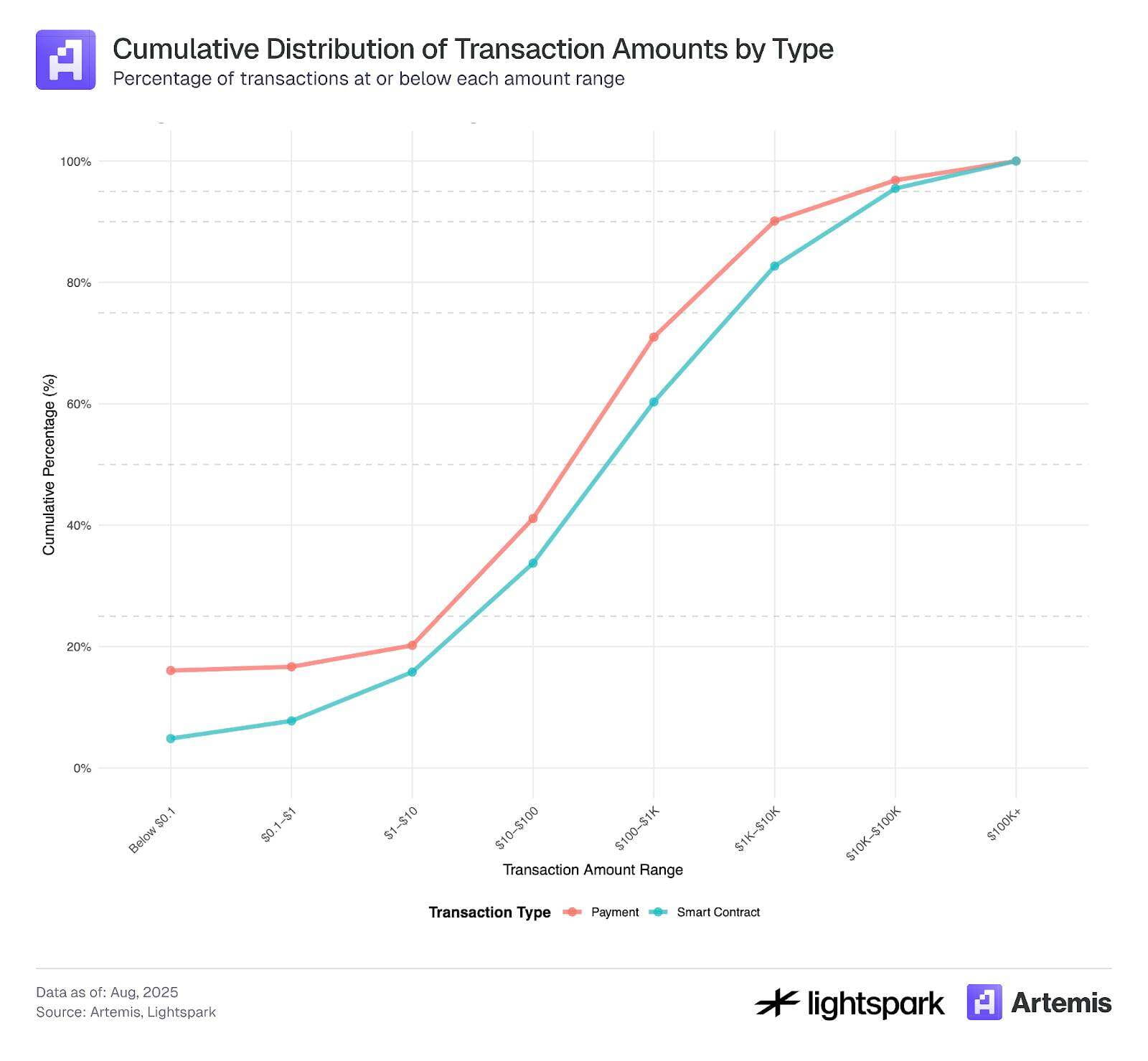
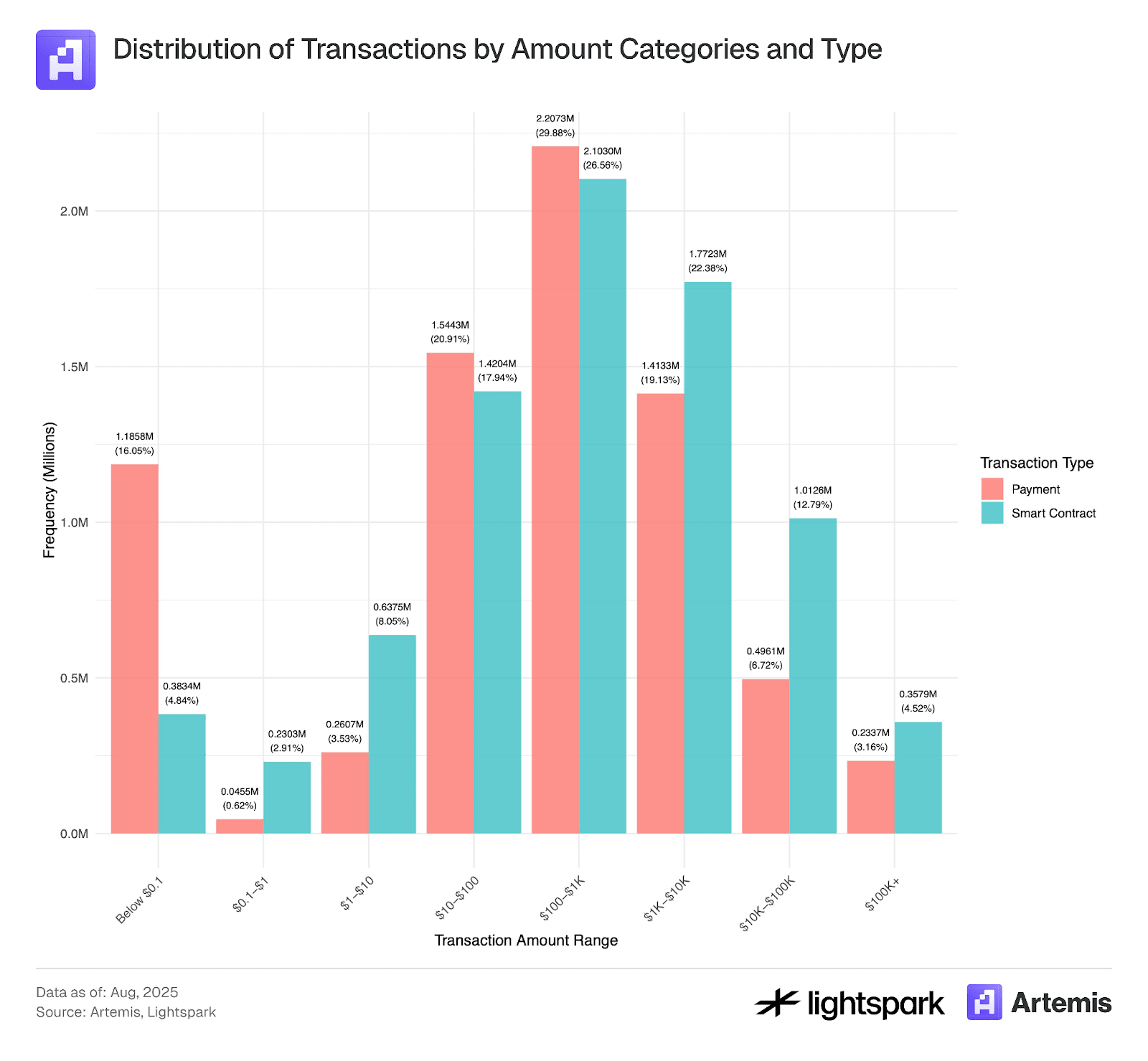
Figure 3 examines the distribution of transaction amounts for payments (EOA-EOA) vs. smart contract transactions. The amount distributions for payment transactions and smart contract transactions are both similar to a heavy-tailed normal distribution, with an average of around $100 to $1,000.
However, transactions with amounts below $0.1 show a significant peak, which may suggest the presence of bot activity or manipulation related to false trading activities and wash trading, consistent with the descriptions by Halaburda et al. (2025) and Cong et al. (2023).
Due to Ethereum's gas fees typically exceeding $0.1, transactions below this threshold require further scrutiny and may be excluded from the analysis.
Figure 3:
The data sample used in this analysis covers transaction records from July 4, 2025, to July 31, 2025.
3.2 Payment Types
By utilizing the label information provided by Artemis, payment transactions between two EOAs (external accounts) can be further analyzed. Artemis provides labeling information for many Ethereum wallet addresses, allowing for the identification of wallets owned by institutions (e.g., Coinbase). We categorized payment transactions into five types: P2P, B2B, B2P, P2B, and internal B-type. Below are detailed descriptions of each category.
P2P Payments:
P2P (peer-to-peer) blockchain payments refer to transactions that transfer funds directly from one user to another via blockchain networks. In account-based blockchains (such as Ethereum), such P2P transactions are defined as the process of transferring digital assets from one user's wallet (EOA account) to another user's EOA wallet. All transactions are recorded and verified on the blockchain without the involvement of intermediaries.
Main Challenges:
Identifying whether transactions between two wallets in the account system actually occur between two independent entities (i.e., individuals rather than companies) and correctly classifying them as P2P transactions is a major challenge. For example, transfers between a user's own accounts (i.e., Sybil accounts) should not be counted as P2P transactions. However, if we simply define all transactions between EOAs (external accounts) as P2P transactions, we may incorrectly classify such transfers as P2P.
Another issue arises when an EOA account is owned by a company, such as a centralized exchange platform (CEX, like Coinbase); this EOA wallet may not actually be owned by a real individual. In our dataset, we are able to add labels for many institutional and corporate EOA wallets; however, due to incomplete labeling information, some EOAs owned by companies but not recorded in our dataset may be incorrectly labeled as personal wallets.
Finally, this method fails to capture blockchain P2P payments conducted through intermediary institutions—also known as the "stablecoin sandwich" model. In this model, funds are transferred between users through intermediaries that utilize blockchain for settlement. Specifically, fiat currency is first sent to the intermediary, which converts it to cryptocurrency, and then the funds are transferred through the blockchain network, ultimately being converted back to fiat by the receiving intermediary (which can be the same or a different intermediary). The blockchain transfer serves as the "middle layer" of the "sandwich," while the conversion of fiat constitutes the "outer layer." The main challenge in identifying these transactions lies in the fact that they are executed by intermediaries, which may bundle multiple transactions together to reduce gas fees. Thus, some key data (such as exact transaction amounts and the number of users involved) is only available on the intermediary's platform.
B2B Payments:
Business-to-Business (B2B) transactions refer to electronic transfers from one business to another via blockchain networks. In our dataset, stablecoin payments refer to transfers between two known institutional EOA wallets, such as a transfer from Coinbase to Binance.
Internal B payments:
Transactions between two EOA wallets of the same institution are labeled as internal B-type transactions.
P2B (or B2P) Payments:
Person-to-Business (P2B) or Business-to-Person (B2P) transactions refer to electronic transfers between individuals and businesses, with transactions potentially being bidirectional.
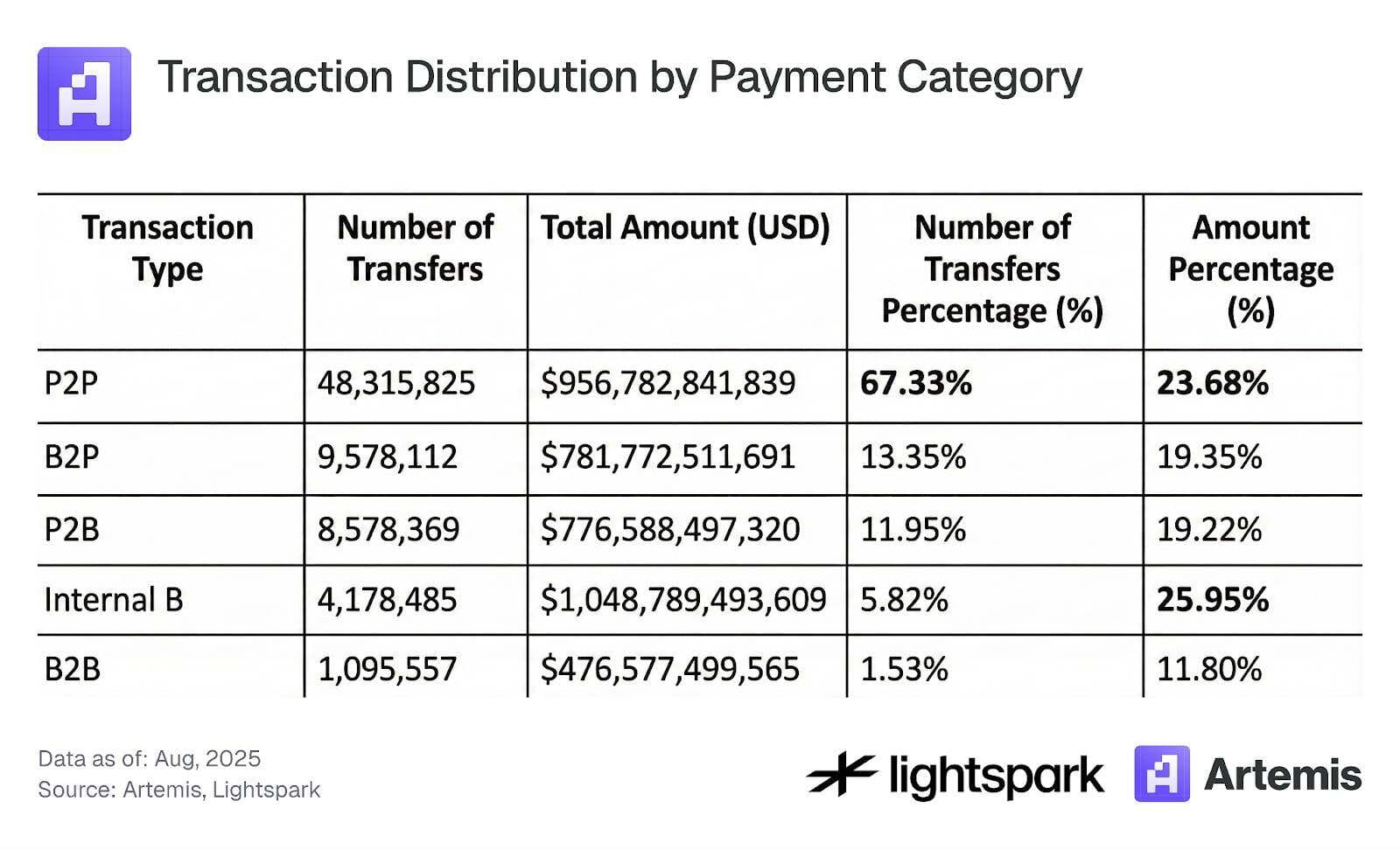
Through this labeling method, we analyzed payment data (limited to EOA-EOA transfers), with the main results summarized in Table 3. The data shows that 67% of EOA-EOA transactions fall into the P2P category, but they account for only 24% of the total payments. This result further indicates that P2P users tend to have lower transfer amounts compared to institutions. Additionally, one of the categories with the highest payment transaction volume is internal B-type, indicating that transfers within the same organization constitute a large proportion. Exploring the specific implications of internal B-type transactions and how to account for them in payment activity analysis remains an interesting area for research.
Table 3: Distribution of transactions by payment category
Finally, Figure 4 shows the cumulative distribution function (CDF) of transaction amounts segmented by each payment category. From the CDF, it is clear that there are significant differences in the distribution of transaction amounts across different categories. Most transactions in EOA-EOA accounts with amounts below $0.1 are of the P2P type, further suggesting that these transactions may be more driven by bots and manipulated wallets rather than initiated by institutions labeled in our dataset. Additionally, the CDF of P2P transactions further supports the notion that most transaction amounts are relatively small, while those labeled as B2B and internal B-type transactions show significantly higher amounts. Finally, the CDF of P2B and B2P transactions lies between P2P and B2B.
Figure 4:
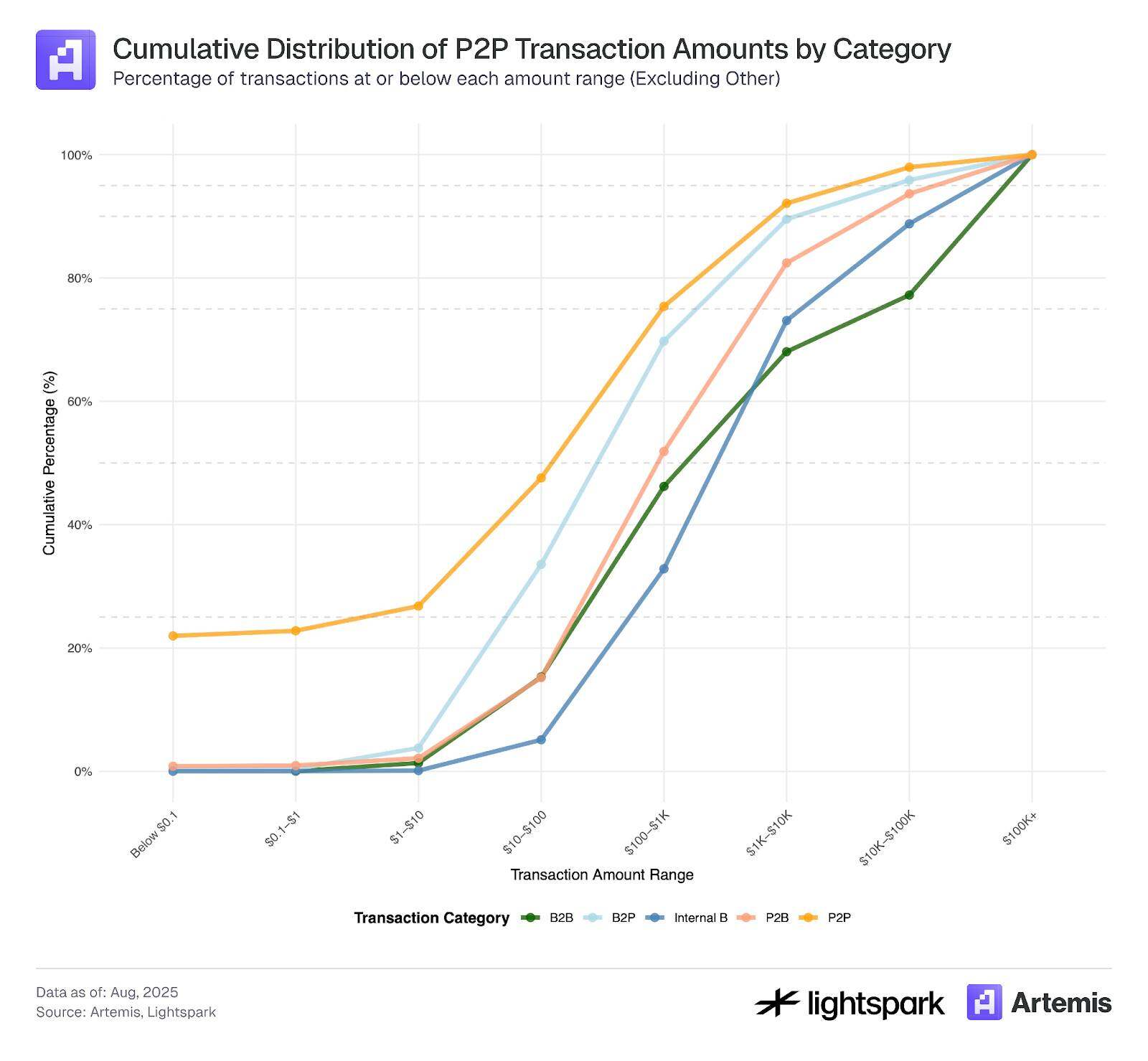
The sample data for this analysis covers transaction records from July 4, 2025, to July 31, 2025.
Figures 5 and 6 illustrate the trends over time for each payment category.
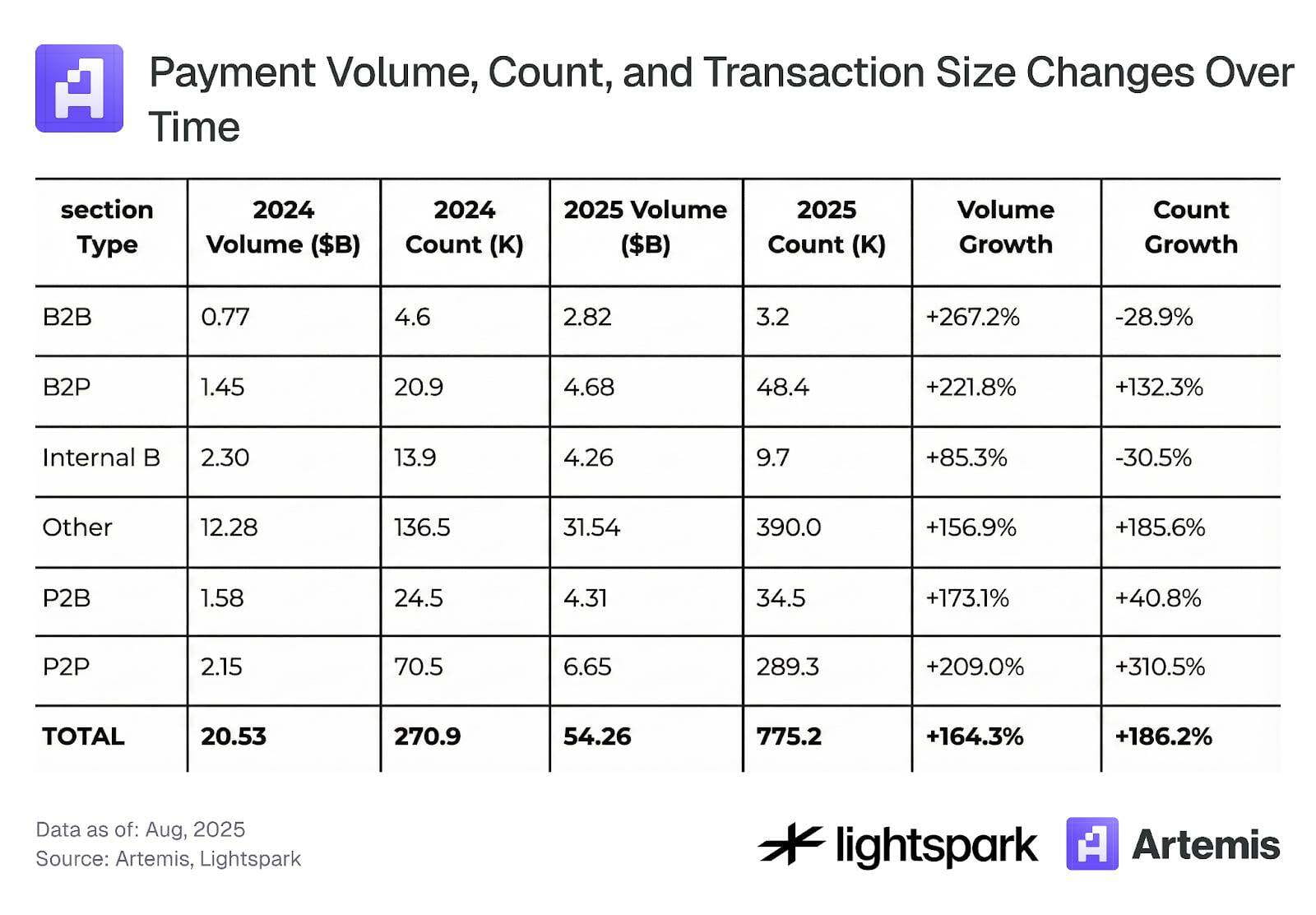
Figure 5 focuses on weekly calculations, showing that the payment transaction volume across all categories exhibits a consistent adoption trend and growth in weekly transaction volume. Table 4 further summarizes the overall changes from August 2024 to August 2025.
Additionally, Figure 6 shows the payment differences between weekdays and weekends, clearly indicating that the payment transaction volume decreases on weekends. Overall, the usage of payment transactions across all categories shows a growing trend over time, both on weekdays and weekends.
Figure 5:
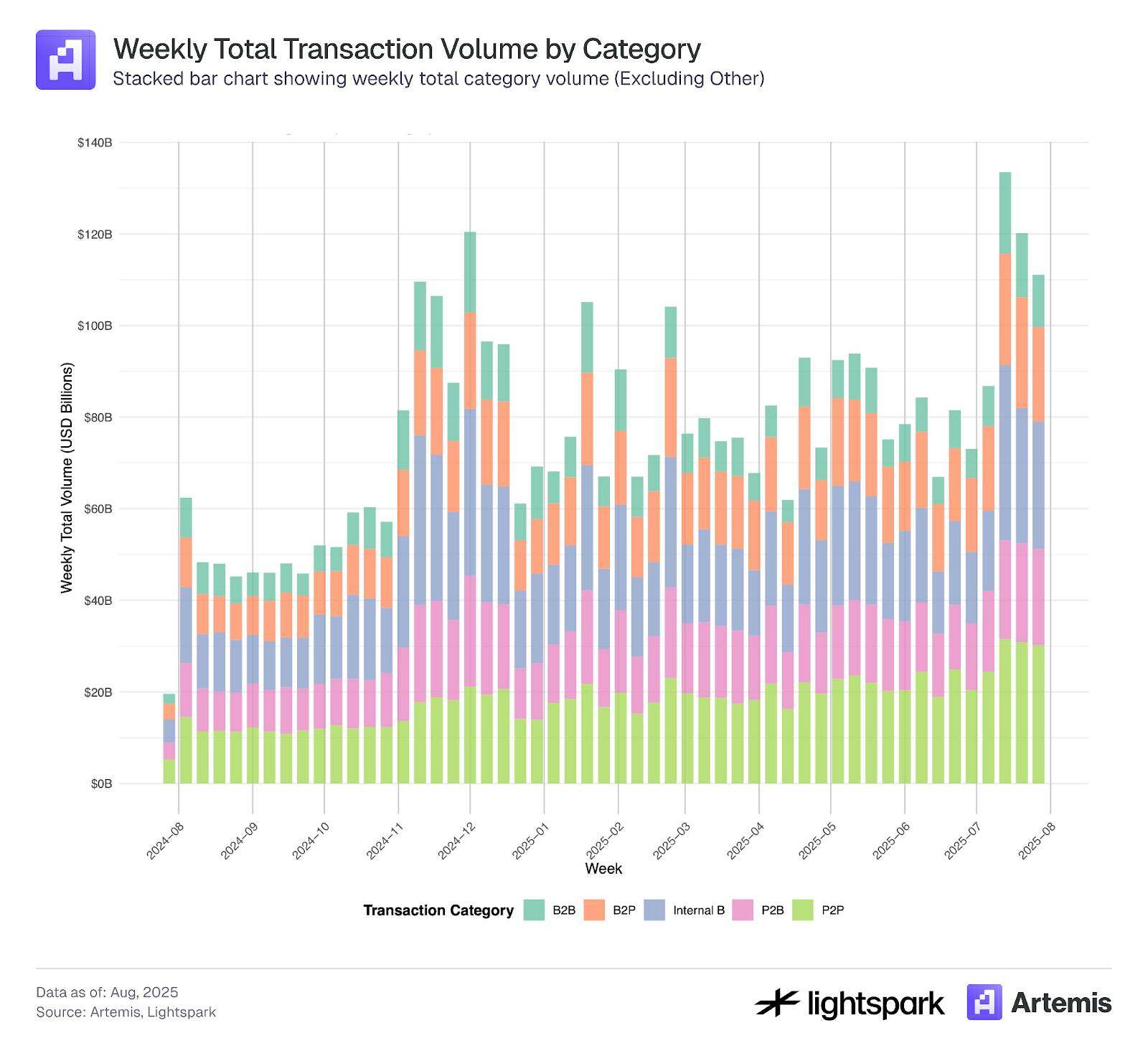
Figure 6:
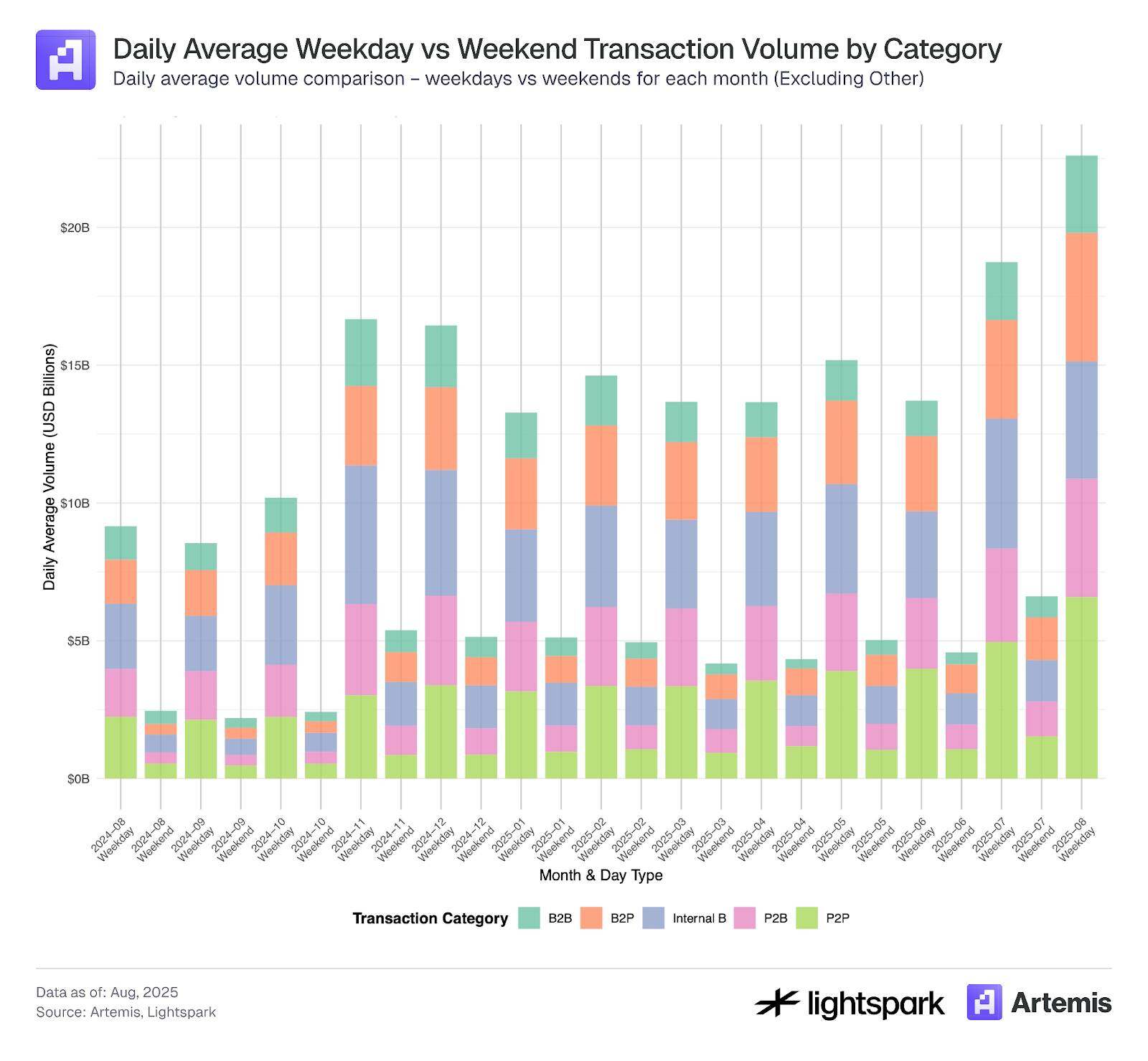
Table 4: Changes in payment volume, transaction count, and transaction amounts over time
3.3 Concentration of Stablecoin Transactions
In Figure 9, we calculate the concentration of major sending wallets for stablecoins sent through the Ethereum blockchain. Clearly, the majority of stablecoin transfer volume is concentrated in a few wallets. In our sample period, the top 1,000 wallets contributed approximately 84% of the transaction volume.
This indicates that while DeFi and blockchain are designed to support and promote decentralization, they still exhibit a high degree of centralization in some respects.
Figure 9:
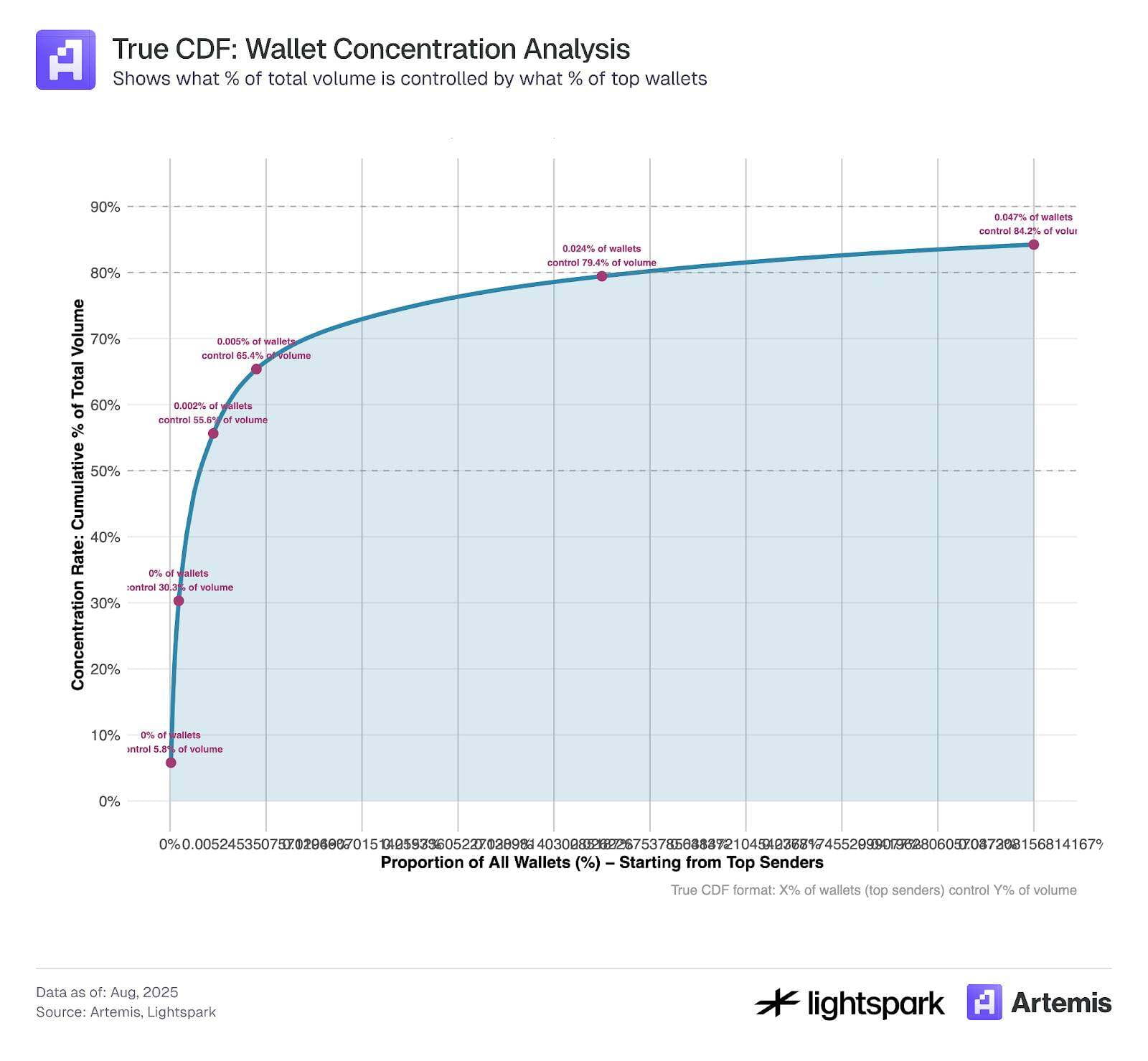
The data sample used in this analysis covers transaction records from July 4, 2025, to July 31, 2025.
4. Discussion
It is evident that the adoption rate of stablecoins is continuously increasing over time, with their transaction volume and transaction count more than doubling between August 2024 and August 2025. Estimating the use of stablecoins in payments is a challenging task, and an increasing number of tools are being developed to help improve this estimate. This study utilizes the labeling data provided by Artemis to explore and estimate the use of stablecoin payments recorded on the blockchain (Ethereum).
Our estimates indicate that stablecoin payments account for 47% of the total transaction volume (35% if internal B-type transactions are excluded). Given our relatively few restrictions on payment classification (mainly based on EOA-EOA transfers), this estimate can be viewed as an upper limit. However, researchers can further apply filtering methods based on their research objectives, such as upper and lower limits on transaction amounts. For instance, adding a minimum amount limit of $0.1 can exclude low-value transaction manipulations mentioned in Section 3.1.
In Section 3.2, by using Artemis label data, we further classified payment transactions into P2P, B2B, P2B, B2P, and internal B-type transactions. We found that P2P payments accounted for only 23.7% of the total payment transaction volume (all raw data) or 11.3% (excluding internal B-type transactions). Previous research indicated that P2P payments accounted for about 25% of stablecoin payments, and our results are comparable.
Finally, in Section 3.3, we observed that, in terms of transaction volume, most stablecoin transactions are concentrated in the top 1,000 wallets. This raises an interesting question: Is the use of stablecoins developing as a payment tool driven by intermediaries and large companies, or is it evolving as a settlement tool for P2P transactions? Time will reveal the answer.
References
<1> Yaish, A., Chemaya, N., Cong, L. W., & Malkhi, D. (2025). Inequality in the Age of Pseudonymity. arXiv preprint arXiv:2508.04668.
<2> Awrey, D., Jackson, H. E., & Massad, T. G. (2025). Stable Foundations: Towards a Robust and Bipartisan Approach to Stablecoin Legislation. Available at SSRN 5197044.
<3> Halaburda, H., Livshits, B., & Yaish, A. (2025). Platform building with fake consumers: On double dippers and airdrop farmers. NYU Stern School of Business Research Paper Forthcoming.
<4> Cong, L. W., Li, X., Tang, K., & Yang, Y. (2023). Crypto wash trading. Management Science, 69(11), 6427-6454.
Original link

