


Original text: dealing with loss
Author: Scimitar Capital Partner thiccy
Translated by: Zombit
2025 is another year of extreme volatility and incredible challenges, yet many people still lose money in trading. This article is not written for those who consistently incur losses, but for those who originally had the capability to profit in the long term, yet still found themselves giving back a significant portion of their gains to the market this season.
One of the most painful things in life is to watch months or even years of hard work vanish in an instant. In Greek mythology, Sisyphus was cursed to forever push a huge boulder up a hill, but every time he was about to reach the top, the boulder would roll back down. This punishment is cruel because it precisely strikes at the core of the human experience.
Trading is just like that. Unlike most professions, trading has no checkpoints. A single wrong decision is enough to ruin an entire career. This cruelty has driven many people to despair.
 When the boulder rolls down again, people usually have two reactions
The first type of person chooses to add to their position, trying to win it back all at once.
They become more aggressive in trading, trying to regain losses in a way similar to 'Martingale'. As long as they can quickly break even, they do not have to face emotional trauma. This method often succeeds for a time—and that is precisely where it is most dangerous. Because it reinforces a behavior pattern that is mathematically destined to zero you out.
The second type of person chooses to burn out completely and exit directly.
These people usually have accumulated some assets, are not in want, and the risks and rewards no longer seem asymmetric. They tell themselves that the market no longer has an advantage, or that these markets will eventually disappear. By leaving, they essentially execute themselves from the market.
Both reactions are understandable, but they are both blunt instruments and do not address the real problem.
The real problem is: your risk management system has a flaw
Most people overestimate their risk management abilities. In fact, risk management itself is not an unsolved problem—the math has already made it clear. The real difficulty lies not in 'not knowing what to do', but in:
"Doing what needs to be done, even under emotion, ego, pressure, and fatigue."
Keeping behavior consistent with intention is one of the most difficult things to do as a human. The market will mercilessly expose all the discrepancies between you and reality.
So, after a loss has occurred, how do you get out of it?
Step 1: You must acknowledge that this is not bad luck, nor is it unfair.
This loss is an inevitable result of a weakness in your system. If you do not precisely identify and fix this issue, it will definitely happen again.
Step 2: You must fully accept your current net asset level.
Do not anchor to past historical highs anymore. The impulse to 'make the money back' is one of the deadliest instincts in the market. Step away from the screen. Be grateful for how far you have come today. You are still alive. You are still in the game. You are not trying to 'make it back', you are simply trying to 'keep making money'.
Consider this loss as tuition paid to the market
The market has revealed a systematic flaw to you. You will eventually learn this lesson. Thank goodness you are learning it now, rather than in the future at higher stakes. If you do this right, you will look back and be grateful for this moment. Character is forged in hell.
Precisely identify the reasons for failure
For most people, the reasons are usually a combination of the following:
Position is too large
No preset stop loss before entering
Stop loss was not executed after being triggered
By setting strict, uncompromising rules for risk and stop loss, you can avoid the vast majority of catastrophic losses. You must constantly remind yourself:
"The only thing that can prevent the boulder from rolling back down the valley is these rules."
They are the only barrier between you and the torment, self-blame, and disgust of the present moment. Without rules, you are nothing.
Allow yourself to fully mourn this loss. Yell, destroy something. Release the emotions instead of letting them linger in your body. What truly matters is: you must guide this pain with extreme precision. If trauma is not transformed into structure, it will surely repeat.
This applies not only to trading but also to all losses in life.
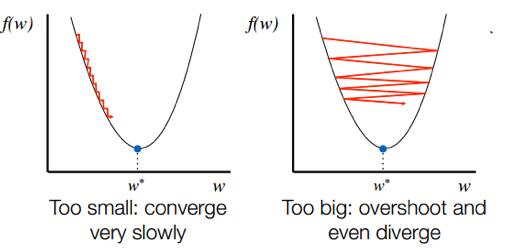
The common reactions mentioned earlier are ineffective because they are too blunt, often introducing new externalities while trying to solve one problem. If you cannot recover from loss in a delicate and precise way, you will be like a gradient descent algorithm with too large a step size, forever oscillating around the optimal solution without converging.
 After losing a battle, Napoleon would immediately begin rebuilding
A failure is only fatal when it undermines your ability to continue fighting. The primary task after defeat is to ensure this weakness is not exploited again and to quickly return to your best state.
You do not seek redemption, you do not seek revenge, you do not self-soothe, and you do not harbor resentment. You must act like a machine. Repair, rebuild, and ensure this mistake never happens again. Every failure you survive will ultimately become a moat in your system—while others will have to learn these lessons in their own way.

Such losses are the material that shapes a person. Be grateful for them. They are there to teach you something. This loss does not happen without meaning. Allow yourself to feel the pain, but transform the torment into a structure that ensures it never happens again. Once you find the right posture, the path to infinite compounding will become inevitable.
Good luck.
Source