

Prediction markets aggregate diverse information through price-based trading, responding quickly to changes in inflation, with average errors about 40% lower than Wall Street analysts.
Traditional expert consensus is constrained by model frameworks and data sources, updating more slowly and reacting less effectively to sudden shifts.
The real-time and decentralized nature of prediction markets provides policymakers, investors, and research institutions with a new perspective, especially valuable in periods of high uncertainty.
Kalshi’s research shows that prediction markets outperform traditional analyst consensus in inflation forecasts, revealing that macro expectations are being repriced through market mechanisms.

In the macroeconomic analysis framework, inflation forecasting has long held near-“authoritative” status. Decisions on central bank policy paths, institutional asset allocation, and corporate cost and pricing strategies are almost always based on expectations of future inflation. Historically, these expectations have been shaped by Wall Street banks, research institutions, and economists, who collectively produce a consensus that markets widely adopt.
However, a research report from the prediction market platform Kalshi is challenging this established system. The report shows that over the 25 months from February 2023 to mid-2025, prediction markets outperformed mainstream analyst consensus in forecasting year-over-year U.S. CPI changes, with average errors approximately 40% lower. Importantly, during periods when inflation deviated significantly from expectations, this advantage became even more pronounced.
This is not simply a contest of “who is smarter,” but a real-world test of how macro expectations are formed, who drives them, and whether they need to be reconsidered.
DOES THIS MEAN WALL STREET FORECASTS ARE FAILING?
Within the traditional framework, the authority of macroeconomic forecasts comes from specialization. Analysts rely on macro models, historical data, and policy understanding to systematically project future inflation. This approach is clear, logically explainable, and has long been a reference point for policymakers and institutional investors.
The problem arises when analysts concentrate on similar model frameworks and rely on similar data sources. Consensus can evolve into “path dependence,” compressing differences between forecasts and synchronizing adjustments, while reducing responsiveness to sudden changes.
Kalshi’s results stand out in this context. Prediction markets do not rely on a single model or authority judgment but continuously adjust expectations through market mechanisms. When their forecasts systematically outperform analyst consensus in actual errors, this difference is no longer coincidental—it is a real-world challenge to established forecasting authority.
COLLECTIVE INTELLIGENCE AS A PRICING MECHANISM
The key to prediction markets outperforming expert consensus is not that participants are inherently “more professional,” but that they aggregate information fundamentally differently.
In prediction markets, judgments are expressed directly in prices rather than reports or opinions. Participants bear real economic consequences for their decisions, continuously filtering the quality of information. Slow-reacting or outdated assumptions are corrected by market forces, while marginally sensitive information is quickly reflected in trading behavior.
This “collective intelligence” mechanism is not a simple majority vote, but a continuous, incentive-driven game. Participants from diverse backgrounds—macro traders, industry researchers, policy observers, and even individuals sensitive to a single metric—compress dispersed information into continuously updating price signals.
By contrast, traditional consensus forecasts rely more on model adjustments and internal review processes, naturally updating more slowly. In stable macro conditions, the difference is minor; but in rapidly changing uncertainty, prediction markets show clear advantages.
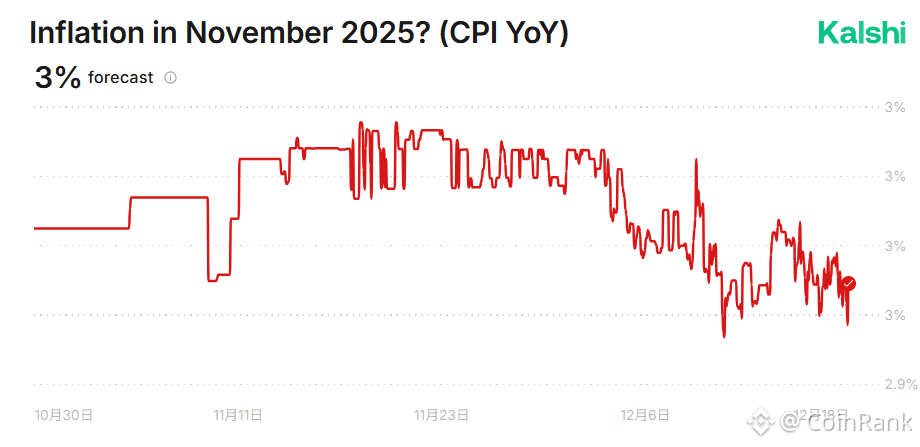
Figure 1: CPI Inflation Prediction Market Probability Chart
IMPACT AND THE REALITY OF AN UNSTABLE INFLATION ERA
If prediction markets’ performance in forecasting inflation is structurally meaningful, its impact extends beyond CPI alone.
Inflation is the most closely watched macro variable, but not the only uncertain event to forecast. Economic growth, policy trajectories, fiscal outcomes, and certain institutional events all face similar expectation formation challenges. Prediction markets provide not conclusions but real-time, adjustable probability assessments.
Kalshi’s research draws attention due to the current macro backdrop. In recent years, multiple economies have experienced significant inflation volatility. Energy price shocks, geopolitical risks, supply chain restructuring, and fiscal expansions overlap, causing frequent shifts in inflation drivers. Models based on historical relationships face unprecedented challenges in this environment.
As inflation no longer follows a single logic, forecasting pivots from “long-term averages” to capturing “marginal changes.” Prediction markets’ real-time and decentralized nature gives them relative advantages in such contexts, explaining why their performance is particularly strong when deviations from expectations are large.
For policymakers, these market prices can serve as forward-looking signals to identify potential risks; for investors, they offer a perspective beyond research reports and model projections; for research institutions, these findings prompt a reassessment of forecasting methodology boundaries.
Importantly, prediction markets are not set to replace traditional macro analysis. A more realistic approach is coexistence: models explain structure and causality, while market prices reflect how information is currently interpreted and digested.
EXPECTATIONS ARE BEING REPRICED
From a broader perspective, the real value of this news is not a competition of winners and losers, but its indication that macro expectations are being repriced through market mechanisms.
Forecasts are no longer only text-based judgments; they are continuously adjusted under real financial constraints, changing the source of authority. Expert analysis remains important but is no longer the sole reference point.
In an era of high uncertainty, ignoring this change may be riskier than accepting it. Whether prediction markets will become a permanent part of the macroeconomic analysis system remains to be seen, but Kalshi’s study shows that in certain key issues, the market has already started providing answers earlier than we imagined.
Read More:
Fed Dissent Rises Amid Sticky Inflation—Crypto Awaits Clarity
Bitcoin vs. Ethereum: An Exploration of Two Inflation Mechanisms
〈When the Market Beats the Experts: Prediction Markets Are Reshaping Inflation Expectations〉這篇文章最早發佈於《CoinRank》。

