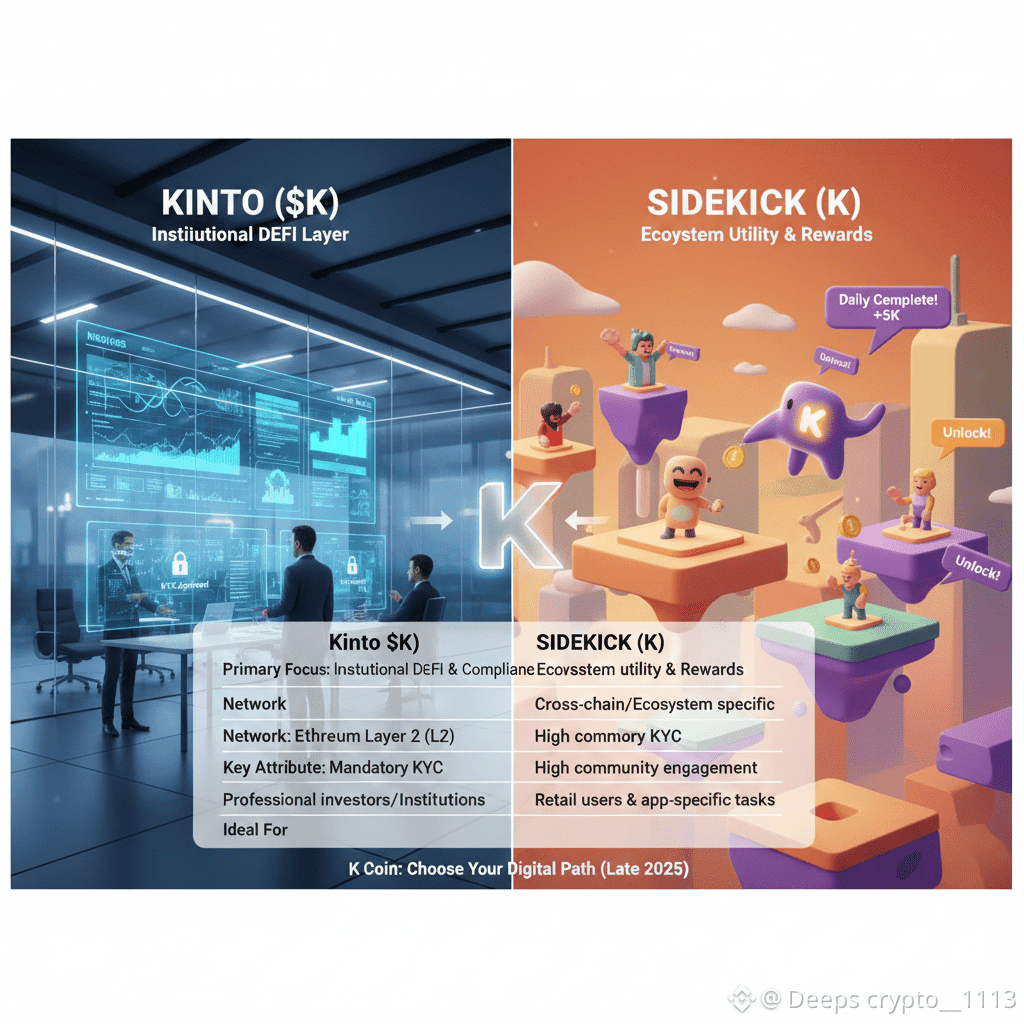
$K In the world of cryptocurrency, the name "K Coin" typically refers to one of two distinct projects: Kinto (K) or Sidekick (K). Both are active in late 2025, but they serve very different purposes within the digital economy.
1. Kinto (K): The Institutional DeFi Layer
Kinto is a modern "Layer 2" network built on top of Ethereum. It is designed to bridge the gap between traditional finance (TradFi) and decentralized finance (DeFi).
* The Problem it Solves: Most blockchains are anonymous, which makes it hard for banks or large institutions to use them due to anti-money laundering (AML) laws.
* The Solution: Kinto is a KYC-native blockchain. This means every user must verify their identity before they can interact with the network, ensuring a "safe" environment for institutional capital.
* The Token (K): Launched in early 2025, the K token is used for governance (voting on the project's future) and staking. As of late 2025, it is a specialized asset for those looking at the regulated side of the crypto industry.
2. Sidekick (K): The Ecosystem Utility
Another common asset using the "K" ticker is Sidekick. Unlike Kinto’s focus on institutions, Sidekick is built for the broader digital economy and community engagement.
* Purpose: It functions primarily as a utility token within its own ecosystem, often used for rewards, micro-transactions, and accessing specific digital services.
* Market Status: It is generally a lower-cap asset compared to major coins like Bitcoin or Ethereum and is often traded on platforms like MEXC.
Key Comparison
| Feature | Kinto (K) | Sidekick (K) |
|---|---|---|
| Primary Focus | Institutional DeFi & Compliance | Ecosystem utility & Rewards |
| Network | Ethereum Layer 2 (L2) | Cross-chain/Ecosystem specific |
| Key Attribute | Mandatory KYC (Identity Check) | High community engagement |
| Ideal For | Professional investors/Institutions | Retail users & app-specific tasks |
#k#deepcrypto_111 #BinanceSquareFamily