Under the Christmas tree, Wall Street traders have left the scene, but the pulse of the global market continues to quietly beat in the digital world.
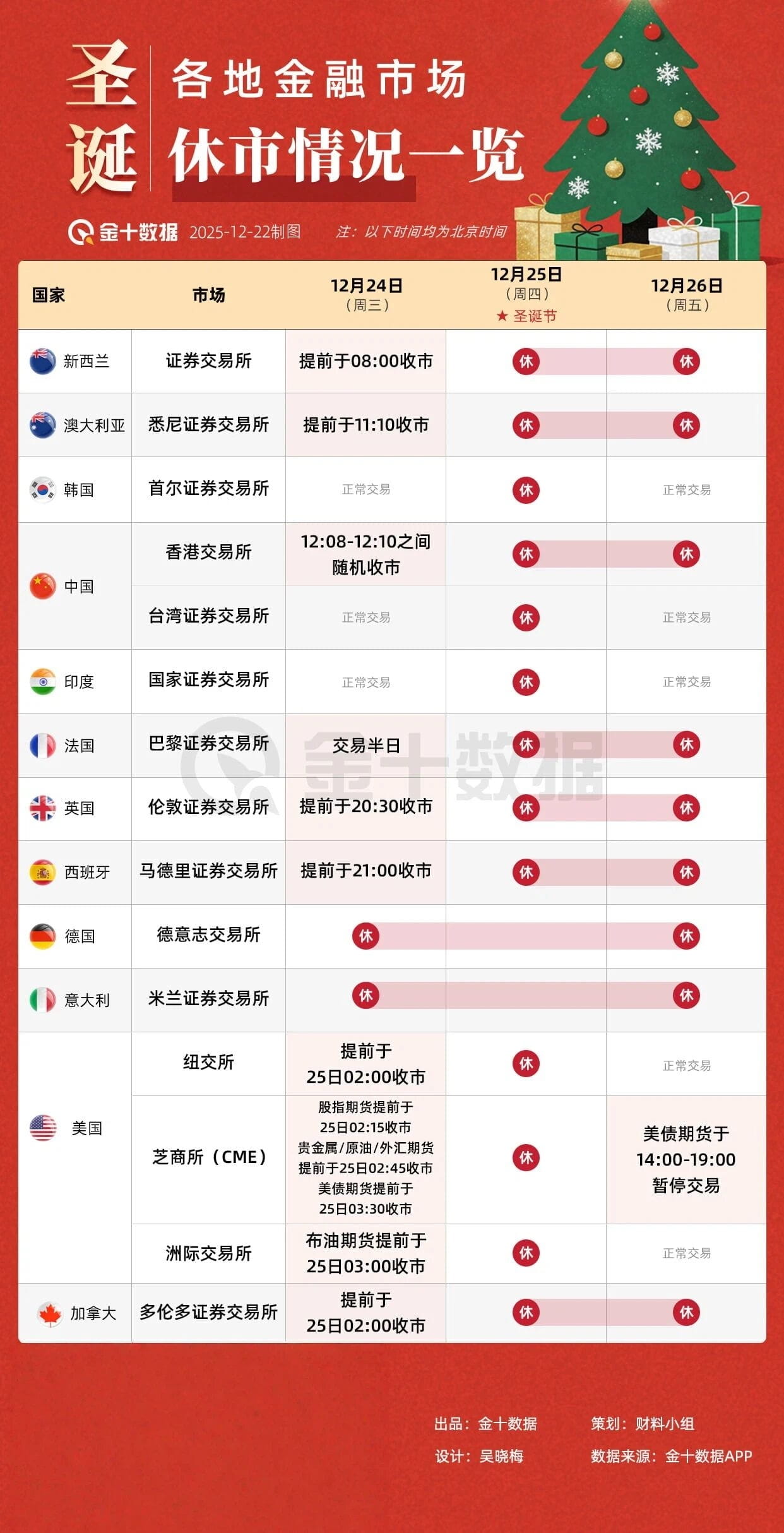
Today is December 24, 2025, Christmas Eve. This week is the Christmas holiday, and the US stock market will be closed on Christmas Eve and Christmas Day, as major investors in Europe and the US have temporarily stepped away from the market. This situation generally lasts until after New Year's Day.
With the arrival of Christmas week, the global market seems to enter another state. The US GDP data for the third quarter was unexpectedly strong, while the Bitcoin market remains unusually calm, with the implied volatility for major terms declining over 5% in the past month, and the short to medium-term IV dropping more than 10%.
Meanwhile, the precious metals market is booming, with gold and silver prices continuously refreshing historical highs. Gold futures briefly broke through $4,500 per ounce, with an annual increase of over 71%. The market's differentiation is thought-provoking.


01 Holiday mode activated
This week, global financial markets officially enter the 'Christmas mode.' The US stock market will close three hours early on Christmas Eve, December 24, and remain closed all day on Christmas Day, December 25, resuming normal trading on December 26.
This holiday arrangement is not just a simple calendar adjustment; it profoundly affects market liquidity, trading activity, and investor psychology. Major institutional investors in Europe and the United States have temporarily retreated from the market, and many traders have taken early holidays, leading to a significant reduction in overall market trading volume.
Historical data shows that the Christmas week is typically one of the periods with the weakest market liquidity. This liquidity shortage can easily amplify price fluctuations, especially when faced with unexpected economic data or sudden events. However, this year seems different, as market participants appear to have prepared for the holiday in advance.
02 Economic data unexpectedly strong
Just as the market was preparing to enter the calm Christmas holiday, data released by the US Department of Commerce on December 23 brought an unexpected 'Christmas gift.' The data showed that US GDP grew by 4.3% in the third quarter, far exceeding the market expectation of 3.3%.
Structurally, strong personal consumption expenditures are the main driving force behind this economic growth. This indicates that American consumers still maintain a high willingness to spend during periods of economic uncertainty, providing solid support for corporate profits. Strong economic growth data boosts market confidence in corporate fundamentals on one hand, while also increasing doubts about the direction of the Federal Reserve's monetary policy on the other.
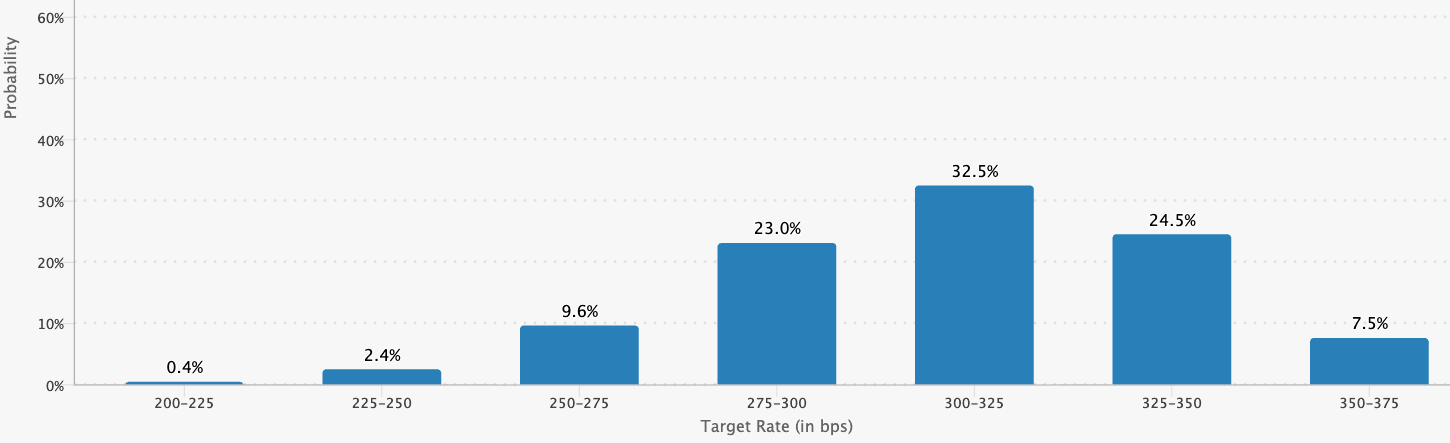
After the release of strong economic data, market expectations for a Federal Reserve interest rate cut in 2026 have cooled. Previously, the market widely expected three rate cuts next year, now adjusting to possibly only two cuts. This means that by the end of 2026, the federal funds rate may remain between 3.0% and 3.25%.
03 The frenzy of the precious metals market
In stark contrast to the relative calm of the stock and cryptocurrency markets, the precious metals market is experiencing an unprecedented frenzy. Gold and silver prices have continuously refreshed historical highs, becoming one of the most prominent asset classes this year.
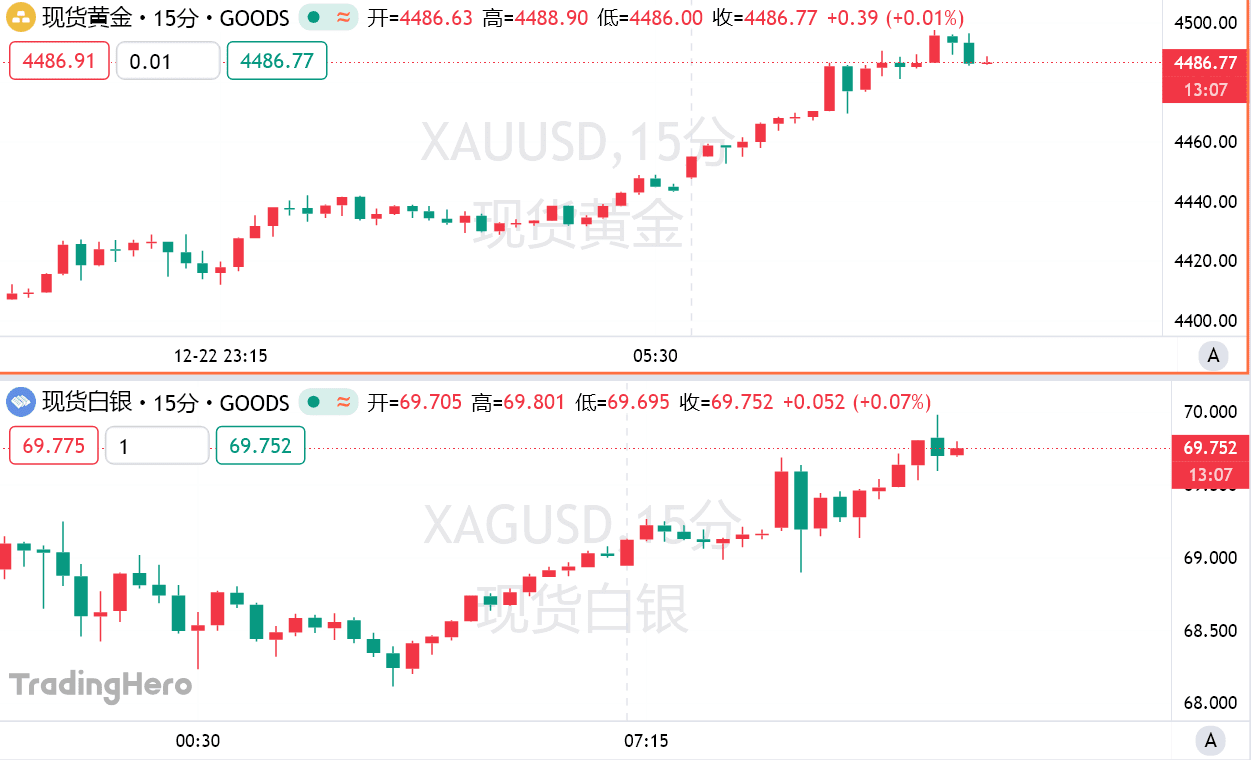
COMEX gold prices broke through $4,500 per ounce on December 23, with an annual increase of over 71%. Spot gold prices also surpassed $4,485 per ounce, setting a new historical high. Even more surprising is the performance of silver, which has increased by about 140% this year, briefly breaking the $70 per ounce mark.
The strong performance of the precious metals market is driven by multiple factors. On one hand, market expectations for further interest rate cuts by the Federal Reserve benefit precious metals that do not generate interest income in a low-rate environment. On the other hand, escalating geopolitical tensions, particularly in Venezuela, where the US has imposed a blockade on oil tankers, have increased market demand for safe havens.
From a broader perspective, this year's rise in precious metals has been supported by large purchases from central banks and inflows into gold ETFs. According to the World Gold Council, the total holdings of gold ETFs have increased every month this year except for May.
04 The calm of the cryptocurrency market
In stark contrast to the heated precious metals market, the cryptocurrency market seems unusually calm. Bitcoin's closing price on December 23 was $88,530.73, and on the 24th, the price fluctuated around $87,000, never managing to stabilize above the $90,000 mark.
What is more noteworthy is the significant decrease in market volatility. Over the past month, the implied volatility of Bitcoin's major maturities has declined over 5%, with medium-short term IV declining over 10%, and ETH's IV decreasing even more. This decline in volatility is the result of multiple factors converging.
As institutional investors choose to move positions early, the implied volatility across major maturities has shown a noticeable decline since last week, and the proportion of block trades has also increased. The market's subdued expectations indicate that investors generally hold a cautious attitude towards the market in the next half month, anticipating that low volatility may become the main theme.
However, beneath the market's apparent calm, there are undercurrents. This Friday (December 26), the Bitcoin market will face the largest options settlement in history, with a total value of up to $23.6 billion.
This scale accounts for more than half of Deribit's total open contracts and may trigger significant market volatility.
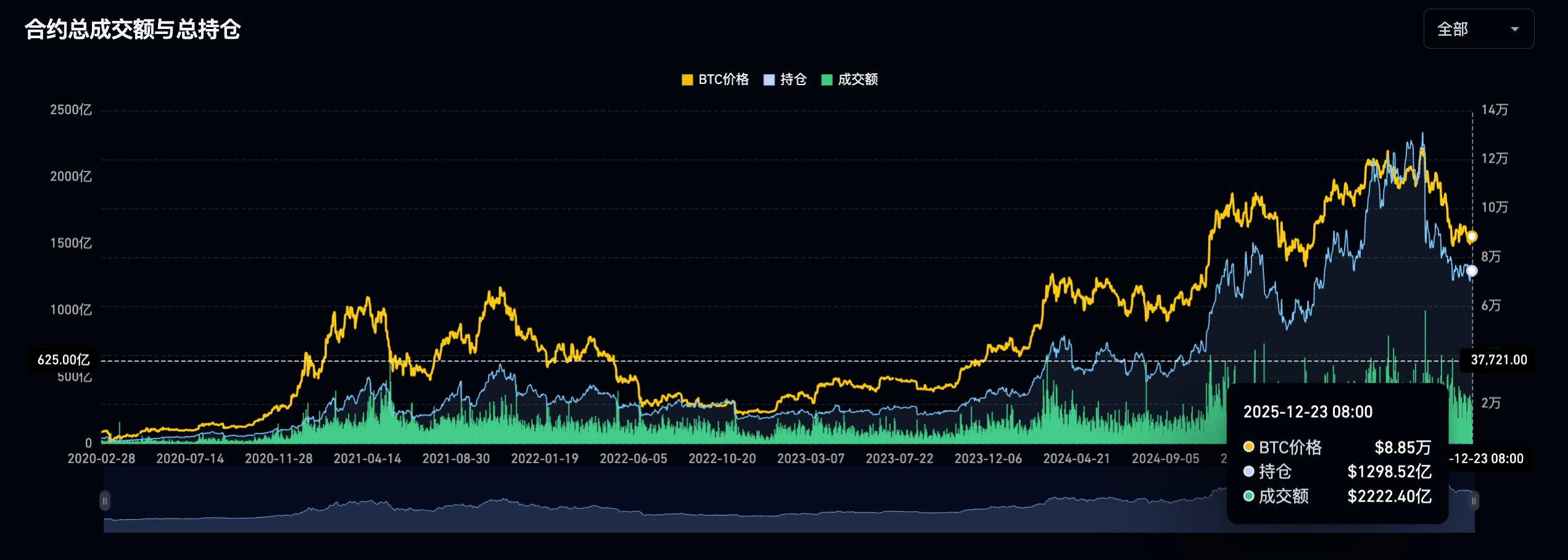
The total open interest across the network has fallen below 130 billion.
05 The deeper logic of market games
Behind the current market differentiation lies profound game logic. From a macroeconomic perspective, strong GDP data superficially benefits risk assets but actually exacerbates market doubts about the direction of monetary policy.
Strong economic growth suggests that the Federal Reserve may not have an urgent need to cut interest rates, while the current inflation rate remains above the 2% target level. This has led to a reduction in the market's expectations for the number of rate cuts in 2026 from three to two, putting pressure on high-valuation assets.
Within the cryptocurrency market, the flow of funds has also shown structural changes. Recently, there has been a clear differentiation at the ETF level: Bitcoin ETFs recorded a net outflow of approximately $158.3 million, while Ethereum ETFs saw outflows of about $76 million.
In contrast, the XRP and Solana ETFs recorded slight inflows of approximately $13 million and $4 million, respectively. This differentiation indicates a structural adjustment of funds within the cryptocurrency market rather than a general return.
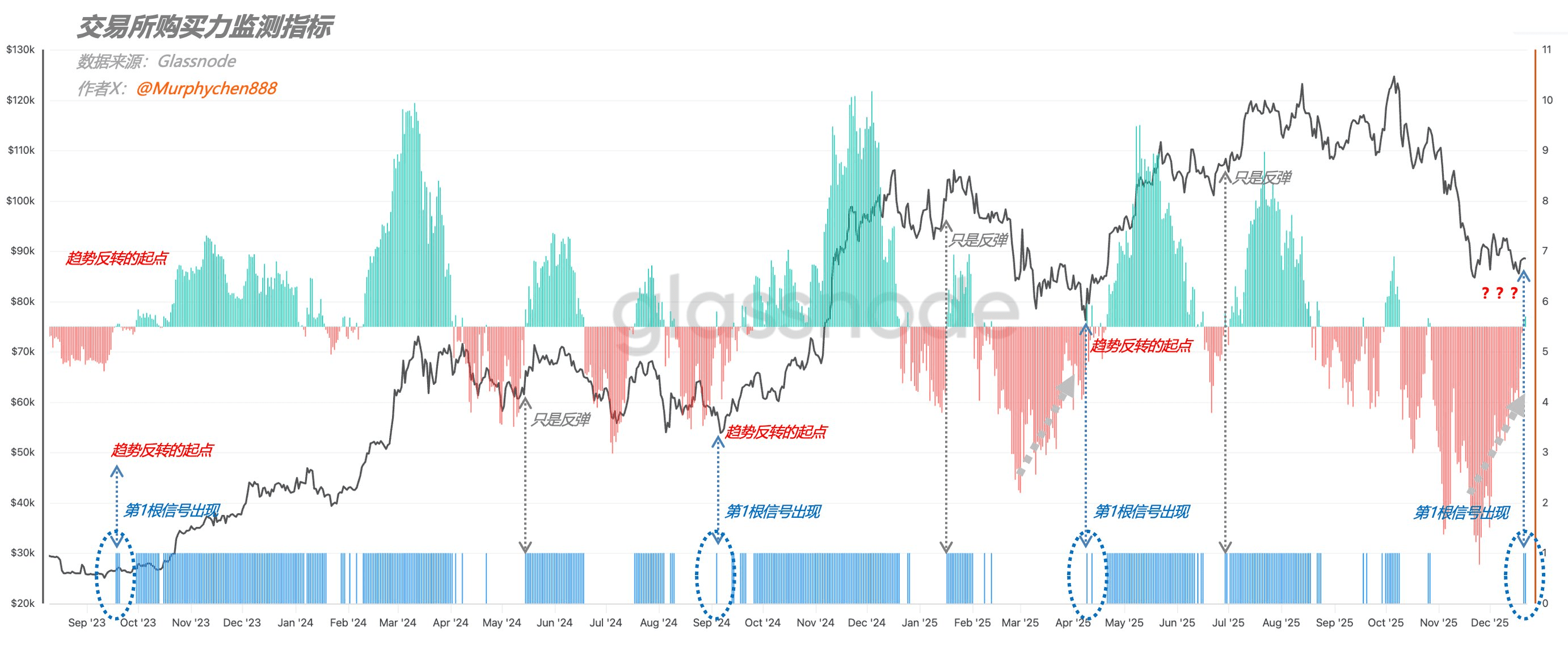
From a technical perspective, Bitcoin is currently at a critical position. The range of $88,000 to $89,000 has become the core oscillation zone validated repeatedly in the short term, while the upper range of $93,000 to $95,000 constitutes the key resistance that bulls must break through.
06 Trading strategies and risk management
In the face of the current complex market environment, investors need to formulate prudent trading strategies and strict risk management measures. The lack of liquidity during Christmas week may amplify price fluctuations, especially in the face of significant options expiration events.
In the options market, both bulls and bears are engaged in fierce battles at key price levels. Bulls are betting that Bitcoin will break the $100,000 mark, while bears are working hard to defend the $85,000 level.
96,000 dollars is seen as a watershed for this trend; if it stabilizes here, it can maintain rebound momentum, otherwise, the market will continue to be under pressure.
For long-term investors, the current market environment provides an opportunity to reassess asset allocation. As volatility decreases, options premiums are reduced, creating relatively favorable conditions for establishing or adjusting positions. However, it is important to note that a low-volatility environment may not last long, especially around significant options expiration events.
In terms of risk control, investors should pay particular attention to position management and stop-loss settings. In the illiquid holiday market, the execution of stop-loss orders may not be as smooth as usual, requiring investors to adopt more conservative risk management strategies. Additionally, considering the increasing correlation between the cryptocurrency market and traditional financial markets, cross-market risks also need to be taken into account.
In an uncertain market environment, maintaining rationality and patience becomes particularly important. In the coming days, the market's key focus will be on Friday's Bitcoin options expiration.
Whether it's the brilliance of gold or the calm of cryptocurrencies, the market is telling investors a unique story about risk, opportunity, and patience in its own way at this special moment.