
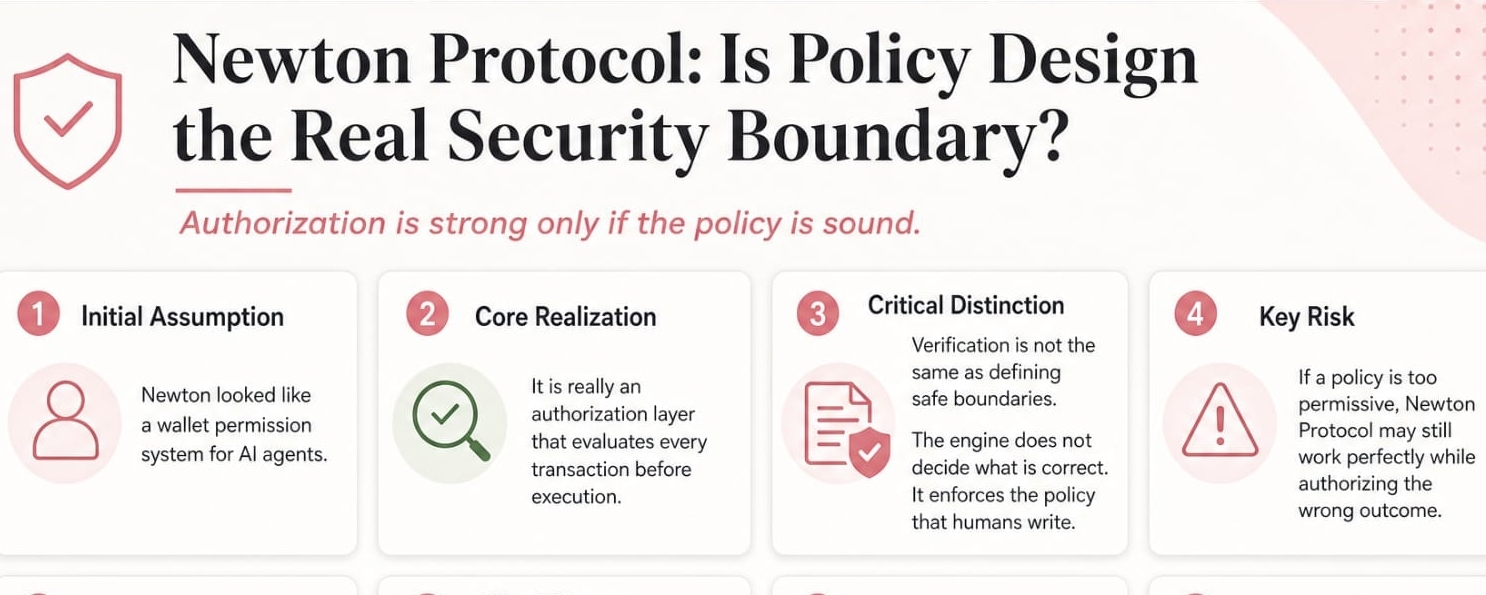

I noticed something while reading through @NewtonProtocol architecture that kept distracting me from everything else. I went in expecting to spend most of my time understanding the authorization flow, but I kept coming back to one different question:
who actually decides what the policy is?
At first, @NewtonProtocol looked like another permission system to me. I assumed it would mostly be about giving AI agents wallet access with some limits attached. The more I looked into it, though, the more I realized Newton Protocol is really positioning itself as an authorization layer where every transaction is evaluated before execution instead of trusting permissions granted earlier.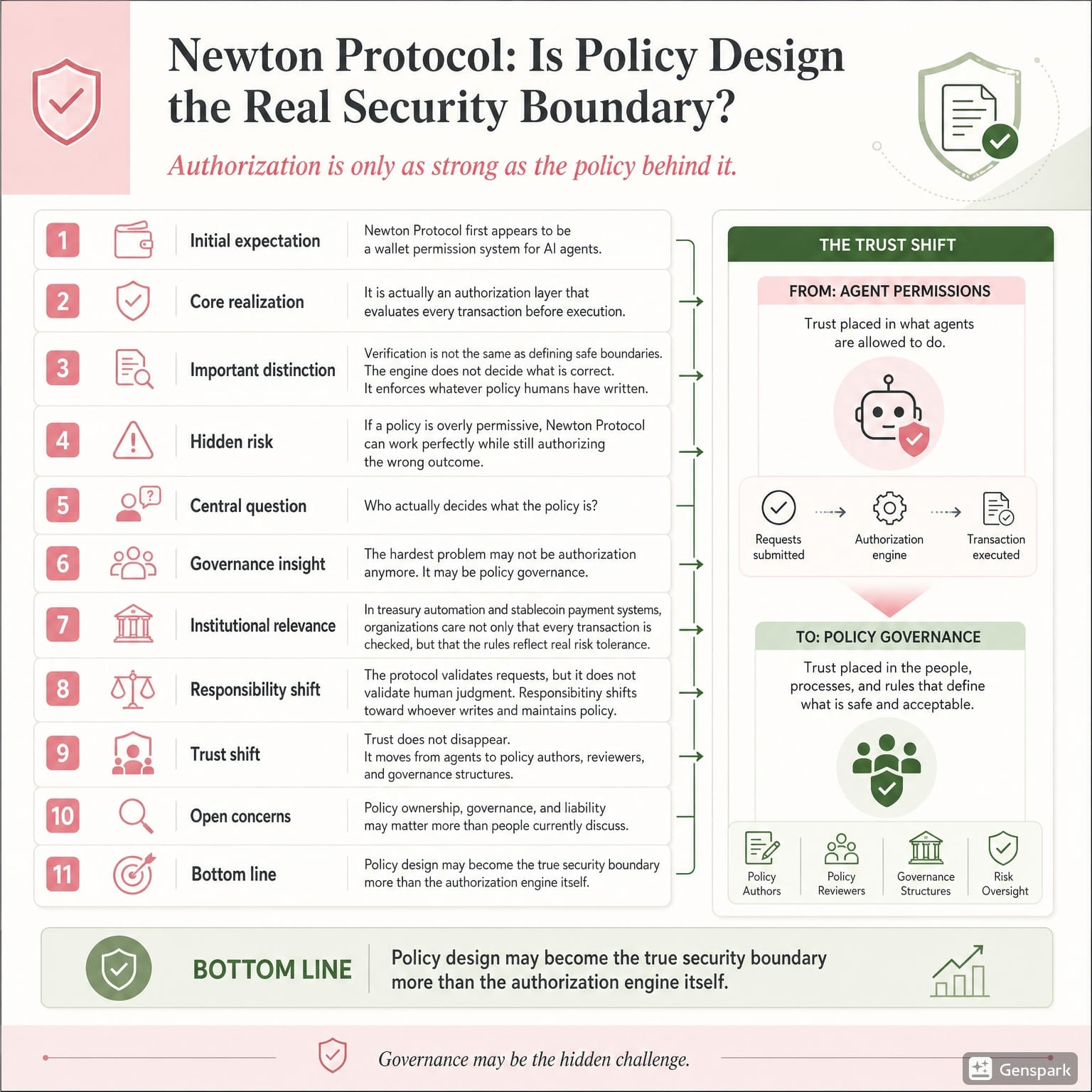
That part makes sense to me. What stood out wasn't the transaction checks themselves, but the fact that the checks are only as good as the policy being enforced. I kept reading about policy evaluation and the use of Rego/OPA, and I realized the engine isn't trying to decide what's "correct." It's simply enforcing whatever logic has already been written.
I could be wrong, but that feels like an underrated distinction.
People—including me before digging deeper—naturally focus on whether Newton Protocol can verify transactions correctly. But verification isn't the same thing as defining safe boundaries. If someone writes an overly permissive policy, Newton Protocol will still execute its job perfectly. It just happens to be enforcing a bad policy.
That made me wonder whether the hardest problem isn't authorization anymore. Maybe it's policy governance.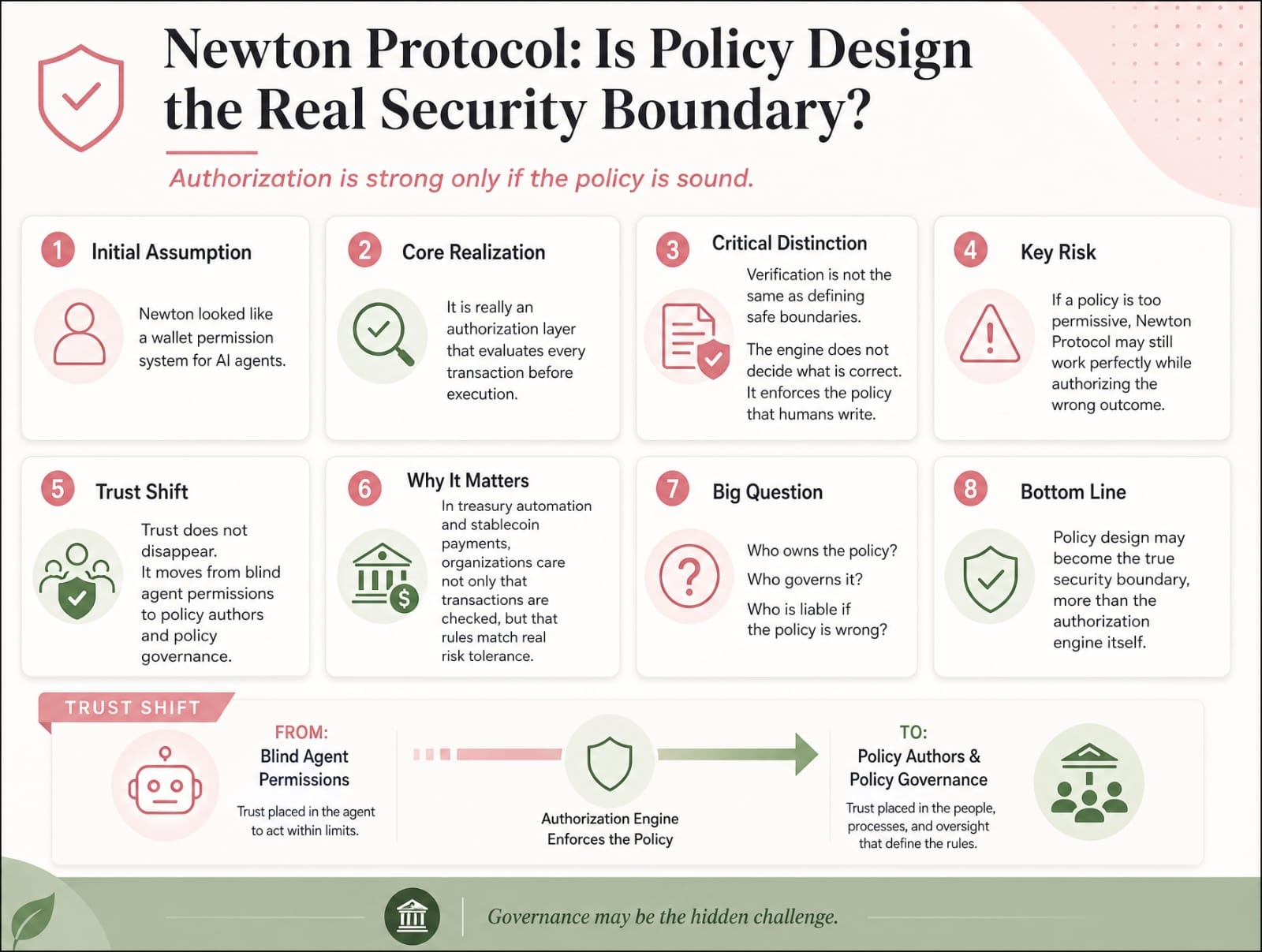
I kept thinking about how this would play out in institutional treasury automation or stablecoin payment systems. Those environments don't just care that every transaction is checked. They care whether the rules themselves reflect the organization's actual risk tolerance. A single mistake in policy design could authorize something nobody intended, even though Newton Protocol behaved exactly as designed.
One thing I wasn't expecting was how much responsibility quietly shifts toward whoever writes and maintains those policies. The protocol can validate every request, but it doesn't automatically validate human judgment.
That's probably the tradeoff I find most interesting. @NewtonProtocol reduces blind trust in agents, yet it increases reliance on carefully designed authorization policies. The trust doesn't disappear—it moves.
I'm still trying to figure out whether the ecosystem is spending enough time discussing that shift. Technical enforcement is getting plenty of attention, but I don't see nearly as much conversation around policy ownership, governance, or liability when the policy itself turns out to be wrong.
Has anyone else come away from researching Newton Protocol with the feeling that policy design might end up being the real security boundary rather than the authorization engine itself?$NEWT

