
Key Insights
Several factors are bound to cause a new bull market in 2026, and some of these include institutional adoption through ETFs and corporate treasuries.
The convergence between AI and blockchain is also expected to create new use cases for autonomous payments
Global liquidity expansion and regulatory clarity are expected to set the stage for a historic crypto year
The crypto market outlook for the coming year looks promising, especially after a turbulent 2025.
Bitcoin reached a new high of $126,277 in October before a 21% pullback cooled overheated positions. Because of this, the current correction feels more like a natural reset than a collapse, and seasoned analysts are seeing this as preparation for what comes next.
Wall Street Goes All In on Crypto
The first wave of Bitcoin and Ethereum ETFs launched between 2024 and 2025. This means that investors expect 2026 to be the integration phase. Major financial institutions have moved past exploration and are now building actual plans to stock up on crypto.
Staking Changes Everything
Ethereum ETFs only recently achieved staking capabilities. This means that investors can now access the 3-4% annual yield that comes from staking their ETH.
This approval is expected to transform Ethereum into something similar to a digital bond. Fixed-income investors will be able to rotate capital from traditional products into crypto more easily, and this yield advantage makes Ethereum particularly attractive.
Corporate Balance Sheets Embrace Bitcoin
MicroStrategy currently holds over 640,000 BTC on its balance sheet, according to data sources like Saylor Tracker. Other companies have watched and learned throughout the year, and new accounting rules (like FASB ASU 2023-08) removed a major obstacle.
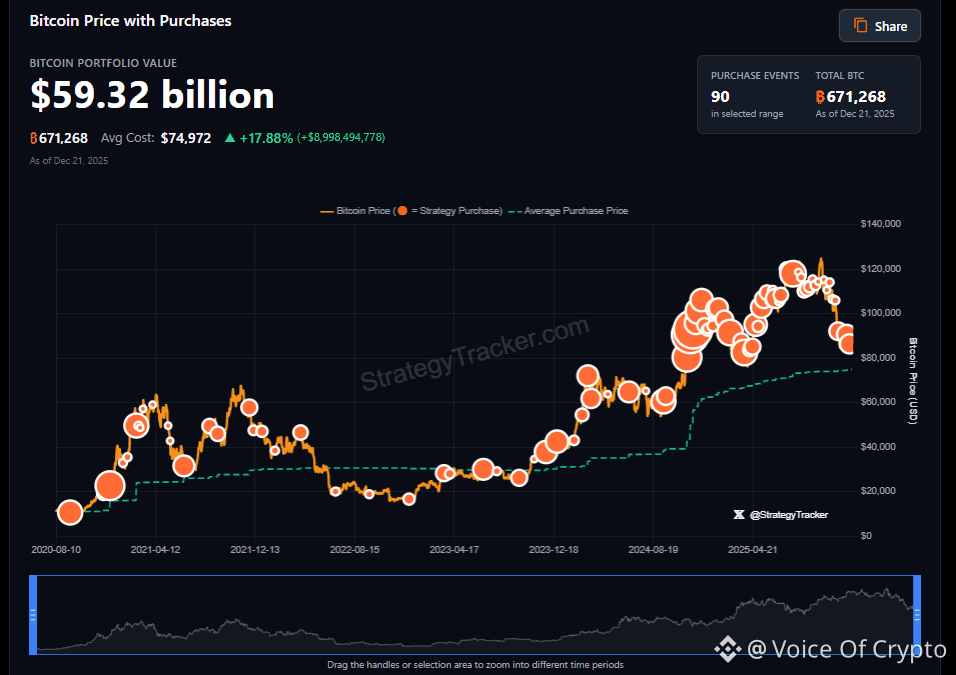
Saylor tracker shows that Strategy has over 640,000 BTC in its balance sheets | source: Saylor Tracker
This means that nearly any company can now report crypto at fair market value.
Fortune 500 firms will likely allocate 1-3% of cash reserves to Bitcoin in 2026, and this isn't limited to tech companies anymore.
AI Meets Blockchain in Real Applications
The 2026 crypto narrative around AI is expected to be bigger than mere buzzwords. Autonomous AI systems need payment rails that work anywhere in the world, without permissions or delays.
As of writing, AI agents can't open bank accounts. However, they can own crypto wallets. This simple fact creates a massive opportunity, where protocols like x402 now allow machine-to-machine transactions.
These agents are now able to pay each other for data access, GPU computing power and API calls. Networks like Render and Akash even provide decentralized computing resources, and the payments happen instantly across borders.
Another AI area is in deepfakes. These AI-doctored images now flood the internet with fake content, but blockchain offers a solution through content verification.
Real-World Assets Go On-Chain
Tokenization has moved from concept to execution, with Real-World Assets (RWAs) being the next major growth area.
Traditional Finance Meets DeFi
U.S. Treasuries, private credit and real estate are being tokenized at a massive scale, with a lead from BlackRock's BUIDL fund. Notably, Boston Consulting Group expects tokenized assets to reach $16 trillion by 2030.
The crypto ecosystem in 2026 is expected to use these assets as collateral for instant loans, where borrowers can access capital in minutes instead of weeks.
Physical Infrastructure Gets Decentralised
Decentralized Physical Infrastructure Networks (DePIN) use tokens to incentivize hardware deployment. Helium builds decentralized 5G coverage. Hivemapper creates crowd-sourced maps. These networks reach a viable scale in 2026.
They compete with centralized companies on cost and efficiency. Token incentives align participant interests. Early adopters earn rewards for contributing to infrastructure.
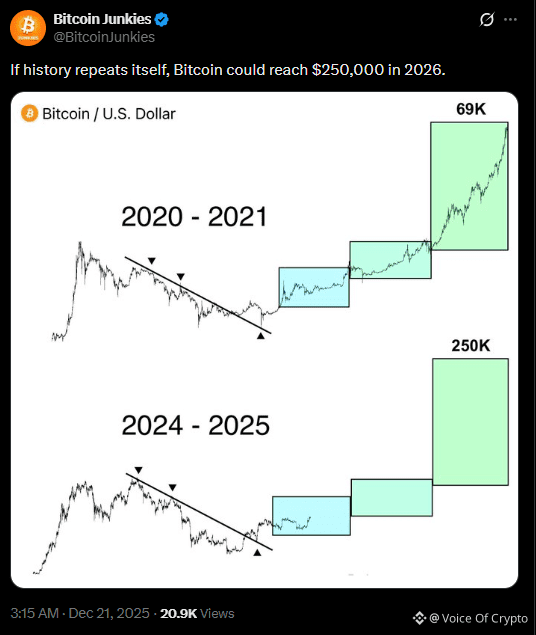
Analysts say Bitcoin will register a new high in the coming year | source: X
Global Money Supply Drives Prices
Bitcoin has followed a four-year cycle tied to halvings for a decade, but that pattern may now be changing. A new theory indicates that the cryptocurrency could be in the middle of a five-year macro cycle based on global liquidity.
Another factor to consider is how Bitcoin price action correlates strongly with the global M2 money supply. This measure tracks all money in circulation worldwide, and the M2 hit an all-time high of $130 trillion recently.
Liquidity Floods the System
Central banks expanded the money supply alongside this, and global debt levels continue climbing. Investors are now looking for assets that governments can't inflate away, and bitcoin fits this description perfectly.
The Federal Reserve began cutting interest rates in late 2025, and this trend is expected to create a high-liquidity environment.
Historically, crypto thrives when cheap money flows through markets.
Price Targets for Major Assets
Analysts from major research firms have published predictions for the coming year, and their targets show strong institutional analysis rather than hype.
According to most of these predictions, Bitcoin could trade between $150,000 and $220,000 on the back of ETF inflows, money supply growth and state-level adoption.
Some states in the US are even exploring Bitcoin reserves.
With this being said, Ethereum might reach $8,000 to $12,000 where staking ETFs, real-world asset settlement and network upgrades could support higher valuations.
Even Solana is showing potential for $400 to $750 as its retail-focused ecosystem continues growing.
Regulatory Clarity Finally Arrives
Crypto is expected to benefit from clearer rules in the coming year, especially with the GENIUS/CLARITY acts in the US and MiCA in Europe.
In all, the stage seems to be set for crypto in the coming year, and many catalysts seem to be aligning at once.
Nothing is certain, but this cycle is clearly different from the previous ones, and crypto indeed has a fighting chance.