

 Market dynamics
 Global assets are soaring, yet cryptocurrencies are in their own recession
Seeing the global assets generally rising in a resonant market, the three major U.S. stock indices have been rising consecutively, with the S&P showing a strong upward trend; commodities such as gold, silver, and copper have recently set new records, especially the price of silver which has skyrocketed by 50% in just two months like a meme coin. However, against the backdrop of this global bull market, Bitcoin and the cryptocurrency market have shown a divergence, becoming the only assets that are declining and fluctuating, not to mention the altcoins, in this essentially casino-like world, gamblers have started to leave the table.
Bitcoin has recently not only faced pressure and declined at the integer level of $90,000, but has continued to trend downward even in the absence of obvious negative news, hitting a low of $87,000 at one point. According to analysts from QCP Capital, a more reasonable explanation is that this decline is not purely triggered by macro news but is a combined effect of year-end tax loss selling pressure and leveraged withdrawals—many investors have begun to realize losses near the highs to offset tax burdens, and during the low liquidity Christmas holiday trading period, such selling pressure is further amplified, leading to a price drop.
The performance of altcoins is weaker than that of Bitcoin, as they have generally broken down and hit new lows in this decline, indicating that funds have significantly withdrawn from high-risk assets. This aligns with the recent trends of institutional funds: ETFs have seen consecutive outflows, market risk aversion has increased, external funds are no longer actively chasing highs, but are more focused on reducing risk exposure. MicroStrategy also paused its Bitcoin purchases this week and shifted to increasing cash holdings, highlighting that in an unclear market, institutional funds are turning defensive, prioritizing debt and risk management, reflecting a market entering a wait-and-see and conservative funding phase.
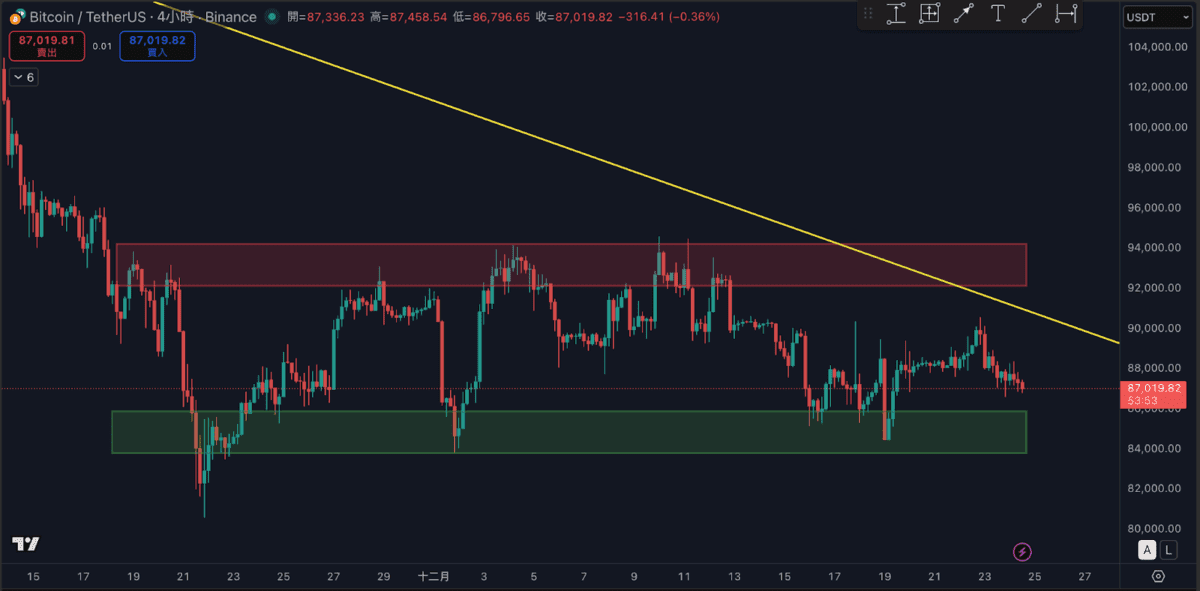
From a technical perspective, Bitcoin is currently still maintaining a range-bound oscillation pattern, with the technical aspects showing a pressure trend from multiple overlaps. Observing the 4-hour candlestick chart, the long-term downward trend line has not been effectively broken, and rebounds have repeatedly faced resistance in the $92,000–$94,000 pressure zone, which has experienced three needle-like pullbacks. At the same time, the support area of $84,000–$86,000 is performing robustly, indicating that bulls still have a certain defensive strength in the short term, and operations still tend to favor high sell-low buy strategies.
As the options expiration approaches, short-term Bitcoin volatility is heating up.
Bitcoin has recently fluctuated between $85,000 and $90,000, as the market approaches a record-sized options expiration of about $28.5 billion for Bitcoin and Ethereum this Friday. Due to the enormous expiration amount, the probability of short-term market volatility is increasing, but many market participants point out that such volatility is more likely to be technical changes rather than a clear reversal of bullish and bearish trends.
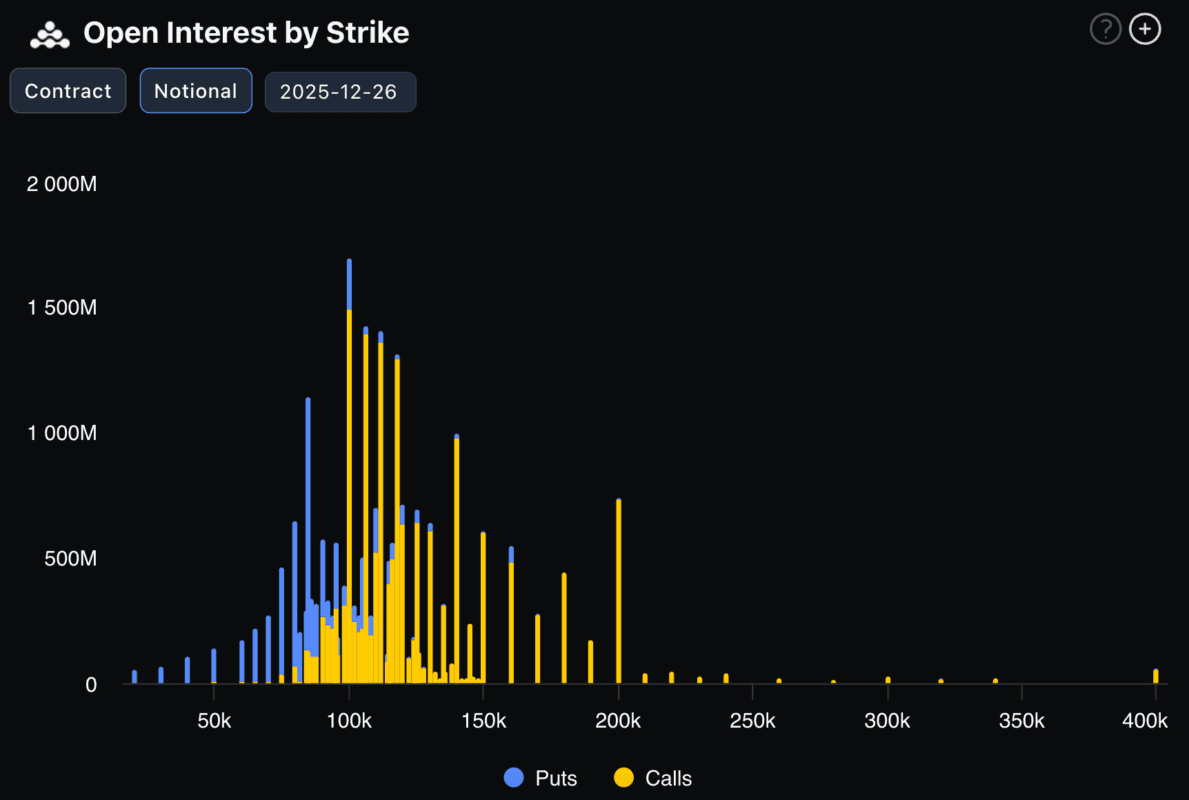
Jean-David Pequignot, Chief Business Officer of the cryptocurrency options exchange Deribit, stated that this year's options expiration reflects a structural shift in the market, with increased participation from institutional investors, making the options market's impact on short-term prices more pronounced. He pointed out that the theoretical price level currently being focused on in the market is $96,000, which is considered a settlement range more favorable to option sellers.
However, from the actual market perspective, a large number of bullish options positions have accumulated above $90,000, making it easy for prices to encounter selling pressure as they approach that level, and the difficulty of breaking through in the short term increases. This also means that even though there are still optimistic voices in the market about the future, short-term trends may still be limited by settlement factors.
On the downside, there are a certain number of put options near $85,000, providing initial support for the price, but this configuration reflects more of investors hedging in advance rather than betting on a significant market downturn. Overall, market sentiment is cautious rather than panicked.
Singapore-based crypto trading institution QCP also pointed out that as a large number of options are concentrated for expiration, the market's reaction to news and capital flows has become more sensitive, and significant price volatility may occur in a short time. Although bearish positions have decreased recently, bullish options at the $100,000 level still exist, indicating that investors retain limited optimistic expectations for the year-end market.
In addition, as the United States enters the Christmas holiday, market funds are increasingly inclined to postpone their hedging positions until next year, and market liquidity will undoubtedly weaken significantly this week. Overall, as the option expiration date approaches, the possibility of short-term Bitcoin volatility increasing is rising, but this kind of volatility may not necessarily indicate that the trend is about to change; it is more likely a rapid price increase or decrease caused by settlement factors. The mid-term direction that investors should really pay attention to still awaits confirmation in January.
Binance Follow Analysis
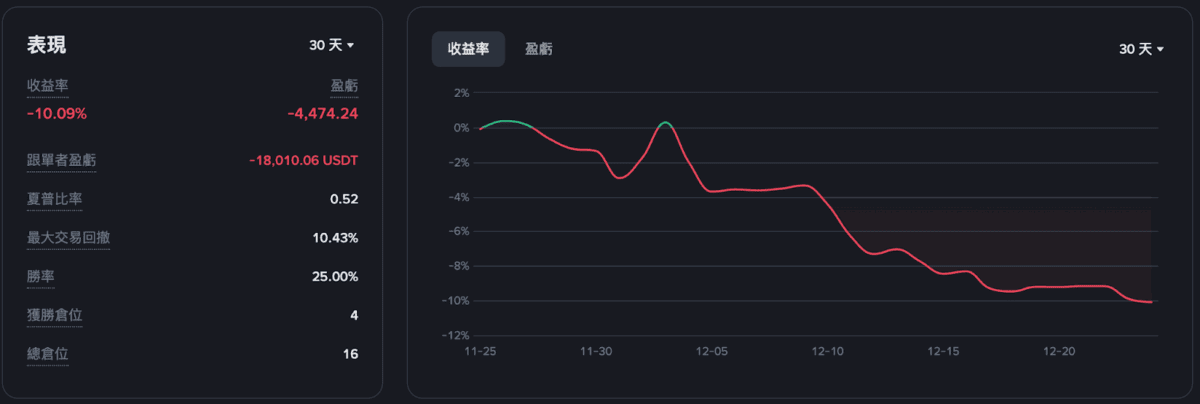
GTRadar – BULL
Follow Link
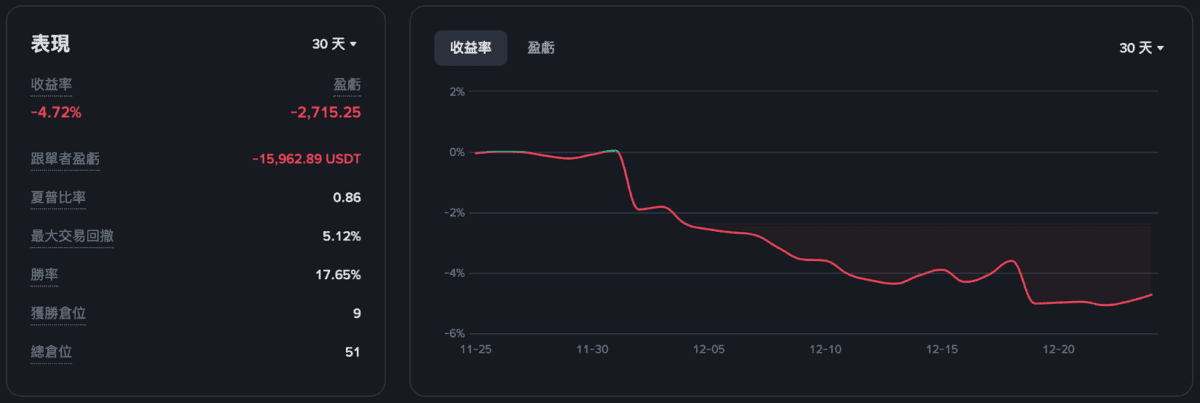
GTRadar – BALANCE
Follow Link
'GTRadar – BULL' and 'GTRadar – BALANCE' had returns of -0.88% and -0.68% respectively over the past 7 days, with returns of -10.09% and -4.72% over the past 30 days.
Currently, 'GTRadar – BULL' holds a net long position of about 15%, mainly in BTC and BNB.
Currently, 'GTRadar – BALANCE' holds a net short position of about 10%, mainly in ETH and ETC.
Long-term returns of followers who frequently change their portfolios are not as good as those who continuously follow one group. Do not easily end a follow due to short-term withdrawals; based on the curve, withdrawals are actually a good time to start following. Coming in and out significantly reduces yield.
Focus News
Insiders: Binance is considering repositioning in the U.S. market and evaluating a restart plan for Binance.US.
Bloomberg reports, citing insiders, that cryptocurrency exchange Binance is evaluating the possibility of returning to the U.S. market. Its co-founder Zhao Changpeng (CZ) views the U.S. as the core of the future cryptocurrency industry, thus implying that the U.S. is also crucial for Binance's future development.
Coinbase officially enters the stock trading and prediction market, fully building a 'one-stop financial platform'.
The largest cryptocurrency exchange in the U.S., Coinbase, has officially launched its largest product expansion action in recent years, with its business scope no longer limited to crypto assets but fully spanning stocks, prediction markets, derivatives, decentralized trading, and payment infrastructure, moving towards the goal of a 'one-stop financial platform'.
Deutsche Bank has given Coinbase a buy rating for the first time.
Deutsche Bank has recently given Coinbase a 'buy' rating for the first time and set a target price of $340, implying about 40% upside from the current stock price level. The bank is optimistic about Coinbase's continued advancement of its 'one-stop trading platform' strategy and believes that the related layout is gradually moving from the conceptual stage to practical implementation.
Precious metals lead the 'currency depreciation trade'; has the narrative of digital gold failed?
The recent failure of Bitcoin to break through the $90,000 level and its rapid retreat seems to have made the market realize that in the current round of 'currency depreciation trade', the truly leading assets are still gold and silver, rather than Bitcoin, which is regarded as 'digital gold'.
JPMorgan lists three major reasons warning that the stablecoin market is unlikely to reach a trillion-dollar scale.
JPMorgan analysts reiterated that they do not believe the stablecoin market can expand to a trillion-dollar level in the coming years, emphasizing that the growth rate of stablecoins will generally align with the overall cryptocurrency market rather than significantly exceeding it.
The U.S. Senate confirms Michael Selig as CFTC chairman, gradually establishing cryptocurrency regulatory authority.
The U.S. Senate passed a procedural vote by 53 to 43 to advance Trump's nomination of Michael Selig as the chairman of the Commodity Futures Trading Commission (CFTC). Government officials and industry leaders generally welcomed Selig's confirmation and expect him to bring clearer regulatory direction for digital assets.
Tether CEO warns: AI bubble could become the biggest risk to Bitcoin in 2026.
Tether's CEO Paolo Ardoino recently warned that if the current artificial intelligence (AI) investment boom ultimately turns into a bubble, it could impact Bitcoin prices in 2026.
Arthur Hayes predicts the yen will continue to depreciate, and Bitcoin will rise to over one million dollars.
Arthur Hayes, co-founder of BitMEX, has resumed a bullish stance this week, citing the central bank's monetary policy meeting (MPM) decision summary, stating: 'Do not fight the Bank of Japan: negative real interest rates are its clear policy.' This implies that Japan will continue to maintain its accommodative stance. Additionally, Arthur Hayes added that the exchange rate of the yen against the dollar will depreciate to 200, and Bitcoin, as a risk asset, will surge and break a million dollars.
Pump.fun, Solana, and Jito are being sued, whistleblowers expose 5,000 internal messages.
A collective lawsuit currently being heard in the U.S. District Court for the Southern District of New York has recently been granted by a judge to include new key evidence—over 5,000 alleged internal chat records, which the plaintiffs claim show that there was coordinated manipulation of token issuance and trading order between Pump.fun, Solana Labs, and MEV infrastructure provider Jito.
Fidelity analysts: Bitcoin is likely still following the four-year cycle pattern, entering a 'rest year' in 2026.
Recently, there has been a growing opinion in the market that the four-year cycle pattern of Bitcoin and its inevitable rise and fall patterns are no longer relevant. However, an executive from Fidelity, a large asset management company, pointed out that, so far, the current trend of Bitcoin still aligns with the four-year cycle pattern, and the current bearish market may continue until 2026.
Metaplanet adjusts its capital structure to support Bitcoin treasury strategy layout.
Japanese Bitcoin treasury company Metaplanet passed a capital structure reform proposal at its temporary shareholders' meeting on Monday, allowing it to raise funds by issuing dividend-type preferred shares to institutional investors. The passage of these proposals signifies that Metaplanet is moving away from the model of pursuing growth solely through equity dilution and is shifting to more traditional capital market practices that allow for income-generating securities to run parallel with Bitcoin-centered balance sheet strategies.
Ray Dalio: Bitcoin is unlikely to be held in large amounts by central banks and most institutions, and its attractiveness is still inferior to gold.
Ray Dalio, founder of Bridgewater Associates, stated in a recent interview that although he holds a small amount of Bitcoin, he still believes that Bitcoin has some issues and does not meet the conditions for central banks of various countries to hold; he prefers gold.
The $28.5 billion options expiration is imminent, and Bitcoin continues to struggle in its fluctuations.
Recently, Bitcoin prices have fluctuated in the range of $85,000 to $90,000, coinciding with an upcoming record $28.5 billion options expiration for Bitcoin and Ethereum this Friday. This expiration amount accounts for more than half of Deribit's current $52.2 billion in open contracts.
BitMine's total Ether holdings exceed 4 million, while ETHZilla chooses to ship out to cope with financial pressures.
As the cryptocurrency market has recently fallen from its highs and asset price volatility has intensified, a listed company known for its 'Ethereum Reserve Strategy' has shown significant divergence. On one hand, BitMine Immersion Technologies (BMNR), led by Fundstrat's research director Thomas Lee, continues to increase its holdings in Ethereum against the trend; on the other hand, the listed company ETHZilla (ETHZ) has chosen to sell its ETH reserves to cope with debt and capital structure pressures.
BlackRock lists Bitcoin ETF as a key investment theme for 2025.
Despite Bitcoin (BTC) declining this year, BlackRock still lists its iShares Bitcoin Trust (IBIT) spot Bitcoin ETF as one of the top three investment themes for 2025. The president of the ETF Store stated that this move reflects the institution's increased bet on long-term BTC allocation.
Insiders: JPMorgan is evaluating the provision of cryptocurrency trading services to institutional clients.
Bloomberg reports, citing insiders, that as global large banks continue to deepen their participation in cryptocurrencies, JPMorgan is considering providing cryptocurrency trading services to its institutional clients.
MicroStrategy raised $740 million by selling common stock, pausing Bitcoin purchases and fully incorporating the funds into cash reserves.
According to the official announcement, Bitcoin treasury company MicroStrategy raised $747.8 million in net proceeds last week by selling common stock, but the company did not use the funds to buy Bitcoin and instead incorporated all of it into cash reserves to rebalance its asset allocation.
Tokens issued in 2025 generally fail: over 80% fall below their initial valuation, and low FDV tokens perform relatively better.
Data from crypto research and advisory firm Memento Research shows that most tokens issued in 2025 have failed to provide returns for early buyers. In contrast, tokens listed at lower fully diluted valuations (FDV) significantly outperform those with higher valuations and more significant competitors.
The above content does not constitute any financial investment advice; all data comes from GT Radar's official website announcement. Each user may experience slight differences due to different entry and exit prices, and past performance does not represent future results!
Source


