

Imagine a scenario like this: you open an account at an international bank, going through a cumbersome KYC process, submitting sensitive information such as your passport, proof of address, and source of income. Months later, when you want to use a cross-border remittance service, you have to repeat the exact same process again—submitting documents once more, waiting for verification again, and entrusting your personal data to another unfamiliar entity. This is not a hypothesis, but the everyday reality of today's digital financial system. We have almost become accustomed to exchanging privacy for convenience and data sovereignty for access rights, until I delved into the technical architecture of @Dusk and discovered that there is such an elegant solution to this problem at the protocol layer.
When most blockchain projects are still pursuing higher TPS or lower Gas fees, Dusk has chosen a more difficult but potentially more disruptive path: natively integrating privacy and compliance at the protocol level. This sounds almost like a paradox—privacy means concealment, compliance requires transparency—but Dusk has found a balance through zero-knowledge proof technology. Their Piecrust virtual machine is not just an execution environment, but an artwork of this balance. Official data shows that Piecrust has achieved over 10 times the performance improvement compared to the previous RuskVM, which means that while maintaining the complexity of ZK proofs, transaction costs have significantly decreased. For a platform aimed at serving RWA (real-world asset) tokenization, this performance optimization is not just a nice-to-have, but a necessity. Institutional users will not tolerate high transaction costs or lengthy settlement times, no matter how robust the privacy protection is.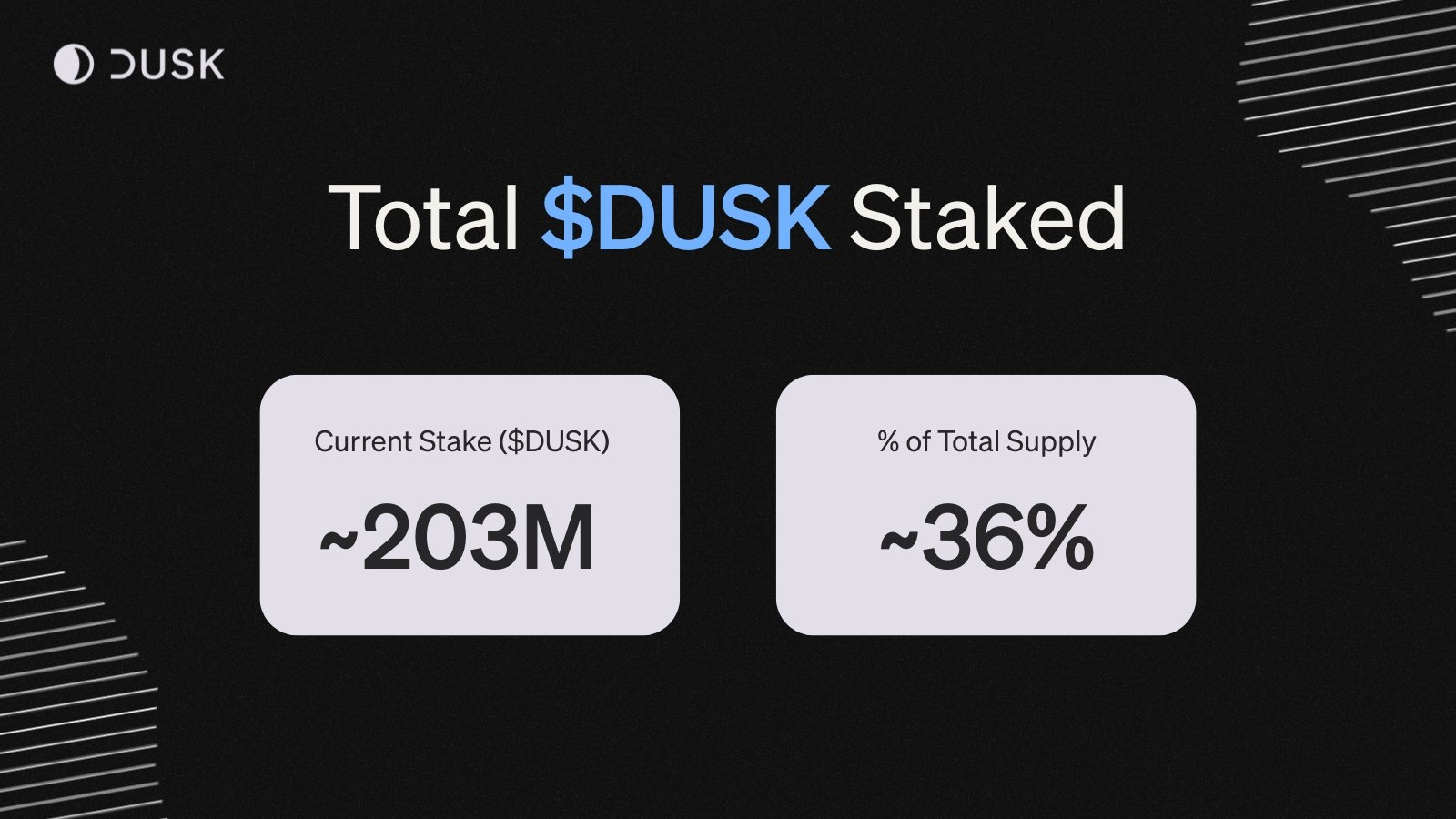
Delving into technical details, what sets Dusk apart is their Phoenix transaction model. This may be the industry's first privacy transaction system to complete a full formal security proof, a goal that even Zcash attempted but ultimately abandoned. Phoenix allows users to confidentially consume public outputs—like staking rewards or change—without revealing any transaction details. This capability is crucial for compliant financial scenarios, as institutions need to demonstrate the compliance of fund flows without exposing the complete transaction graph. When I looked at the on-chain data of the DUSK token, I found that the top two addresses hold 21.2% and 20.1% of the supply, a concentration that is usually seen as a risk signal, but in the context of Dusk, it may reflect early institutional and validator engagement, aligning with their B2B positioning.
The Citadel protocol may be the most innovative part of Dusk's tech stack. It is essentially a self-sovereign identity (SSI) system based on zero-knowledge proofs, but the implementation is very clever. Citadel uses a private NFT model to encode users' license proofs as privacy-protected records on the blockchain. Users can prove they hold a certain license through ZK without revealing the content of the license itself, and service providers can verify the validity of the proof without accessing the original data. This architecture resolves the fundamental contradiction in traditional KYC: institutions need to ensure compliance while users want to protect their privacy, and existing solutions often only meet one of those needs.
From a market performance perspective, the price trend of the DUSK token reflects the market's gradual recognition of this technological innovation. Starting at around $0.05 in October 2025, DUSK peaked at over $0.30 in January 2026, and has since returned to around $0.11. This volatility is common in early-stage tech projects, especially for projects like Dusk that are in the testnet stage (the Nocturne testnet was launched in October 2025). With a market capitalization of about $57 million, it could be said to be undervalued relative to the market problems they are trying to solve. The Boston Consulting Group predicts that the RWA market could reach $16 trillion by 2030, and even capturing a small share of this market means tremendous growth potential.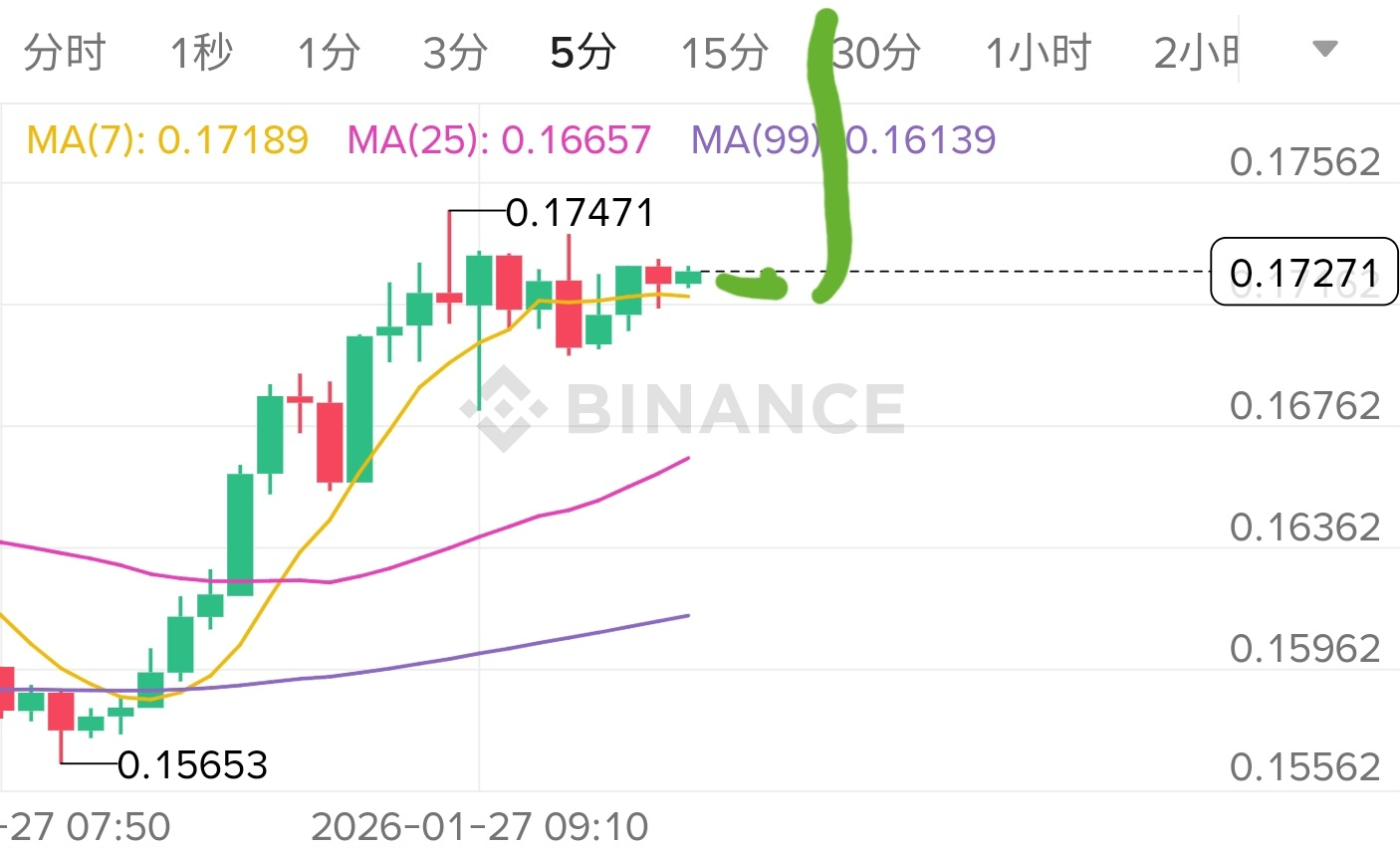
Compared to RWA protocols like Ondo Finance and Centrifuge, Dusk's differentiated positioning is very clear. Ondo focuses on tokenizing traditional assets like U.S. Treasury bonds, while Centrifuge is dedicated to bringing real-world debt assets on-chain, but they both rely on relatively transparent blockchain architectures. Dusk provides another option through its native privacy layer: institutions can enjoy the efficiency and transparency advantages of blockchain while maintaining the confidentiality of commercially sensitive information. Their collaboration with Cordial Systems is particularly noteworthy, marking the beginning of Dusk's construction of institutional-grade custody and settlement infrastructure, rather than just another DeFi protocol.
When I think about Dusk's long-term vision, what attracts me the most is not any single technical feature, but the systemic issues they are trying to solve. The modern financial system is built on trusted intermediaries, with banks, brokers, custodians, and other institutions serving as bridges of trust, but they have also become bottlenecks for efficiency and single points of failure for data breaches. Blockchain technology should eliminate these intermediaries, but most public chains lack the identity layer and privacy protection needed for compliance. Dusk's protocol layer solution may provide a middle path: preserving the advantages of blockchain's de-intermediation while meeting real-world compliance requirements.
From an investment perspective, Dusk faces the typical challenges of a tech project: outstanding technology does not necessarily translate into commercial success. Institutional adoption in the RWA market takes time, regulatory clarity is still developing, and competition is intensifying. However, Dusk's first-mover technological advantage—especially their complete ZK security proof and privacy transaction model—forms a considerable moat. These are not features that can be easily replicated or forked; they require years of research and development accumulation.
For me, the most exciting aspect may be the paradigm shift represented by Dusk. We no longer need to choose between privacy and compliance, nor do we have to sacrifice personal data sovereignty for regulatory compliance. Through cryptographic innovation and clever protocol design, Dusk demonstrates another possibility: a financial future that protects privacy while being compliant with regulations. This possibility is not just about technology, but about rebalancing power relationships—returning control from institutions to individuals while maintaining the overall compliance and security of the system.
With the progress of the Nocturne testnet and the approaching mainnet launch, Dusk is at a critical turning point. The technology is ready, market timing is maturing, and institutional interest in blockchain solutions is at an all-time high. If executed properly, Dusk could not only become a successful blockchain project but also an important bridge connecting traditional finance with a decentralized future. In this process, what we should pay attention to is not just price fluctuations or technological updates, but how they redefine the relationship between privacy, compliance, and financial inclusivity.#dusk $DUSK