
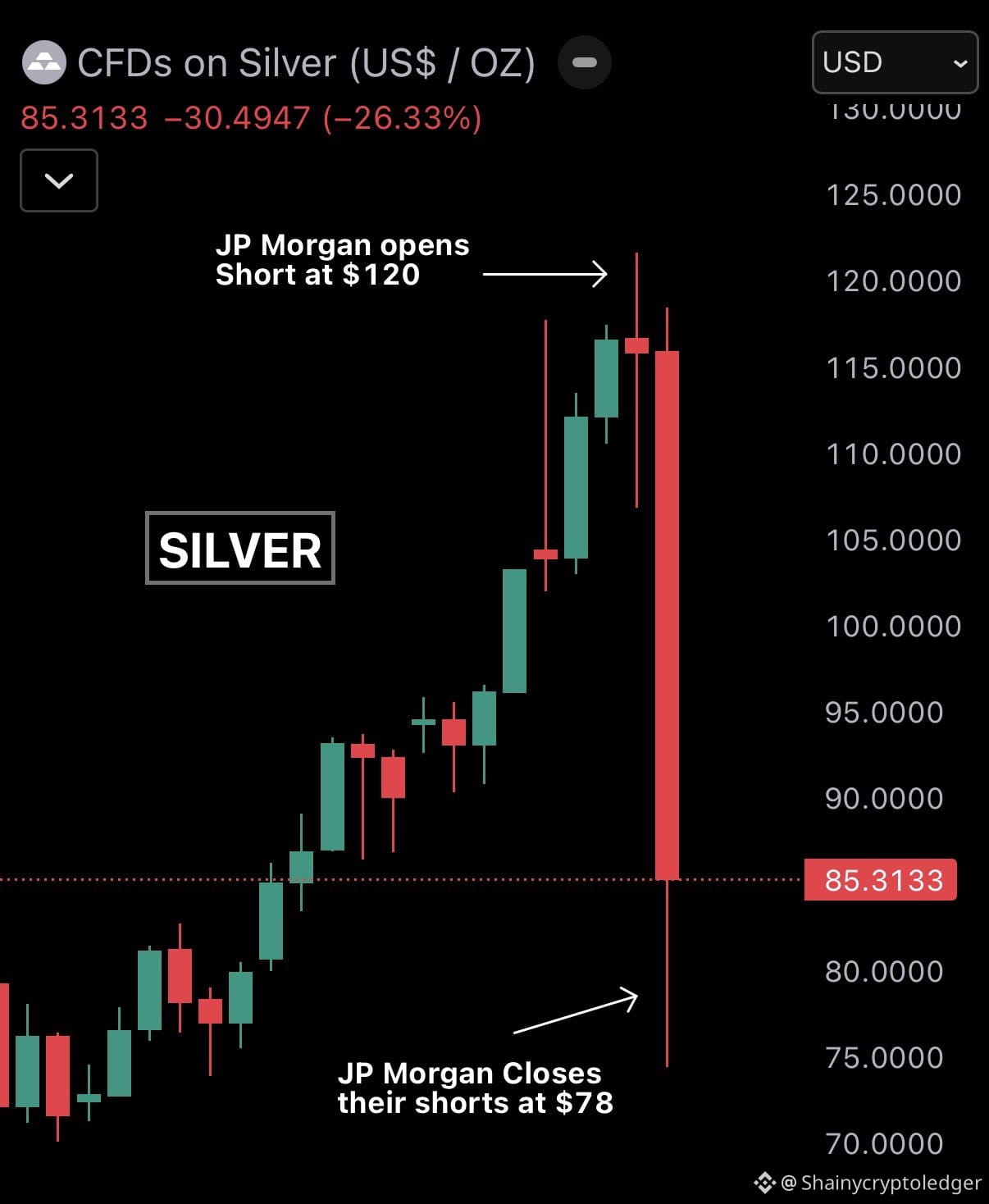
Silver just experienced an extreme paper-market selloff, one of the sharpest in decades. The speed of the drop triggered mass liquidations, wiping out over-leveraged longs almost instantly.
This has reignited debate around bullion banks and futures market mechanics.
Here’s what matters
• Silver trades mostly via paper contracts, not physical metal
• Hundreds of paper ounces exist for every real ounce
• Margin hikes during volatility force small traders to sell
• Large institutions with deep balance sheets survive and buy the dip
JPMorgan is one of the largest COMEX participants, active in both paper futures and physical silver. This dual exposure means violent moves in leveraged markets benefit players who can withstand margin pressure — while others are flushed out.
This isn’t new. Between 2008–2016, JPMorgan traders were convicted for spoofing precious metals markets — documented history, not opinion.
What’s interesting now?
• US paper silver collapsed
• Physical silver in Asia trades at a premium
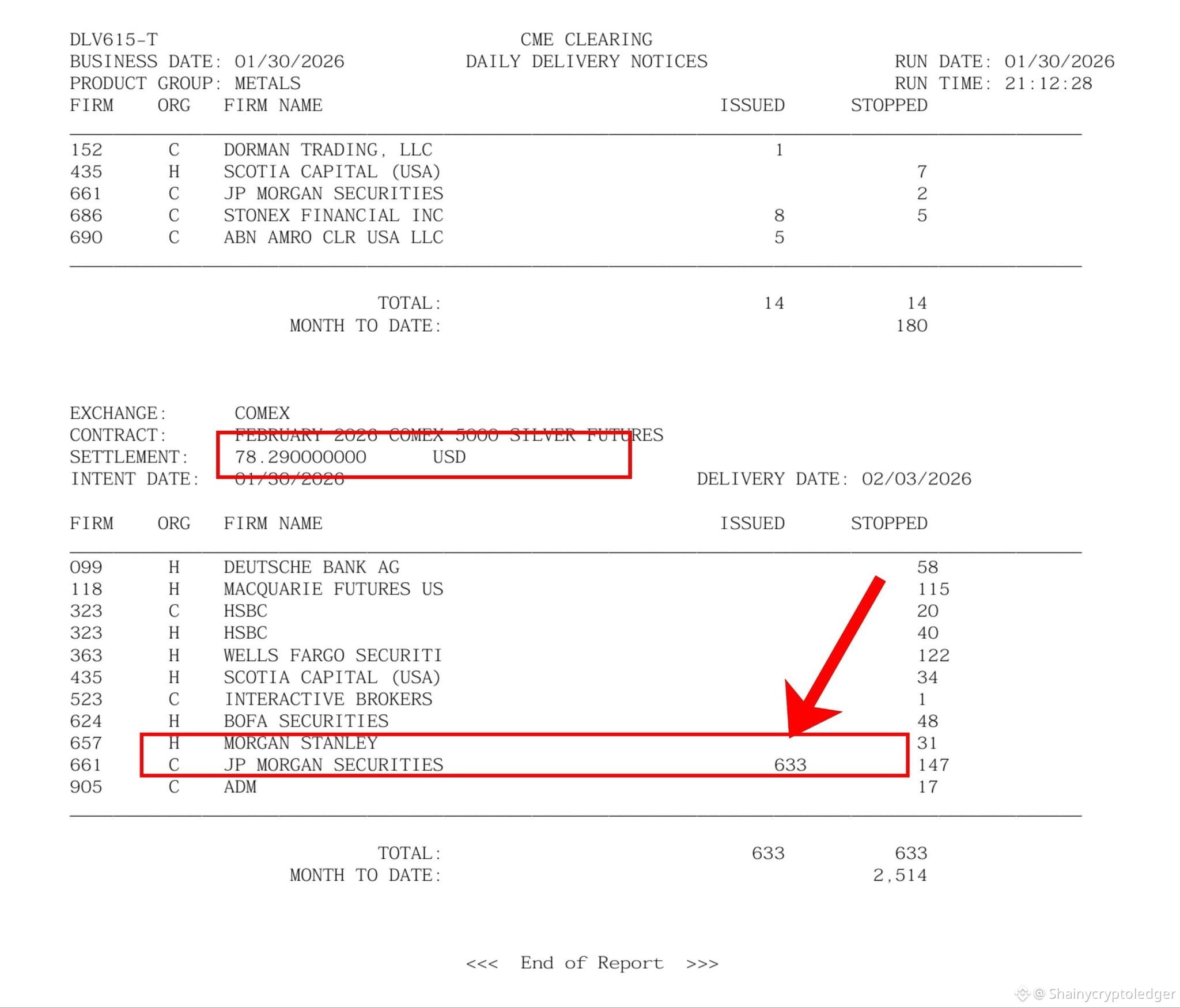
• COMEX delivery shows large banks taking delivery during the selloff
That gap tells a story:
👉 This was paper selling, not physical supply flooding the market
No one needs to prove intent to see the problem.
The structure itself rewards size, leverage tolerance, and balance-sheet power.
Volatility doesn’t hit everyone equally.
Trade smart. Understand the game before playing it.
👇 Trade Silver here$XAG

 #Silver #BinanceSquare #Macro #PreciousMetalsTurbulence #USGovShutdown