


For a long time, most of us never really questioned where our data lives. We just upload photos to Google Drive or back up files on iCloud and move on. It feels easy, it feels safe. But if you stop and think for a second do you really own that data, or are you just renting space?
This is where something like Walrus Protocol $WAL starts to make sense. The idea is simple but powerful: verifiable data that you actually own, stored on decentralized infrastructure, and somehow it’s even cheaper than the big tech options we all know.
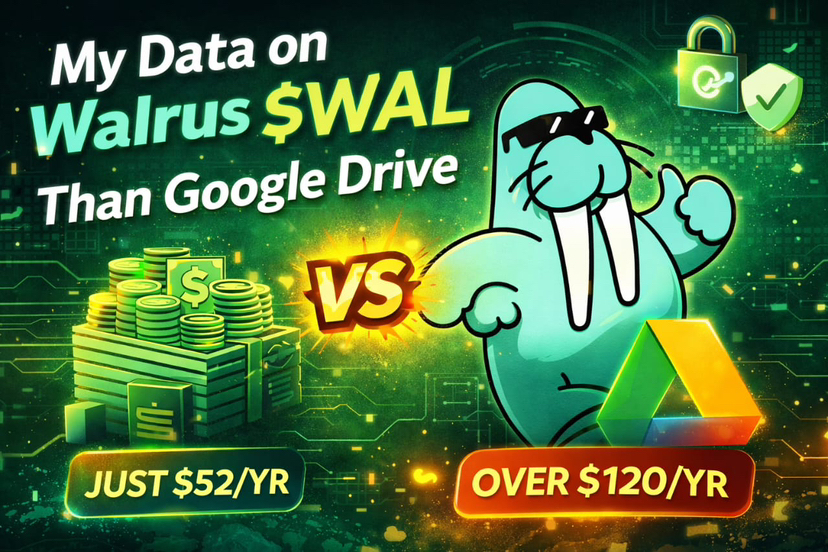
Let’s use a very simple example. Say you’re a small business owner, a student, or even a content creator with lots of videos and documents. You need around 2TB of storage for a whole year. On Walrus, at the time of writing, that costs roughly $52. Now compare that to Google Drive or iCloud, where you’ll pay around $120 for the same storage and time. That’s more than double the price, just to keep your files on someone else’s servers.
But price is only part of the story. With centralized platforms, your data lives under their rules. Accounts can get restricted, content can be scanned, access can be limited. We’ve all heard stories of people waking up and suddenly locked out of their own files. With Walrus, the data is decentralized. No single company controls it, and more importantly, you own it.
Think of it like this: Google and iCloud are like renting a storage room where the landlord has a master key and can walk in anytime. Walrus is more like owning your own safe, spread across many locations, where only you control the lock.
If you barely use Google Docs or iCloud tools and mostly just need storage, this becomes a serious option to consider. Especially for people who value privacy, control, and long-term cost savings.
Now imagine how far this could go. Picture an office suite built directly on Walrus. Documents, spreadsheets, and presentations that live on decentralized storage, not tied to one company. Or even better, Walrus integrated into open-source tools like LibreOffice or OpenOffice. You edit your files like normal, but the data lives on infrastructure you actually own.
It’s not perfect yet, and it’s still early. But this feels like how data storage should work. Cheaper, decentralized, and in your hands, not locked behind corporate walls.