
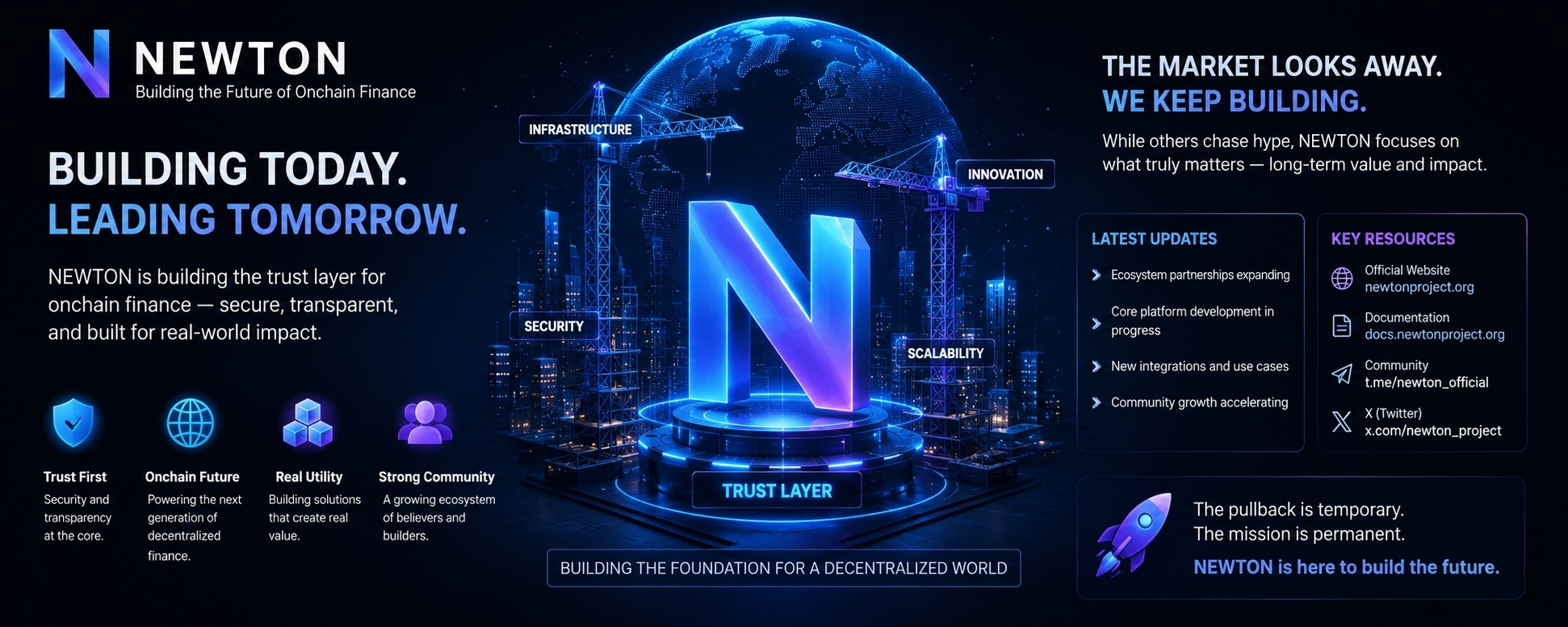
I’ve been watching Newton Protocol closely, and the more I think about it, the more it feels like the project is building around a problem most people will only notice when automation becomes too powerful to ignore.
Crypto keeps racing toward a future where wallets, bots, AI agents, and smart contracts can act without us sitting there approving every move.
That future is exciting.
But it also creates a new kind of fear.
Because once something can move your assets for you, the real question is no longer whether it is fast.
The real question is whether it knows where to stop.
That is where Newton Protocol starts to make sense.
The project is not trying to make automation feel louder or more aggressive. It is trying to make automation feel safer, more controlled, and more realistic for people who actually care about what happens to their money.
That difference matters.
Most people do not want to hand over full access to a wallet just because a tool promises convenience.
They want flexibility, but they also want boundaries.
They want an agent to help manage tasks, but not touch everything.
They want automation, but not blind trust.
Newton Protocol is built around that middle ground.
The idea is simple when you look at it from a human perspective.
You should be able to give permission without giving away control.
You should be able to allow a wallet, app, or agent to do something specific without opening the door to everything else.
For example, someone may want an automated strategy to rebalance part of a portfolio.
But they may not want it touching long-term holdings.
A business may want recurring payments to happen automatically.
But only within a fixed budget.
A user may want an agent to execute actions when certain conditions are met.
But only if it stays inside clear limits.
That is the kind of future Newton Protocol seems designed for.
And honestly, it feels more important than people think.
Because the next stage of crypto will not be built only for traders refreshing charts every five minutes.
It will be built for people who want onchain systems to work quietly in the background.
Founders managing treasuries.
Creators receiving payments.
Teams coordinating funds.
Users setting rules once and letting the system handle the rest.
But none of that works if people feel like they are giving away the keys to everything they own.
That is why smart permissions could become one of the most important layers in the space.
Fast automation is easy to admire.
It looks impressive.
It creates screenshots, demos, and big promises.
But smart permissions are what make that automation usable in real life.
They are what make people comfortable enough to actually trust the system.
And trust is still one of the hardest things to build in crypto.
Newton Protocol is interesting because it is not just focused on what automation can do.
It is focused on what automation should be allowed to do.
That feels like a small distinction at first.
But it becomes massive when you imagine millions of users interacting with AI agents, automated wallets, and programmable financial tools.
The smarter these systems become, the more important the rules become.
A powerful agent is not valuable just because it can make decisions.
It becomes valuable when users can define the boundaries around those decisions.
That is where the project has a real opportunity.
Newton Protocol could become part of the foundation that helps people move from manually controlling every transaction to setting smarter rules around how their assets behave.
Not giving up control.
Just upgrading it.
There is something very human about that.
People do not want technology to replace their judgment.
They want technology to work within their judgment.
And that may be the deeper idea behind Newton Protocol.
Not a future where everything becomes automatic.
A future where automation finally starts working on our terms.