
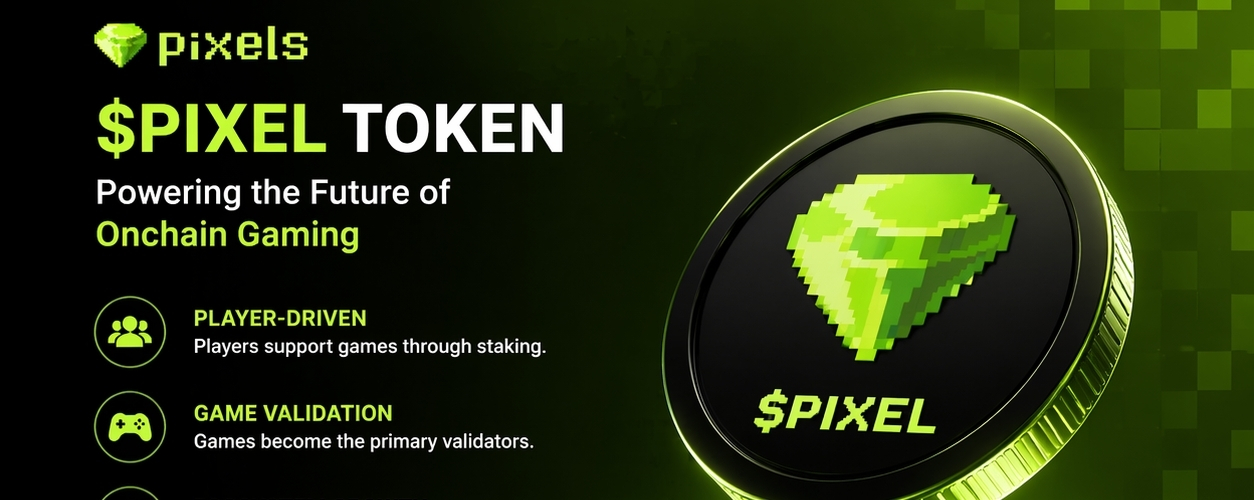

The evolution of Web3 gaming has transformed how players interact with digital worlds. Unlike traditional games, where value remains locked within the ecosystem, GameFi projects introduce real financial exposure. Pixel Token (PIXEL) is a prime example of this shift blending gameplay, ownership, and token-based incentives into a single economy.
However, this innovation comes with layered risks. PIXEL is not just a gaming asset; it behaves like a volatile financial instrument. Players are no longer just participants they are investors, speculators, and economic actors. This dual role creates both opportunity and instability.
Understanding risk management in Pixel Token is essential. Without it, users are exposed to market volatility, economic imbalance, and behavioral traps that are unique to GameFi ecosystems.
Understanding Pixel Token
PIXEL functions as the core utility token within the Pixels ecosystem. It is used for in-game upgrades, premium features, crafting acceleration, governance participation, and various economic activities.
The project aims to move away from the traditional “play-to-earn” model and toward a more sustainable “play-and-engage” structure. But this ambition introduces a contradiction:
The token has real-world value
The game encourages non-financial engagement
This conflict creates a fragile balance between entertainment and speculation.
Core Risks in Pixel Token
1. Market Volatility
PIXEL behaves like most crypto assets—highly volatile and sentiment-driven. Prices can rise rapidly during hype cycles and drop just as quickly when attention fades.
Key Issues:
Sudden price swings
Market manipulation risks
Emotional trading behavior
Risk Management Approach:
Treat PIXEL as a high-risk asset
Avoid investing funds you cannot afford to lose
Do not rely on short-term price movements for income
2. Inflation and Token Supply Pressure
A major structural risk lies in token emissions. As more tokens enter circulation over time, supply increases, often faster than demand.
Impact:
Decreased token value
Reduced rewards for players
Long-term dilution for holders
Risk Management Approach:
Track token release schedules
Avoid entering during heavy distribution phases
Focus on long-term utility rather than short-term gains
3. Dependency on Game Success
PIXEL’s value is directly tied to the success of the Pixels game. Unlike standalone cryptocurrencies, it cannot survive without active user engagement.
Key Risk: If player activity declines, token demand collapses.
Observed Behavior:
Players join during reward-heavy periods
Users leave when rewards decrease
Risk Management Approach:
Monitor player activity trends
Evaluate community growth, not just token price
Avoid long-term holding if user engagement declines
4. Utility vs Speculation Imbalance
PIXEL is designed primarily as a utility token. However, many users treat it as an investment vehicle.
This mismatch leads to:
Overvaluation during hype
Sharp corrections when expectations fail
Risk Management Approach:
Separate gaming usage from investment strategy
Do not assume utility tokens will generate consistent profit
Avoid hype-driven decisions
5. Behavioral Risk
One of the most overlooked risks is user psychology.
In traditional gaming:
Players seek enjoyment
In GameFi:
Players seek profit
This shift leads to:
Panic selling
FOMO buying
Short-term thinking
Risk Management Approach:
Set clear financial goals
Avoid emotional decision-making
Stick to a predefined strategy
6. Ecosystem and Security Risks
GameFi ecosystems often attract:
Fake airdrops
Scam links
Phishing attacks
Since players frequently interact with wallets and assets, exposure is higher than in typical gaming environments.
Risk Management Approach:
Use secure wallets
Verify all official announcements
Avoid interacting with unknown sources
Practical Risk Management Framework
Portfolio Allocation
Never overexpose yourself to a single GameFi token.
Allocate only a small portion (5–10%) of your portfolio to PIXEL
Diversify into more stable assets
Entry Strategy
Timing matters significantly in volatile markets.
Avoid buying during hype phases
Look for accumulation zones when sentiment is low
Exit Strategy
Most users fail not because of entry, but because of poor exits.
Set profit targets in advance
Take partial profits during price increases
Do not wait for “perfect” highs
Capital Segmentation
Separate your funds into categories:
Gaming budget (for fun)
Investment capital (for profit)
Mixing these leads to poor decisions and emotional stress.
Real Example: The Hype Cycle Trap
Situation
A player enters the PIXEL ecosystem during a major update:
New features are released
Social media hype increases
Token price rises rapidly
Encouraged by momentum, the player invests heavily.
What Happens Next
Rewards get adjusted downward
Growth slows
Early investors take profits
Price drops significantly.
Outcome
Late entrants face losses
Many players exit the ecosystem
Lesson
GameFi cycles are faster and harsher than traditional markets. Entering during hype often leads to poor outcomes.
The Retention Problem
The biggest challenge for Pixel Token is not price—it is retention.
Why Retention is Weak
1. Profit-Driven Participation
Most players join for earnings, not gameplay.
2. Repetitive Mechanics
Farming loops can become monotonous over time.
3. Reward Dependency
When rewards decrease, engagement drops instantly.
4. Lack of Emotional Connection
Traditional games build stories and characters.
GameFi often builds economies first.
Personal Opinion
Pixels represents one of the most interesting experiments in Web3 gaming.
However, its biggest challenge is not technical—it is psychological.
Players in GameFi behave differently:
They think like traders, not gamers
They measure success in profit, not enjoyment
This creates a fragile ecosystem where:
Engagement depends on rewards
Loyalty depends on token price
In my view, PIXEL has strong potential, but it must solve the human behavior problem before it can achieve long-term sustainability.
Improvement Strategies
1. Gameplay First Approach
The game must be enjoyable without financial incentives.
Introduce deeper mechanics
Add storytelling elements
Focus on player experienc
2. Dynamic Reward Systems
Static rewards create exploitation.
Adjust rewards based on activity
Prevent farming abuse
Encourage long-term engagement
3. Strong Token Sink Mechanisms
To control inflation, tokens must be spent.
Introduce meaningful in-game purchases
Create exclusive features requiring PIXEL
Reduce circulating supply
4. Social and Competitive Features
Community-driven gameplay increases retention.
Guild systems
Player vs player interactions
Seasonal events
5. Dual Economy Model
Separate the ecosystem into:
Fun economy (gameplay)
Financial economy (token use)
This reduces pressure on the token and stabilizes the system.
Long-Term Sustainability
For Pixel Token to survive and grow, it must achieve:
1. Stable Player Base
Consistent daily users are more important than short-term spikes.
2. Balanced Tokenomics
Controlled emissions and strong demand drivers.
3. Real Utility
The token must have meaningful use beyond speculation.
The Bigger Picture
Pixels reflects a broader reality in GameFi:
Most projects fail because they:
Prioritize token price over gameplay
Attract investors instead of players
Pixels is attempting to break this pattern—but the transition is incomplete.
Final Thoughts
Pixel Token is not just an asset—it is part of an evolving digital economy experiment.
Its risks are multi-dimensional:
Market volatility
Economic imbalance
Behavioral instability
Retention challenges
Managing these risks requires discipline, awareness, and realistic expectations.
The most important question is not:
“Will PIXEL increase in value?”
But rather:
“Can the game sustain player interest without financial incentives?”
If the answer becomes yes, PIXEL has the potential to become a long-term success.
If not, it risks following the same path as many GameFi projects—rapid growth followed by gradual decline.
Effective risk management in Pixel Token comes down to understanding one key principle:
You are not just investing in a token—you are participating in a living game economy.
Control your exposure.
Separate emotion from strategy.
Focus on fundamentals, not hype.
Because in GameFi, the real indicator of success is not price—it is player retention.
