
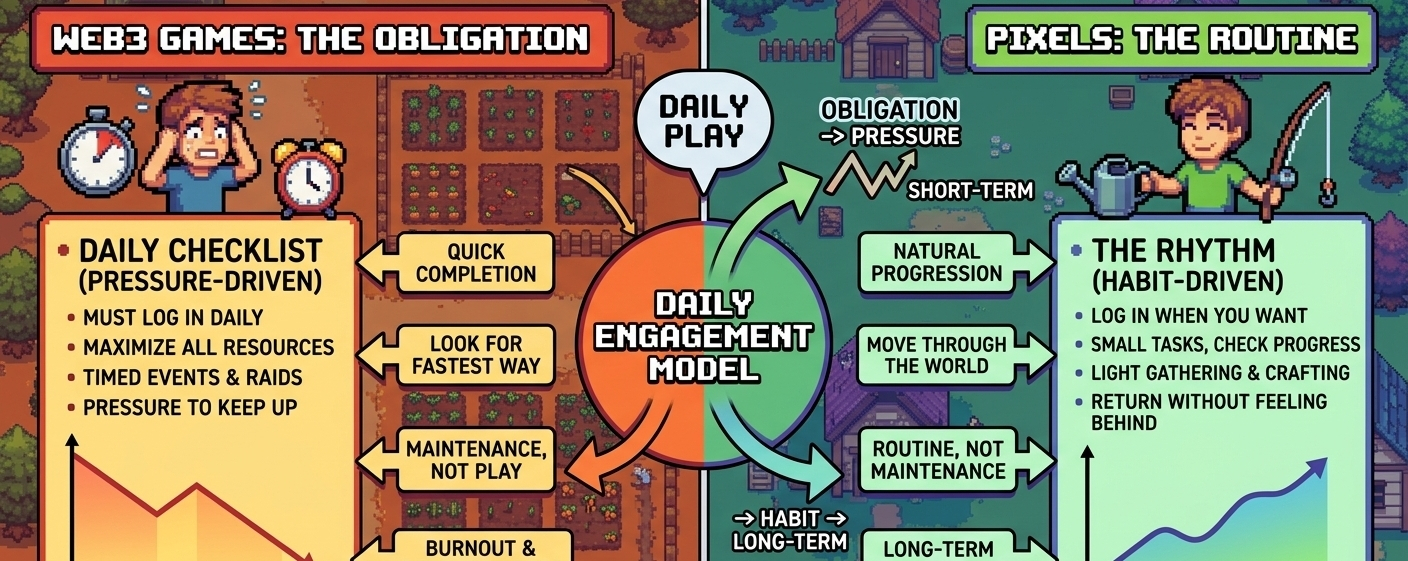
I keep thinking about what Pixels chooses not to put on-chain.👌
Most Web3 games focus on what they can make permanent. Ownership, assets, transactions. The assumption is usually that more things on-chain means more value, more transparency, more trust.
But I’m not sure that always translates into a better game.
Because games are not just systems of ownership. They are systems of change.🤷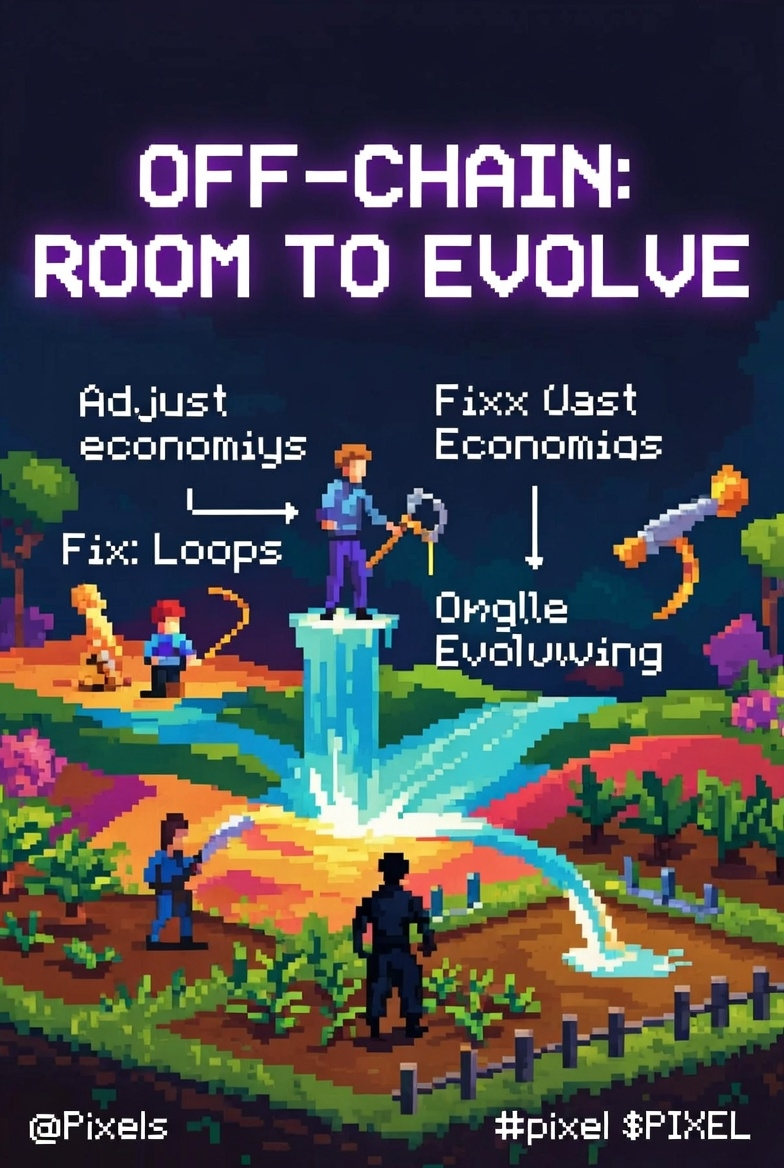
Mechanics need to be adjusted. Economies need to be balanced. Loops need to be fixed when players inevitably find edges. And all of that requires flexibility.
That is what makes Pixels interesting to me.
It seems selective.
Some things are clearly positioned on-chain — land, $PIXEL, ownership-heavy elements. The parts meant to persist, to carry scarcity, to hold identity.🤔
But a lot of the everyday gameplay stays off-chain.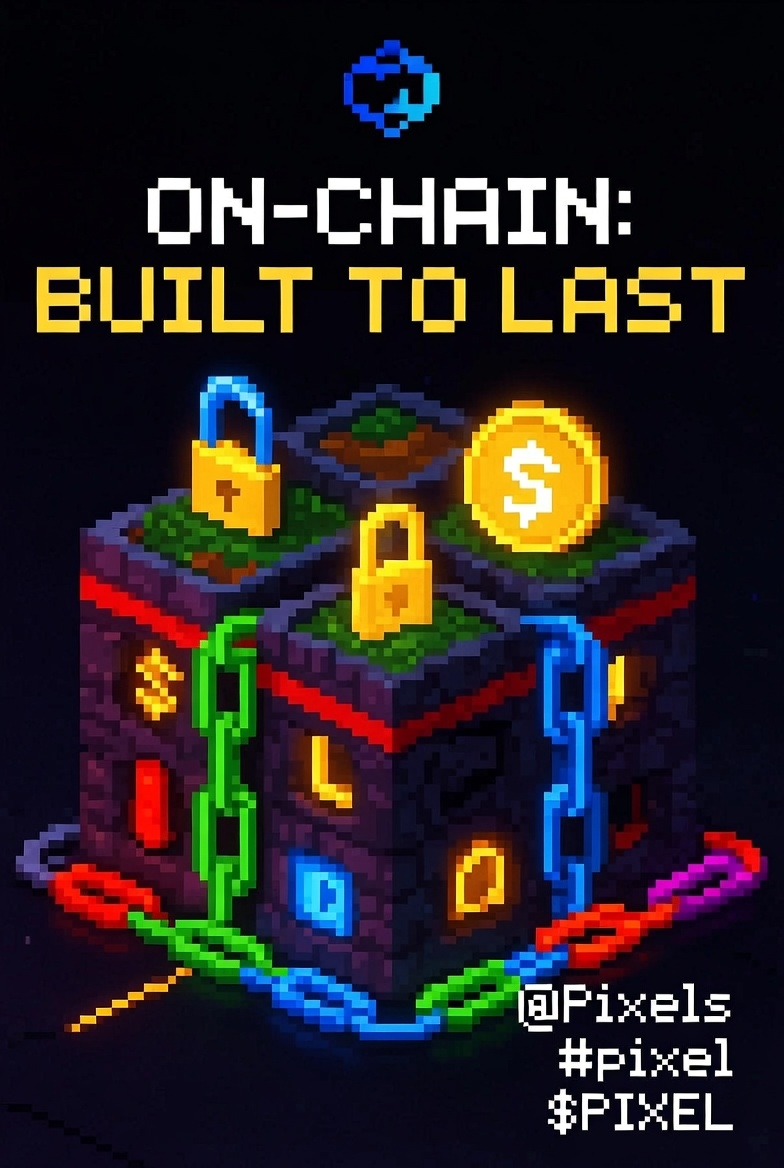
And I think that is intentional.
Because if everything becomes permanent too early, the game loses its ability to move. Every adjustment becomes slower. Every fix becomes more complicated. The world starts feeling less alive and more… settled.
I don’t think most games are meant to feel settled.
They are meant to evolve.
Of course, keeping systems off-chain introduces its own tension.
It requires trust.
It means designers still have control.
It means the world is not fully governed by immutable rules.
But I keep wondering if that is actually necessary.
Because a game that cannot change quickly may struggle to survive player behavior over time.🙃
And players are always unpredictable.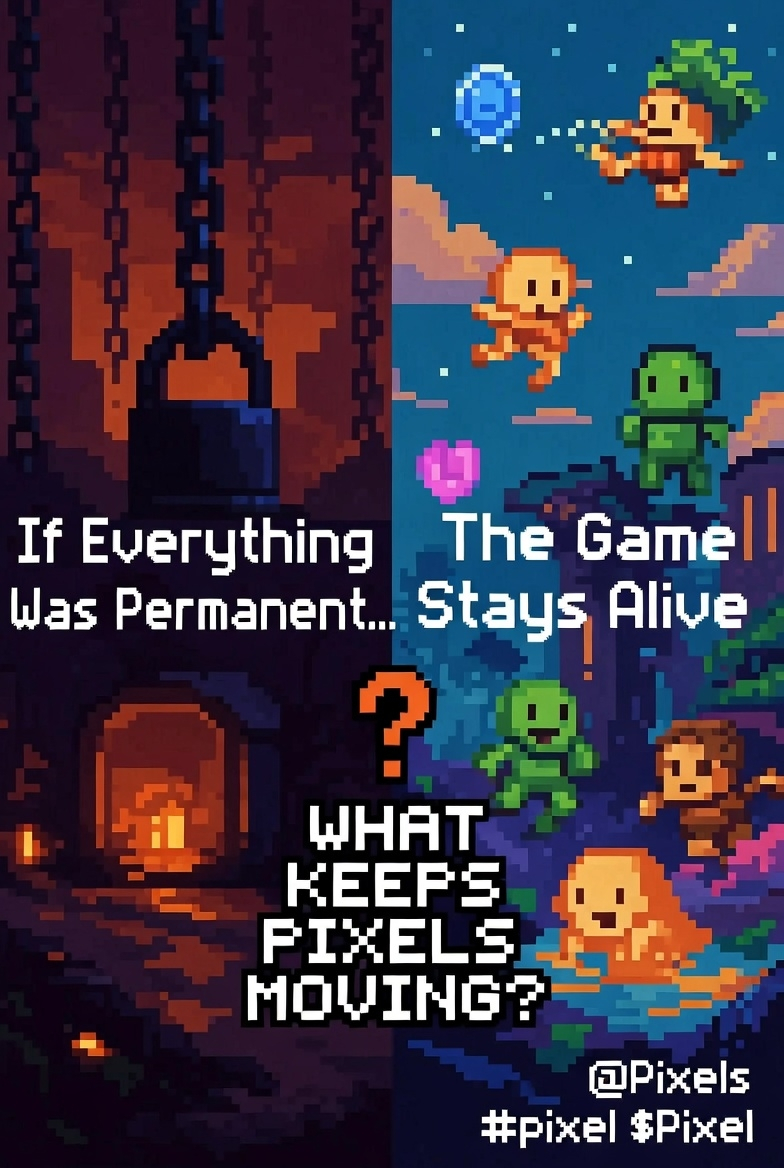
So to me, the question is not why Pixels keeps some things off-chain.
It is what would happen if it didn’t.
And I suspect the answer is that the game would become more rigid and maybe less alive.