

Pixels is one of those projects I didn’t plan to pay attention to. It just kept showing up anyway. Not loudly, not in that forced “you need to look at this now” kind of way. More like something sitting in the corner, doing its thing while everything else fights for attention.
I’ve been around long enough to know how this usually goes. Simple game, token attached, early traction, then the same cycle kicks in—people optimize the fun out of it, rewards get drained, and whatever looked active starts feeling empty. So when I first saw Pixels, it didn’t feel new. Farming, exploring, collecting… it’s familiar territory. Almost too familiar.
That’s usually where I lose interest.
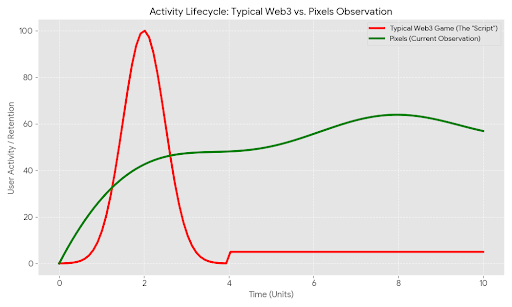
But I didn’t this time. Not because I was impressed—more because I was waiting for it to break. I kept checking back expecting to see the usual drop-off. The moment where activity spikes, then falls off a cliff once the easy rewards dry up. That moment hasn’t hit the way I expected.
It’s not that the game is doing something revolutionary. It isn’t. The loop is straightforward, even a bit repetitive if you’re being honest. But there’s something in how people interact with it that feels different. It’s not frantic. It’s not purely transactional. People aren’t rushing through it like they’re trying to squeeze every last bit of value out before moving on.
That alone is strange for a Web3 game.
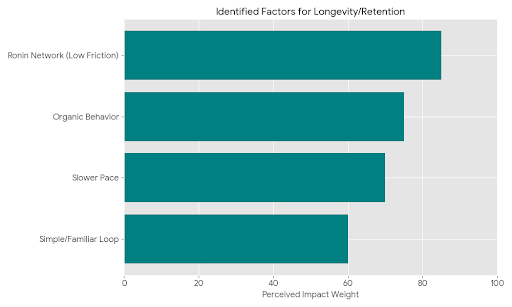
Most of these systems accidentally train users to behave like extractors. Get in, earn fast, get out. Pixels doesn’t completely avoid that—it can’t—but it doesn’t push you there as aggressively either. The pace is slower. You don’t feel like you’re constantly behind if you’re not optimizing everything.
And that changes how long people stick around.
I also can’t ignore the fact that it’s running on Ronin. That probably matters more than people want to admit. When the friction drops—cheap transactions, smoother interactions—you remove one of the biggest reasons people leave early. It stops feeling like work just to exist inside the system.
Still, that’s not enough on its own. Plenty of projects have decent infrastructure and still fade out.
What I keep coming back to is behavior. Not numbers, not announcements—just what people actually do when no one is telling them to stay. And here, they stay a bit longer than expected. Not forever. Not obsessively. Just enough to notice.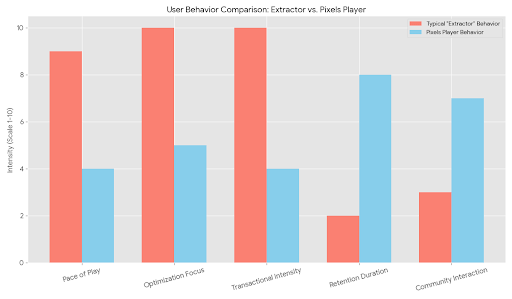
But I’m not convinced this holds.
Because incentives are still there, and incentives have a way of reshaping everything over time. What feels organic now can slowly tilt into something more mechanical. If rewards become the main reason to show up, the whole thing shifts. I’ve seen that happen too many times to ignore it.
There’s also the question of attention. The market doesn’t sit still. It chases whatever feels bigger, faster, louder. Something like Pixels can either get overlooked completely or get pulled into hype it wasn’t built to handle. Both outcomes can break it in different ways.
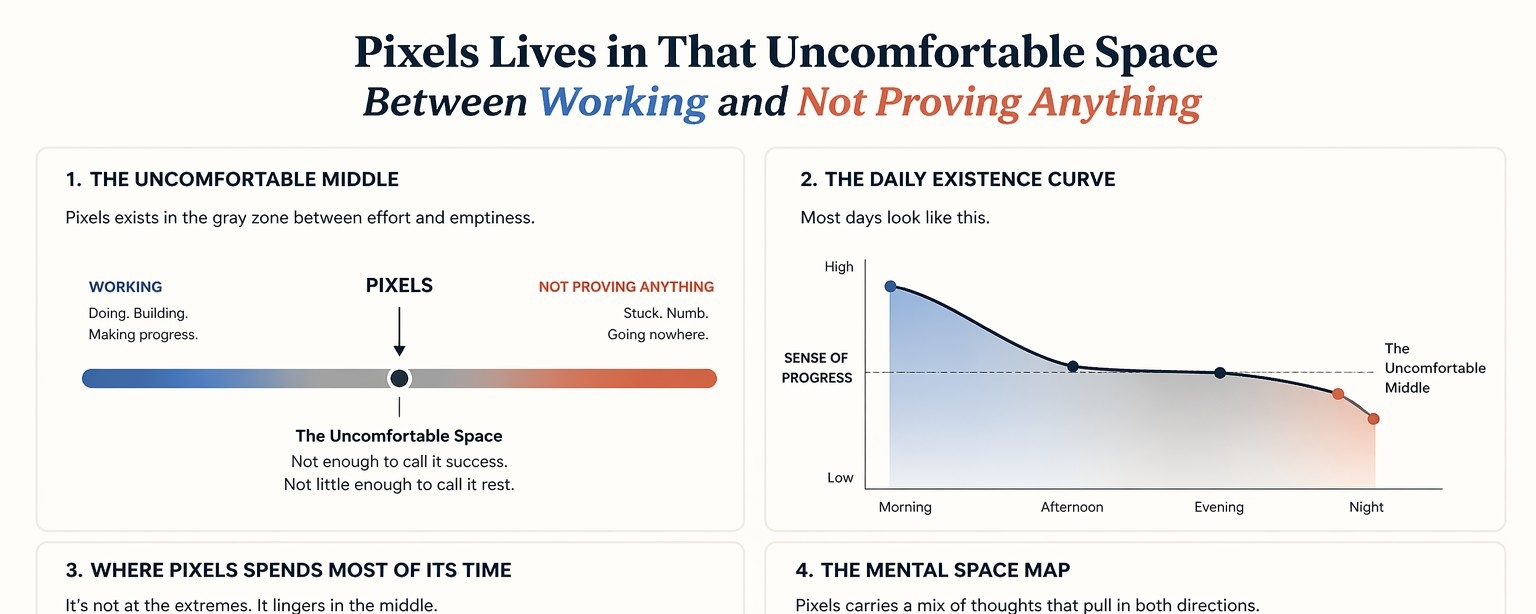
So I’m stuck somewhere in the middle with it.
It hasn’t given me a reason to write it off, which already puts it ahead of most. But it also hasn’t proven that this model can last once conditions change. And they always change.
For now, it feels like something that works just enough to keep going. Not perfect, not broken. Just… functioning in a space where most things either explode or disappear.
And maybe that’s why I keep checking back. Not because I think it’s the answer to anything, but because it hasn’t followed the script exactly.
I’m still waiting to see if it eventually does.