The latest Iran-linked USDT freeze is not just another enforcement headline. It is a reminder that stablecoins are no longer sitting outside geopolitics. They are now part of it.
The U.S. Treasury sanctioned multiple crypto wallets tied to Iran, freezing around $344 million in digital assets, according to Treasury Secretary Scott Bessent. Reuters reported the freeze as part of Washington’s effort to disrupt Iranian financial networks.
The more interesting detail is how it happened. Reports say Tether coordinated with U.S. authorities and froze USDT across two Tron addresses at the smart-contract level. That means the Tron network itself did not need to stop. The issuer simply made those tokens immovable.
That changes how people should think about stablecoins.
USDT can move fast across borders, but it can also be frozen fast when regulators identify sanctioned links. In this case, crypto.news reported that investigators connected the wallets to Iranian exchanges, intermediary addresses, and wallets associated with the Central Bank of Iran.
The timing also matters. The action comes as pressure around Iran is escalating, with new sanctions and possible talks involving Pakistan already in the geopolitical background. Al Jazeera reported earlier this week that the U.S. issued more Iran sanctions ahead of possible talks in Pakistan.
For the market, the signal is clear: stablecoins are becoming easier to monitor, trace, and freeze when tied to sanctioned actors. That may increase trust for regulators and institutions, but it also reminds users that centralized stablecoins are not censorship-resistant money.
Crypto did not become invisible finance.
It became visible finance with faster rails.
#USDT #Tether #CryptoNews #Tron

Article
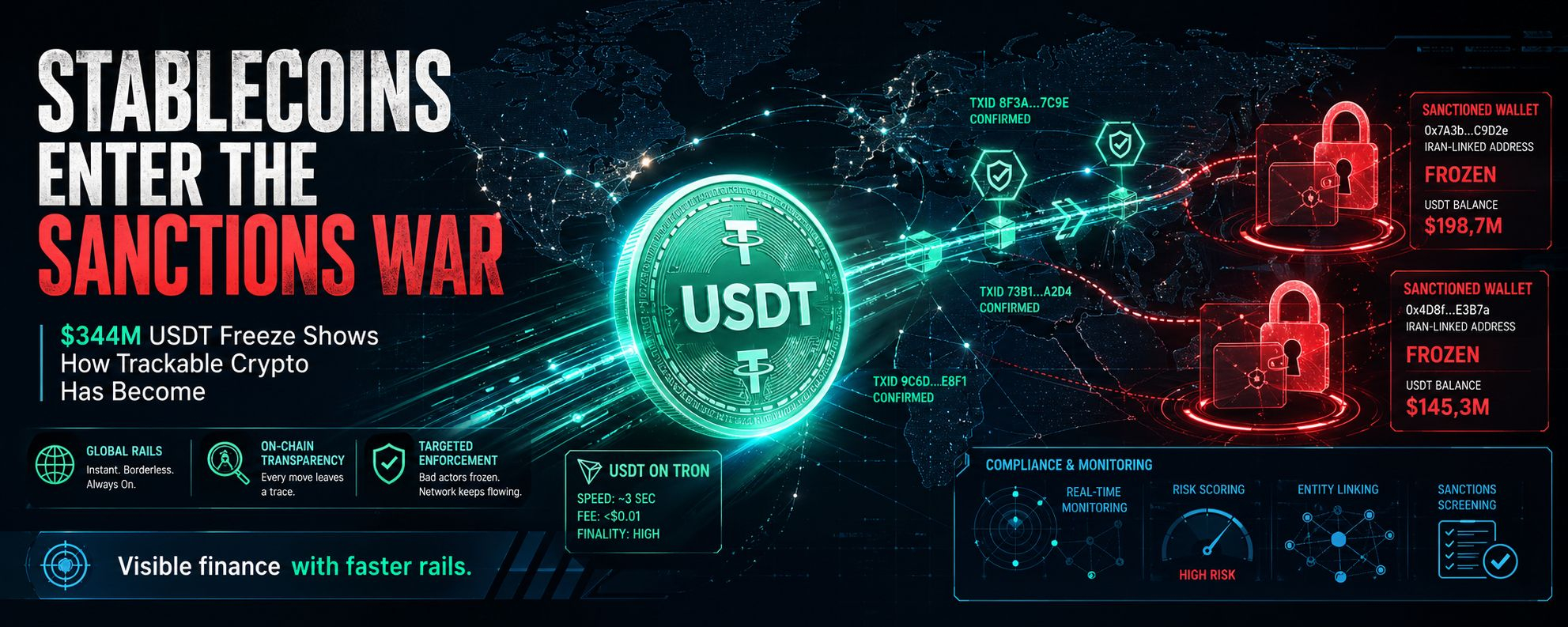
Stablecoins Just Entered the Sanctions War: $344M USDT Freeze Shows How Trackable Crypto Has Become

--