
According to a comprehensive analysis of market and on-chain indicators, Bitcoin is in the early stage of a long-term downward trend. This trend is expected to continue throughout the entire year of 2026. Meanwhile, the probability of breaking historical highs in the near term is assessed as minimal.
In a conversation with BeInCrypto, Julio Moreno, head of the research department at CryptoQuant, identified weakening demand as the main factor behind this forecast.
Blockchain data confirms the start of the 'bear' cycle
Many market participants continue to debate the prospects of the industry, but statistical data indicates that the downturn phase began as early as November 2025. The current situation is characterized as a transition into a prolonged decline in prices.
"Almost every on-chain metric or market indicator confirms that we are in the early stages of a 'bear market,'" explained the expert. The main question for analysts now is the duration of this cycle and the depth of the potential correction. However, given the current market conditions, expecting a revival to record highs is unrealistic.
Institutional investor demand crisis
In recent months, there has been a structural decline in interest in the asset. CryptoQuant specialists closely monitor capital flows into exchange-traded funds (ETFs), which previously served as the primary driver of growth.
From 2024 to 2025, the market was supported by significant capital inflows following the launch of spot Bitcoin ETFs in the U.S. Additional optimism was driven by the regulatory policy of Donald Trump's administration, which encouraged interest in riskier assets. However, this mechanism is no longer supporting growth at present.
Since early November, ETFs have turned into net sellers of cryptocurrency. The period of aggressive accumulation has shifted to stagnation, and then to a deliberate withdrawal of funds. The lack of new buyers creates excessive pressure on trading platforms.
Risks of forced sales of treasury reserves
Last year, there was a surge in activity from the corporate sector: companies widely added Bitcoin to their reserves. Following MicroStrategy (now Strategy), similar accumulation strategies were implemented by MetaPlanet, Twenty One Capital, and MARA Holdings.
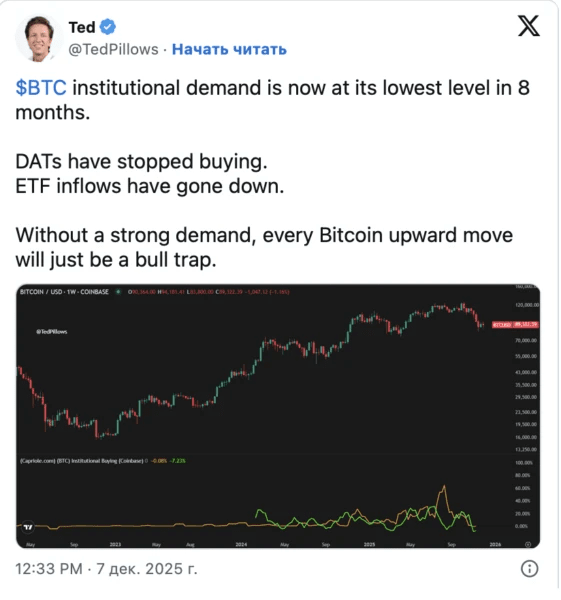
To date, this wave of investment has faded. Except for MicroStrategy, almost all public holders have stopped purchasing. If price declines continue, there will be a serious risk of forced liquidation of positions by these companies to cover their obligations.
Such a scenario could act as a catalyst for volatility and accelerate the decline. According to expert estimates, Bitcoin could reach a local bottom around $56,000. The asset's future prospects will depend entirely on the ability of demand to recover. Until signals of renewed growth appear on the blockchain, the most prudent strategy remains caution.
#BTC #BTCReview #Bitcoin #CryptoMarketAnalysis
