


Dusk Network, a privacy-focused Layer 1 blockchain designed for regulated financial applications and real-world assets (RWAs), has introduced innovative features to enhance its staking ecosystem. One of the standout advancements is Hyperstaking, also referred to as Stake Abstraction. This mechanism revolutionizes traditional staking by making it programmable, enabling smart contracts to directly participate in the staking process.
What is Traditional Staking on Dusk?
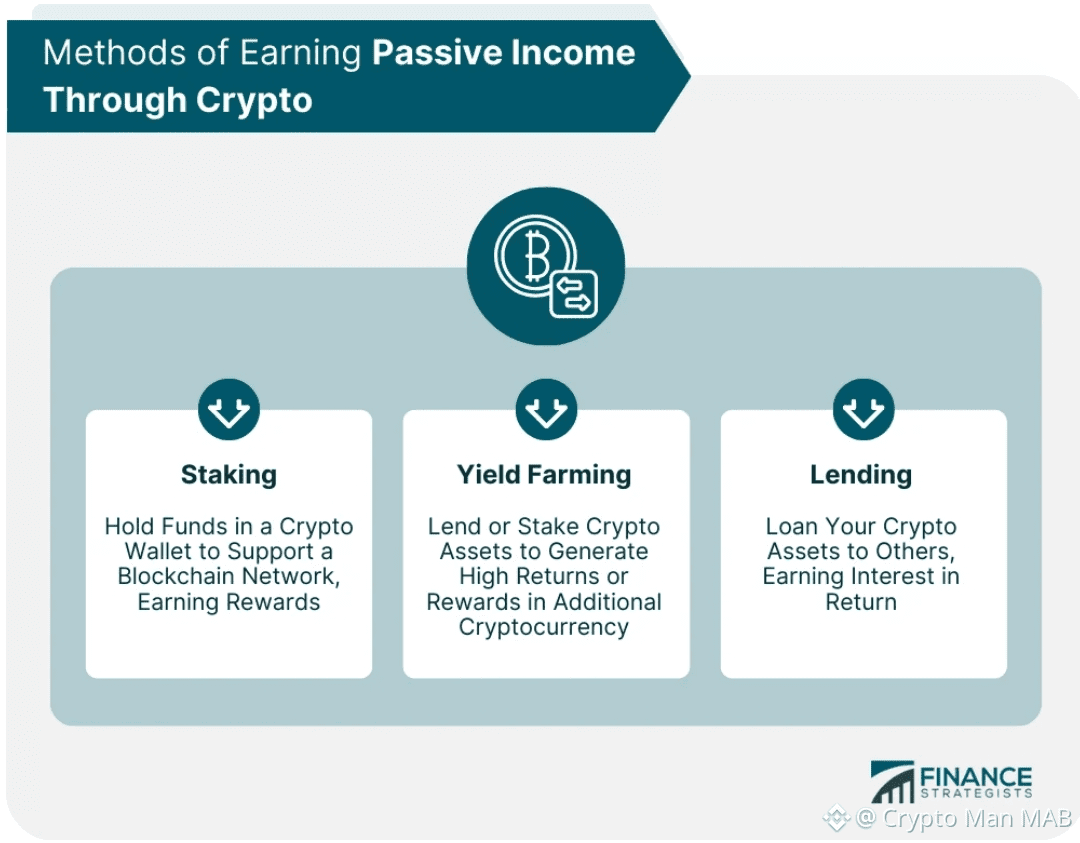
In conventional proof-of-stake (PoS) networks like Dusk, staking typically requires users to lock up their native tokens (in this case, $DUSK) using their personal wallet keys. This secures the network through consensus participation (via provisioner nodes), earns rewards, but often demands technical know-how--such as running a node--or ties up funds with lockup periods.
 While effective, this model limits accessibility: many users avoid staking due to complexity, and innovation remains constrained to basic reward distribution.
Introducing Hyperstaking: Programmable Staking Explained
Hyperstaking, launched as part of Dusk's mainnet advancements (with full rollout highlighted around early 2025), implements Stake Abstraction. This allows smart contracts to act as staking participants--exactly like regular user accounts.
Instead of relying solely on user-controlled keys, a smart contract can:
Stake and unstake $DUSK tokens automatically
Manage staking based on predefined, programmable logic embedded in the contract
Handle rewards by automatically reinvesting (compounding), distributing to users, or pooling them
This abstraction removes manual intervention and node-running requirements, opening the door to fully programmable staking.
As explained in Dusk's official documentation: "Stake Abstraction (Hyperstaking) enables smart contracts to participate in staking on Dusk, replacing the traditional model where only user keys are allowed to stake."
How Hyperstaking Works
At its core, Hyperstaking empowers developers to write smart contracts that interact directly with Dusk's staking system. The contract behaves as a "staker" entity:
It stakes $DUSK (often pooled from multiple users)
It follows custom rules for when to stake/unstake
Rewards flow to the contract, which can execute logic like auto-compounding or splitting yields
This is trustless and decentralized--no central custodian needed--while leveraging Dusk's privacy features for confidential transactions where applicable.
Key Benefits and Use Cases
Hyperstaking transforms staking from a static process into a dynamic, programmable one. Major advantages include:
Accessibility -- Users stake without running nodes or dealing with technical setup.
Automation -- Rewards compound automatically; staking adjusts per logic.
Decentralization Boost -- Lowers barriers, attracting more participants and increasing staked $DUSK for network security.
Innovation -- Enables new models beyond basic staking.
Prominent use cases:
Liquid Staking -- Smart contracts run staking pools; users deposit $DUSK and receive liquid staking tokens (LSTs) usable in DeFi for trading, lending, or further yield while earning staking rewards--no lockups required.
Delegation and Staking-as-a-Service -- Third parties or automated pools handle staking on behalf of users.
Referral-Based Staking -- Incentive programs reward users for onboarding others via shared rewards.
Privacy-Preserving Staking -- Leverages Dusk's zero-knowledge features for confidential staking activities.
Yield Boosting -- Custom logic combines staking with other DeFi opportunities.
Real-World Example: Sozu
The first major project leveraging Hyperstaking is Sozu, a community-built initiative on Dusk. Sozu provides an automated staking pool where users delegate $DUSK without node overhead. It started with delegated staking in beta and aims for full liquid staking, issuing tradable tokens for enhanced flexibility. As Dusk announced, Sozu exemplifies how Hyperstaking makes staking "simpler, automated & accessible for everyone."
Why Hyperstaking Matters for Dusk and $DUSK
Dusk targets regulated finance with privacy and compliance. Hyperstaking aligns by fostering greater participation, higher staking ratios, and ecosystem growth. It reduces centralization risks from technical hurdles and sparks innovation in privacy-focused DeFi.
As one Dusk update noted: "Hyperstaking marks a significant step forward in providing greater staking flexibility, automation, and accessibility for all users... [It] significantly lower[s] entry barriers, encourage[s] network participation, and foster[s] further decentralization."
In summary, Hyperstaking turns staking into a programmable primitive on Dusk. By letting smart contracts manage staking logic, it paves the way for liquid staking, automated yields, and next-gen financial tools-all while preserving the network's privacy ethos and security. For developers and users alike, it's a powerful evolution in how we think about staking in privacy-centric blockchains.