


"Hey Bro, I heard some Crypto Hack Happened Because of Guardian Network. What is Guardian Network, Bro?"
You are talking about the Wormhole Bridge, which relies on a consensus system called the Guardian Network. They suffered one of the most brutal exploits in decentralized finance history. Let's break down the massive system behind this so you actually grasp the technical reality of the hack.
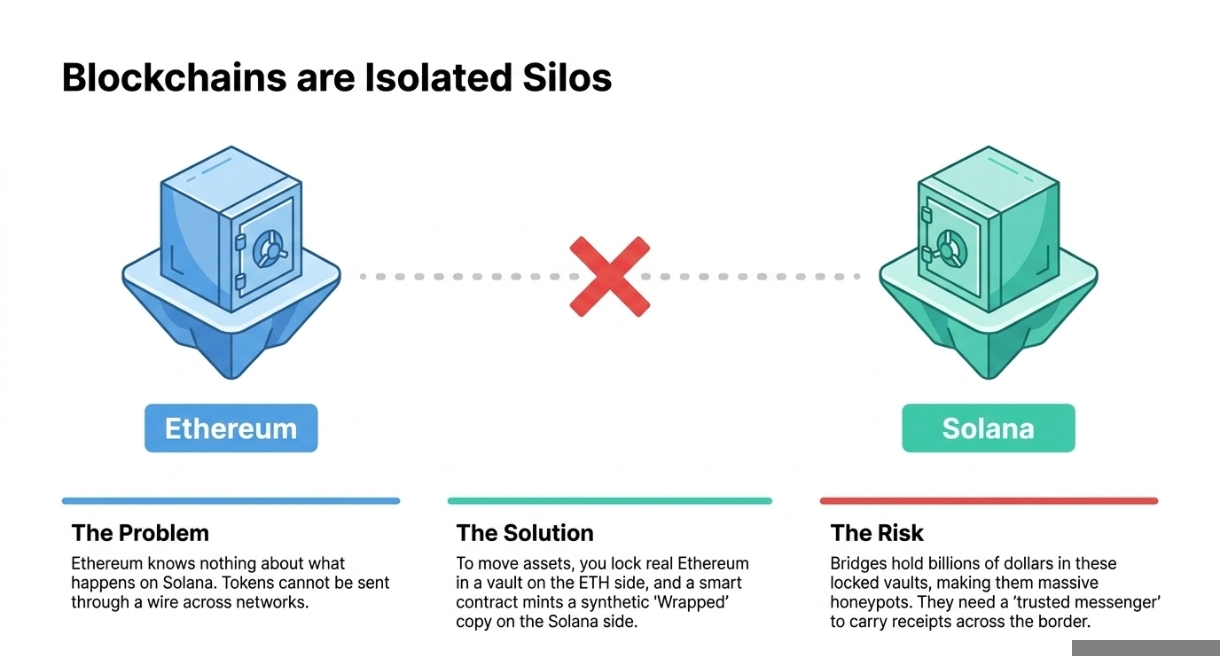
Blockchains are completely isolated silos. Ethereum knows absolutely nothing about what happens on Solana.
If you want to move assets from Ethereum to Solana, you cannot actually send the tokens through a wire. You have to lock your real Ethereum in a vault on the Ethereum side, and then a smart contract mints a synthetic "Wrapped" copy of that Ethereum on the Solana side.
But how does the Solana network verify that you actually locked the real funds before printing the synthetic tokens? It needs a trusted messenger to carry the receipt across the border. Bridges hold billions of dollars in these vaults, making them the biggest honeypots for hackers.
❍ How It Works
The Guardian Network is the decentralized border patrol for the Wormhole Bridge. It is a group of 19 highly powerful validator nodes run by top crypto institutions.
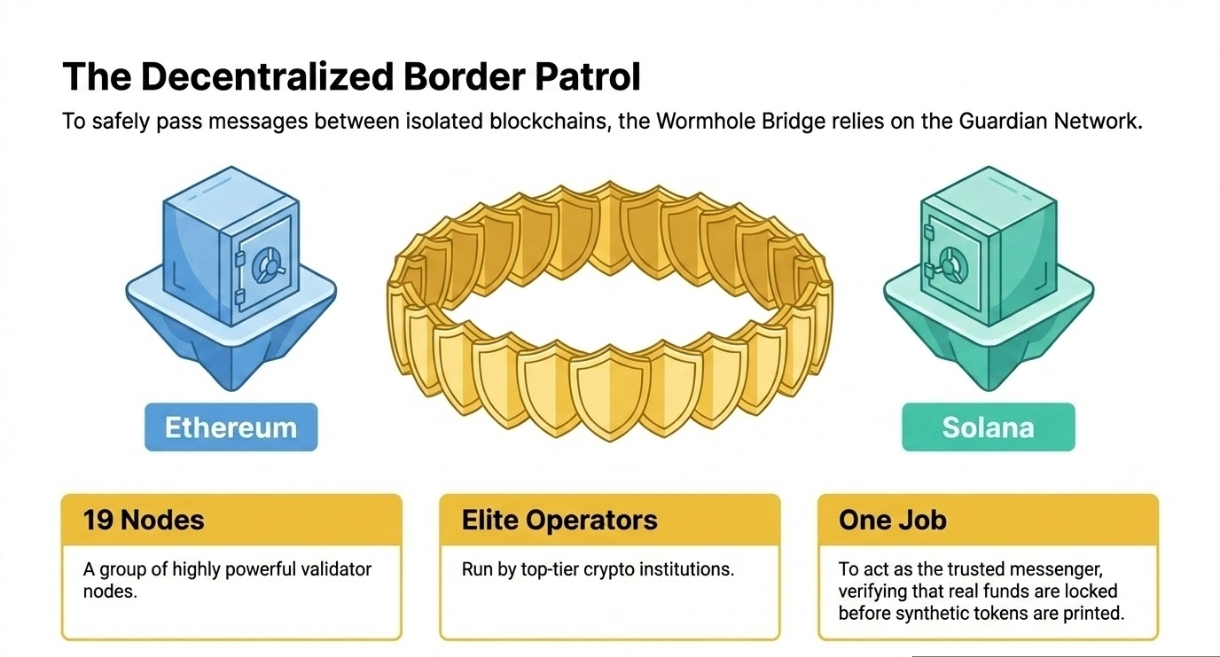
Here is the exact step-by-step process of how they secure the bridge:
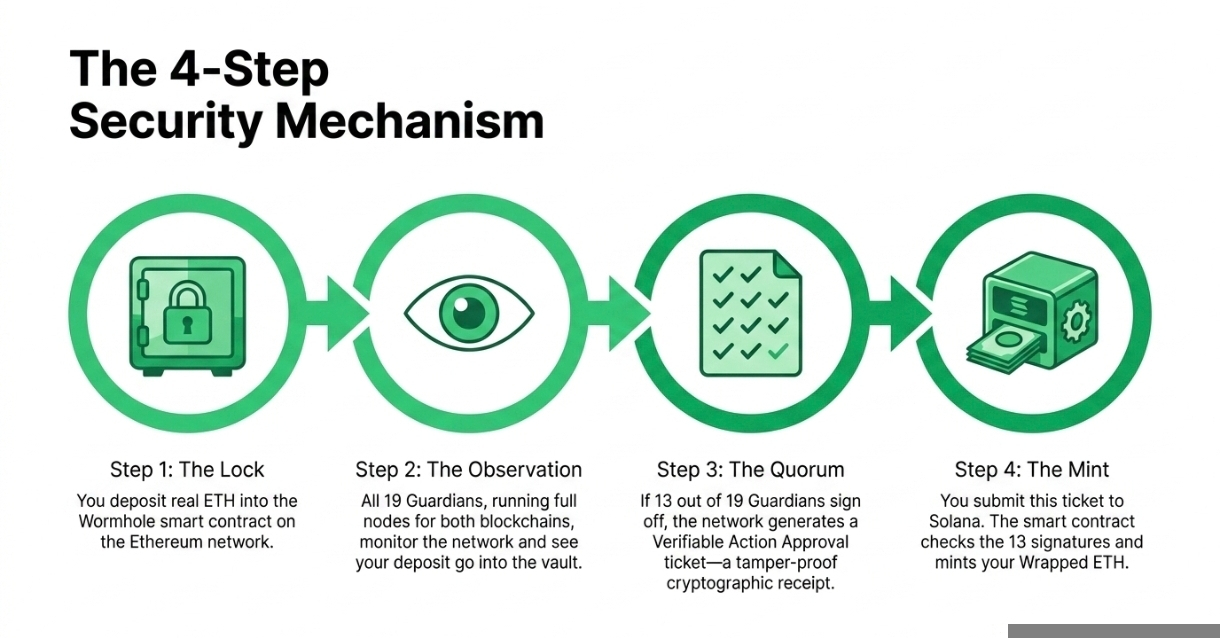
The Lock: You deposit your ETH into the Wormhole smart contract on the Ethereum network.
The Observation: All 19 Guardians run full nodes for both blockchains. They constantly monitor the Ethereum network. They see your deposit go into the vault.
The Quorum: Once they verify the deposit, they cryptographically sign a message confirming the transaction. When at least 13 out of 19 Guardians sign it, the network generates a Verifiable Action Approval ticket. This is your official, tamper-proof receipt.
The Mint: You submit this ticket to the Wormhole smart contract on Solana. The contract checks the 13 signatures, confirms they belong to the real Guardians, and mints your Wrapped ETH.
❍ The Danger (The $320 Million Heist)
The crazy part is that the hackers never breached the Guardian Network. The 19 Guardians did their jobs perfectly. The hacker exploited a critical architecture flaw on the Solana side of the bridge.
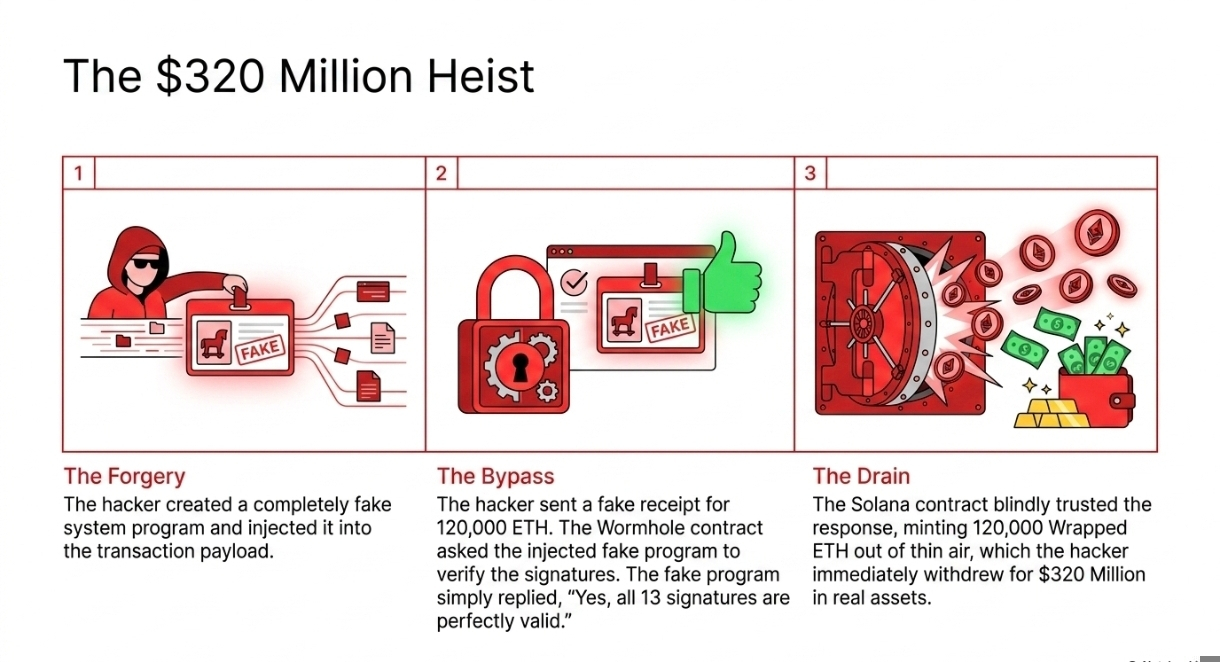
The Flaw: To verify the 13 Guardian signatures, the Solana smart contract relied on a specific built-in system program. But the developers made a fatal error. They forgot to write the code that strictly verifies which system program was doing the checking.
The Forgery: The hacker created a completely fake system program and injected it into the transaction payload.
The Bypass: The hacker sent a fake receipt ticket asking for 120,000 ETH. The Wormhole contract asked the injected fake program to verify the signatures. The fake program simply replied, "Yes, all 13 signatures are perfectly valid."
The Drain: The Solana smart contract blindly trusted the fake response and minted 120,000 Wrapped ETH out of thin air. The hacker immediately bridged this fake ETH back to the Ethereum main network and withdrew $320 Million in real, hard assets from the vault.
This proved that a cross-chain bridge is only as secure as its weakest smart contract logic. Jump Crypto, the firm backing Wormhole, actually had to step in and replace the $320 Million out of their own pockets to prevent a total market collapse.