
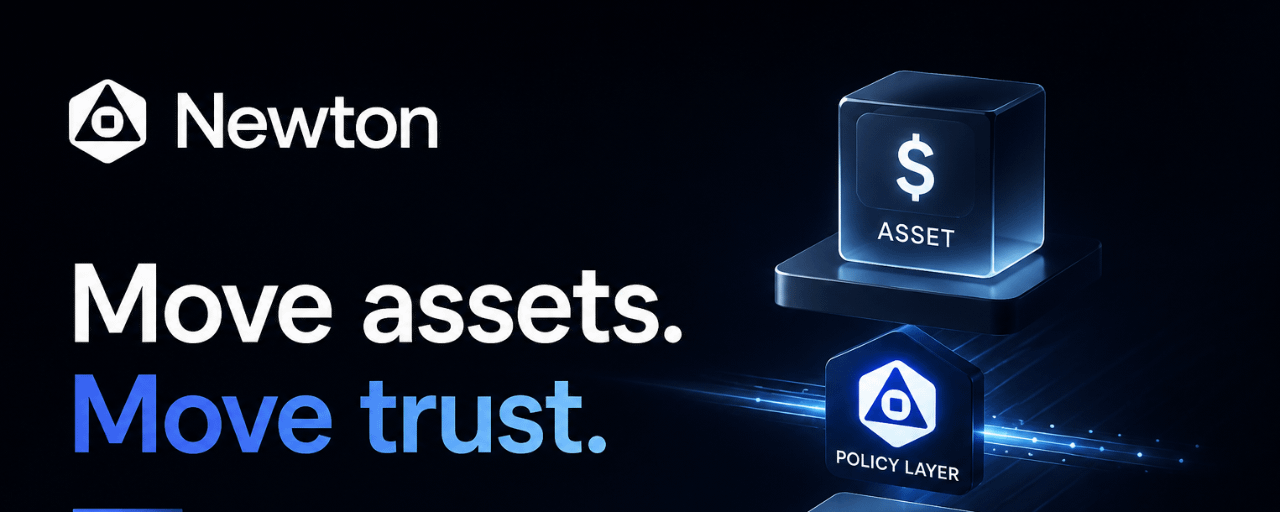
Crypto has learned how to transfer assets.
But it still hasn’t learned how to transfer ownership to use assets.
That’s the difference I realized when looking at how most protocols are working.
A stablecoin can go across many chains.
A token can be bridged from nearly anywhere.
But the conditions that come with it are usually left behind.
An organization that is allowed to trade on this protocol may not necessarily be accepted on another protocol.
A wallet that has completed verification here may need to start over somewhere else.
Assets move.
But the trust doesn’t.
The internet once faced a similar problem.
Before TCP/IP, systems could still exchange data.
What’s missing isn’t the ability to connect.
It’s a unified way for data to pass through many different networks without each place having to understand it all over again.

I think onchain is in a stage quite like that.
We’ve built the infrastructure to move value.
But there wasn’t a shared infrastructure to move the conditions of value.
That’s why I look at @NewtonProtocol from a pretty different angle.
I don’t think Newton is trying to build an extra blockchain.
The project being tested to standardize is how policies can travel together with a transaction, rather than being stuck inside each application.
If that happens, a transaction won’t just carry the asset.
It also carries proof that the asset meets the necessary conditions to be accepted at the destination.
That’s a small change in how it’s implemented.
But it’s a very big shift in how systems begin to trust each other.
Perhaps the most important piece of crypto infrastructure over the next few years won’t be where the asset is stored.
It’s a place where trust can move along with the asset.