
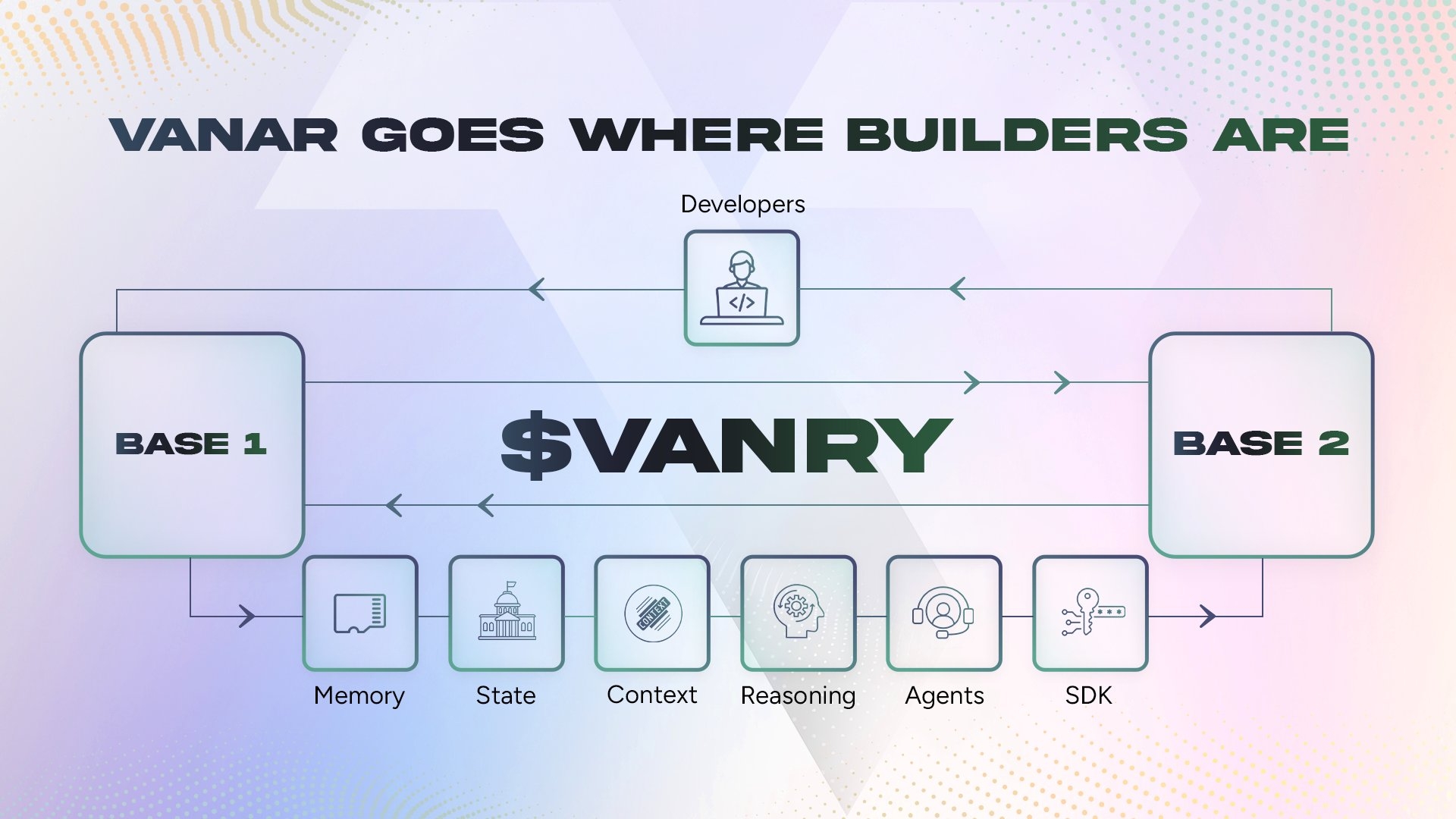
When talking about the vision for 2026 of @Vanar , I think the most important question is not how many games they will release or how many big IPs they will sign, but rather: Does Vanar really want to become another entertainment platform, or do they want to be the 'backbone' of the entire digital entertainment industry?
These two concepts are often confused, but the consequences are entirely different.
The entertainment platform survives on content and attention. The backbone survives on the entire system being forced to operate based on it, even when the end users have no idea what it's called.
The entertainment industry is a very difficult industry. Content always has a short life cycle, tastes change quickly, and the cost of retaining users is increasingly high.
In crypto, this is even more brutal, as most 'on-chain entertainment' previously was merely a narrative dressed in new technology.
When the market is euphoric, everything seems to work. When the cycle turns, very few content platforms survive.
Therefore, if it only stops at being a chain serving games or entertainment, they will have to accept playing a continuously depleting game.
What makes Vanar worth following is that they do not talk too much about 'creating content', but focus on the infrastructure layer beneath the content.
Instead of asking how to get users to Vanar, they ask the opposite question: how can studios, publishers, and other entertainment platforms build, distribute, and operate content more easily.
This is a completely different approach compared to most previous entertainment chains.
If looking deeper, the digital entertainment industry in the coming years will face very specific issues such as increasingly complex IP ownership and lack of transparency in revenue distribution.
User data is fragmented, and the operational costs of the system are increasingly high.
Blockchain, if only used to mint NFTs or issue tokens, will not solve these problems.
But if used as a layer for ownership, a layer for value distribution, and a layer for recording operational data, it could become real infrastructure.
Vanar is trying to position itself in that role.
They talk a lot about the 'blockchain-less' experience, about how users don't need to understand wallets, gas, or tokens to use the product.
This may seem vague, but it is very important if the goal is the mass entertainment industry.
Users do not want to learn new technology just to watch movies, play games, or interact with content.
If blockchain appears as a friction, it will be eliminated very quickly.
Becoming the 'backbone' of the entertainment industry does not mean that Vanar must control the content.
On the contrary, it means they must be neutral enough for multiple parties to build upon.
A good backbone does not need to stand out, but must be reliable.
It must be able to handle a large volume, low cost, and most importantly, be scalable without breaking the experience.
This is an infrastructure problem, not a marketing problem. By 2026, I think the entertainment industry will no longer be too excited about 'all-in-one' platforms promising to change everything.
Instead, they will look for systems that help reduce costs, lower risks, and increase control.
Studios will care about distributing revenue more transparently.
Publishers will care about user data and content consumption behavior.
Creators will care about ownership and the ability to receive direct value.
If Vanar can address these needs at the infrastructure level, they will gradually become an indispensable part, even if quietly.
Of course, this path is not easy. Building infrastructure for entertainment requires a great deal of patience, as its value only becomes apparent when enough parties are using it.
Vanar will have to accept slow progress, less hype, and sometimes being unfavorably compared to flashier entertainment projects.
But in return, if successful, they will not depend on a few IPs or a short-term attention cycle.
I'm not sure by 2026 Vanar will truly become the 'backbone' of the entertainment industry.
But what I clearly see is that they are trying to go in that direction, rather than just becoming another content platform.
And in crypto, where most projects fail due to not finding a sustainable role, choosing the right role is sometimes more important than speed.
Will Vanar have enough discipline to pursue the infrastructure path to the end, or will it be pulled back into the familiar content game? 2026 will be the time when the answer begins to become clear.
@Vanar #vanar $VANRY