
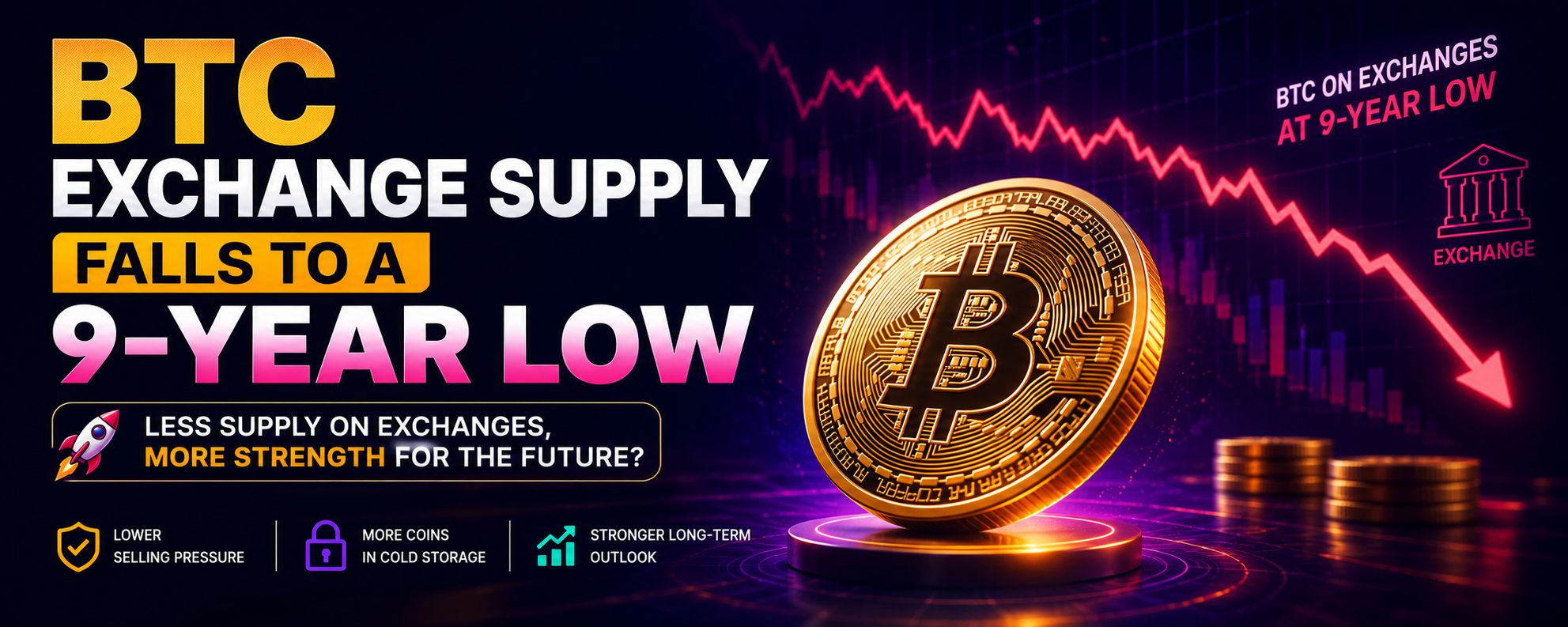
The crypto market is sending another powerful signal, and this time it's coming from Bitcoin's exchange reserves.
According to recent on-chain data, the amount of BTC held on centralized exchanges has dropped to its lowest level in nearly nine years. While price movements often grab the headlines, this metric quietly reveals what long-term investors are actually doing behind the scenes.
Why Does Exchange Supply Matter?
When Bitcoin leaves exchanges, it usually means investors are transferring their coins into private wallets for long-term storage rather than preparing to sell.
In simple terms:
📉 Less BTC on exchanges = Less immediate selling pressure.
If demand increases while available supply keeps shrinking, the market can experience what's known as a supply squeeze, where buyers compete for fewer available coins. Historically, this environment has often supported stronger price momentum.
What's Driving This Trend?
Several factors appear to be contributing:
🔹 Long-term conviction: Many investors believe Bitcoin still has significant upside over the coming years.
🔹 Institutional accumulation: Large investment firms and ETF issuers continue absorbing substantial amounts of BTC, reducing the liquid supply available on exchanges.
🔹 Self-custody movement: Following past exchange failures, more users prefer holding their assets in personal wallets, strengthening the "not your keys, not your coins" philosophy.
Is This Automatically Bullish?
Not necessarily.
A declining exchange balance is generally considered a positive long-term indicator, but it's not a guarantee of an immediate price surge.
Bitcoin's price is still influenced by:
- Global liquidity conditions
- Interest rate expectations
- Macroeconomic events
- Regulatory developments
- Overall investor sentiment
These factors can create short-term volatility even when on-chain fundamentals remain strong.
The Bigger Picture
Bitcoin has a fixed maximum supply of 21 million coins. As more BTC moves into long-term storage and institutional hands, the amount actively available for trading continues to shrink.
If new demand accelerates while exchange reserves remain near multi-year lows, the market could enter another phase where supply struggles to keep pace with buying pressure.
This doesn't guarantee a bull run tomorrow—but it does strengthen one of Bitcoin's most compelling long-term narratives: scarcity.
Final Thoughts
The decline in Bitcoin exchange reserves isn't just another statistic—it's a reflection of investor behavior and confidence.
Whether you're a trader watching short-term charts or a long-term believer in Bitcoin's future, this is one of the most important on-chain metrics to keep on your radar.
As always, combine on-chain data with sound risk management and never rely on a single indicator when making investment decisions.
What do you think?
Is Bitcoin quietly preparing for its next major breakout, or will macroeconomic conditions delay the next rally?
#BTCExchangeSupplyFallsTo9YearLow #USLaunchesNewStrikesAgainstIran #cryptouniverseofficial #BinanceSquare #HODL #OnChainAnalysis #CryptoNews #BullMarket #Blockchain