
The year 2026 was marked by a significant transformation of the cryptocurrency market. While previous cycles were characterized by speculative excitement around meme coins and promises of quick profits, the current stage of industry development demonstrates maturity and a focus on real useful products. Investors are increasingly paying attention to projects that offer a sustainable token economy, real applications of blockchain technology, and integration with traditional financial instruments. In this article, we will conduct an in-depth analysis of four promising cryptocurrency projects that are attracting the attention of institutional and retail investors in the current market cycle.
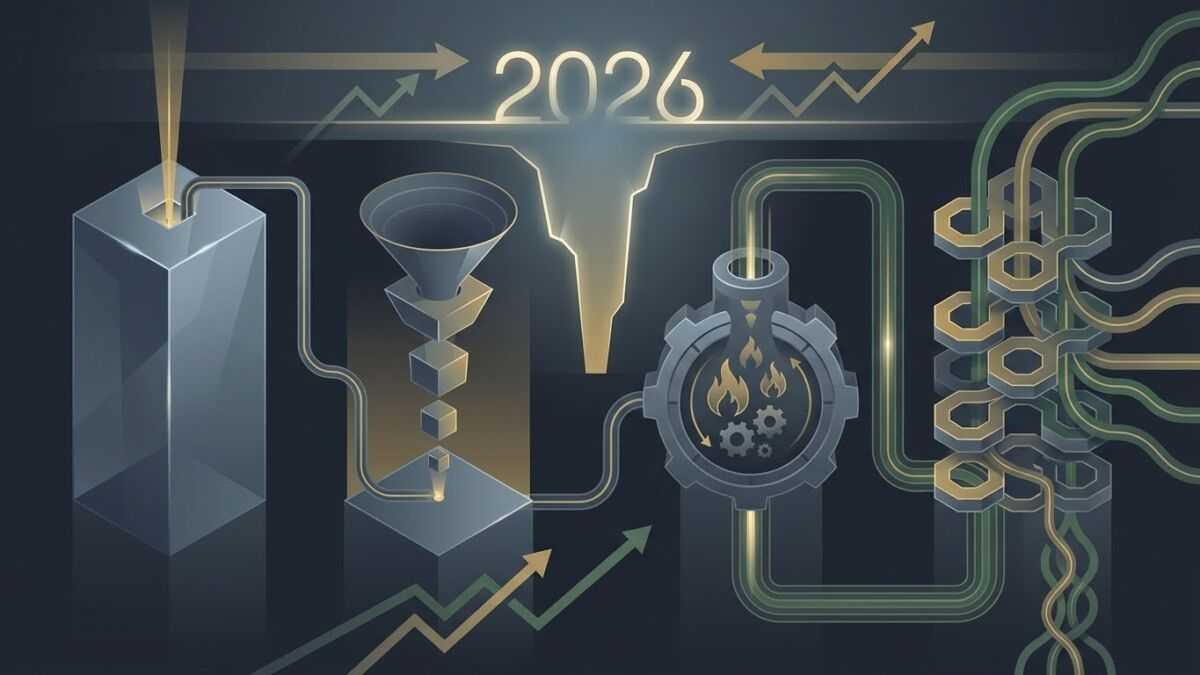
The altcoin market in 2026 shows a high correlation with macroeconomic factors. Interest rates, inflation data, and geopolitical stability directly affect liquidity in risky assets. However, within the cryptocurrency sector, there is clear segmentation. The artificial intelligence sector, next-generation decentralized finance, web 3 games, and innovative stablecoins are becoming key growth drivers. Understanding the fundamentals of these projects is critically important for forming a balanced investment portfolio.
We will review four projects: $GRASS, representing the decentralized artificial intelligence and data collection sector; $RENZO, a key player in liquid Ethereum restaking; $PIXEL, a leader in mass adoption of web 3 games; and $ENA, a synthetic dollar protocol offering a new yield model. Each of these projects addresses unique challenges and has its specific risk profiles. Our goal is to provide structured information that helps you conduct your own research and make informed decisions.
It is important to understand that the cryptocurrency market remains highly volatile. Past performance does not guarantee future returns. The information in this article is for informational purposes only and is not financial advice. Before making any investment decisions, it is essential to conduct your own analysis, assess your risk tolerance, and consult independent financial advisors if necessary.
Chapter 1. $GRASS: Decentralized Data Layer for Artificial Intelligence
Concept and technology
The $GRASS project emerged in response to the growing need for high-quality data for training models by companies developing artificial intelligence. Traditional data collection methods often face issues of privacy, censorship, and high costs. Grass offers a decentralized solution that allows users to share unused internet bandwidth to collect publicly available web data. In exchange, users receive rewards in network tokens.
The technical architecture of Grass is built on top of the Solana blockchain, providing high transaction speeds and low fees. This is critically important for micropayments that occur when rewarding network nodes. The protocol uses a system of nodes that operate in the background on users' devices. Data collected by these nodes is cleaned, structured, and transmitted to project partners—companies engaged in AI development.
The uniqueness of $GRASS lies in creating a sustainable data market. Instead of relying on closed databases or dubious scraping methods, the project creates a legal and transparent channel for information supply. This addresses the ethical dilemmas facing the AI industry and opens new monetization opportunities for ordinary users' internet traffic.
Tokenomics and economics
The $GRASS token serves multiple functions in the ecosystem. Firstly, it is used for governance of the protocol. Token holders can participate in votes on key network parameters such as reward distribution, data partner selection, and protocol upgrades. Secondly, the token serves as a payment medium for data consumers. Companies purchase access to data using $GRASS, creating a steady demand for the asset.
Thirdly, the token is used for staking by validators and delegators to ensure network security. Staking allows participants to earn passive income in the form of additional tokens, which incentivizes long-term holding of the asset. The token's inflation model is balanced by mechanisms that burn a portion of the fees, helping to control issuance in the long term.
The token distribution has been designed with community interests in mind. A significant portion of the supply is allocated to rewards for users and early participants in the network. This promotes decentralization of ownership and reduces the risk of token concentration in the hands of insiders. However, investors should carefully study the token unlock schedule, as the gradual release of large volumes may create price pressure.
Growth potential and risks
The artificial intelligence sector continues to be one of the most attractive for investment in 2026. The increasing demand for computational power and data creates a favorable environment for projects providing infrastructure for AI. $GRASS sits at the intersection of two powerful trends: cryptography and artificial intelligence. The project's success relies on its ability to attract new partners among AI development companies and maintain the quality of collected data.
Main risks are associated with competition. New projects are emerging offering similar solutions for decentralized data collection. Additionally, regulatory changes regarding data protection and privacy can impact the operational activities of the protocol. Technical risks, such as vulnerabilities in smart contracts or scalability issues with the Solana network, must also be considered when evaluating investment attractiveness.
For those interested in this asset, it is recommended to study the project documentation, track news about partnerships, and monitor developer activity in code repositories. Current price and trading volumes of $GRASS can be checked on the chart to understand current market sentiment. A deep analysis of on-chain metrics, such as the number of active nodes and the volume of data transferred, will help assess the actual usage of the network.
Chapter 2. $RENZO: Liquid Restaking and a New Era of Yield
Restaking mechanics
With the Ethereum update allowing for staking withdrawal, demand has emerged for tools that enhance the capital efficiency of staked assets. Liquid restaking protocols allow users to stake their ETH while simultaneously utilizing derivative tokens in other decentralized finance platforms. $RENZO is one of the leaders in this category, offering an optimized strategy for asset allocation among various restaking operators.
Users deposit ETH or liquid staking tokens into the Renzo protocol and receive ezETH tokens in return. These tokens represent a share in the pool and automatically accumulate rewards from staking and restaking. The main advantage is that ezETH can be used as collateral on other DeFi platforms to generate additional yield, creating a compound interest effect.
The protocol automatically manages the distribution of funds among node operators by assessing their reliability and profitability. This reduces the burden on users, who do not need to research and select operators themselves. The points and rewards system incentivizes early participation and user loyalty, contributing to a rapid increase in total value locked in the protocol.
Integration into the DeFi ecosystem
The success of $RENZO largely depends on the depth of integration of the ezETH token into the decentralized finance ecosystem. The token must be accepted by major lending protocols, decentralized exchanges, and yield management platforms. Currently, ezETH is integrated into several leading platforms, ensuring high liquidity and utility of the asset.
The governance token $RENZO allows holders to influence protocol parameters such as fees, operator selection, and revenue distribution strategy. Protocol governance is becoming an increasingly important aspect as operational scales grow. Decentralized governance ensures transparency and reduces the risks of censorship or unilateral control by developers.
Yield in the protocol is generated from several sources: rewards for staking Ethereum, rewards for restaking from security layer protocols, and additional incentives from ecosystem partners. Combining these income streams allows for competitive yield compared to traditional staking. However, investors should remember that yield is not guaranteed and can change depending on network conditions.
Smart contract and liquidity risks
Like any DeFi protocol, Renzo carries risks associated with smart contracts. Despite security audits, the potential for vulnerabilities always exists. Hacking the protocol can lead to loss of user funds. Additionally, there is a risk of devaluation of the ezETH token relative to ETH in case of errors in the rate mechanism or mass withdrawal of funds from the protocol.
Liquidity risk also plays an important role. During periods of high market volatility, the ability to quickly withdraw funds without significant losses may be limited. Users are advised to diversify their positions and not invest all their funds in one protocol. Monitoring total value locked and collateral ratios helps assess the health of the protocol.
For investors considering $RENZO, it is important to understand the difference between native staking and liquid restaking. Native staking offers maximum security but less flexibility. Restaking increases yield and capital utility but adds layers of complexity and risk. Analyzing the dynamics of the $RENZO token and comparing it to its peers can help. Evaluating the risk-reward ratio should be the foundation of investment decisions.
Chapter 3. $PIXEL: Mass Adoption of Web 3 Games
Game economy and mechanics
The blockchain gaming sector has gone through several stages of development, from simple clickers to complex multiplayer worlds. $PIXEL is the token of the Pixels ecosystem, one of the most popular web 3 games on the market. The game combines elements of a farming simulator, world exploration, and social interaction. The project's success is attributed to its low entry threshold and engaging gameplay that keeps players around for the long term.
In the game, users can grow resources, create items, complete quests, and interact with other players. The $PIXEL token is used for governance of the ecosystem, purchasing in-game assets, and participating in special events. The game’s economy is structured to balance the inflow and outflow of tokens, preventing hyperinflation and devaluation of rewards.
An important aspect is the game's transition to its own blockchain network or the use of scalable second-layer solutions. This ensures instant transactions and no fees for players, which is critical for mass adoption. Integration with popular wallets and simplifying the onboarding process allows attracting users without cryptocurrency experience.
Partnerships and ecosystem
The development of the Pixels ecosystem depends on strategic partnerships. Collaboration with other gaming projects, brands, and content distribution platforms expands the audience and enhances the token's utility. Introducing cross-game assets and the ability to transfer progress between different projects creates a network effect that strengthens $PIXEL's position in the market.
The project team regularly updates content, adds new features, and conducts events to maintain community interest. Developer activity and transparency of communication are key indicators of the project’s health. Investors should keep an eye on the development roadmap and the team's fulfillment of promises.
The web 3 gaming market remains competitive. The emergence of new projects with improved graphics and mechanics puts pressure on market leaders. Retaining users requires constant innovation and investment in product development. The success of $PIXEL depends on the ability to adapt to changing player preferences and technological trends.
Tokenomics and sustainability
The distribution of $PIXEL tokens includes shares for the team, investors, the ecosystem fund, and the community. The token unlock schedule affects market supply and the price of the asset. It is important for investors to track unlock dates to anticipate potential selling pressure. Token burning mechanisms and their use within the game help reduce the circulating supply and maintain value.
Yield for players is generated through task completion, trading in-game items, and participating in staking. However, relying on the game as a primary source of income is not recommended. The game should primarily be seen as entertainment, and the crypto-economic elements as an additional bonus. This ensures the economy's stability even during bear market periods.
For those interested in gaming tokens, it is recommended to try the game personally to understand the mechanics and user retention potential. Analyzing wallet activity and the volume of in-game transactions provides insight into actual demand. Current liquidity and volatility of $PIXEL can be checked on the trading chart. Evaluating the project's fundamental indicators is more important than short-term price movements.
Chapter 4. $ENA: Innovations in the Stablecoin Sector
Concept of synthetic dollar
Stablecoins are the foundation of the cryptocurrency economy, providing stability in transactions and preserving value. The Ethena project offers an innovative approach to creating the USDe stablecoin, which does not depend on the traditional banking system. Instead of holding fiat reserves in bank accounts, the protocol uses cryptographic guarantees and position hedging to maintain parity with the US dollar.
The mechanism operates by opening short positions on Ethereum futures equivalent to a long position in spot ETH. This creates a delta-neutral position that protects the value of the asset from market fluctuations. Yield is generated from the differences in funding rates for futures and rewards for staking Ethereum.
This approach allows for high yields for stablecoin holders without the risk of devaluation of fiat reserves or dependence on traditional financial sector regulators. The protocol is transparent and allows any user to verify the collateralization of positions on the blockchain. This creates a new standard for decentralized stablecoins.
Yield and Risks
The yield on USDe is not fixed and depends on market conditions. In a bull market, funding rates for futures are usually positive, generating high returns. In a bear market, rates may turn negative, reducing yield or requiring additional support mechanisms. The protocol has insurance funds to cover periods of negative funding.
Risks include smart contract risk, counterparty risk from exchanges where futures positions are opened, and parity breach risk. Although the hedging mechanism is effective, extreme market conditions can put pressure on the system. Users are advised to diversify their stablecoin holdings and not keep all their funds in one asset.
The governance token $ENA allows holders to participate in decision-making regarding protocol parameters such as exchange selection, insurance fund management, and revenue distribution. Protocol governance becomes critically important as the system scales. Decentralization of governance reduces censorship risks and enhances project resilience.
Comparison with traditional stablecoins
Traditional stablecoins, such as USDT or USDC, depend on issuers and banking partners. They are subject to regulatory risks and the risk of freezing funds. Synthetic stablecoins offer an alternative free from these constraints. However, they require a deeper understanding of technical mechanisms and carry different types of risks.
For conservative investors, traditional stablecoins may seem safer. For those seeking yield and decentralization, synthetic options are of interest. Balancing safety and yield is a key factor in decision-making. Details of the mechanism and current collateral metrics can be studied in the project documentation.
Analyzing the $ENA token requires understanding the specifics of the stablecoin sector. Competition in this segment is high, and success depends on the ability to offer a unique value proposition. Monitoring the overall capitalization of the stablecoin and the volume of issuance helps assess market acceptance. Current price and dynamics of $ENA can be checked on the market chart.
Chapter 5. General Risks of the Cryptocurrency Market
Volatility and liquidity
The cryptocurrency market is known for its high volatility. Asset prices can change by tens of percent over short periods of time. This creates opportunities for profit but also carries risks of significant losses. Investors should be prepared for portfolio value fluctuations and not invest funds they are not prepared to lose.
The liquidity of altcoins may be limited compared to Bitcoin or Ethereum. During periods of market stress, the ability to sell an asset quickly at a fair price may be hindered. This can lead to price slippage and additional losses. Diversifying the portfolio and using limit orders can help mitigate these risks.
Regulatory uncertainty
The regulatory environment for cryptocurrencies continues to evolve. Changes in legislation across different countries may affect product availability, taxation, and compliance requirements. Investors should monitor news from regulators and understand the laws of their jurisdiction. Non-compliance can lead to fines or blocking access to services.
Security and storage
The security of funds is the number one priority. Using strong passwords, two-factor authentication, and hardware wallets to store large amounts is essential. Phishing, social engineering, and malware remain common threats. Users should remain vigilant and not share their private keys with third parties.
Verifying contracts and addresses before sending funds helps avoid mistakes. Using official websites and applications protects against counterfeits. Regularly updating software and antivirus protection reduces the risks of device hacking. Education in security is the best protection against losses.
Chapter 6. Portfolio Management Strategies
Diversification
Capital allocation among various assets and sectors helps reduce risks. One should not invest all funds in one project or one category of cryptocurrency. A balanced portfolio can include Bitcoin, Ethereum, major altcoins, and a small portion of promising high-risk projects.
Portfolio rebalancing allows for profit-taking and maintaining target asset allocation. Regular analysis of portfolio performance helps identify weaknesses and adjust strategies. Discipline and adherence to the plan are more important than attempts to guess short-term market movements.
Long-term perspective
Investing in cryptocurrencies should be viewed from a long-term perspective. Short-term trading requires significant skills and time. Long-term holding of quality assets smooths volatility and capitalizes on industry growth. Patience and confidence in the fundamental strengths of projects are key to success.
Continuous learning and tracking trends help stay informed about market changes. Participation in communities and discussing ideas with other investors enriches understanding. However, final decisions should be made independently based on personal analysis.
Conclusion
The cryptocurrency market in 2026 offers a variety of opportunities for investors willing to conduct deep research. Projects like $GRASS, $RENZO, $PIXEL, and $ENA represent different sectors of the industry and have unique growth potential. However, each carries its own specific risks that must be considered.
Success in investing depends on discipline, risk management, and continuous learning. There are no guaranteed ways to make profits, and each investor is responsible for their decisions. Use available analysis tools, keep an eye on news, and formulate a strategy that aligns with your goals.
Detailed information about each asset, current quotes, and trading volumes can be checked on the chart of the respective pair. Comparing trading conditions and fees helps optimize costs. Start with small positions to understand market mechanics and gradually increase exposure as experience accumulates.
Remember that capital preservation is the main goal. Profit comes as a result of making the right decisions and managing risks. Be cautious, conduct your own research, and do not succumb to emotions. The cryptocurrency market is full of opportunities but requires a respectful and professional approach.
\u003ct-171/\u003e\u003ct-172/\u003e\u003ct-173/\u003e\u003ct-174/\u003e