


I've always seen a clear misalignment between game studios and players. The studio wants retention, revenue, and high LTV. The player wants a good experience, fair progression, and to feel like their time is worth something. These goals seem complementary, but in practice, I rarely see them align.
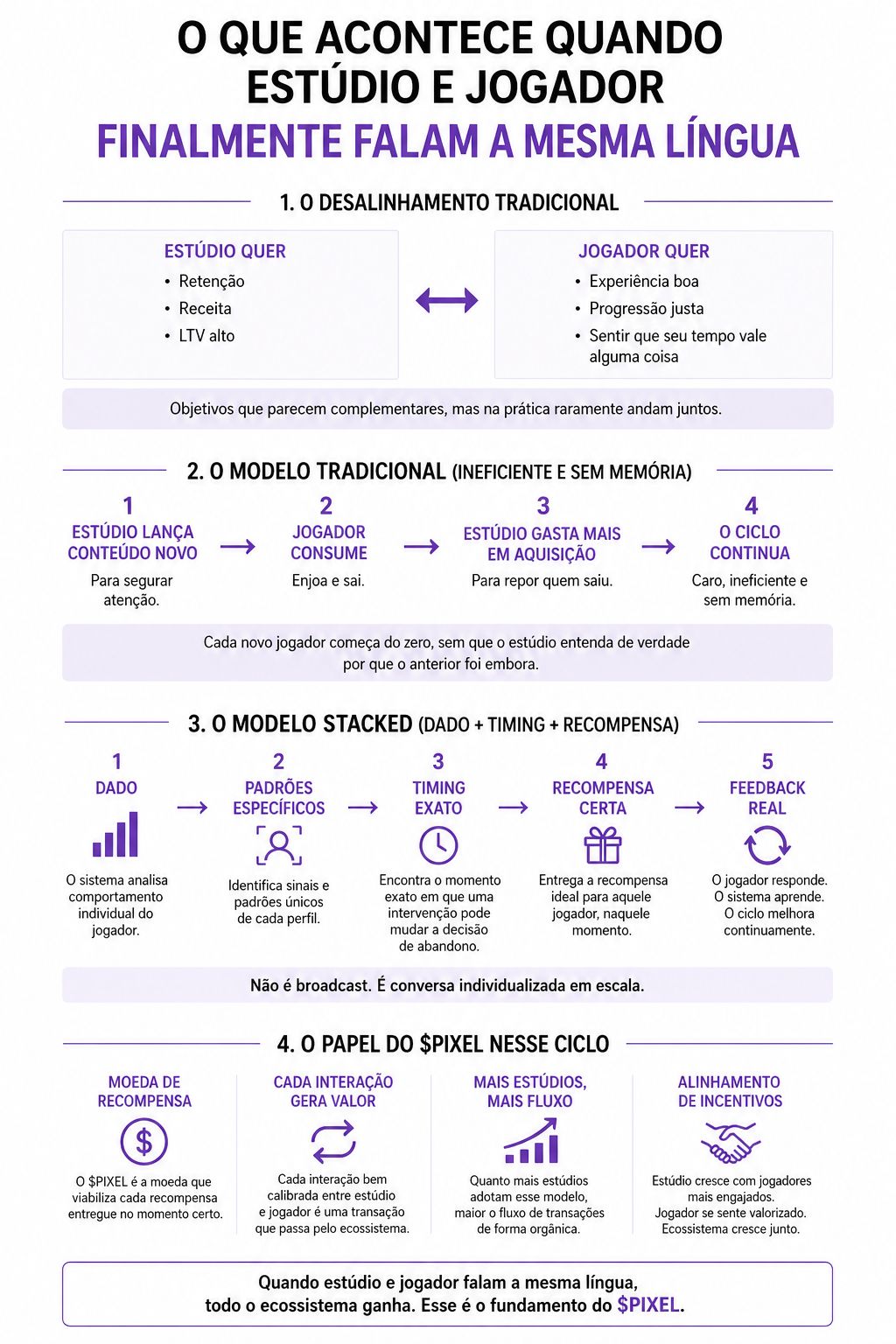
The traditional model tackles this imperfectly. The studio drops new content to keep attention. The player consumes, gets bored, and leaves. The studio spends more on acquisition to replace those who exited. The cycle remains costly, inefficient, and forgetful — each new player starts from scratch, without the studio truly understanding why the previous one left.
What Stacked proposes is different, and that’s what caught my attention. Instead of treating retention as a content issue, it treats it as a data and timing issue. The system analyzes individual behavior — not aggregated averages, but specific patterns for each profile — and identifies the exact moment when a certain reward can change the decision of a player about to bounce.
This creates something I’ve never seen the traditional model achieve: a real feedback loop between what the player does and what the studio offers. It’s not a blanket promotion for the entire base. It’s individualized conversation at scale.
For my thesis on PIXEL, this matters because the token enters this cycle as a reward currency. Each well-calibrated interaction between the studio and the player is a transaction flowing through the ecosystem. The more studios adopt this model, the more this flow grows organically.
It’s a model that aligns incentives in a way I’ve rarely seen the gaming market achieve before. For me, this alignment is the most interesting foundation behind the $PIXEL today.
