
Yi Hailun Coin writes every analysis article with a responsible, focused, and sincere attitude, characterized by clarity, authenticity, and modesty!
Daily market interpretation, I am digital currency analyst Yi Hailun Coin!
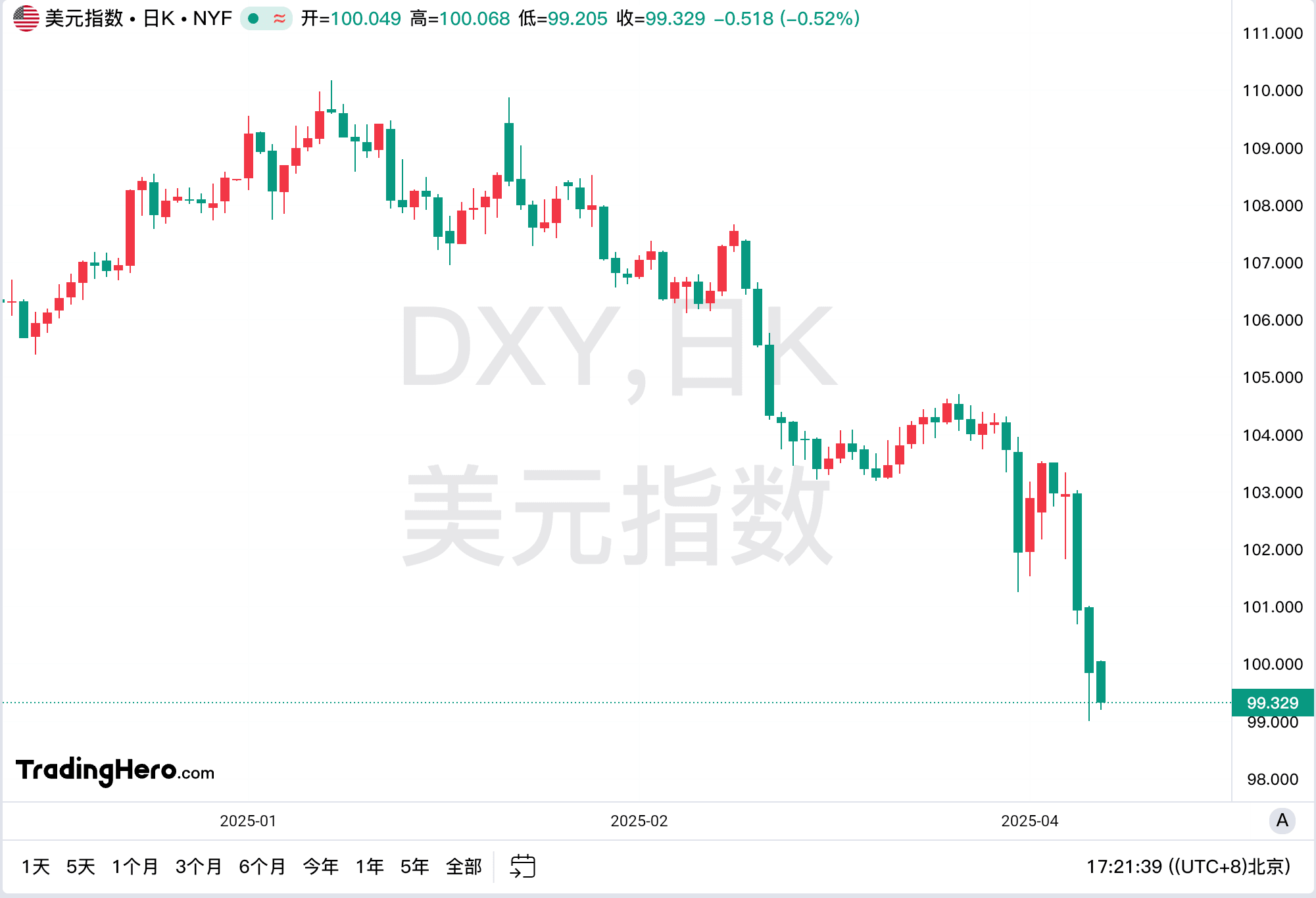
Last week, the global financial market was not peaceful. Under Trump's erratic maneuvers, a trust crisis is also fermenting and spreading. After announcing the formal implementation of reciprocal tariffs, Trump suddenly made a 180-degree turnaround, postponing the imposition of high tariffs on 75 regions for 90 days. Prior to this, Trump's stance was absolutely not to consider suspending tariffs; even the White House specifically stepped in to debunk rumors that the previous 90-day suspension was a rumor. However, a few days later, the rumor became reality. Trump's extreme uncertainty in strategy and speech has shaken the market's confidence in the stability of American strategies, leading to a significant sell-off of U.S. Treasuries. Last week, the yield on 10-year U.S. Treasuries peaked at 4.5%, and the dollar index dropped below the psychological barrier of 100 points amid panic, hitting a nearly three-year low. European market safe-haven assets also saw gains, with the euro benefiting from capital inflows, last week’s increase exceeding that of the yen. The Swiss franc also significantly appreciated against the dollar, and gold reached new highs for three consecutive days! The data behind this also reveals global capital markets' doubts about the stability and predictability of the American economy. Even though March's CPI and PPI data showed some cooling, inflation could resurge after the comprehensive implementation of tariffs, further compressing the Federal Reserve's operational space. The probability of not cutting interest rates in May is as high as 80%. Last week, Federal Reserve officials mentioned that when truly facing a liquidity crisis, they will inevitably resort to strategic tools.

Although the global market was relatively turbulent last week, BTC's performance, in terms of results, also rose by ten thousand points. A rough estimate shows that last week it captured more than half of the range's amplitude, and I believe most friends are quite satisfied with this result. This Wednesday, March retail sales data will be released, expected to grow by 1.4% month-on-month, far exceeding February's 0.2%. The market will closely observe whether American consumers changed their spending behavior before and after Trump's tariff measures, especially among the middle and low-income groups, regarding their consumption elasticity in the face of high inflation and uncertainty. If this data does not meet expectations, it may further confirm that the internal demand of the American economy is starting to weaken, thus intensifying concerns about stagflation, ultimately affecting the Federal Reserve's strategy. Additionally, Powell will speak at 1 AM this Thursday, which will likely lead to further market fluctuations. Looking back at BTC's recent price trend, the daily downward trend seems to have changed, which is the first since January's new high. At the beginning of this month, there was a brief breakthrough, but it ultimately did not effectively break the downward trend line. After BTC breaks the downward trend line, combined with the weekend's impact, there are currently signs of some consolidation. Before reclaiming the 200-day moving average, BTC may continue to oscillate and consolidate. The short-term and long-term moving averages have maintained a certain range, and the global M2 money supply also indicates that BTC will have a relatively positive trend in the coming months. Moreover, the continued weakness of the dollar is very favorable for risk assets.
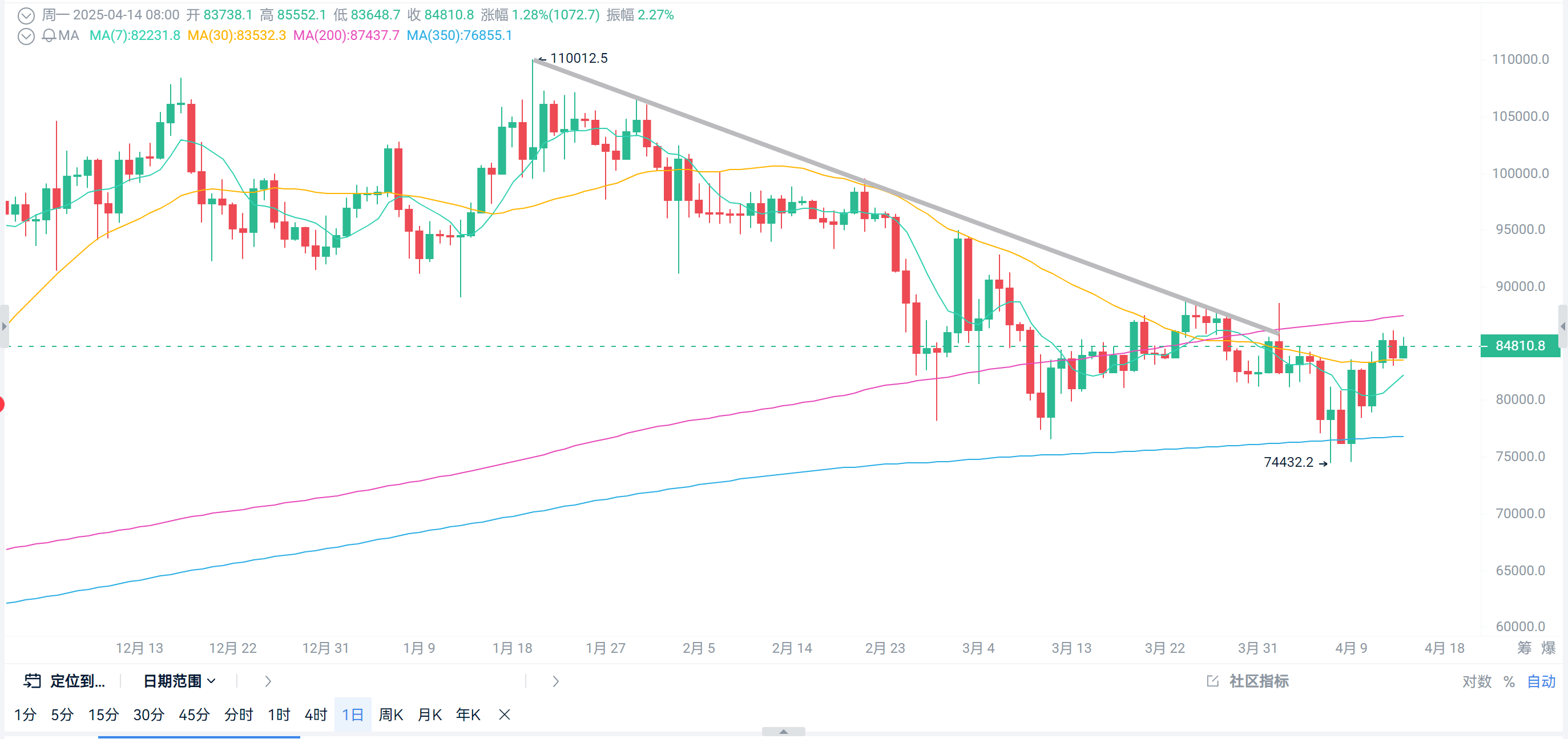
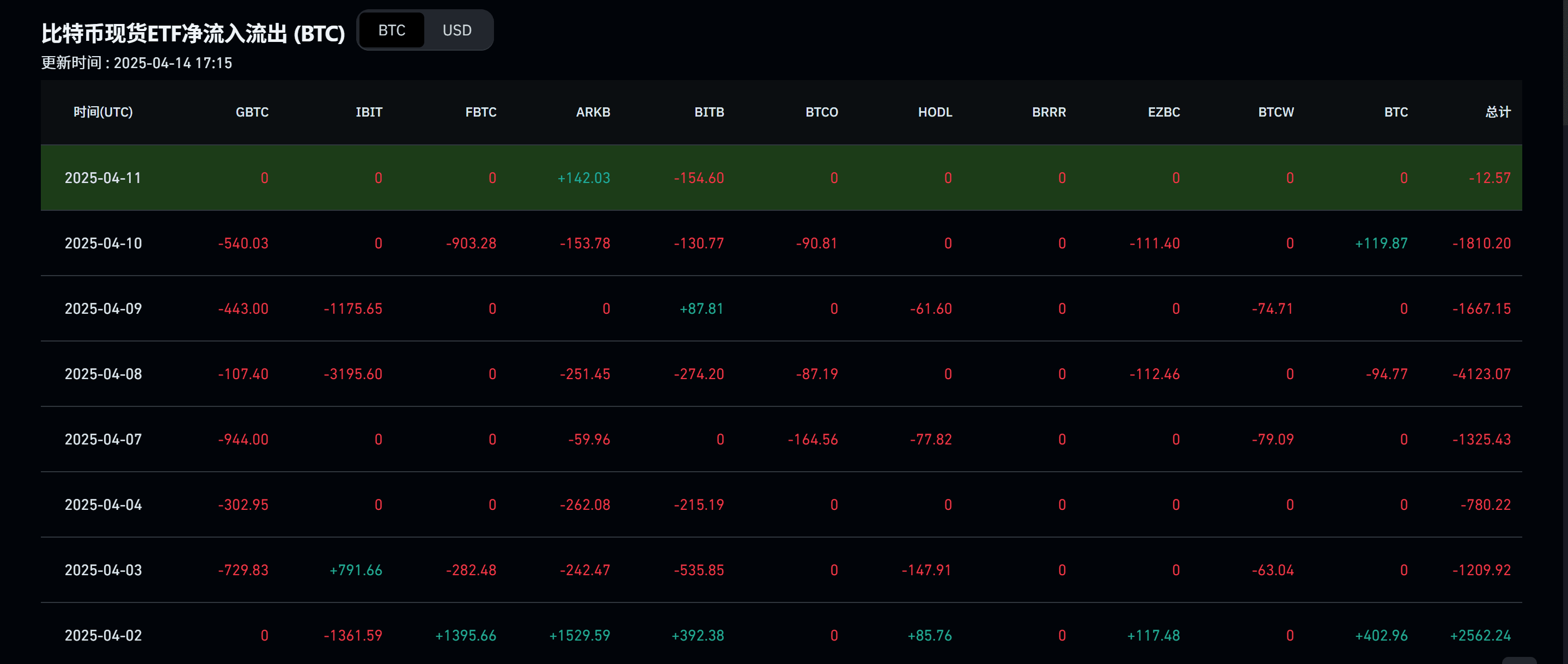
Currently, due to not seeing any new CME gaps, the small gap formed above $85,000 on April 3rd, if no significant bearish factors are seen, is likely to be filled soon; overall, it is a favorable direction, and we need to continue to monitor market dynamics. Looking back at the BTC spot ETF, last week it was generally in an outflow state, but the outflow of funds on Friday was relatively small. If the ETF resumes inflows this week, it will provide more support for BTC, and the upward momentum will be further confirmed. Meanwhile, Saylor has released a new tweet; everyone can check it along with the image. He said the orange dots have no tariffs, indicating that they increased their BTC holdings again last week, and we will see the details of the increase later today. Overall, it seems that the market is favoring investors, and it has returned to the consolidation state of a few weeks ago. Everyone still needs to view the market cautiously, as it has faced the $85,000 watershed without effectively breaking through, retracting in a pin-like manner, but the trend seems to have been confirmed.
On the other hand, from the perspective of the USD index, it reflects the strength of the dollar against other major currencies, primarily including the euro and yen. This means that when the USD index rises, the dollar is stronger relative to these currencies, which conversely indicates that the purchasing power or scarcity of the dollar in the international market is weakening. Once the dollar weakens, central banks in various regions have greater room to release local currency liquidity and also reduce exchange rate pressure, no longer needing to strictly maintain local currency stability. Thus, the global M2 money supply will see synchronous growth. This is why we often observe that when the dollar weakens, not only the American market but also the global asset market, especially emerging markets and the crypto space, tend to experience better performance. Of course, this is just one aspect; although the dollar has been continuously declining since the beginning of the year, BTC has also been declining in sync in recent months. I previously mentioned that these two typically exhibit opposite trends. Now that uncertainties regarding tariffs have eased, I will view BTC's performance in this second quarter with a more ideal outlook.
The financial turmoil faced by the United States can essentially be summarized as a structural issue, long-accumulated and increasingly worsening uncontrolled sovereign debt. Whether it's the uncertainty of interest rate strategies or the dollar system itself, which carries inflation and credit risks, it can actually be traced back to a fundamental reality: the United States relies on issuing debt to maintain fiscal operations, while the difficulty of refinancing is continuously rising. The financial system faces heavy debt rollover pressure. The U.S. Treasury can obtain financing by issuing bonds, and the Federal Reserve can directly purchase these bonds. This was indeed seen in the early stages of the pandemic in 2020 when U.S. organizations continued to inject significant funds to stimulate the economy and stabilize the financial order in response to the sudden economic halt. In the context of saturated demand for U.S. Treasuries in traditional markets, the Federal Reserve initiated quantitative easing, directly incorporating organizational bonds into its balance sheet, providing monetized funding support for fiscal expenditures. This mechanism expanded M2 supply directly by creating new money, while also intensifying subsequent inflationary pressures.

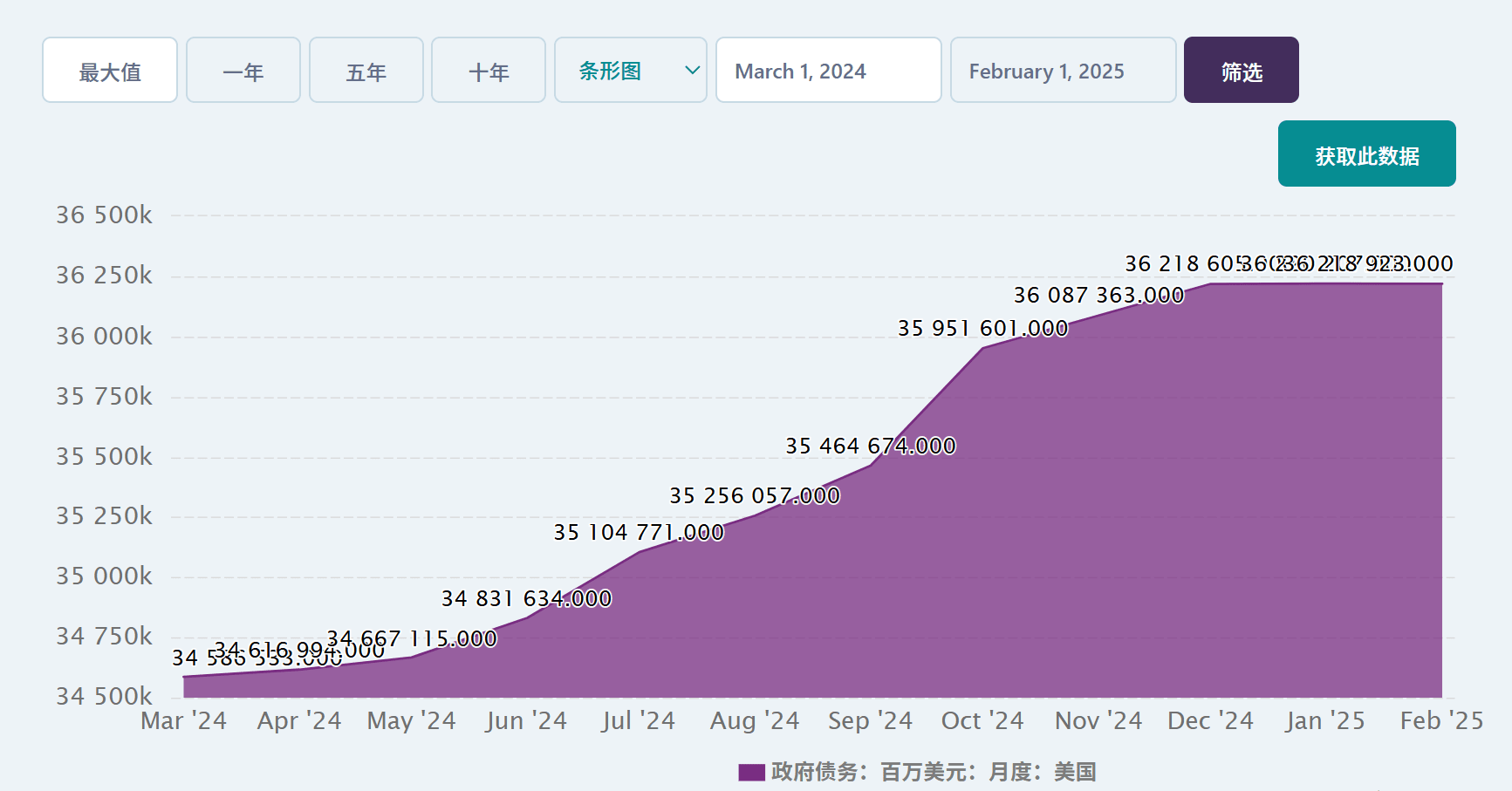
During this wave of quantitative easing, the U.S. has issued a large amount of short-term U.S. Treasuries with relatively low interest rates, with refinancing pressure concentrated in the coming years. This year, a significant portion of bonds is about to expire and will need to be refinanced at higher interest rates. The funds the U.S. uses each year to pay interest on Treasury bonds have already exceeded defense spending, and this trend is rapidly intensifying. Of course, theoretically, U.S. organizations will never default on dollar-denominated debt because they have the power to issue currency; the Federal Reserve can purchase U.S. Treasuries anytime to inject funds. However, this reliance on the central bank to bear the fiscal deficit will gradually dilute the real purchasing power of the dollar. Simply put, it involves unrestricted expansion of the money supply to cover endless growth in fiscal deficits, ultimately eroding the global credibility of the dollar. The total amount of U.S. debt is nearing $37 trillion, and although Congress has institutionally set a debt ceiling, in practice, this ceiling is always raised or temporarily shelved. The result is a continuous increase in total debt levels, leaving the U.S. Treasury in a state of dependence on a cycle of constantly borrowing new debt to replace old debt.
Refinancing debt in a high-interest-rate environment not only increases the fiscal burden but also significantly weakens the capacity of American organizations to engage in other public investments. Therefore, Trump is trying to lower U.S. Treasury yields. If American organizations need to refinance nearly $90 trillion in short-term debt at current interest rates, even a 1% spread will add a huge interest cost to the budget, further eroding fiscal sustainability. Meanwhile, the trend of money supply expansion will continue, and monetary expansion will drive the prices of risk assets upward, especially for assets like BTC that have scarcity and anti-inflation properties. As for the altcoin market, due to liquidity tightening, I have repeatedly reminded everyone that the vast majority of altcoins have returned to significantly bearish levels during the recent downturns. I believe that after experiencing one or two cycles, most friends will find that holding a bunch of altcoins will ultimately lead to losses for the majority, and it is a huge waste of time. In contrast, those who choose BTC will see a clear result. The risks in the crypto space are inherently high; surviving already surpasses a large portion of people, especially during periods of relatively tight liquidity, the altcoin market is more challenging than ever. Therefore, I always emphasize that regardless of whether you are a new or old friend, do not waste too much time on altcoins; choice is greater than effort.

The trend has been discussed enough recently, and I believe friends who understand my approach have started to position themselves. However, I still need to remind everyone that risk and reward coexist. Controlling this critical point is essential to being a long-term winner in this market. Currently, from an overall structural perspective, BTC has entered a new phase. If it can completely break the downward trend line and sustain it, the injection of liquidity could drive BTC to see new highs. From my perspective, this is not difficult. Many new friends say that the threshold for BTC is relatively high. In the market, anyone discussing investment should not just talk about returns without mentioning risks; if they do, it indicates you're facing an abyss. Seeking progress steadily has always been my style. Proper position management can help survive any turmoil, while the market is uncontrollable. I cannot guarantee results but will keep everyone updated on the outcomes in my social circles, which you can check on your own. Currently, it seems that there are no more controllable options for Americans. Today's content is relatively abundant; if there are any unclear areas, feel free to communicate with me. We have many users recently, and I hope everyone can understand if response times are slow. Let's weather this bull market together!
Yi Hailun Coin: The success of investment not only depends on choosing good targets but also on when to buy and sell. Preserving principal and making good asset allocations are essential to navigating the sea of investment steadily. Life is like a long river flowing into the sea; what determines victory or defeat is never the gains and losses of one pass or one barrier, but rather the confluence of many rivers!
The article represents personal views and does not constitute any trading advice. The crypto space carries risks, and investment should be cautious!
