
Yi Hai Lun Bi writes each analysis article with a responsible, focused, and sincere attitude, characterized by distinctiveness, authenticity, and no exaggeration!
Daily market interpretation, I am digital currency analyst Yi Hai Lun Bi!
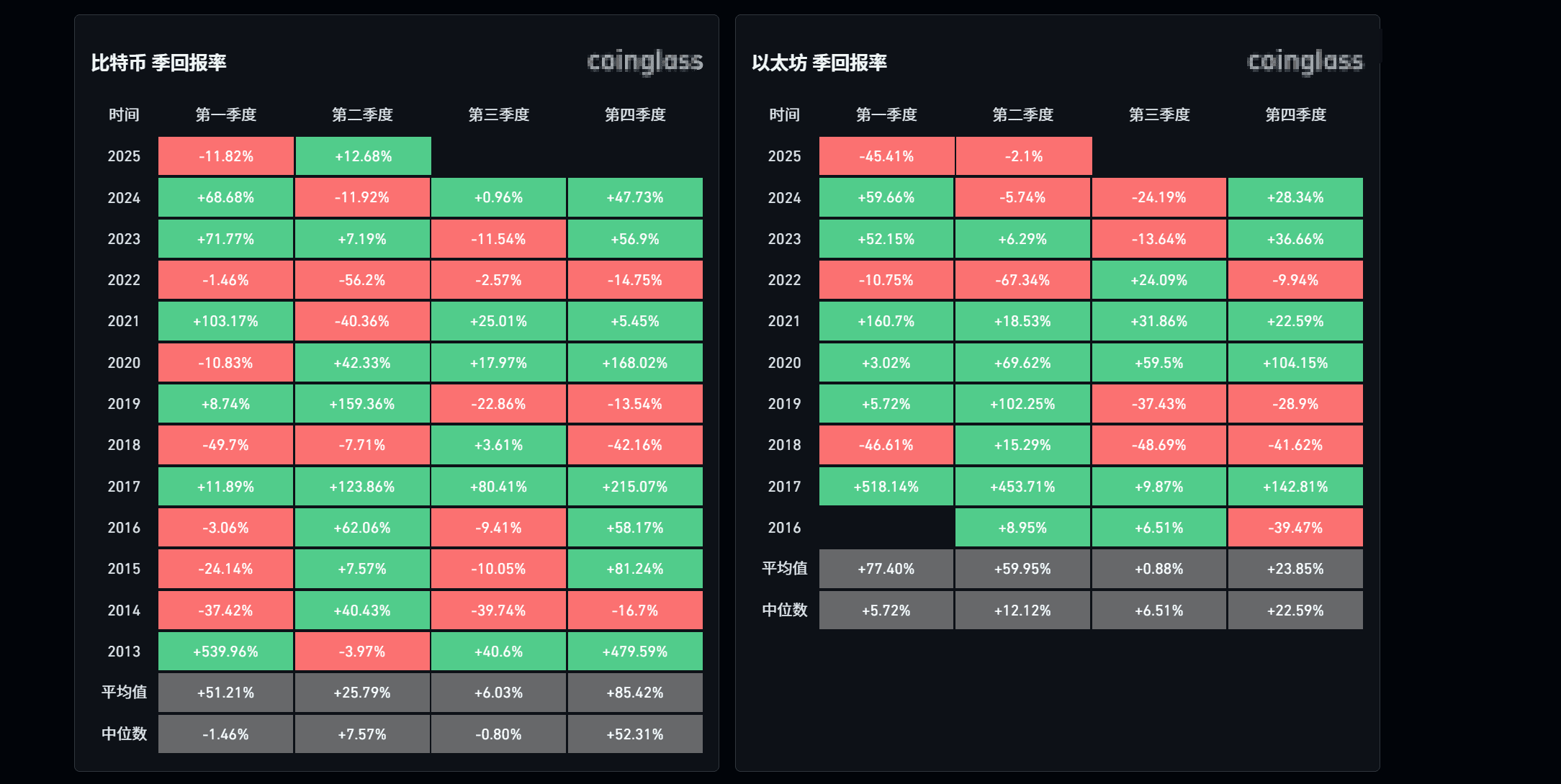
As of now, BTC has risen 13% in the second quarter, relatively speaking, the rebound of the three major U.S. stock indices has been limited. When facing MA200, we did not see an effective breakthrough, which is also due to the market's expectation that our trade negotiations with the U.S. have further eased, maintaining a relatively optimistic sentiment on the emotional front. Trump's attitude has also changed; previously, he repeatedly threatened to oust Powell, but recently he has clearly stated that there is no actual intention to dismiss him and mentioned that he would consider lowering tariffs on us, which has eased market concerns. However, due to Trump's unpredictable style, market sentiment remains relatively conservative. At least the major U.S. stock indices have not shown a more positive trend, while BTC has not only broken through MA200 but has also successfully surpassed the average price line of short-term holders. In this regard, BTC's attributes as an alternative asset seem to be more prominent.
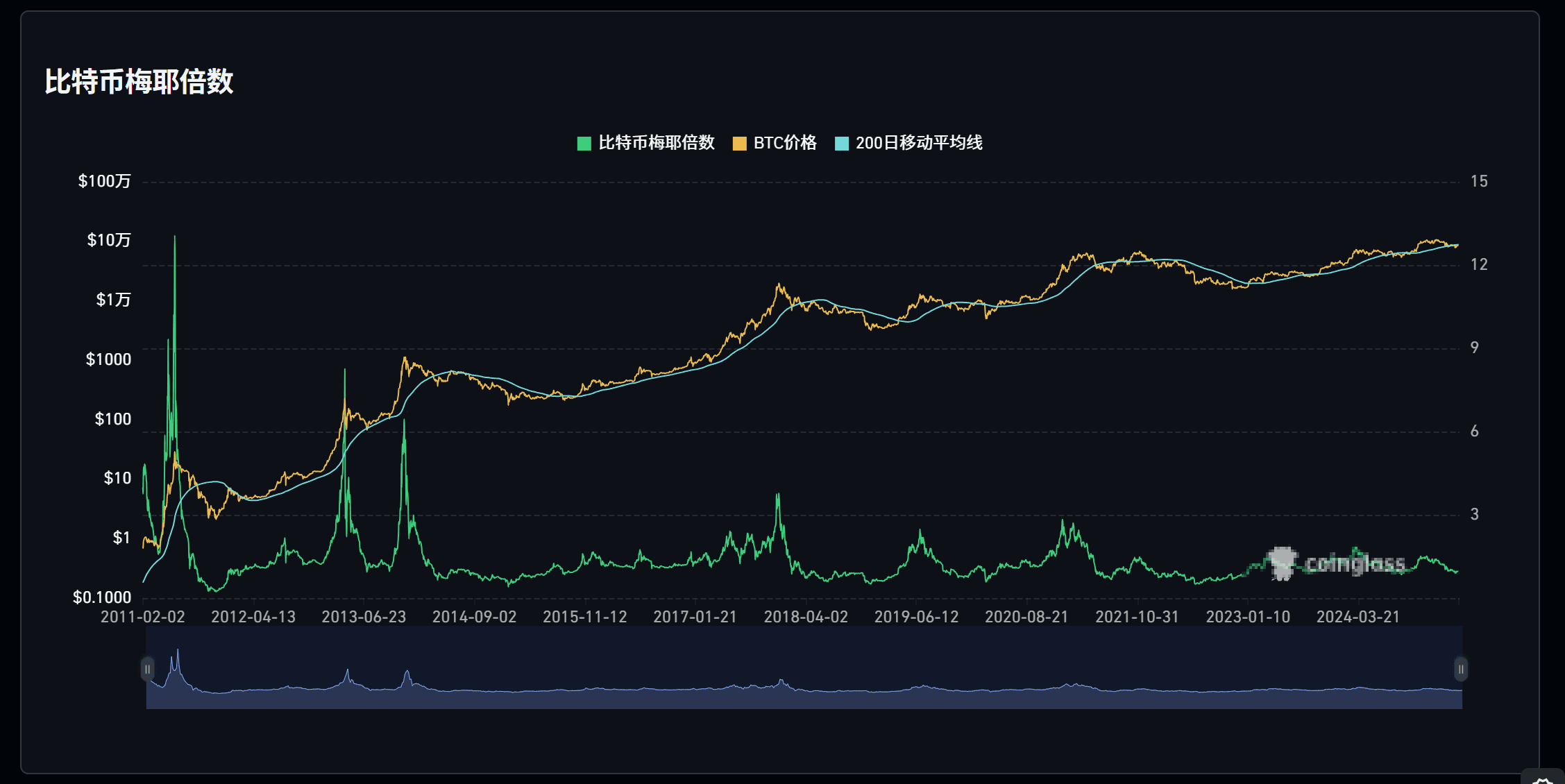
During the same period, BTC did not completely synchronize with the U.S. stock market. From the global M2 money expansion trend, BTC prices have begun to gradually respond, while gold has reacted very quickly, which is also due to the market's heightened risk-averse sentiment. Although BTC seems somewhat lagging, it has now begun to show signs of a trend reversal. I believe that in the coming months, BTC will refresh its historical highs. As previously mentioned, the Mayer multiple indicator suggests that if it touches the 1.5 times value of MA200 again, it means BTC will break through $130,000, but this is not a target that can be achieved overnight. If BTC continues to rise, there is noticeable resistance around $96,000, or it can also be viewed as a resistance range. $96,000 is the average purchase cost line for BTC investors who have held for 3 to 6 months. Once BTC reaches this position, this group is also a source of new selling pressure; they are the ones who entered at relatively high levels. If they did not choose to withdraw in this round of the market, then $96,000 is the key position for them to reassess risk or decide whether to take profits, which is the highest resistance level—not the psychological barrier of $100,000, but the average purchase cost line of the 3-6 month holding group. Additionally, the cost lines for those holding BTC for one week to one month, as well as those holding for one to three months, have actually been successfully broken, indicating that these short-term chips have basically completed price digestion. What remains is the choice of the 3-6 month holding group. Once BTC successfully stabilizes above $96,000, a large amount of selling pressure will be initially released, and the chips will enter the hands of more stable long-term holders, resulting in a noticeable contraction on the supply side of the entire market. This is known as the critical point of selling pressure.
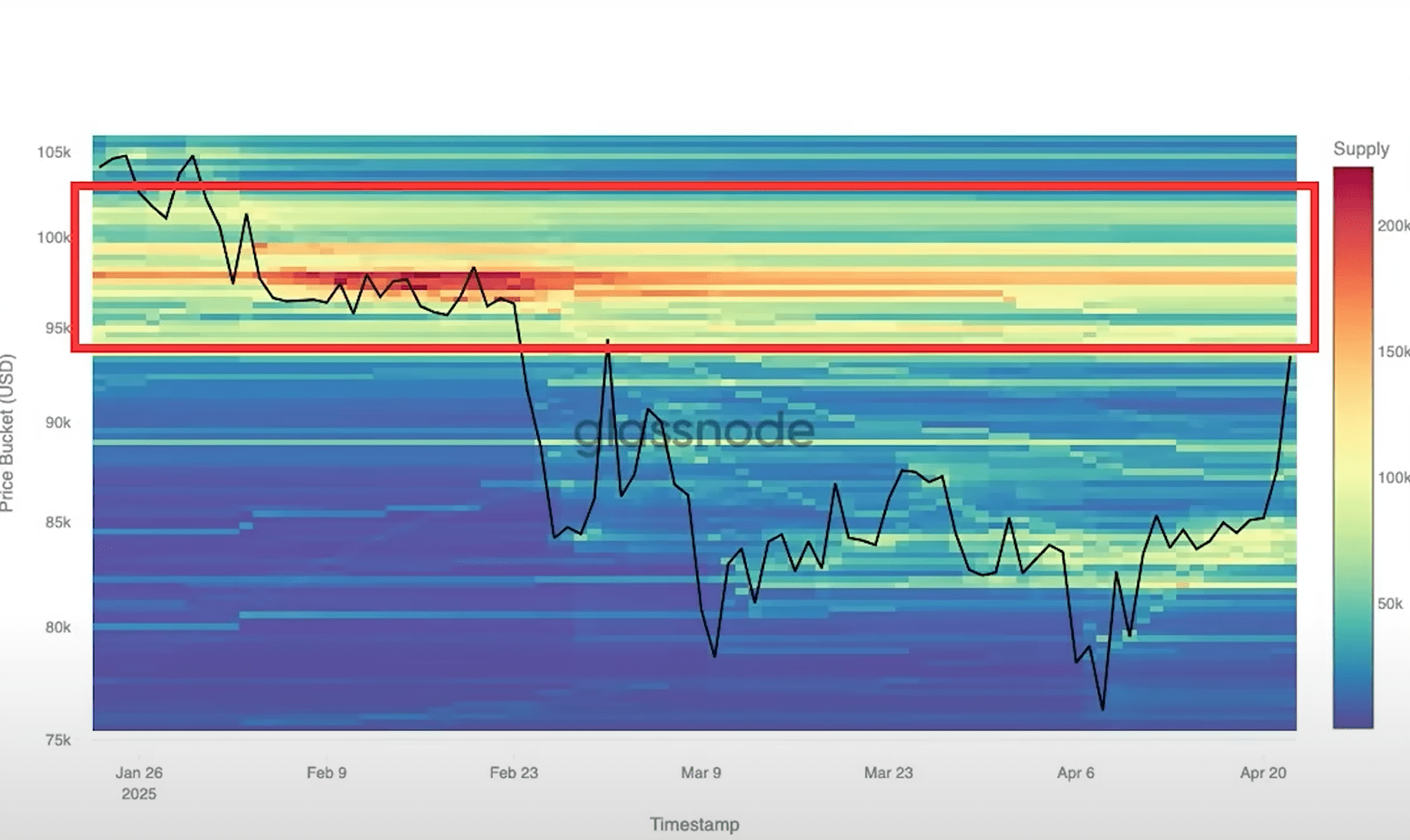
Upon closely examining the cost basis distribution heatmap, Lao Yi believes that for BTC to truly break through $100,000 is not as easy as imagined. The range of $95,000 to $102,000, indicated by the brighter colors in the map, signifies a dense supply in that price range. This means that once BTC enters these higher ranges, it will face significant selling pressure, including at the $97,000 price segment, where nearly 392,000 BTC were bought at this cost basis. In simple terms, there is a large number of trapped positions here; once the price returns to the cost line of these holders, some may choose to sell quickly to break free, and this selling pressure will hinder upward momentum. Everyone can continue to observe these key positions. However, the recent inflows from BTC spot ETFs have also provided further confidence to the market; American investors have started to attack, or rather, institutional demand has returned, which is positive for BTC. Looking at the groups that have entered the market in the last month, their realized market capitalization ratio has rapidly fallen, and after touching a certain low area, it often indicates the end of panic selling and the market entering a phase of bottoming out, as many retail investors have surrendered and handed over their chips. Of course, long-term holders and whales have taken the opportunity to accumulate more BTC. Although BTC prices continue to rise, long-term players have not started a new round of chip distribution. If more retail investors flood into the market due to FOMO sentiment or if prices reach some people's psychological expectations, long-term holders will obviously start to reduce their holdings again. At least from the current perspective, there are no signs that long-term chips have been released; the FOMO sentiment is not yet strong enough, but short-term speculative funds have begun to enter.
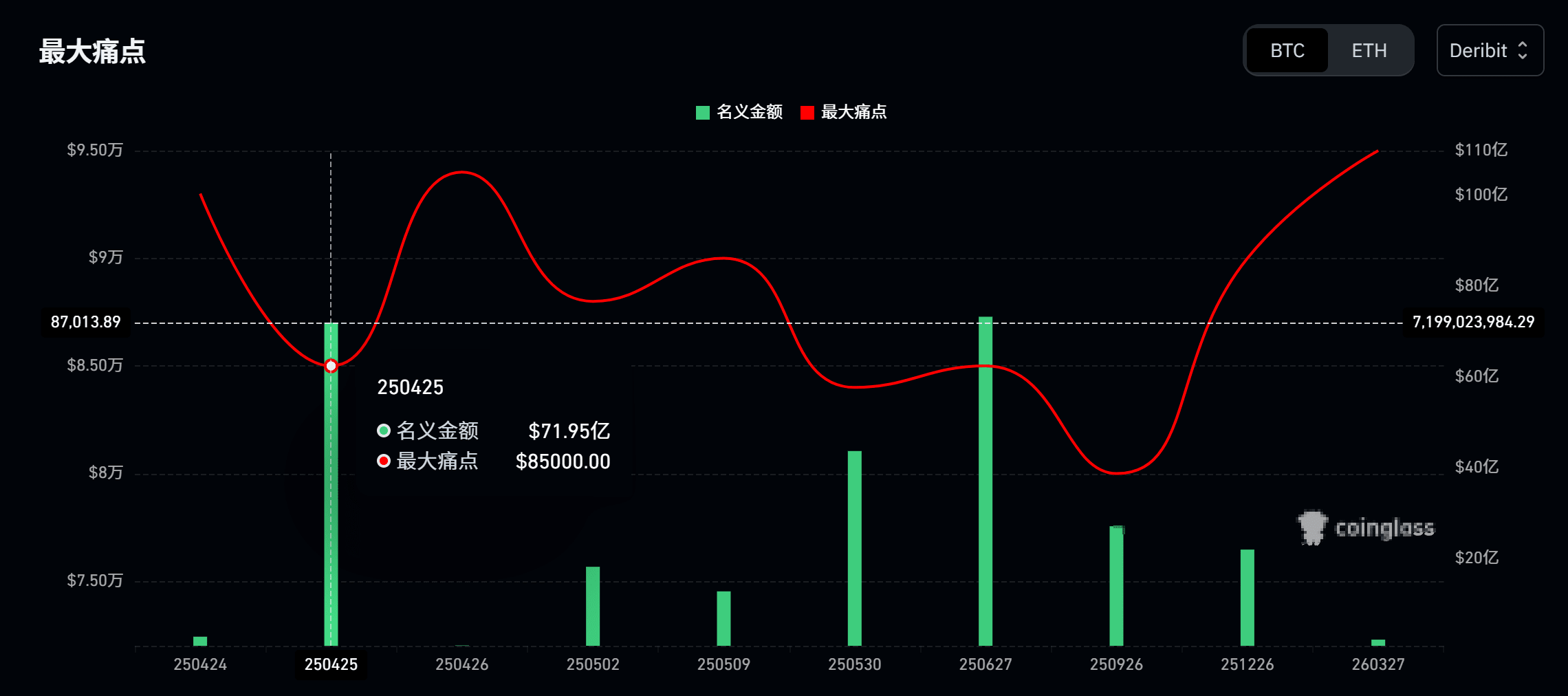
If BTC continues to rise in the coming days, it should subsequently pull back to the short-term holders' cost line for necessary adjustments and gain support at that line before continuing to break upward. This would be a very healthy situation for the ongoing bull market. However, due to BTC's rapid rise, it is still essential to keep an eye on the CME gap, which has formed a new CME futures gap around $91,700. Considering the speed of gap filling in recent months, even if it rises to higher levels in the short term, due to the demand for filling the CME gap, Lao Yi believes that a pullback to below $92,000 is a normal phenomenon. However, this does not mean that everyone can directly engage with leverage. A safer offensive strategy, for now, can be summarized in one word: wait! Of course, the CME gap formed in early November last year was not filled until the end of March this year. From Lao Yi's personal perspective, it would be best to fill this gap before continuing to move upward. The possibility of filling the gap downward is very high. Tomorrow, Friday at 4 PM, $7.2 billion in BTC options will expire, with the maximum pain point at $85,000, which is expected to trigger some market volatility.
On the other hand, a few days ago, the Fear and Greed Index was still in the fear range, but now the sentiment has shifted to greed. Many people are somewhat caught off guard by BTC's sudden surge or hold a certain degree of skepticism about the sustainability of the price increase. After all, the funding rate in the BTC futures market had seen a relatively rare negative value previously. The funding rate is easily understood: when more people bet on an increase than a decrease, the funding rate will turn positive, while when more people bet on a decrease, the funding rate will turn negative. However, the market always moves in the opposite direction. The more people bet on a decline, if BTC continues to rise, the phenomenon of short squeezing will be observed. Essentially, shorts are borrowing to sell, betting that BTC prices will fall in the future, hoping to buy back at a lower price, repay the loans, and profit from the difference. If the price does not see the necessary correction and continues to rise, these shorts will begin to feel the pressure, and their losses will increase, especially when prices break through certain psychological barriers. To avoid greater losses, some shorts may have no choice but to close their positions, which is referred to as being forced to buy back BTC, effectively creating buying pressure in the market. This process may irrationally propel BTC to surge in a very short period, potentially far exceeding expected growth rates, with shorts becoming catalysts for the rise.
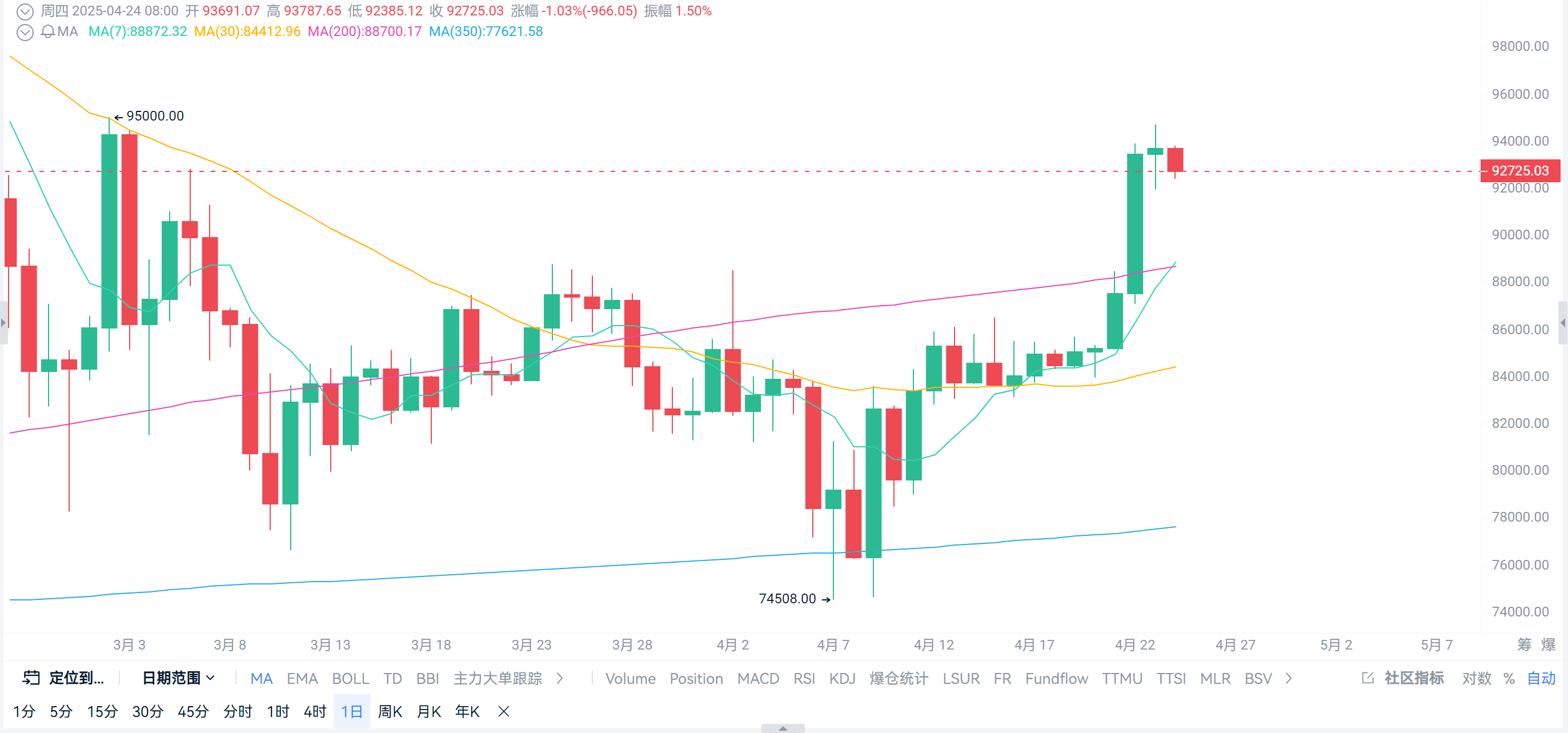
In the short term, BTC has not hesitated much, directly breaking through MA200 with a large bullish candle. However, it is still uncertain whether the average price line of short-term holders at $92,600 can be effectively broken. This is related to the CME futures gap mentioned by Lao Yi; if the gap is filled downward, it will fall below $92,000. The 4-hour chart is also somewhat overbought, and the daily chart is quickly approaching the overbought area. Lao Yi believes that the recent gains have been sufficiently considerable, and it is acceptable to pause and make reasonable adjustments. As long as multiple BTC daily closing prices can remain above MA200 for a while, it will not overly affect the subsequent upward trend. The current task remains to hold on. Even if a noticeable downward trajectory is observed in the short term, it is still not recommended to engage in short positions. Currently, one can wait for the market to clarify further before making a move, continuously observing the cost line of short-term holders. If stabilization occurs in this area, one can directly team up with the bulls again. However, before that, the market will likely be dominated by bears. $92,000 was tested yesterday, and the best scenario would be to see fluctuations around $92,000, waiting for the next wave of main funds to join. The reason for not allowing everyone to engage with the bears is still Lao Yi's strategy: when the trend is clear, do not go against it. Before the next entry, Lao Yi will remind everyone in time. Friends without contact with Lao Yi should remember to communicate with him in advance and move forward together!
Yi Hai Lun Bi: The success of investment relies not only on choosing good targets but also on when to buy and sell. Protecting principal and making good asset allocation is essential for steady progress in the ocean of investment. Life is like a long river flowing into the sea; what determines victory or defeat is never the gains and losses of a single battle or the fluctuations of a specific time and place, but the convergence of countless rivers!
This article is merely a personal opinion and does not constitute any trading advice. The crypto market is risky; investment requires caution!
