

"Gaze into the endless frontier of technology; Insight into the future, leading a new era of investment research."
This report is provided by the 'WTR' Research Institute:
Member Twitter IDs:
Gold Egg Diary @jindanriji; Moose won't get lost @crypto_elk_; Forex Brother; Xibei @Asterismone;
The first round of WTR on-chain data subscription (OG) is officially open!
Data provided: WTR independently developed short-term, medium-term, and long-term on-chain data, as well as some small coin data.
First round pricing: 399 U/year. Payment supports on-chain and off-chain transfers.
Other notes: We have prepared a strategy package for OG users, with limited slots. Currently, the strategy package is only considered for first-round OG users. Subscriptions can directly add OG user groups, details can be found on Twitter or WeChat.

This week in review
From July 28 to August 4 this week, the highest for sugar oranges was around $119800, and the lowest was close to $112003, with a fluctuation range of about 6.51%.
Observe the chip distribution chart, where there is significant chip trading near about 113965, which will provide certain support or pressure.
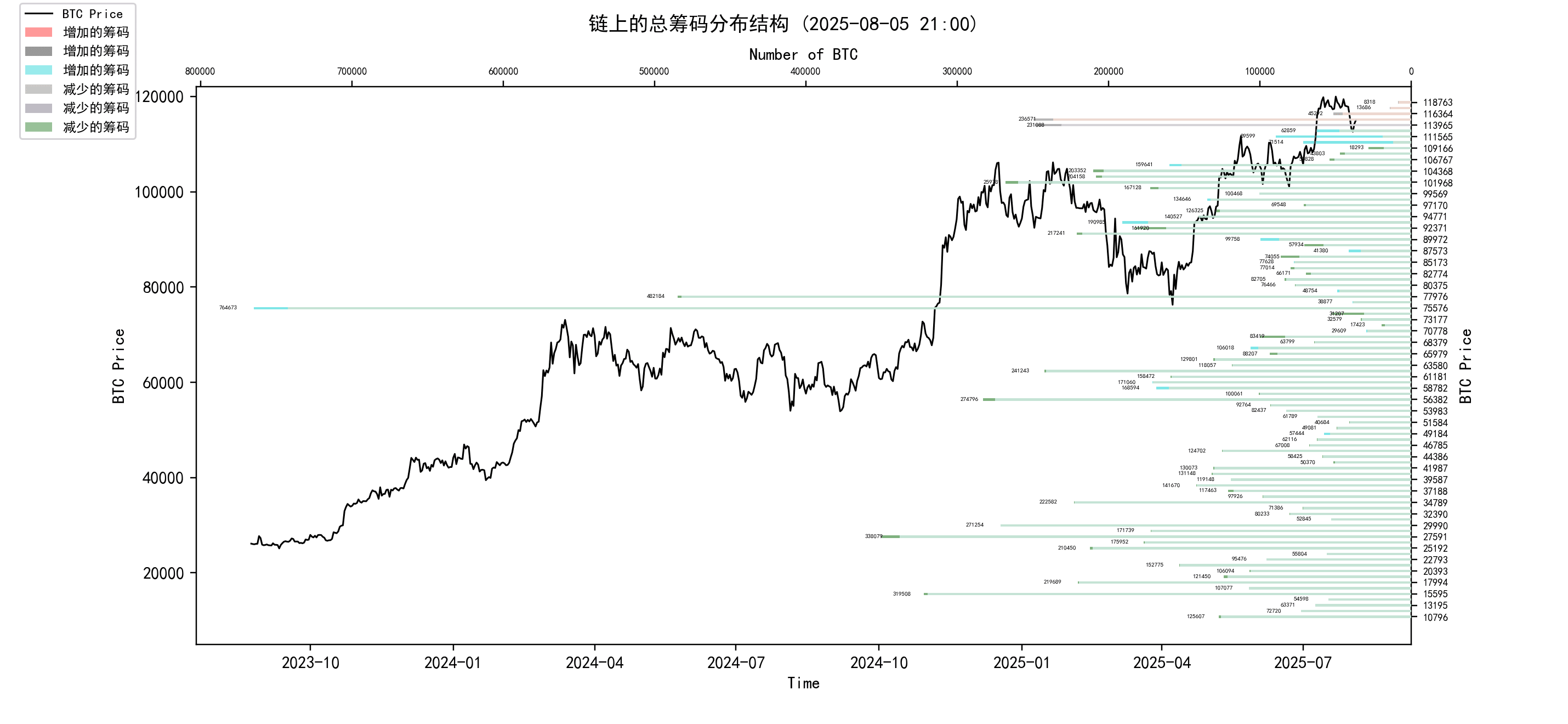
Analysis:
60000-68000 about 903,000 pieces;
76000-89000 about 1.2162 million pieces;
90000-100000 about 1.3 million pieces;
Above 100000 about 1.68 million pieces;
There is a 70% probability that the price will not break below the 110000-105000 range in the short term;
Important news aspects
Economic news aspects
The U.S. job market is weak, and the expectations for rate cuts are heating up.
Non-farm data significantly revised down: Last week, U.S. July non-farm payrolls added only 73,000 jobs, far below the expected 113,000. More notably, the non-farm data for May and June was significantly revised down, with May adjusted from 144,000 to 19,000 and June from 147,000 to 14,000, a nearly 90% downward revision.
Market Reaction: The obvious weakness in the job market has increased the market's bets on the Federal Reserve cutting rates in September. Currently, the market expects an over 80% probability of a 25 basis point rate cut in September.
Federal Reserve Dynamics:
Federal Reserve Williams believes that the unusually large downward revisions in employment growth in May and June are 'the real news' in Friday's non-farm report, and he will participate in the September meeting with an 'open attitude' to discuss whether to cut rates.
Federal Reserve Governor Kugler will resign this week, allowing Trump to appoint a candidate early, possibly succeeding Powell. Trump has stated he will announce a candidate to fill the vacancy in the coming days.
Trump continues to pressure Federal Reserve Chairman Powell, calling him a 'stubborn idiot' and demanding immediate significant rate cuts.
Other macro dynamics
U.S. stock market opening: On Monday, U.S. stock indices opened, with the Nasdaq index up 1.8% during the session, the S&P 500 index up 1.2%, and gold up 0.36%.
Goldman Sachs Forecast: Goldman Sachs expects the Federal Reserve to begin cutting rates in September, possibly three consecutive cuts. If employment data remains weak, a one-time 50 basis point cut in September cannot be ruled out.
News in the crypto ecosystem
Regulatory Dynamics
U.S. SEC: U.S. Securities and Exchange Commission (SEC) Commissioner Hester Peirce will conduct a ten-city tour from August to December this year as part of the SEC's newly launched public engagement program on cryptocurrencies. Previously, the cryptocurrency working group had discussed topics such as regulation, custody, tokenization, and decentralized finance.
U.S. CFTC: U.S. Commodity Futures Trading Commission (CFTC) Acting Director Caroline D. Pham stated that the CFTC will launch a crypto sprint initiative to provide clear regulation for the digital asset market and promote innovation.
U.S. Treasury Secretary: U.S. Treasury Secretary Basent stated that the U.S. has entered a golden age of cryptocurrencies, exploring new possibilities for decentralized computing and digital payments.
Hong Kong: The Hong Kong Monetary Authority has issued a safety warning, cautioning against scams related to fake licensed stablecoins. The Hong Kong (Stablecoin Regulation) has officially come into effect, and the issuer's regulatory system is also implemented in parallel, adopting a 'strict first, steady later' regulatory concept.
Institutional and corporate dynamics
OpenAI: According to the New York Times, OpenAI completed $8.3 billion in financing, with a valuation of $300 billion.
Capital Flow:
Last week, U.S. BTC spot ETF saw a cumulative outflow of $642.9 million, while ETH spot ETF saw a cumulative inflow of $154.3 million.
Stablecoins increased by $1.78 billion last week, with a week-on-week growth of 0.67%, bringing the total market cap to $267.405 billion.
Tether has cumulatively issued $6 billion in stablecoins since July and $20 billion since the beginning of the year. Tether's total holdings of U.S. government bonds have reached $127 billion, surpassing South Korea to become the 18th largest holder of U.S. government bonds.
Corporate Increases:
Data from the Salvadoran Ministry of Finance shows that El Salvador has accumulated 8 BTC in the past 7 days, currently holding 6258.18 BTC.
Metaplanet increased its holdings by 463 BTC, now holding a total of 17595 BTC.
Sharplink Gaming increased its holdings by 15822 ETH, now holding a total of 480204 ETH.
Analyst's Viewpoint:
Analyst Eugene Ng Ah Sio stated that the market is very torturous, but ultimately it will get through smoothly. Now expecting ETH to reach $3800-$4000, but uncertain how the market will behave if it deteriorates again.
BitMine CEO Lee stated that ETH is benefiting from tokenization driven by Wall Street, as it has advantages in legal clarity and technical reliability. If the Federal Reserve's monetary policy shifts, especially if they start cutting rates in the coming months, BTC could rise to $250,000.
Matrixport analysis: This round of decline continues the seasonal weakness commonly seen in August, while also being affected by macroeconomic uncertainty caused by downward adjustments to U.S. labor market data. Similar situations occurred around the same time last year when the Federal Reserve unexpectedly cut rates by 50 basis points due to market pressure.
The Block reports: Amid macroeconomic uncertainty and institutional buying, the current market shows a 'cautiously optimistic' sentiment, with the fear and greed index trending towards 'greed'. Whale buying and expectations of rate cuts are driving a reallocation of risk assets in the market. Investors are focusing on the U.S. July CPI data to be released on August 12.
Long-term Insights: Used to observe our long-term situation; Bull Market/Bear Market/Structural Change/Neutral State
Medium-term exploration: Used to analyze what stage we are currently in, how long this stage will last, and what situations we will face.
Short-term observation: Used to analyze short-term market conditions; and the possibility of certain events occurring under certain premises.
Long-term Insights
Non-liquid long-term whales
Total selling pressure on-chain
ETF reserve status
Proportion of long-term investors holding positions for more than six months
Large net transfers on exchanges
Short-term speculator cost line
(Non-liquid long-term whales)
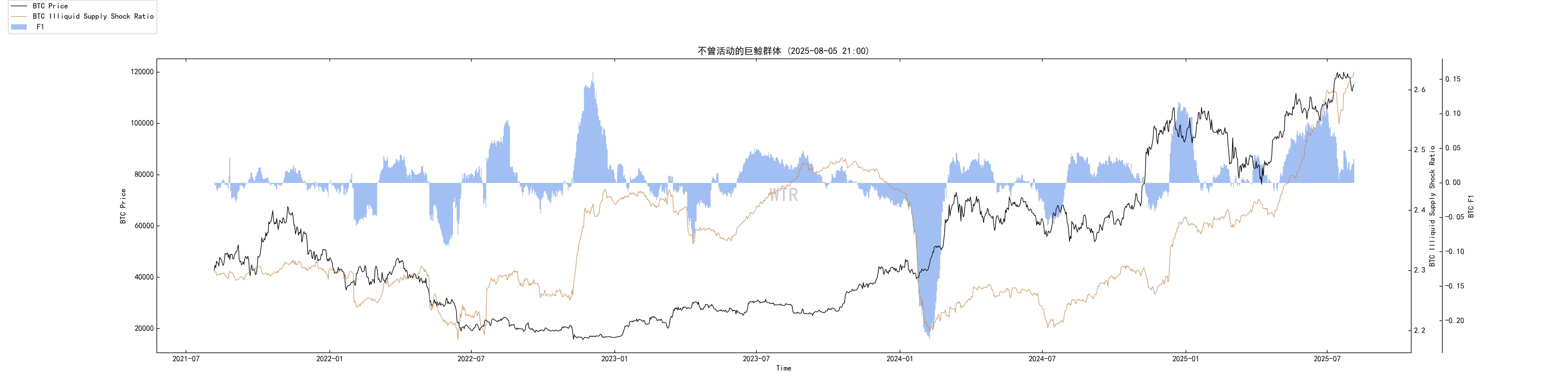
Smart money has cast trust votes through actions. After rational profit-taking near previous highs, these visionary investors have shifted back to net accumulation, indicating that they see value in long-term investment in the current price range, forming a solid underlying demand for the market.
(Total selling pressure on-chain)
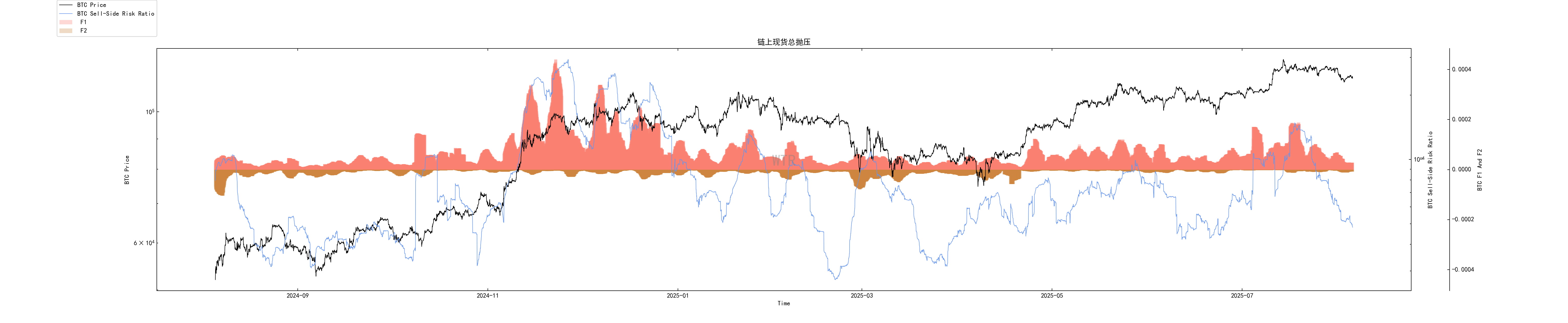
Market selling pressure is exhausted.
Whether in profit or loss, the overall willingness to sell has dropped to a medium-low level and continues to decline. This means that the resistance above has become thin, and the market has 'locked' a large number of chips, clearing some obstacles for potential upward movement.
(ETF reserve status)
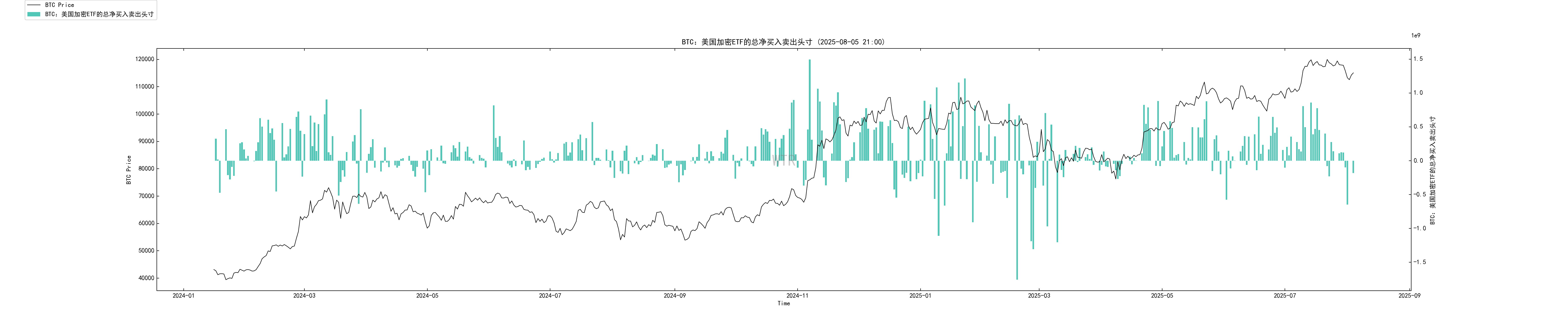
External new funds show signs of fatigue.
As an important source of incremental funds in this round of increase, ETF inflows have recently turned cautious and even resulted in net outflows.
This is the most alarming signal, indicating that purchasing power from traditional finance is weakening, or that there is hesitation regarding current price levels and macro risks.
(Proportion of long-term investors holding positions for more than six months)
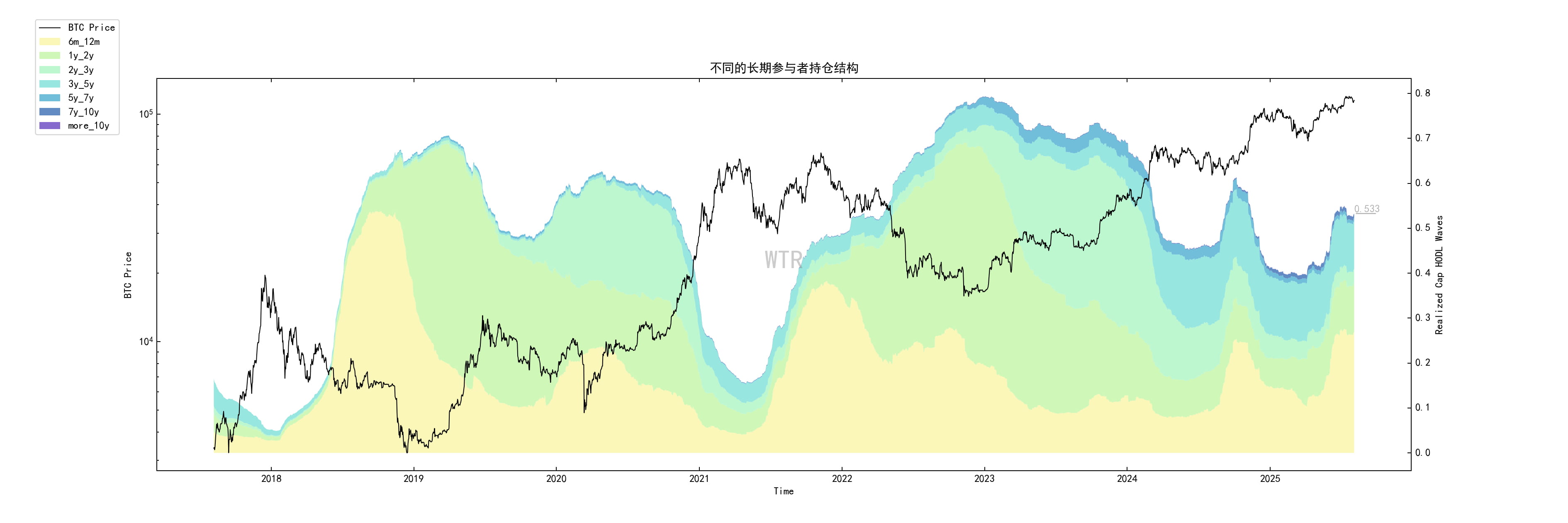
Market conviction is solid and strengthening.
In the volatile market, the proportion of long-term holders has increased instead of decreased, indicating that chips are continuously transferring from short-term traders to long-term value investors.
This optimizes the market's chip structure and enhances its ability to withstand volatility.
(Large net transfers on exchanges)
Whale game cools down, selling willingness weakens.
The previous intense inflow and outflow of exchanges has calmed down, currently turning into slight net outflows.
This indicates that large holders are generally more inclined to withdraw and hold assets long-term rather than being ready to sell on exchanges, and the potential large selling pressure is decreasing.
(Short-term speculator cost line)
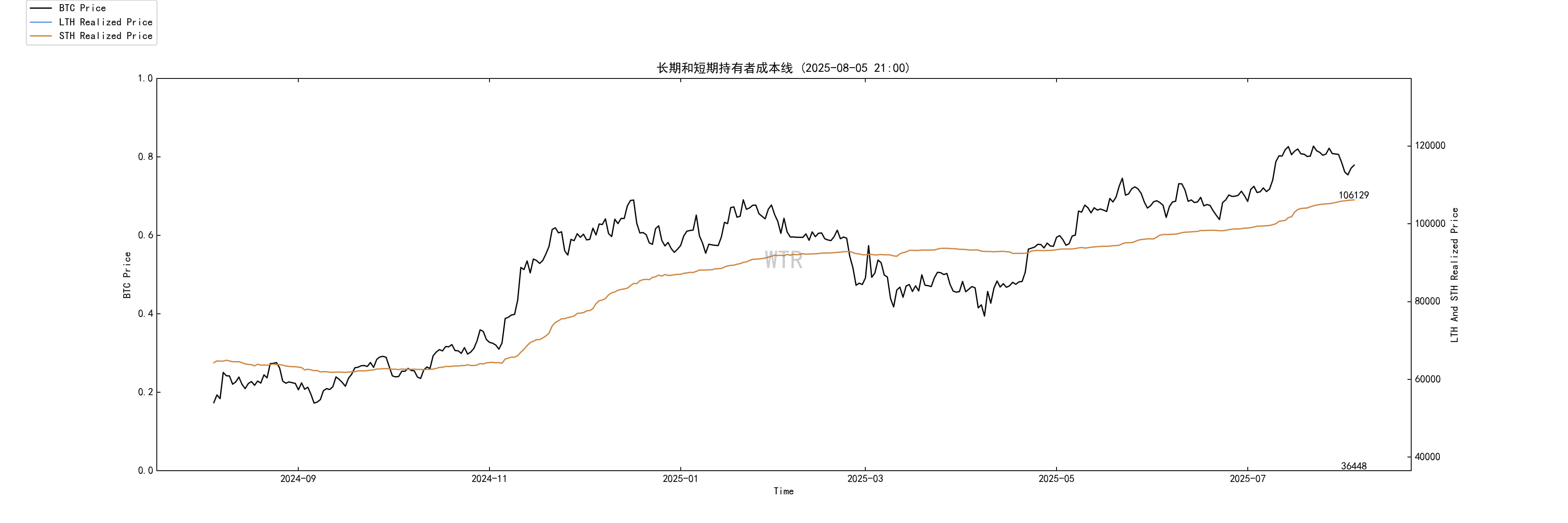
Lifeline of short-term market health.
This cost line is steadily rising, indicating that new investors are building positions at higher prices, providing dynamic psychological and technical support for the market. As long as prices maintain above this line, short-term market sentiment is relatively safe.
Comprehensive Analysis
Considering all macro information and on-chain data, the current market is not simply a bull or bear market, but rather in a state of tension and balance;
A macro turning point supported by internal conviction and pressured by external caution.
Core Logic:
Macro: The starting point of everything comes from the sharp cooling of the U.S. job market. This fact has generated contradictions:
On one hand, it almost locks in expectations for Federal Reserve rate cuts, which is a significant positive (hope) that could theoretically release massive liquidity;
On the other hand, it reveals the real risk of economic recession, which may trigger risk-averse sentiment in the market, constituting significant negative pressure (fear).
The core issue of the market has switched from combating inflation to the back-and-forth switch between hope and fear.
The pricing divergence of market participants: This macro duality has been selectively priced by different attributes of capital, forming a distinct behavioral divergence in on-chain data:
Internal core capital (long-term whales, old players) are more often trading on hope. They have experienced several cycles and firmly believe in the ultimate power of central bank liquidity injection, viewing the current economic weakness as a golden window for future layout. Their continuous buying and reluctance to sell constitute solid internal support for the market.
External incremental (ETF investors, new funds) are more sensitive to fear. As participants in traditional finance, they are more wary of the risks of economic recession, thus choosing to slow down or even temporarily withdraw in the face of uncertainty. Their hesitation forms the main external resistance against market upward movements.
Therefore, a clear scene can be observed:
On one side of the market are strong internal buying and optimistic expectations for future liquidity;
On the other end, there are the real risks of economic recession and the cautious attitude of external funds.
Every fluctuation in price is a struggle between these two forces.
Future Outlook
Short-term:
The direction of the market will be determined by a key variable:
U.S. Consumer Price Index (CPI) data to be released soon.
It is the most likely catalyst to break the current balance.
Optimistic (CPI cooling): If the CPI data meets or is below expectations, it will greatly strengthen the narrative of hope, proving that the Federal Reserve can comfortably cut rates without triggering an inflation rebound.
This could inject a strong boost into the market, potentially quickly reversing the outflow trend of ETFs and attracting external funds back. At that time, internal and external forces will resonate, and the market is expected to break through consolidation and start the next significant increase.
Pessimistic (CPI stubborn): If the CPI data is above expectations, it will complicate the situation and strengthen the narrative of fear. The Federal Reserve will be caught in a dilemma between maintaining the economy and combating inflation, and the market will have doubts about the path and determination of rate cuts.
Risk-averse sentiment may heat up, leading to prices breaking below the short-term speculator cost line, triggering a chain selling, and the market will continue to struggle in balance, even seeking lower price support.
Medium to Long-term Outlook:
It depends on the ultimate victory between hope and fear, whether the U.S. economy will undergo a soft landing or a hard landing.
Core Bull Market Scenario (high probability of soft landing): If the Federal Reserve successfully slows the economy without falling into a deep recession (soft landing) through precise rate cuts, it will be a golden era for risk assets.
In a context of ample liquidity, stable economy, and increasingly clear regulatory environment, Bitcoin's strong internal fundamentals will perfectly combine with macro tailwinds, likely opening a bull market cycle of unprecedented intensity and breadth.
Core Bear Market Risk (low probability of hard landing): If economic data continues to deteriorate, proving that a recession is inevitable (hard landing), then market fear will overwhelm everything.
In the face of systemic risks, rate cuts will also be seen as a drop in the bucket.
At that time, the market will undergo a comprehensive risk clearing, and capital will massively flee to safe havens like the U.S. dollar and government bonds. Bitcoin will also struggle to stand alone and may face a deep correction.
The accumulation behavior of long-term whales will face severe tests.
Medium-term Exploration
USDC comprehensive purchasing power score
Whale comprehensive score model
Hedging model
Liquidity supply volume
BTC Exchange Trend Net Position
ETH Exchange Trend Net Position
(Below is the comprehensive score of USDC purchasing power)
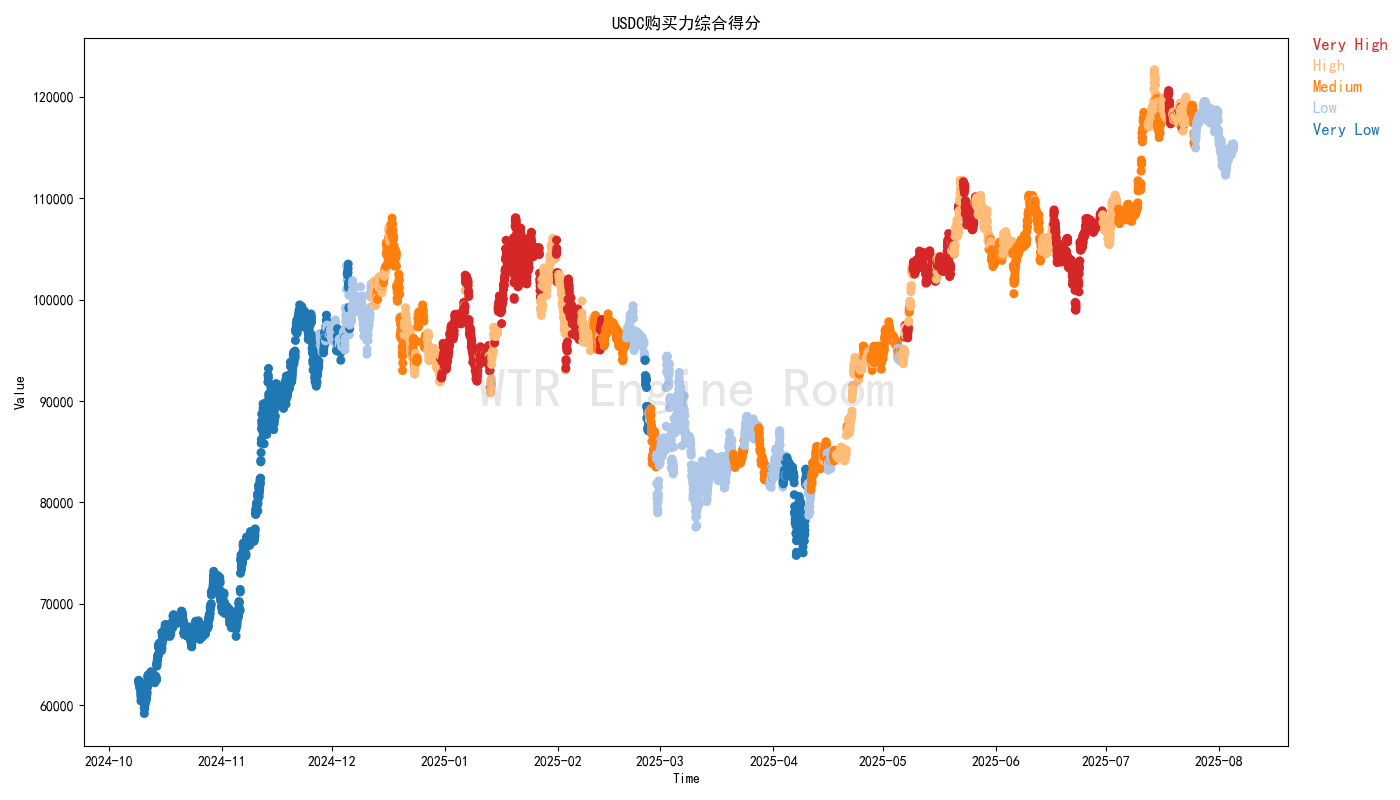
USDC comprehensive purchasing power score is low, currently there may be a dilemma of insufficient buying power in the U.S. market.
There may be a risk of insufficient liquidity under the current conditions.
(Below is the comprehensive score model for whales)
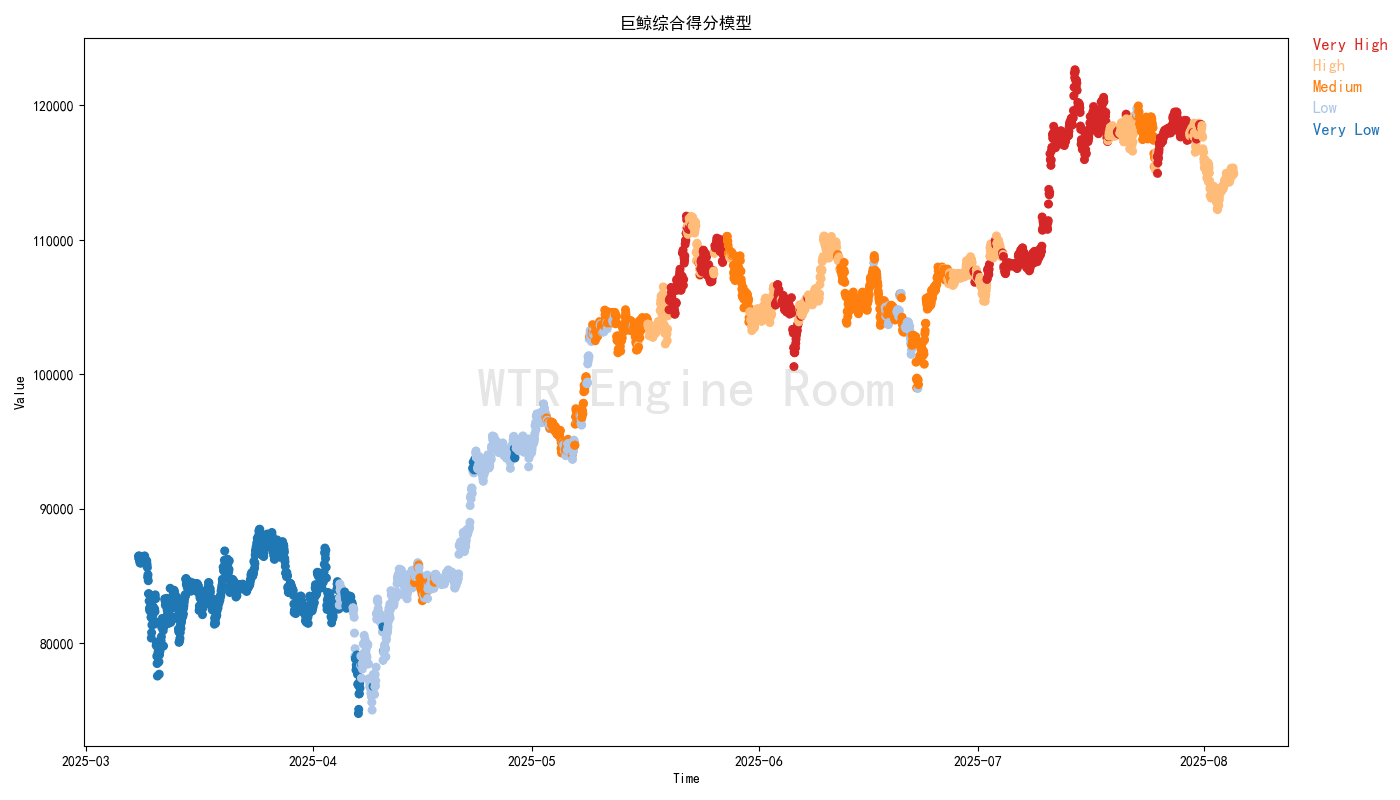
The comprehensive score for whales is currently in a neutral zone, indicating that whales may also show signs of indecision.
Currently, there is a slight wait-and-see sentiment in the market. With prices maintaining a high-level oscillation pattern, it may be the result of the struggle between bullish and bearish forces in the market.
The buying power in the U.S. market is also a basis for judging whether prices can stabilize at high levels. Currently, with declining buying power in the U.S. market and whales being neutral, it may expose some unstable conditions.
(Below is the hedging model)
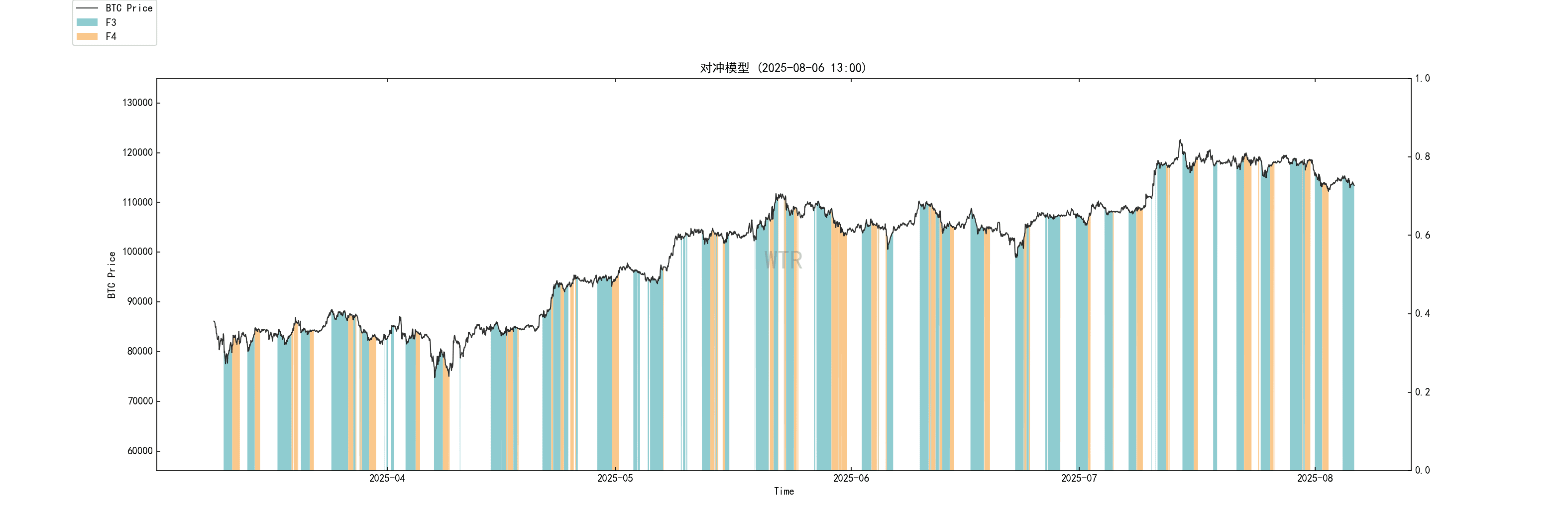
From the hedging pressure model, the blue area represents the pressure zone, and the yellow area represents the pressure relief zone.
The current market faces some pressure, but the degree may be lighter. From a dynamic perspective, the market needs to guard against the spread of pressure or the continuation of selling emotions.
(Below is the liquidity supply volume)
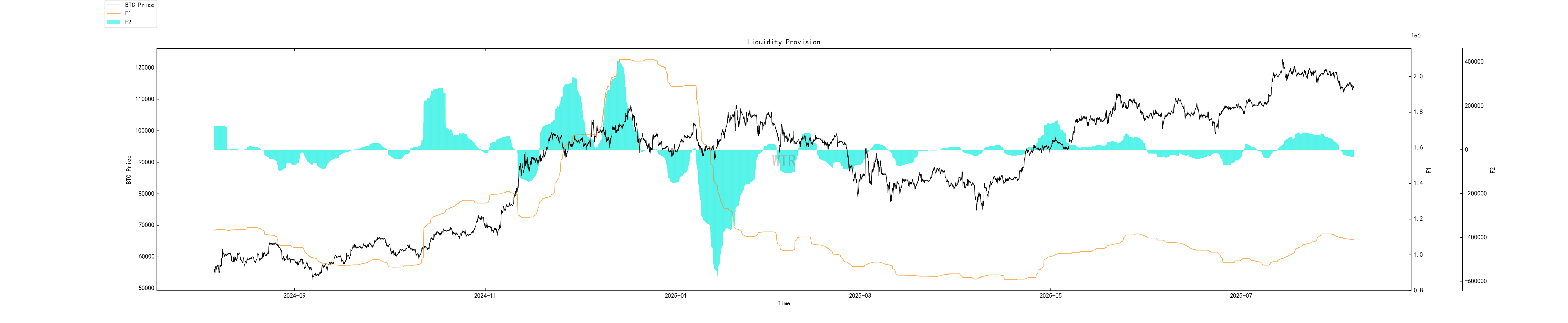
Currently, liquidity has decreased slightly compared to the previously ample liquidity.
(Below is the trend net position of BTC on exchanges)
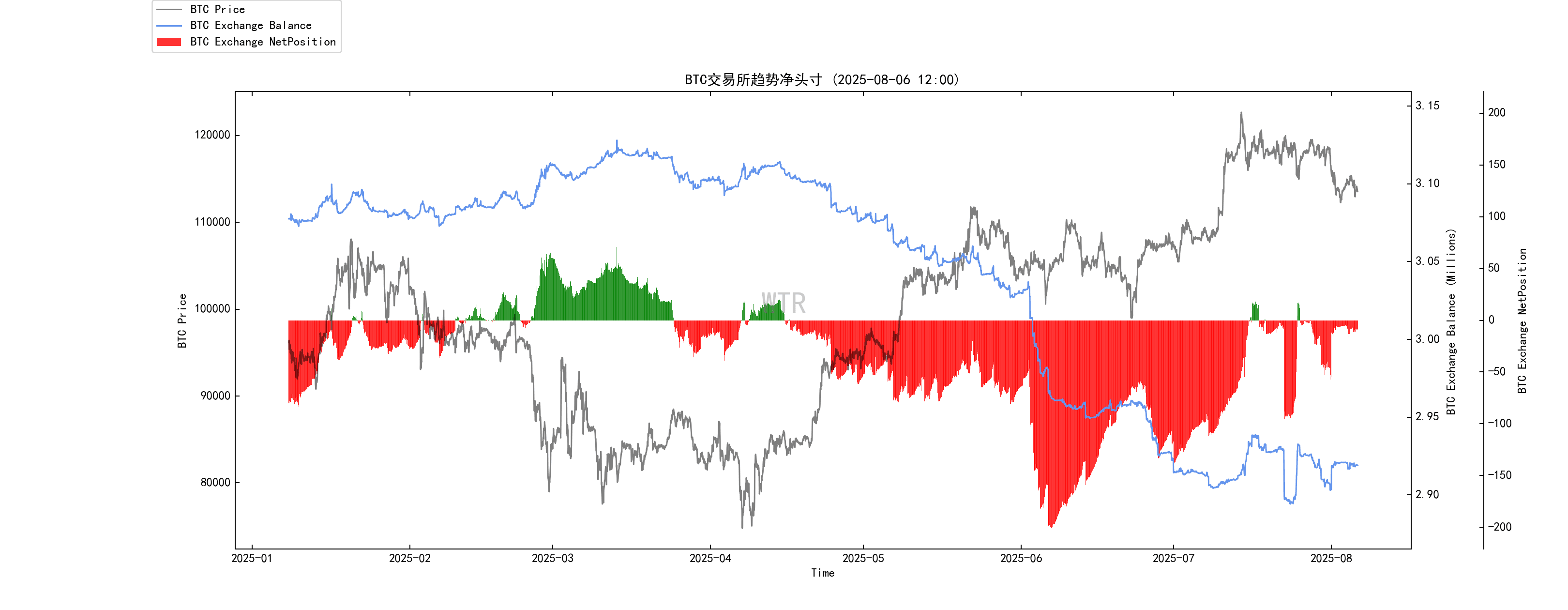
The market in June and July showed an accumulation trend, with positive holding sentiment and demand. Currently, it tends to enter a divergence phase.
The outflow of chips accumulated on exchanges and the inflow of chips forming potential selling pressure are in confrontation, which has affected the observation of trend positions.
It is currently impossible to determine whether the market is accumulating or selling. Based on past market observation experience, there will be considerable oscillation and volatility.
(Below is the ETH exchange trend net position)
The ETH group has become relatively more positive, with some participants accumulating a significant amount of coins, possibly improving ETH's unstable state.
Short-term observation
Risk coefficient of derivatives
Options intent transaction ratio
Derivative trading volume
Options implied volatility
Profit and loss transfer volume
New addresses and active addresses
Net position of sugar oranges on exchanges
Net position of Aunt Tai exchanges
High-weight selling pressure
Global purchasing power status
Net position of stablecoin exchanges
Derivative rating: Risk coefficient is in the neutral zone, with moderate derivative risks.
(Below is the risk coefficient of derivatives)
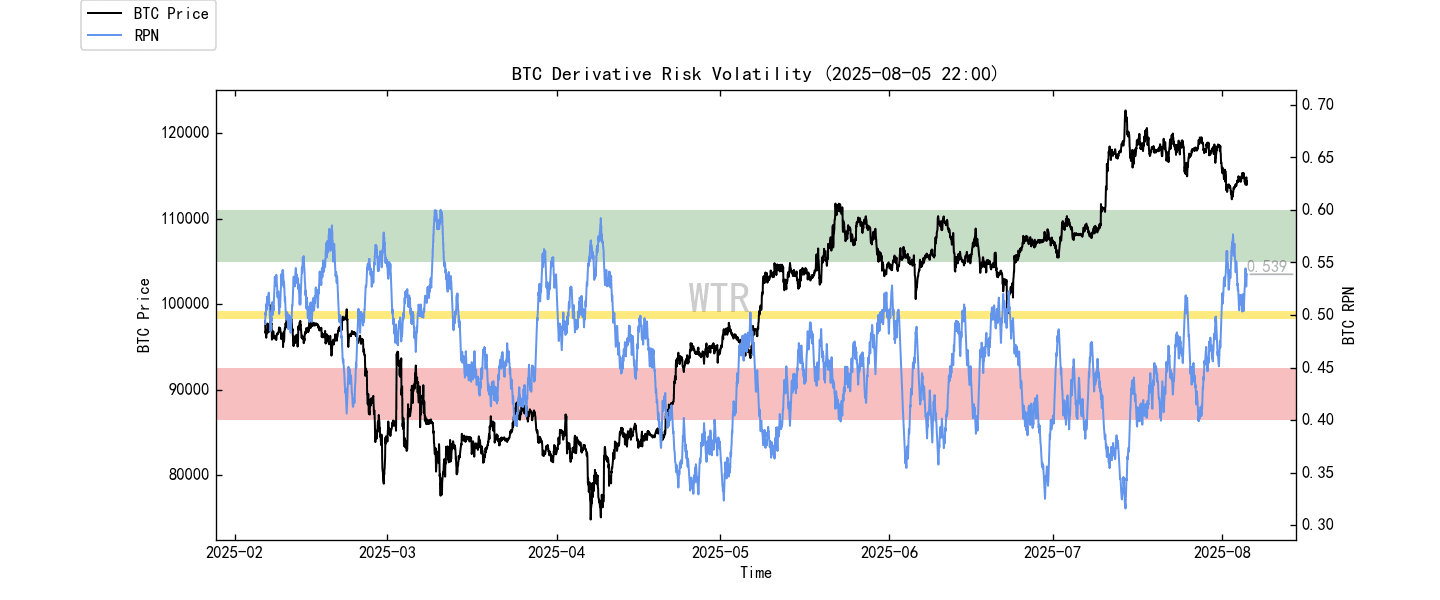
Last week's market trend was basically consistent with expectations, with BTC in a volatile mode. Although the fluctuation was not large, the risk coefficient touched the green zone once, forming a short-term buying point. This week, the expectation is still a high probability of volatility.
(Below is the options intent transaction ratio)
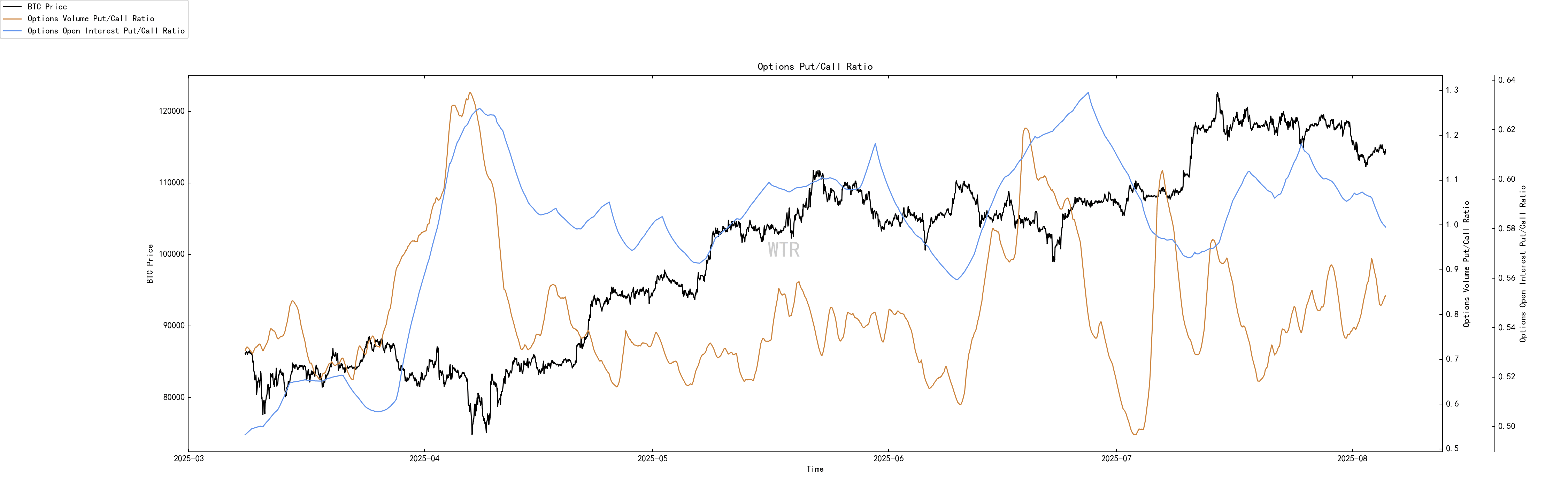
The proportion of put options is currently at a medium-high level, with trading volume at a medium level.
(Below is the derivative trading volume)
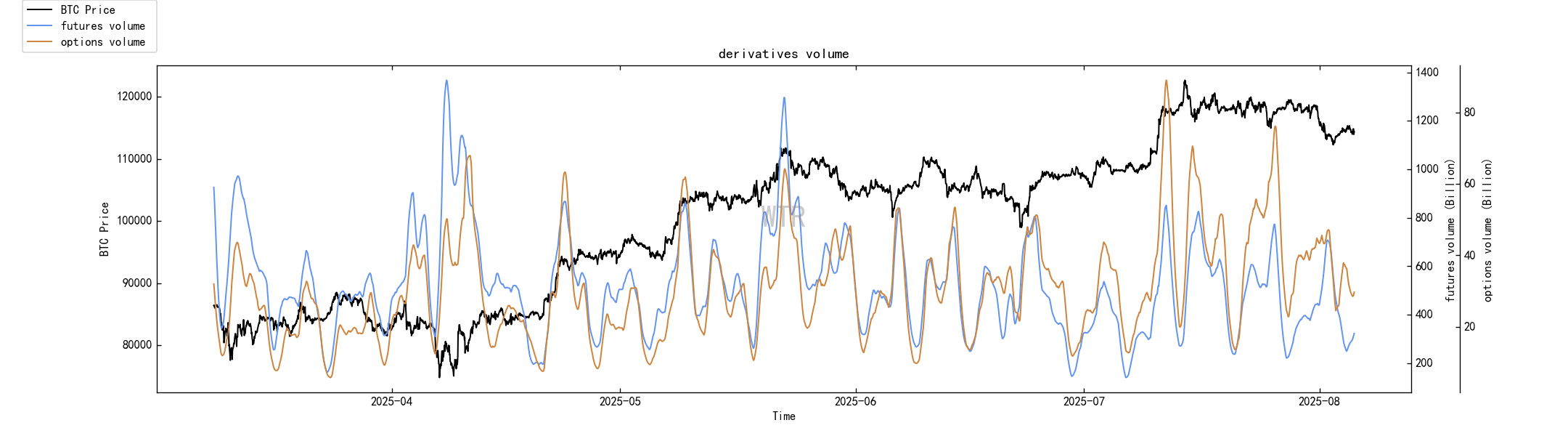
Derivative trading volume is at a medium-low level.
(Below is the options implied volatility)
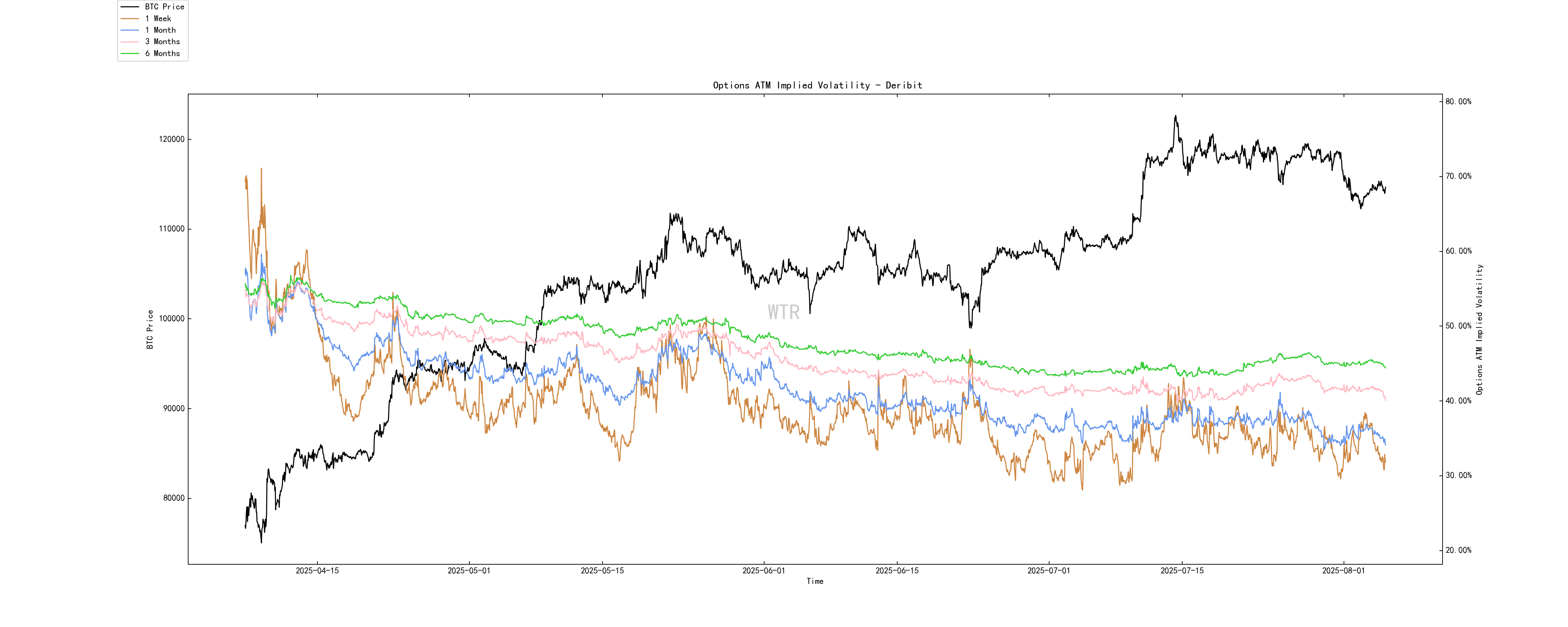
Short-term implied volatility of options shows no significant fluctuations.
Sentiment state rating: Neutral
(Below is the profit and loss transfer volume)
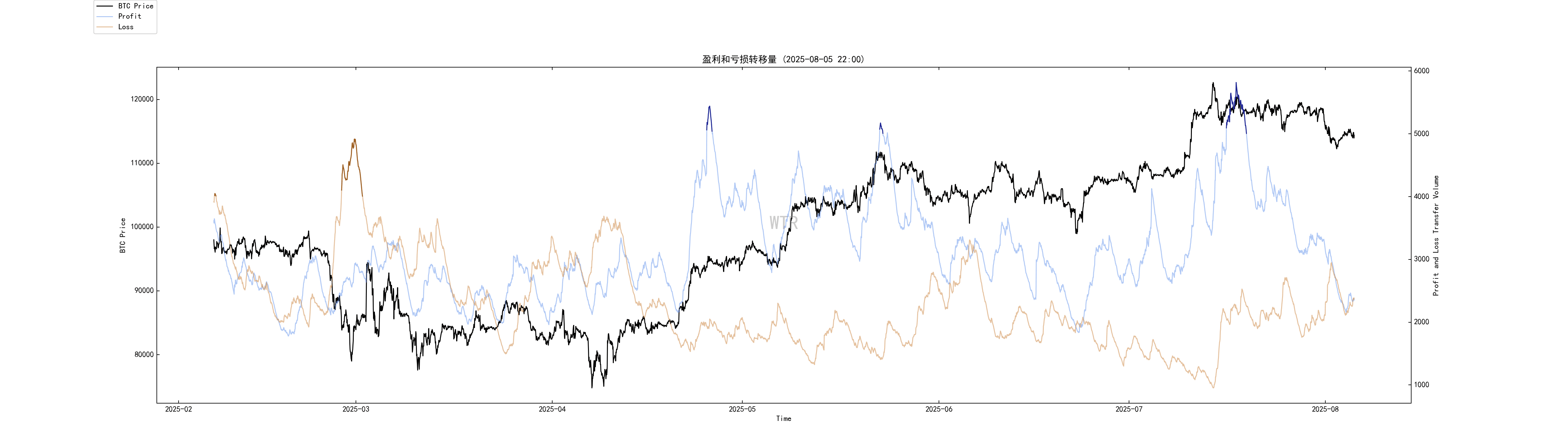
Market positive sentiment (blue line) is still slowly declining, but market panic sentiment (orange line) has not rapidly increased significantly. It only slightly increased during a minor drop in BTC, which is a temporary panic selling of some chasing high chips, but the overall market sentiment remains stable and neutral.
(Below is the number of new addresses and active addresses)
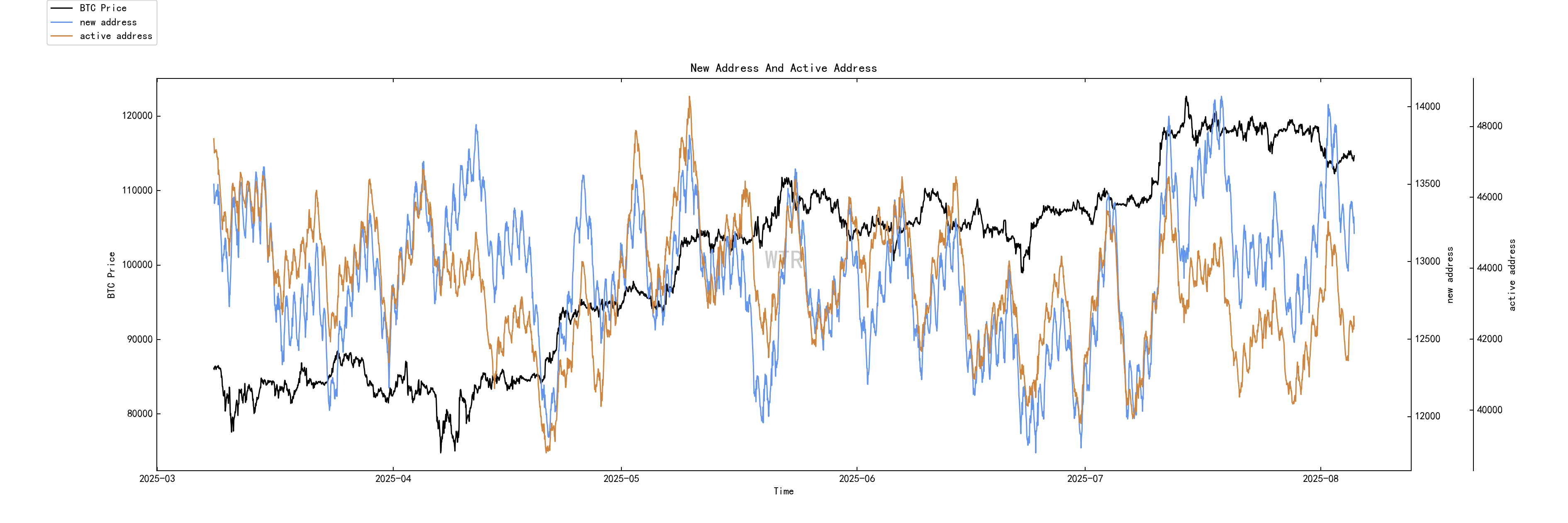
The number of new active addresses is at a median level.
Spot and selling pressure structure rating: BTC outflow accumulation, ETH has significant outflows.
(Below is the net position of sugar oranges on exchanges)
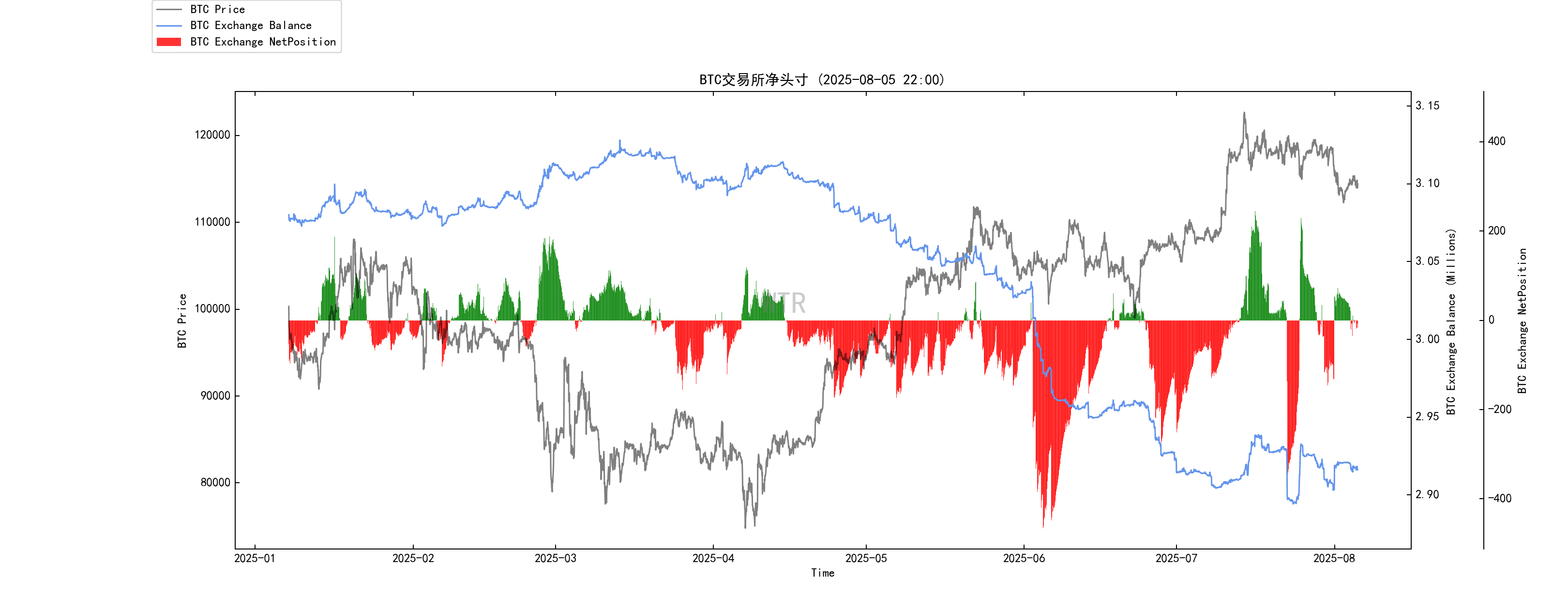
BTC is overall in an outflow accumulation state, with no significant changes last week.
(Below is the net position of E Tai exchanges)
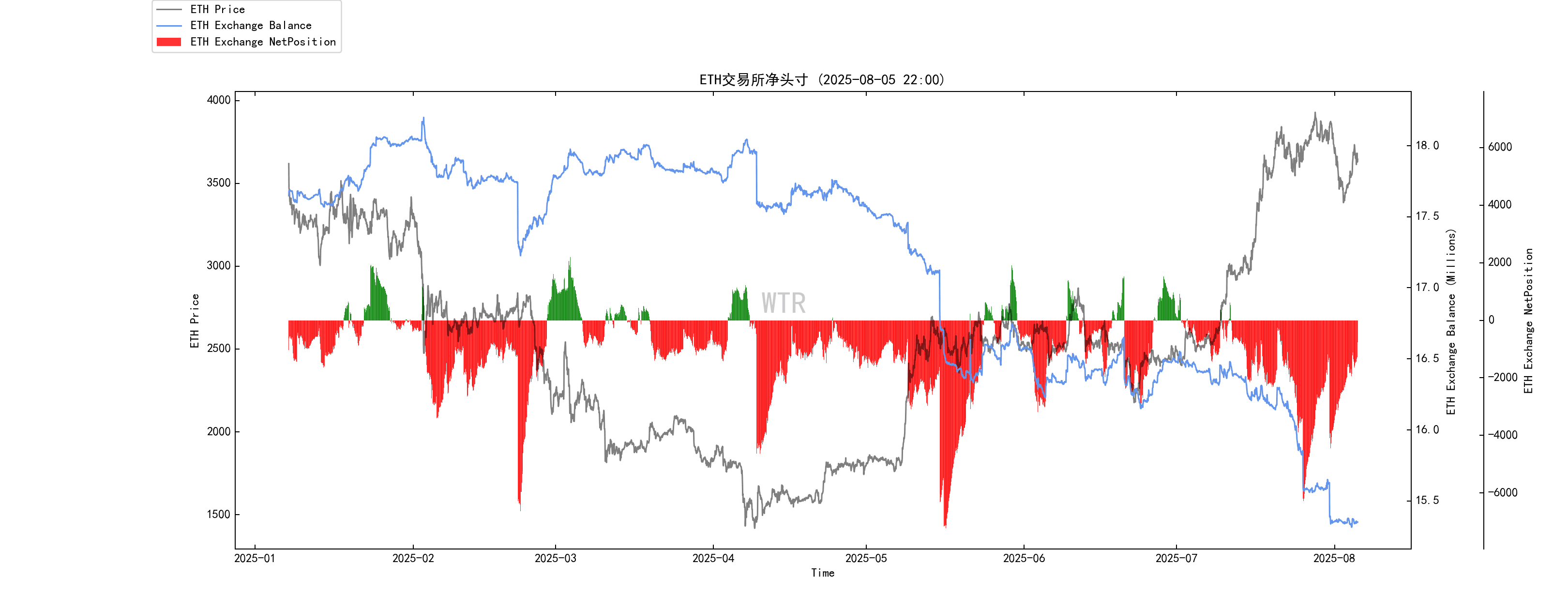
ETH is overall in an outflow accumulation state, with significant outflows last week.
(Below is the high-weight selling pressure)
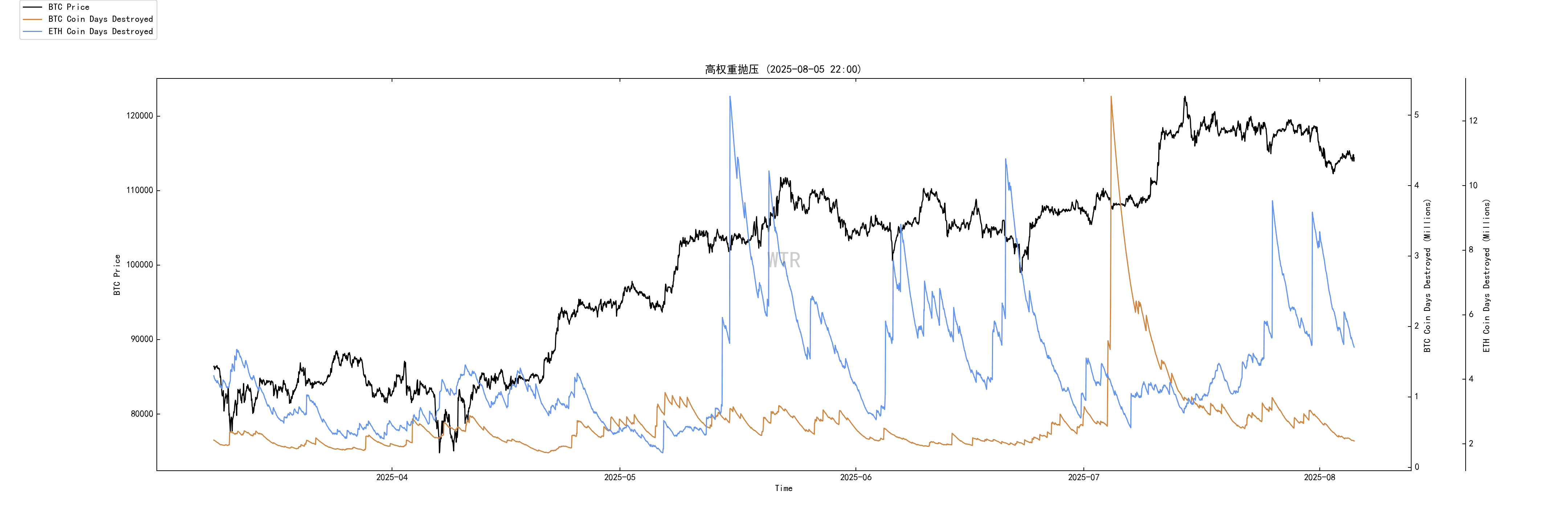
There has been a slight high-weight selling pressure when ETH falls, and it has eased. Currently, there is no high-weight selling pressure involved.
Purchasing power rating: Global purchasing power, stablecoin purchasing power remains the same as last week.
(Below is the global purchasing power status)
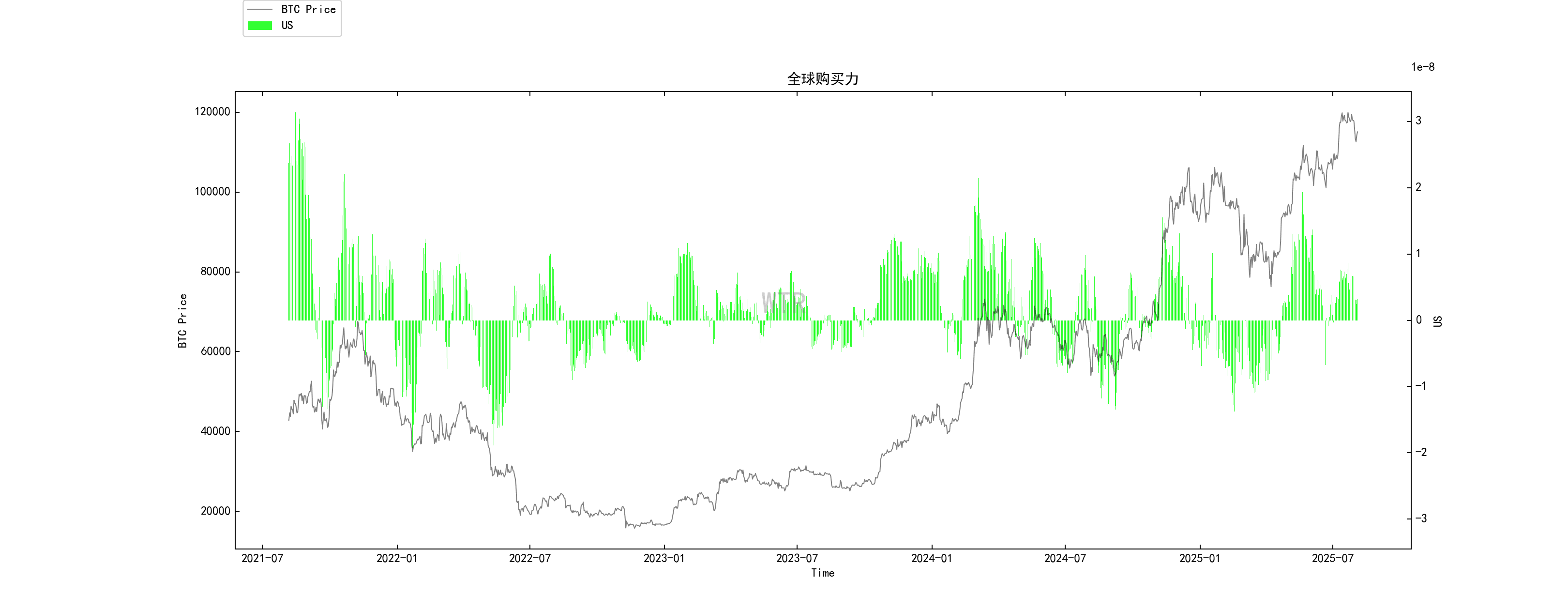
Global purchasing power remains the same as last week.
(Below is the net position of USDT on exchanges)
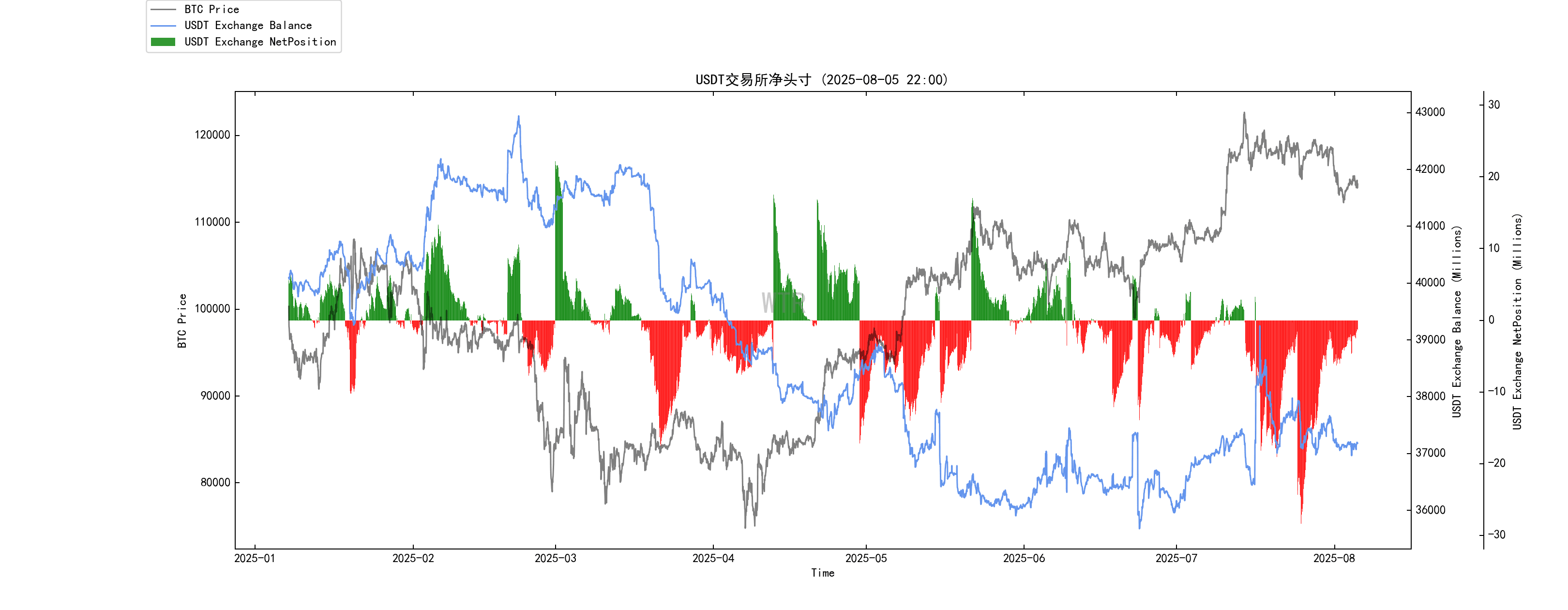
Stablecoin purchasing power is the same as last week.
Weekly summary:
Summary of News:
Macroeconomic mutation → Rate cut expectations become consensus → Global liquidity about to be unlocked → Risk assets welcome tailwinds → The crypto market prepares to absorb macro liquidity with 'regulatory de-risking' and 'institutional buying' as its endogenous driving forces, showing cautious optimism and extremely high expectations for the future.
This is a rare situation where both external blood transfusions and internal blood production functions are simultaneously enhanced.
Future Outlook:
Short-term:
The focus of attention: U.S. July CPI data on August 12. This is the most critical variable determining the market's next direction.
Scenario A (Ideal): If the CPI data meets or is below expectations, inflation cools down. This will clear the last obstacles for the Federal Reserve to cut rates, and the market will likely start a new round of increase, with the fear and greed index possibly slipping completely into greed.
Scenario B (Bad): If the CPI data is above expectations, inflation remains stubborn. This will put the Federal Reserve in a dilemma between maintaining growth and combating inflation, greatly shaking the market's strong belief in a September rate cut, possibly triggering severe short-term corrections and market volatility.
Medium-term:
Main Theme: The Federal Reserve's rate cut cycle. The market's focus will shift from whether to cut rates to the magnitude and frequency of rate cuts. If Goldman Sachs' forecast of consecutive rate cuts, or even 'one-time cuts of 50 basis points' comes true, it will inject strong momentum into the market.
In the crypto market internally: It is expected that the narrative around the ETH spot ETF will continue to ferment, especially regarding its staking returns and the tokenization of assets (RWA). At the same time, attention should be paid to whether the funding flows of the BTC spot ETF will turn positive due to the clarity of the rate cut cycle, regaining upward momentum.
Long-term:
Potential huge upside space: If the U.S. economy successfully achieves a soft landing (i.e., economic slowdown without falling into a severe recession, while controlling inflation), then under a new easing cycle and an increasingly clear regulatory environment, the crypto market will welcome the most favorable macro background in its development history. In this context of favorable timing, location, and manpower, analysts' calls for BTC to reach $200,000 and other targets, while aggressive, have a coherent logic behind them.
Risk: Failure of the soft landing, leading the U.S. economy towards a hard landing (i.e., recession). In a true recession, despite the central bank cutting rates, corporate profits would plummet, and the market's risk-averse sentiment would peak. At that time, all risk assets (including cryptocurrencies) could face indiscriminate selling pressure.
Currently at a critical macro turning point.
The truth of the job market has paved the way for a shift in monetary policy.
The crypto market is bracing for the internal fundamentals becoming increasingly solid.
The road ahead for the next few months will be determined by inflation data and the Federal Reserve's actual actions, but in the long term, risks and opportunities coexist, and the scale of opportunities is tilting.
On-chain long-term insights:
The current market is in a balance driven by macroeconomic contradictions.
Its internal structure is rock-solid, continuously reinforced by high-conviction long-term capital;
But the external environment is murky, with new capital hesitating due to concerns about recession.
The core contradiction in the market is the game between the expectation of liquidity injection and the reality of recession, as well as the struggle between internal conviction and external caution.
Market Tone:
The market is in a pressure cooker of potential, with solid internal conviction, but external funds and confidence fluctuating.
Macro tailwinds, but the shadow of recession makes the market still hesitate, requiring a wait for the final signal.
On-chain medium-term exploration:
USDC purchasing power is low, with a risk of insufficient liquidity.
Whales are relatively neutral, and the decline in buying power in the U.S. market may lead to instability.
The market faces slight pressure and needs to guard against the spread of squeezing emotions.
Current liquidity has decreased compared to the previous ample state.
The BTC group has shifted from accumulation to divergence, with a high chance of volatility.
The ETH group sentiment is positive, with coin accumulation possibly improving unstable conditions.
Market Tone:
Caution, wait-and-see
Market gaming is intense, liquidity is tightening, and volatility risk is rising.
On-chain short-term observation:
Risk coefficient is in the neutral zone, with moderate derivative risks.
The number of new active addresses is at a median level.
Market sentiment state rating: Neutral.
The net position on exchanges shows an overall BTC outflow accumulation, with significant outflows of ETH.
Global purchasing power, stablecoin purchasing power remains the same as last week.
There is a 70% probability that the price will not break below the 110000-105000 range in the short term;
Market Tone:
Short-term market sentiment is stable and neutral. The cost line for short-term holders is still rising, with last week's brief fluctuations slightly declining. Whether in profit or short-term loss, there is a portion of buying power continuously supporting. This week, there is still a possibility of volatile consolidation, during which a short-term buying signal is likely to appear.
Risk Warning:
The above are all market discussions and explorations, without directional opinions on investments; please approach with caution and guard against market black swan risks.
This report is provided by the 'WTR' Research Institute.
Welcome to follow us!
