
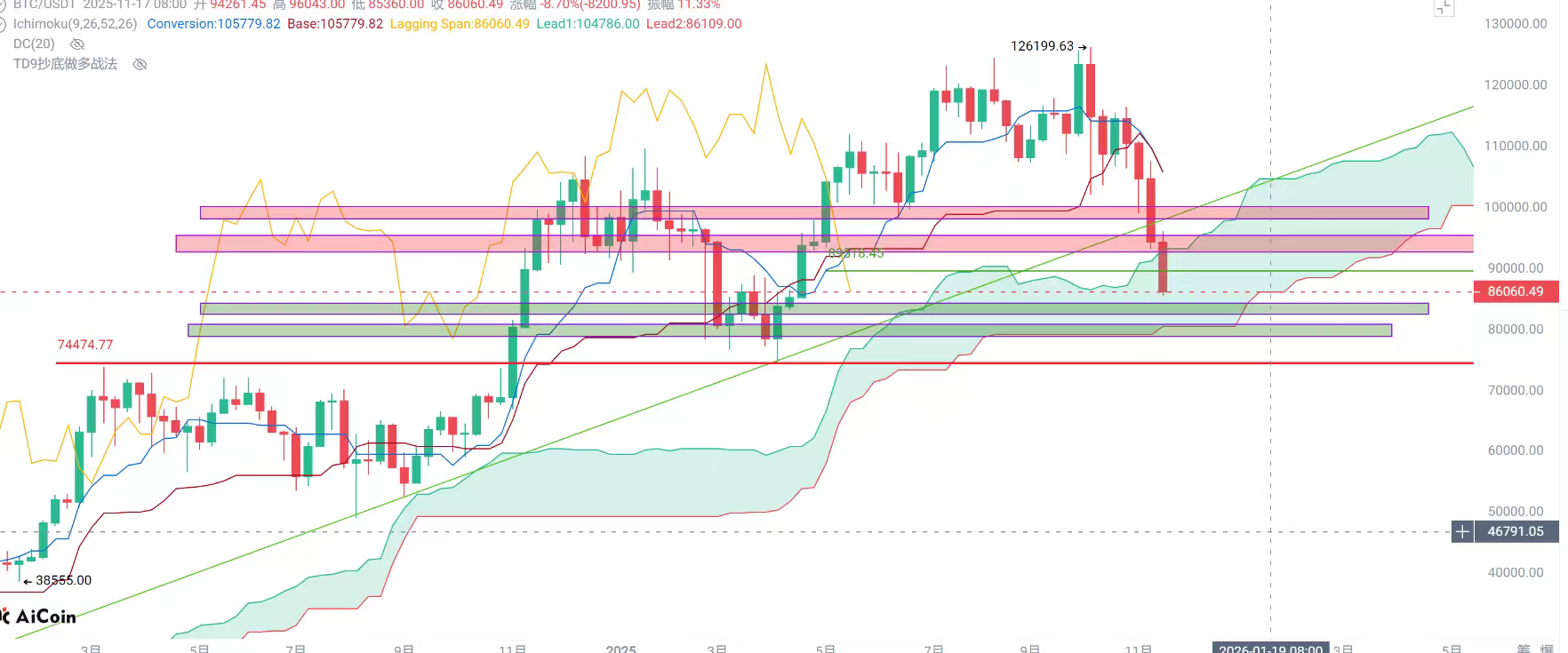
The cold wind of late autumn not only blows down the remaining leaves from the branches but also sends a chill through the cryptocurrency market. Bitcoin performed a 'high dive', plummeting over 32% from its October peak, not only breaking the psychological barrier of 87000 dollars but also briefly piercing the support level of 85300 dollars, creating a new low since April.
In this bloody storm, our prediction yesterday unexpectedly became an 'anchorage' for investors. The article accurately pointed out the short position suggestion near 93200, which perfectly captured a drop of nearly 8000 points within 24 hours, becoming a rare highlight in this round of decline.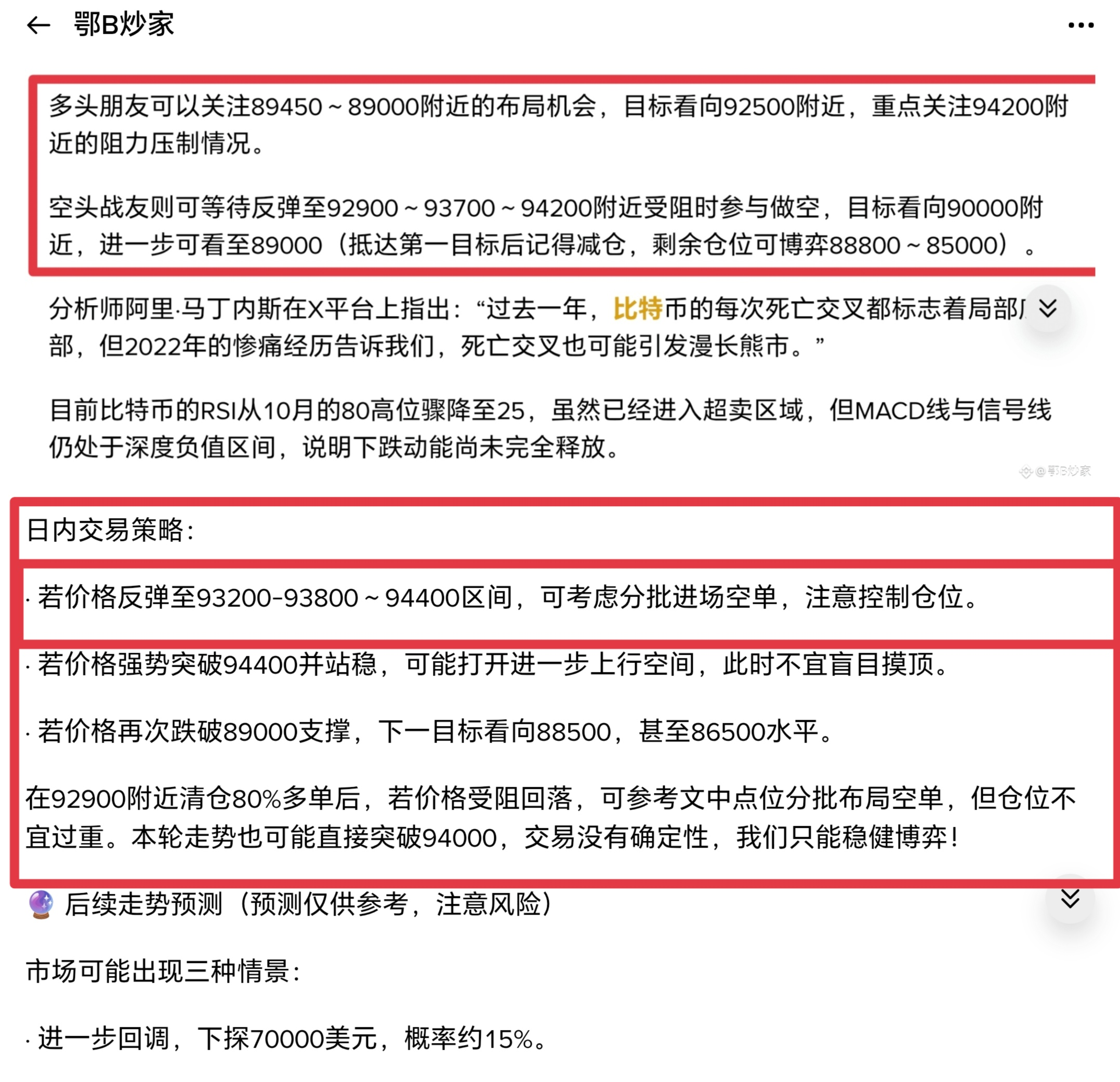
This crash came quickly and fiercely. According to statistics, over 245,000 investors across the internet suffered liquidation within 24 hours, with 5.8 billion in funds evaporating instantly. Panic spread like a plague, while the market seems to still be searching for the bottom.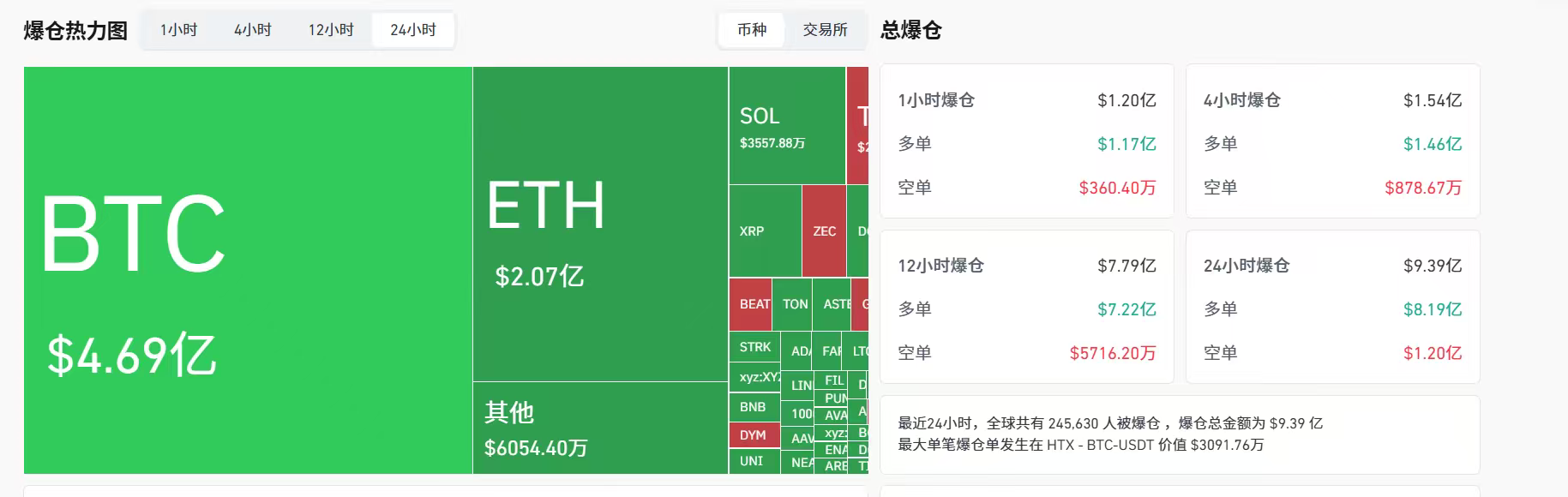
[Data Truth: A Decline That Had Long Been Foreshadowed]
In Thursday's trading, cryptocurrencies continued their decline for over a month, in stark contrast to the brief euphoria brought on by Nvidia's earnings in the early trading of U.S. stocks. Market buying pressure is weak, and the momentum that supported the early gains this year is dissipating.
Behind this round of adjustment is the continuous clearing of positions after the significant rise in October. The withdrawal of fast trading funds, combined with the inertia of high-position holdings, has made the market particularly vulnerable in the face of selling pressure.

CoinShares research director James Butterfill said bluntly: "Cryptocurrency is experiencing a whale sell-off driven by the 'four-year cycle theory', a phase that is usually accompanied by periodic declines." Although he does not personally agree with this theory, market behavior is self-reinforcing — since September, large holders have sold off over 20 billion USD in positions.
[Multiple Pressures: Who is strangling Bitcoin?]
Behind this crash is a dual strangulation of renewed risk aversion and a sell-off in tech stocks.
The former support forces — large investment funds, ETF allocators, and corporate treasurers — have all exited, leaving Bitcoin without the crucial pillars that supported its significant rise this year, and the market has entered a new fragile phase.
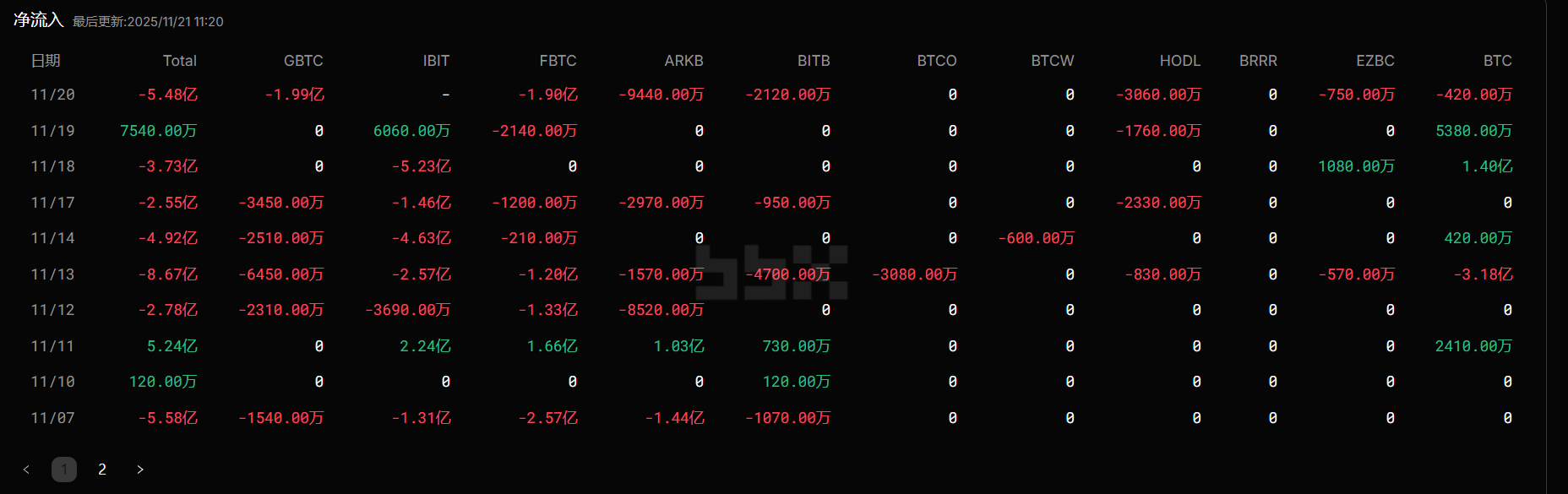
10X Research analysts candidly state: the cryptocurrency market has entered a "confirmed bear market phase." Weak ETF inflows, ongoing selling by long-term holders, and low willingness of retail investors to enter the market all silently convey the market's pessimism.

On the macro level, the outlook is equally pessimistic. Jake Ostrovskis, head of over-the-counter trading at Wintermute, pointed out: "In the absence of key economic data, the Fed's policy path is shrouded in uncertainty, which is stifling investors' risk appetite."
[Key Levels: Where is the Market Focused?]
The options market is closely watching the key support levels below. Deribit data shows that the demand for downside protection around 85,000 USD is the strongest, followed by 82,000 USD, indicating that traders are preparing for further declines.
Bitcoin is nearing the "maximum pain" range of 84,000-73,000 USD, a zone closely related to the cost benchmark of BlackRock's IBIT spot Bitcoin ETF. Once reached, it could trigger fierce competition between bulls and bears.
Placeholder VC partner Chris Burniske is itching to re-enter the market when Bitcoin dips to 75,000 USD or lower. Meanwhile, BitMEX co-founder Arthur Hayes predicts that Bitcoin may first test the 80,000-85,000 USD range.
[Trading Guide: Navigating Steady Amidst Turbulence]
Currently around 85,400 points, the market is in a delicate technical position. The bearish forces remain strong, but the bulls are likely to organize a counterattack at key support levels.
For friends who are following the trend to short:
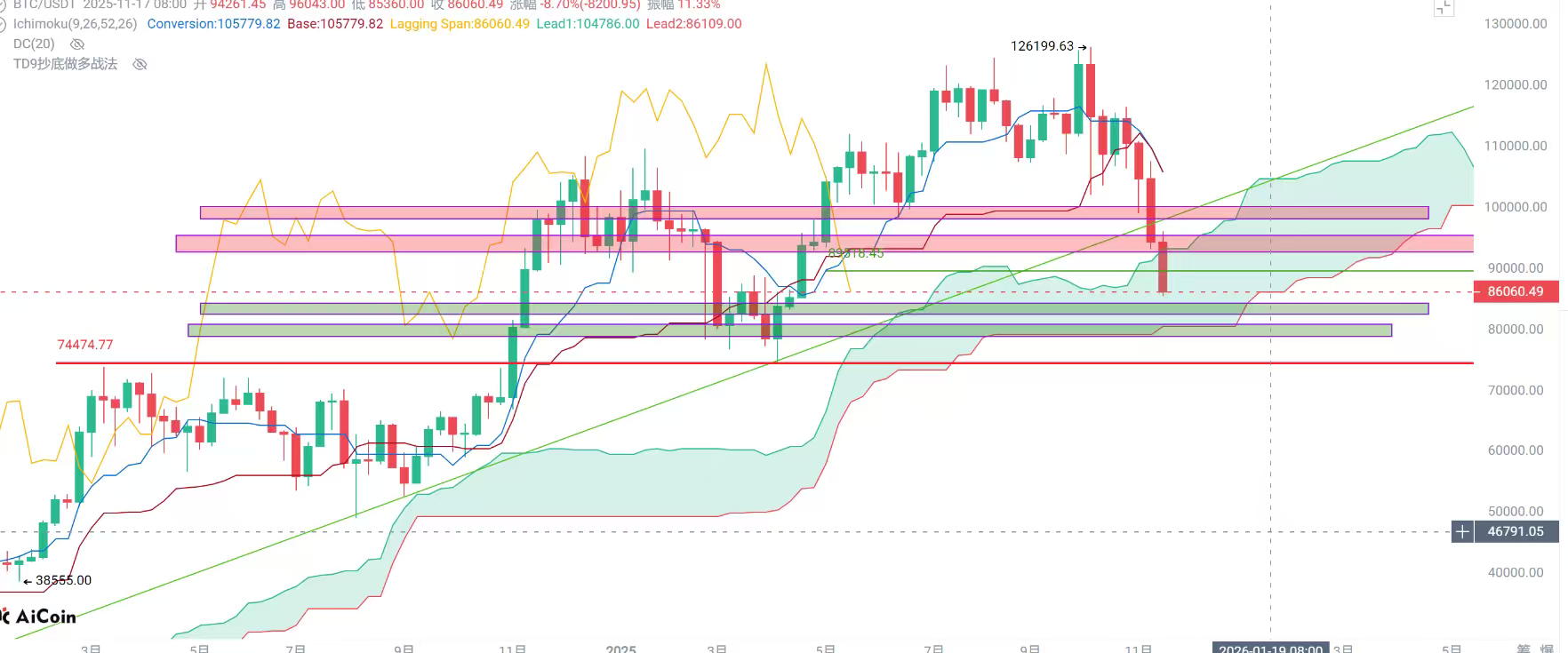
A rebound to the 87,500-88,300-89,500 range may be considered for gradually building short positions, targeting the 85,000-78,000 range. It is advised to reduce positions by 80% around 83,900, leaving sufficient safety margin, with the ultimate target looking towards around 74,500.
For spot investors:
Attention can be paid to the three key levels of 83,900, 78,000, and 74,500 for gradual position building, but position size must be controlled. Investors with weaker risk tolerance may consider staying on the sidelines and waiting for clearer market signals.
Remember: during abnormal market volatility, the risk of a single trade should not exceed 2% of total capital; this is your life jacket for surviving the storm.
Short-term pressure and long-term opportunities
80,000 USD is not only a technical barrier but also a psychological defense line. Bitmine chairman Tom Lee pointed out that the impact on the market due to the liquidity gap from market makers needs 6-8 weeks to repair, and this process may ease after Thanksgiving.
From on-chain data, Bitcoin's Relative Strength Index (RSI) daily chart has fallen to around 18, indicating an oversold area, suggesting that downward momentum may be waning. The market may be approaching a critical point for a short-term rebound, although the overall trend remains bearish.

In the trading world, correct judgment is more precious than gold. When 5.8 billion in funds vanish into thin air during liquidations, precise foresight becomes the brightest beacon in the dark.
The market is still experiencing extreme volatility, with the "maximum pain" range of 84,000-73,000 USD looming. As Bitcoin struggles around 85,400 points, the next big market move is quietly brewing.
Remember: the market is never short of opportunities; what it lacks is patience and discipline. In the tumult of cryptocurrency, only by grasping key levels and strictly adhering to stop-loss discipline can one await the dawn's light.
Written by: E B Trader
