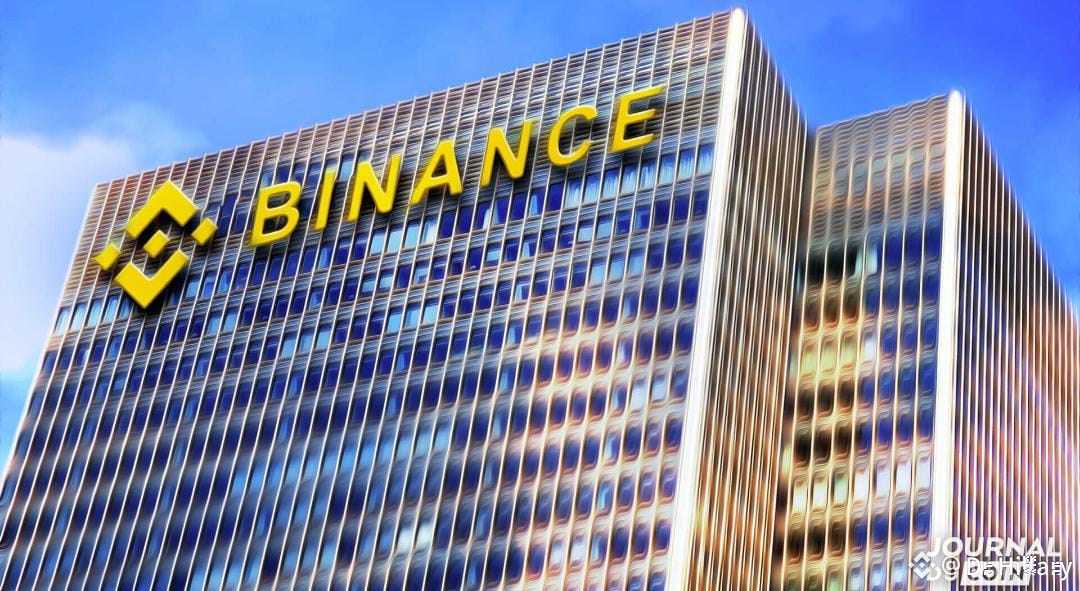
Founding and Early Vision (2017)
Binance was founded in July 2017 by Changpeng Zhao (often called “CZ”) @Changpen Zhao and @Yi He


The initial funding came via an initial coin offering (ICO) that raised around US$15 million.
From the outset, Zhao’s vision for Binance was to create a fast, user-friendly and efficient cryptocurrency exchange that could scale globally.
The combination of technological infrastructure (drawing from Zhao’s background in high-frequency trading) and a focus on broad accessibility helped Binance rapidly gain traction.
Rapid Growth & Expansion (2017–2020)
Within a few months of launch, Binance became — by trading volume — the largest cryptocurrency exchange in the world.
The exchange rapidly expanded its services: launching its native token $BNB , introducing multiple trading pairs, expanding to new markets, and later developing a blockchain ecosystem (Binance Smart Chain) to support smart contracts and decentralized applications.
This period exemplified bold, growth-focused leadership: combining engineering excellence, product innovation and global ambition to scale fast.
On the organizational front, the co-founder Yi He played a major role: beyond co-founding, she contributed strongly to marketing, global strategy and later to investments through internal arms of Binance.
Leadership Style and Corporate Philosophy
Under CZ’s leadership, Binance prioritized speed, accessibility, and customer-centric innovation — core values that distinguished Binance from many traditional exchanges and fintech platforms.
The structure of Binance was deliberately flexible: the company did not anchor itself to a fixed headquarters. Its operations moved across jurisdictions (from China, to Japan, then to Malta) — enabling agility in the face of regulatory changes.
This “decentralized headquarters” model reflects a leadership philosophy aligned with the core ideals of cryptocurrency — decentralization, global access, and avoiding traditional gate-keeping.
Also, Binance’s leadership — both Zhao and He — showed willingness to evolve, adapting to new market demands: from simple crypto-to-crypto trading to full ecosystem building: tokens, smart-contracts platform, wallet services, global outreach.
Challenges, Legal Pressure & Leadership Transition (2023–2025)
As Binance grew, it attracted scrutiny from regulators worldwide. Allegations included weak anti-money laundering (AML) controls, unlicensed money-transmitting operations, and inadequate compliance in certain jurisdictions.
In 2023, founder CZ and Binance pleaded guilty to U.S. federal charges including violations of anti-money laundering laws and sanctions violations.
Following the guilty plea, CZ resigned as CEO. As part of the settlement, he personally paid a fine (US$50 million) and the firm faced substantial penalties.
In the wake of these events, Binance underwent a leadership restructuring. Richard Teng assumed the role of CEO.
Most recently (December 2025), co-founder Yi He was appointed co-CEO, ushering in a new dual-leadership model alongside Richard Teng.
This transition marks a pivot: from rapid expansion and aggressive growth under a single visionary founder, to a more regulated, compliance-aware, diversified leadership team.
What Leadership at Binance Today Means: Reflections & Lessons
The ascent of Binance demonstrates how vision-driven leadership, combining technical mastery (through CZ) and strategic marketing/management (through Yi He), can disrupt traditional industries — in this case, finance.
The flexible, decentralized structure of Binance’s operations shows the value of organizational agility, especially in a regulated, fast-changing global landscape.
But the legal challenges and resulting restructuring also highlight the importance of governance, compliance, and sustainable risk management — even (especially) for disruptive, high-growth enterprises.
The recent co-CEO move suggests Binance is trying to balance innovation with regulation and institutional maturity, signaling a shift from “startup rebel” to “global financial infrastructure provider.”
For other organizations (or for budding entrepreneurs), Binance’s story underscores that bold vision + speed + adaptability can deliver rapid success — but long-term sustainability often requires systems, compliance, transparency, and diversified leadership.
Conclusion
The leadership journey of Binance — from its founding by Changpeng Zhao and Yi He in 2017 to its current dual-CEO structure in 2025 — tells a rich story of ambition, innovation, disruption, challenge, and evolution. What started as a lean startup with a provocative vision of “freedoms of money” has matured into a global powerhouse wrestling with the realities of regulatory frameworks, legal responsibilities, and sustainable governance.
As Binance moves forward under a new leadership model, its balancing act between preserving the pioneering spirit that built it and adopting the discipline needed for longevity will be crucial. For the crypto world at large, Binance’s story offers lessons — and warnings —
about what true leadership means in a volatile, high-stakes industry.