
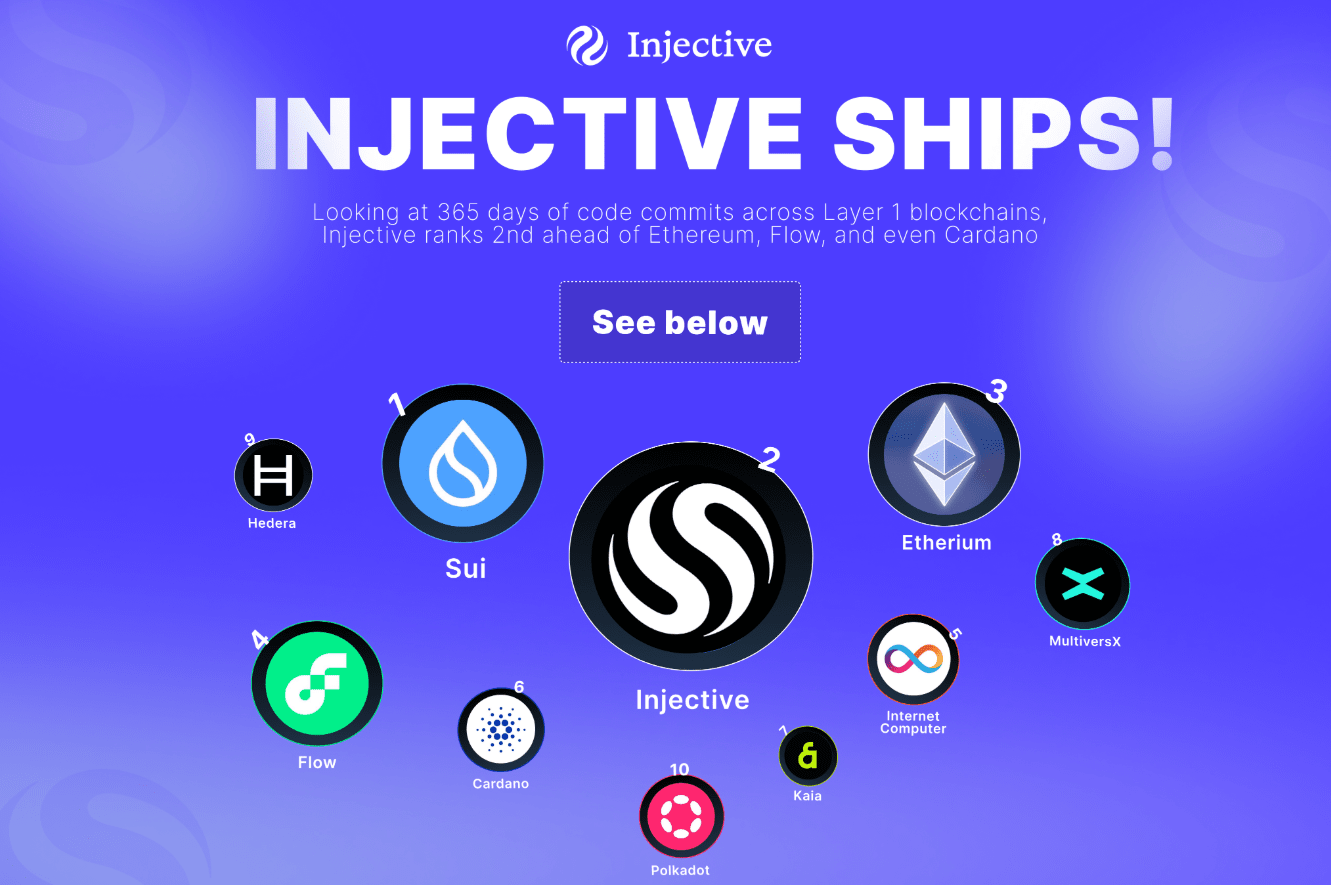
Let's get straight to the point without talking nonsense. Recently, the Nivara upgrade of Injective is not the usual operation of just changing the skin or fixing a bug, but a 'heart surgery' on the underlying execution engine. It addresses a long-standing difficult problem in the blockchain field: liquidity fragmentation and development efficiency bottlenecks.
1. MultiVM Determinism: Breaking the 'islands within the chain', a dual revolution of speed and security
In the past, if a chain simultaneously supported EVM (Ethereum Virtual Machine) and CosmWasm (the Wasm virtual machine of the Cosmos ecosystem), it was like a building having two completely different plumbing and electrical systems. Applications interacting between different systems not only experienced slow speeds but also faced various compatibility issues and security risks.
The core of this upgrade for Injective is to equip these two (and potentially more in the future) systems with a unified 'scheduling hub' and 'translator'.
How is this achieved? By enhancing the syntax tree parsing capabilities of the Cosmos SDK and refining the execution path of EVM bytecode. In simple terms, it allows the 'languages' of different virtual machines to be understood and coordinated efficiently and unambiguously at a lower level.
How effective is it? Official data shows that cross-VM interaction latency has decreased by 15%, and the median time for asset transfer packaging has been compressed to under 0.5 seconds. This means that a derivatives DEX built on Wasm can almost seamlessly call asset pools on EVM, with users completely unaware of the complex switches behind the scenes. Liquidity pools are no longer fragmented 'small ponds', but have been connected to form a 'great river'.
Is it safe? In the extreme case of 33% of nodes acting maliciously (Byzantine fault tolerance), the network can still maintain correctness. Coupled with an encrypted memory pool (transaction contents are scrambled and hidden), common MEV exploitation methods such as frontrunning and sandwich attacks are greatly curtailed here, ensuring fairness for high-frequency derivatives trading.
Two, AI scaffolding: From 'handwritten code' to 'describe to generate', igniting the ecosystem's atomic bomb.
If MultiVM has fixed the highway, then Injective's AI-driven development platform is essentially giving everyone a free race car, complete with a coach.
Traditional development: A team wanting to create a fragmented gold trading product needs to understand Solidity/Wasm, DeFi logic, oracle integration, and security auditing... taking months and incurring high costs.
Injective AI Development: Developers may only need to describe in natural language: 'I want a fragmented gold token vault anchored to the real-time price of London gold, integrating a TWAP (time-weighted average price) oracle, and featuring a frontrunning protection capability.' The AI platform can generate a secure, deployable contract code framework in minutes.
What does this mean? The development threshold has been lowered from 'professional engineers' to 'domain experts'. Financial experts wanting to handle RWA (real-world assets) and traders wanting to innovate derivatives can bypass the lengthy coding phase and quickly prototype and deploy their ideas. This directly explains why EVM-native deployments can increase by 180% monthly, and over 70 innovative dApps can emerge rapidly—AI is not an assistant; it has become the ecosystem's 'creative accelerator' and 'capacity bottleneck breaker'.
Three, data does not lie: The 'flywheel effect' of a prosperous ecosystem and institutional entry.
All these technological upgrades must ultimately be reflected in data and adoption:
Solid ecosystem data: 140,000 daily active users, $14 million in protocol liquidity, and over $12 billion in monthly inflows for RWA perpetual contracts. These figures indicate that it is not speculators who are active, but real users and capital. 72 dApps cover complex areas from derivatives and options vaults to cross-margin engines, indicating that the ecosystem's 'technical depth' is sufficient to support advanced financial applications.
Institutions are voting with their feet: Over 12% annualized staking yield has attracted large-scale delegated staking from asset management companies, which is not only profit-seeking but also enhances network security (nodes are more decentralized and stable). Commercial real estate, pre-IPO shares on-chain, GPU power tokenization... these are not things for retail investors, but rather institutional-level assets and yield demands seeking a new efficient layer of support.
Regulatory and deflationary expectation management: Products similar to ETFs are in preparation, which will serve as a legitimate bridge connecting traditional billion-dollar capital. Meanwhile, a continuous deflationary destruction mechanism shrinks supply while demand grows, providing classic economic support for asset value.
Four, deep insights: What track is Injective positioning itself in?
What Injective envisions is not a faster DeFi chain, but a 'programmable financial infrastructure'. Its ambition lies in:
Become a unified settlement layer for multi-asset and multi-virtual machine environments: stocks, gold, government bonds, cryptocurrencies... regardless of the source of assets, they can be efficiently and compliantly tokenized and programmed here.
Reshape the financial application development lifecycle with AI: The time from idea to product is compressed from 'quarters' to 'days', greatly releasing the potential for financial innovation.
Meet the comprehensive needs of institutions for yield, compliance, and security: high certainty, resistance to MEV, compliance tools, and real yield—these are all 'must-answer questions' before traditional financial institutions enter the market.
Conclusion:
Currently, Injective has already transcended the realm of simple 'public chain competition'. It solves the underlying issues of performance and interoperability through MultiVM determinism, resolves productivity issues in ecological outbreaks through AI scaffolding, and addresses demand and capital issues through solid RWA and institutional adoption. This has formed a powerful growth flywheel.
Technology ultimately needs to serve applications, and applications need to carry real assets and users. Injective is on this path, building a new paradigm that is 'heavier' and closer to traditional financial logic than other chains, while also possessing blockchain's inherent high efficiency and transparency. When the depth of technology, breadth of the ecosystem, and institutional demand resonate, the potential it contains may truly 'surpass historical benchmarks'.
