
Analysis of Falcon Finance (FF) in 2025: Market Trends and Future Outlook
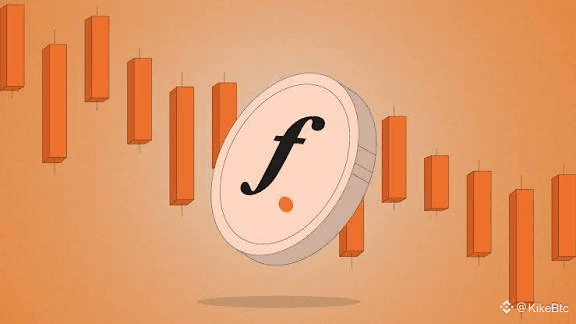
Falcon Finance (FF) has navigated a volatile 2025, marked by both significant technological advancements in the Decentralized Finance (DeFi) space and persistent market challenges. As of late 2025, the protocol is focused on integrating real-world assets (RWA) to stabilize its offerings and drive institutional adoption.
2025 Performance Overview
Falcon Finance operates as a developer of blockchain-based financial protocols, focusing on decentralized liquidity generation and asset-backed token issuance, such as its synthetic dollar, USDf.
The year 2025 has seen mixed performance. While technical analysis shows the FF token trading near its all-time lows and below key Fibonacci retracement levels, suggesting bearish momentum in the short term, the company has made strategic operational strides.
Key developments include:
USDf Circulation Growth: In October 2025, USDf circulation surpassed $2 billion.
Strategic Funding: The company secured a $10 million investment to expand its collateralization infrastructure.
Risk Mitigation: Falcon Finance established an on-chain insurance fund with an initial $10 million contribution to provide stability buffers.
Key Drivers for the Remainder of 2025 and 2026
The trajectory of Falcon Finance's native token ($FF) hinges on several critical factors:
1. Real-World Asset (RWA) Integration
The core of Falcon's 2025 and 2026 roadmap involves integrating tokenized real-world assets like sovereign bonds and Tether Gold (XAUt). The success of these integrations, particularly the Q1 sovereign bond pilots, is crucial. Bullish signals will emerge if RWA exposure in their reserve reports surpasses a 40% collateral diversity ratio, indicating strong institutional adoption.
2. Yield Viability
Falcon offers an 8.97% USDf yield, generated through perpetual futures arbitrage and RWA returns. Maintaining this premium yield is a challenge amidst fluctuating market conditions and competition from traditional finance (TradFi) yields (e.g., T-bill yields around 4.2%). Any significant compression of this yield could trigger capital flight to competitors.
3. Token Vesting and Dilution
A major overhang on the FF price is the potential for significant dilution when vesting periods end. Historical data suggests similar events in comparable projects have caused substantial price drops. The market is skeptical, and the protocol needs strong demand drivers (like successful RWA integration) to offset the impact of an estimated $23 million+ in potential dilution.
Analyst Forecasts for 2025
Price predictions for the FF token in 2025 are predominantly cautious and varied:
Pessimistic Outlook: Some analysts forecast a decline, with price predictions suggesting a potential ROI of -23% by the end of 2025.
Range-Bound Trading: Others anticipate the token will trade within a specific range, with an expected average price that reflects a slight potential loss compared to current rates.
Long-term Potential: Despite short-term bearishness, some technical indicators suggest FF might be a viable buy in 2025 for long-term investors, assuming the fundamental factors align with the company's ambitious roadmap.#FalconFinance $BTC
 BTCUSDTPerp93,900+4.56%
