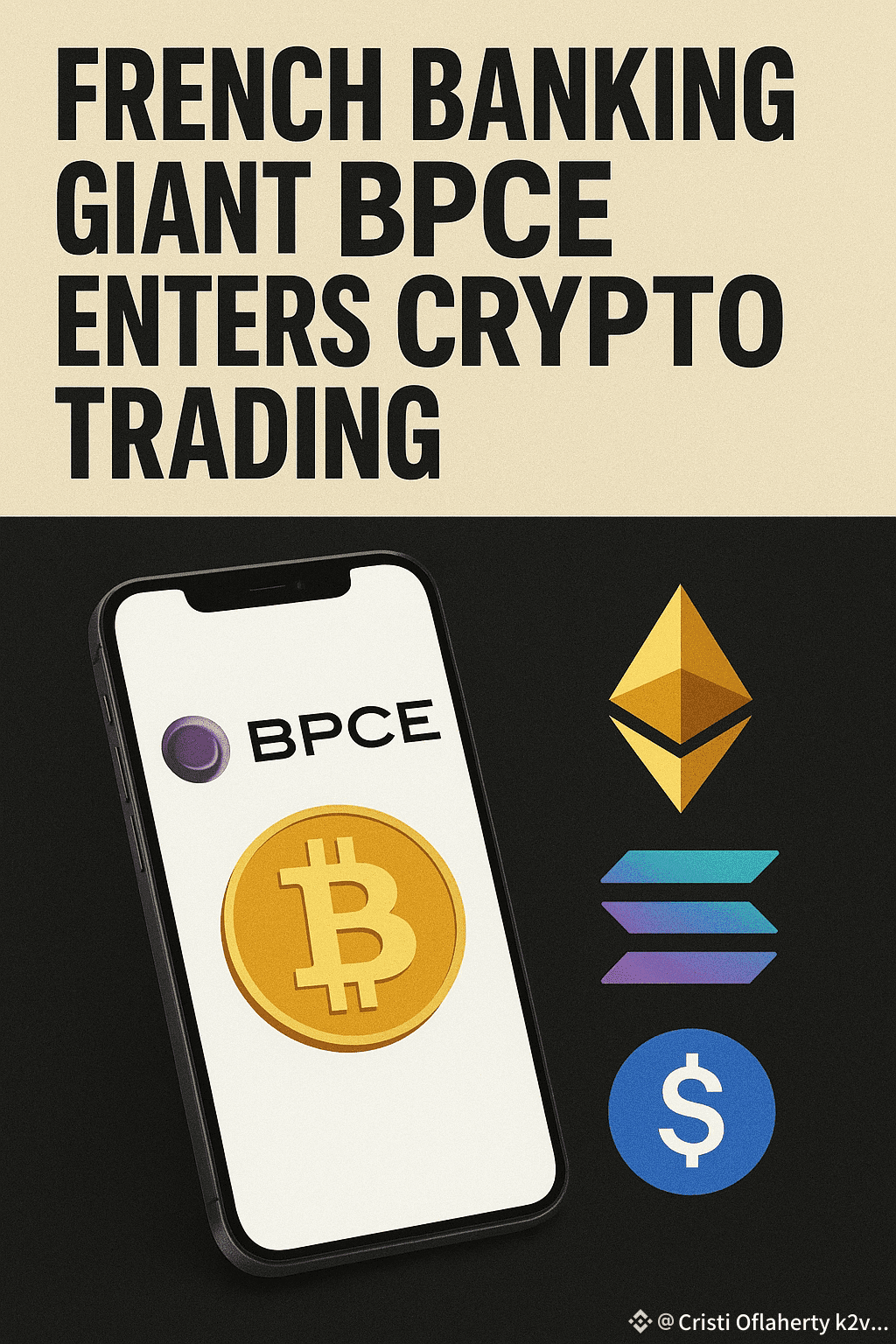
French Banking Giant BPCE Enters Crypto Trading — A New Era for 12 Million Customers
In a landmark move for Europe’s traditional financial sector, France’s second-largest banking group, BPCE, is rolling out crypto trading services directly inside its Banque Populaire and Caisse d’Épargne mobile apps. The launch begins Monday and will initially reach 2 million customers, with a nationwide expansion planned through 2026, ultimately unlocking access for more than 12 million retail users.
A Major Step Toward Mainstream Crypto Adoption
For the first time, BPCE clients will be able to buy and sell Bitcoin (BTC), Ethereum (ETH), Solana (SOL), and USDC without needing any external exchange. All trading will take place through a dedicated digital asset account managed by Hexarq, BPCE’s crypto-specialized subsidiary.
Each user account will include:
€2.99 monthly management fee
1.5% commission per trade
€1 minimum fee
BPCE says this phased rollout is designed to monitor market demand, user behavior, and system stability before opening crypto access to its full retail base.
Europe’s Banks Are Warming Up to Crypto
BPCE’s move follows a growing trend among major European financial institutions:
BBVA already provides BTC and ETH trading for customers in Spain.
Santander’s Openbank offers access to five major crypto assets through its digital platform.
Raiffeisen Bank’s Vienna unit, in partnership with Bitpanda, has integrated crypto services into traditional banking channels.
This collective shift marks a significant moment for crypto adoption in Europe, signaling that digital assets are no longer a fringe investment, but a mainstream financial product embraced by major banks.
Why This Matters
BPCE’s entry into crypto signals:
Greater trust and legitimacy for digital assets
Simplified access for millions of everyday users
Increased competition between traditional banks and crypto exchanges
Potential growth in European crypto volume
As 2026 approaches, BPCE’s initiative may become one of the largest bank-led crypto integrations in the world, redefining how Europeans interact with digital assets.