
Ten years ago, I used CAGR to predict that Bitcoin would reach $100,000, and it seems that my prediction back then was quite accurate.
Then I will again use CAGR forecast analysis to predict the CAGR scenario for the next 10 years (2025–2035).
Baseline scenario – approximately 40% CAGR
The projected CAGR for Bitcoin by 2030 is approximately 40%, based on global adoption and network activity. If this growth rate continues until 2035, the growth multiple would be (1 + 0.40)^10 ≈ 28 times. Assuming the current Bitcoin price is [value missing],The annual price would then be approximately 3,300,000.Conservative scenario – approximately 30% CAGR
The long-term annualized growth rate remains consistent at 30%. After 10 years, the growth multiple will be: (1 + 0.30)^10 ≈ 13.79 times.This means that Bitcoin could potentially reach around $1,300,000 in the future.Aggressive scenario – over 50% CAGR
Bitcoin is projected to achieve a CAGR of 50%. This corresponds to a growth multiple of approximately (1 + 0.50)^10 ≈ 57 times.That is, by 2035, it may reach $6,700,000.
The conclusion is that, even in the most conservative estimate of 10 years from now, by 2035, the value of Bitcoin will reach $1.3 million per coin; this is the absolute minimum.
Summary Table
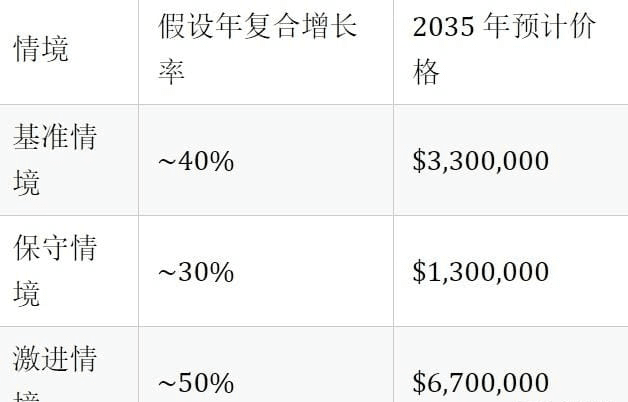 Let me first explain CAGR to you.
The formula for calculating CAGR (Compound Annual Growth Rate, also known as Compound Annual Return) is as follows:
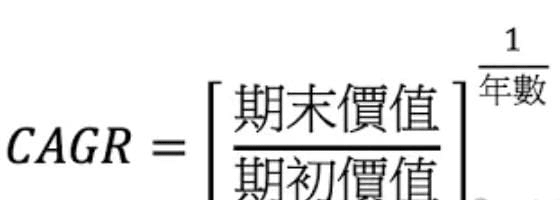 in:
in:
Value at the end of the period: for example, the price in the last year.
Initial value: e.g., price in the first year
Years: Length of time (in "years")
CAGR means: If this investment grows at the same percentage every year, for example, it grows from $10 to $30,000 after 10 years. It smooths out annual fluctuations and is suitable for long-term comparisons.
Why might CAGR change?
Network effects are amplified: driven by initiatives such as the Lightning Network and tokenized assets like RWA. Institutional funding is entering the market: ETFs and retirement fund allocations will increase market demand. Scarcity is a key factor: Bitcoin's supply is fixed, making it a scarce asset with long-term advantages.
Risks and precautions
Bitcoin has historically experienced multiple price retracements exceeding 80%. These predictions are based on idealized long-term growth, and reality is subject to fluctuations. Global regulation, macroeconomic changes, and competing cryptocurrencies can all introduce disruptions.
In summary
If Bitcoin can maintain a compound annual growth rate of 30-40% in the future, its price could reach $3,300,000 by 2035. If it maintains a 50% CAGR, it could potentially reach a price of $6 million or more.
Similar predictions have been shared before: a Bitcoin price of $100,000 will not be reached before 2021, but no later than 2028; after that, the price of Bitcoin will not fall below $100,000. A Bitcoin price of $1 million will not be achieved before 2028, but no later than 2037. After 2037, the price of Bitcoin will not fall below $1 million.
Now that we know for sure that Bitcoin will reach this price in 10 years, we should be considering how to earn USDT in the crypto world and accumulate Bitcoin!
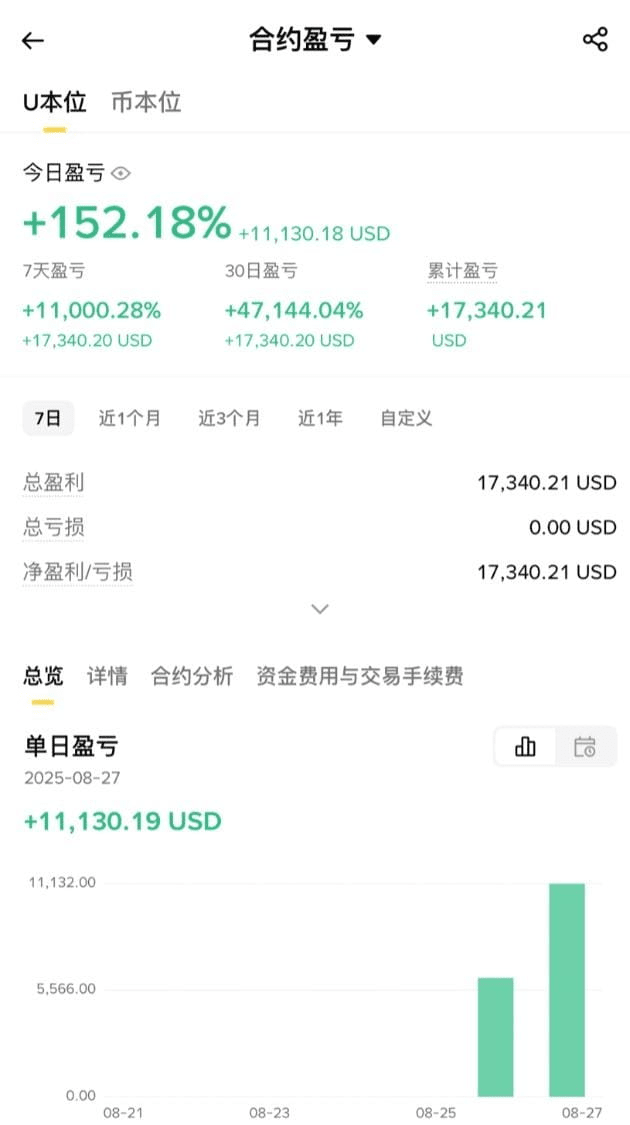 In the cryptocurrency world, there's only one way to turn a few thousand dollars into 1 million dollars: rolling over positions.
Once you have 1 million in principal, you'll find that your whole life seems to change. Even if you don't use leverage, if you buy a commodity and it rises by 20%, you'll have 200,000. 200,000 is the annual income ceiling for most people.
Moreover, once you've grown your money from tens of thousands to 100,000, you'll grasp some of the strategies and logic for making big money. At that point, your mindset will be much calmer, and from then on, it's just a matter of copying and pasting.
Don't talk about tens of millions or hundreds of millions all the time. You need to start from your own actual situation. Only bullshit is comfortable. In trading, you need to have the ability to identify the size of opportunities. You can't always use a small position or a large position. Usually, you play with a small position, and when a big opportunity comes, you can pull out your big guns.
For example, rolling over positions is something you can only do when a big opportunity comes along. You can't keep rolling over positions. It's okay if you miss out, because you only need to successfully roll over positions three or four times in your lifetime to go from zero to tens of millions. Tens of millions is enough for an ordinary person to join the ranks of the wealthy.
First, we need to know when it's appropriate to perform a rolling position operation:
Previously, only the following three situations were suitable for rolling over positions:
1. Choosing a direction after a long period of sideways trading and new lows in volatility
2. Buying the dip after a major rally in a bull market
3. Breakthrough of major resistance/support levels on the weekly chart
In general, the odds of winning are only relatively high in these three situations; all other opportunities should be abandoned.
Common view: Rolling in positions is defined as follows: In a trending market, after significant profits are made using leverage, the overall leverage passively decreases. To achieve compound interest, the position is increased at an appropriate time. This process of increasing the position is called rolling in positions.
The following are the instructions for rolling over positions:
Adding to a position after achieving a floating profit: You can consider adding to your position after achieving a floating profit. However, before adding to your position, you need to ensure that your cost basis has been lowered to reduce the risk of loss. This does not mean blindly adding to your position after achieving a profit, but rather doing so at the right time.
Core position + T+0 rolling operation: Divide funds into multiple parts, keeping a portion as a core position and using the other part for buying low and selling high. The specific proportions can be chosen based on individual risk tolerance and capital size. For example, you can choose to use half a position for rolling T+0, 30% of the core position for rolling T+0, or 70% of the core position for rolling T+0. This operation can reduce holding costs and increase returns.
Several points to note regarding rollover:
1. Sufficient patience is needed. The profits from rolling over positions are enormous. As long as you can successfully roll over a few times, you can earn at least tens of millions or hundreds of millions. Therefore, you cannot roll over easily. You need to look for opportunities with high certainty and a high probability of success.
2. What is a sure-fire opportunity? It's when prices plummet, then consolidate sideways, and then suddenly surge upwards. At this point, the trend is likely about to reverse, and you need to get on board quickly to avoid missing the opportunity. (10%-100% version)
Only 10% of people can make money in this market because it is destined to be a zero-sum game.
The money you can make will only be generated during the 20% of bull market periods; the rest of the time, it will eliminate those who lack investment logic and patience.
Only by being prepared to withstand a 30%-50% pullback can you ultimately succeed; otherwise, the process will be torture for you.
40% of non-newbies may perish right from the start; there are more pitfalls in this circle than you imagine.
At least 50% of people in this market will choose to play contracts, and most of them will end up losing everything and gaining nothing. Remember, contracts are gambling.
In a bull market, 60% of those who trade spot commodities will make some profit, but those who can hold on throughout the entire bull market cycle are the ultimate winners.
It is estimated that 70% of people have been depositing money without ever withdrawing any; the cryptocurrency world is far more brutal than you can imagine.
80% of people are so captivated by the wealth effect of this circle that they can't go back to the past, just like drug addicts.
90% of people are ultimately just passersby in this market, but everyone thinks they are the chosen one;
Ultimately,#BTCwill 100% reach $1 million. Always believe this.
3. Only roll more;
4. Setting appropriate stop-loss and take-profit points is very important.
 There's only one way to turn 10,000 into 10 million in a year through cryptocurrency trading: rollover trading + accumulating shares in top-performing altcoins!
Our current advice on position management is as follows:
1. For example, if you have 30,000 USDT to work on a contract, my suggestion is to divide it into three parts, each with 10,000 USDT.
2. Use one unit of the Bitcoin to open a position each time, with a fixed amount of 10,000 USDT. For Bitcoin, the leverage should not exceed 10 times, and for altcoins, it should not exceed 5 times.
3. If you lose money, say 1000U, you will replenish 1000U from outside. If you make 1000U, you will withdraw 1000U.
4. Ensure that every time you open a position recently, you maintain a fixed position size of 10,000 USDT.
5. Once you've earned 60,000 USDT using this method from 30,000 USDT, increase each of your positions to 20,000 USDT and do the same.
The advantages are: First, splitting accounts and using low leverage avoids being caught in exchange spikes that could cause you to lose all your funds.
Secondly, it helps you avoid getting carried away. If you do get carried away and lose everything, at most you'll lose 1/3 of your money, and the rest will give you a buffer period.
Thirdly, maintaining a fixed position size allows you to maintain a relatively calm mindset whether you are making a loss or a profit, which can help stabilize your emotions.
The martial arts manual has been given to you all; whether you can become famous in the martial arts world depends on yourselves.
In the cryptocurrency world, there's only one way to turn 10,000 yuan into 12 million yuan quickly: rolling over your positions.
Even the riskiest approach should be taken in three stages. In other words, you should give yourself at least three chances.
For example, if your account has a total balance of 200,000, and the client allows you to lose a maximum of 20%, or 40,000, then the most risky loss plan I suggest is: 10,000 for the first loss, 10,000 for the second, and 20,000 for the third. I believe this loss plan has some merit. Because if you succeed once out of three attempts, you can profit or at least continue to survive in the market. Not being kicked out of the market is itself a success, and it means you still have a chance to win.
2. Grasping the overall market trend is far more difficult than trading in a range-bound market. Trend trading involves chasing highs and selling lows, requiring the discipline to hold positions. Buying low and selling high aligns well with human nature. The more a trade aligns with human nature, the less profitable it is; it's precisely because it's difficult that it's profitable. In an upward trend, any sharp pullback should be an opportunity to go long. Remember what I said about probability? So, if you're not already in the market, or have already exited, wait patiently. If there's a 10-20% drop, go long aggressively.
3. Setting Profit and Stop-Loss Targets: Profit and stop-loss are crucial in determining profitability. In a series of trades, the goal is to ensure that total profit exceeds total loss. Achieving this isn't difficult; simply follow these points: ① Each stop-loss ≤ 5% of total capital; ② Each profit > 5% of total capital; ③ Total win rate > 50%. Meeting these requirements (profit/loss ratio > 1 and win rate > 50%) will result in profitability. Of course, a high profit/loss ratio and low win rate, or vice versa, is also possible. In short, as long as the total profit is positive, it's acceptable. Total profit = Initial capital × (Average profit × Win rate - Average loss × Loss rate).
4. Avoid excessive trading. Because BTC perpetual contracts are traded 24/7, many beginners trade every day, even if it's only one of the 22 trading days in a month. As the saying goes, "He who walks by the river will eventually get wet." Too much trading will inevitably lead to mistakes, which will negatively impact your mindset. A negative mindset can lead to impulsive, "retaliatory" trading: potentially going against the trend or over-leveraging. This can easily lead to a series of mistakes, resulting in huge losses that may not be recovered for years.
Several points to note regarding rollover:
1. Sufficient patience is key. The profits from rolling over positions are enormous. If you can successfully roll over a few times, you can earn at least millions. Therefore, you shouldn't roll over positions lightly; you need to look for opportunities with high certainty.
2. Opportunities with high certainty refer to those that have experienced a sharp drop followed by sideways consolidation and then an upward breakout. At this point, the probability of a trend reversal is very high. Once you identify the point where the trend reverses, you should get on board as soon as possible.
3. Only roll long positions, never short positions.
Essential for cryptocurrency trading: Last year, with less than 10,000 yuan in capital, I used trend lines to trade spot and futures, and I made more than 5 million yuan!
90% of people draw trend lines incorrectly! This is the correct way to draw trend lines that touch three "volatility points" and several high-probability trading strategies.
Trend lines are among the most commonly used patterns in technical analysis. At the same time, they are also perhaps one of the most underutilized analytical tools. If correctly drawn and used to aid trading, trend lines can be just as accurate as other methods. Unfortunately, the vast majority of traders cannot draw trend lines correctly.
If you are familiar with support and resistance (the most basic technical analysis patterns), then understanding trend lines will be very easy. Trend lines function exactly the same as traditional support and resistance; the only difference is that support and resistance are drawn as horizontal lines, while trend lines are diagonal lines. Aside from the direction of the lines, they are identical. Let me use a chart to help you understand better.
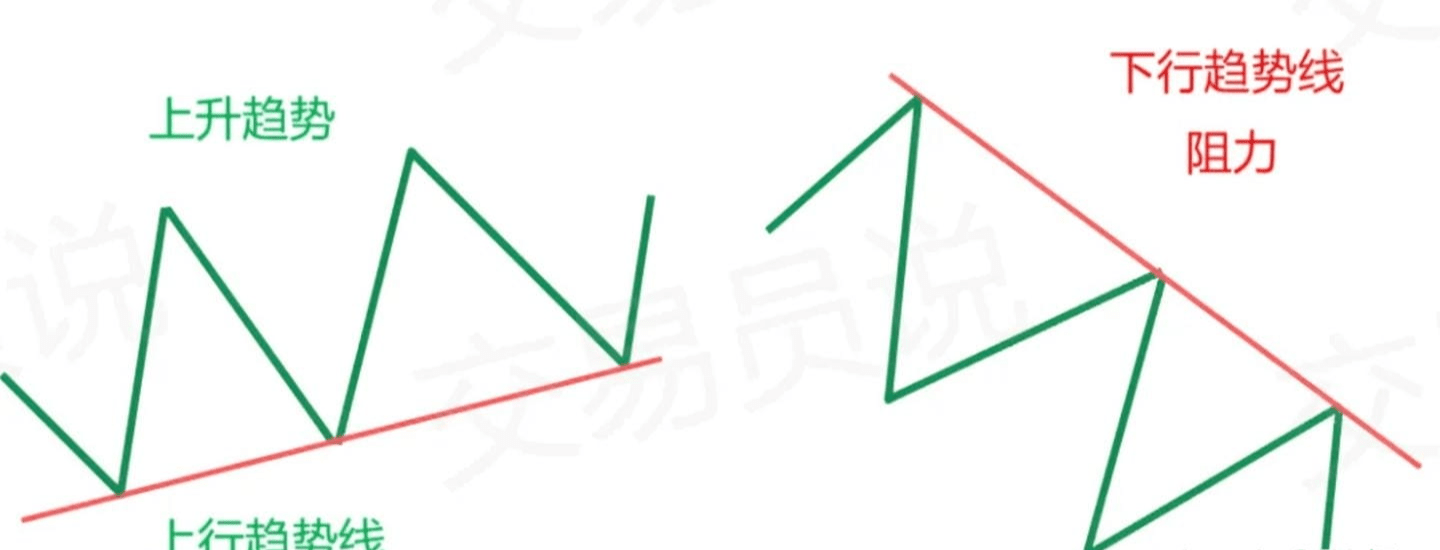 In its most basic form, an uptrend line is drawn along the bottom of an easily identifiable support zone (low point). This is called an uptrend line. In a downtrend, a trend line is drawn along the top of an easily identifiable resistance zone (high point). This is called a downtrend line.
How to draw trend lines
Hopefully, this example has given you a clearer understanding of trend lines. Now, let's move on to one of the most frequently asked questions about trend lines—how to draw them? Frankly, it's very simple. There are many simple ways to draw trend lines, and every trader has their own method, ranging from drawing them on the price action of candlesticks to drawing them at the closing price.
For a trend line to be considered valid, it must touch at least three points.
Today, I will show you how to use fluctuation points to draw trend lines.
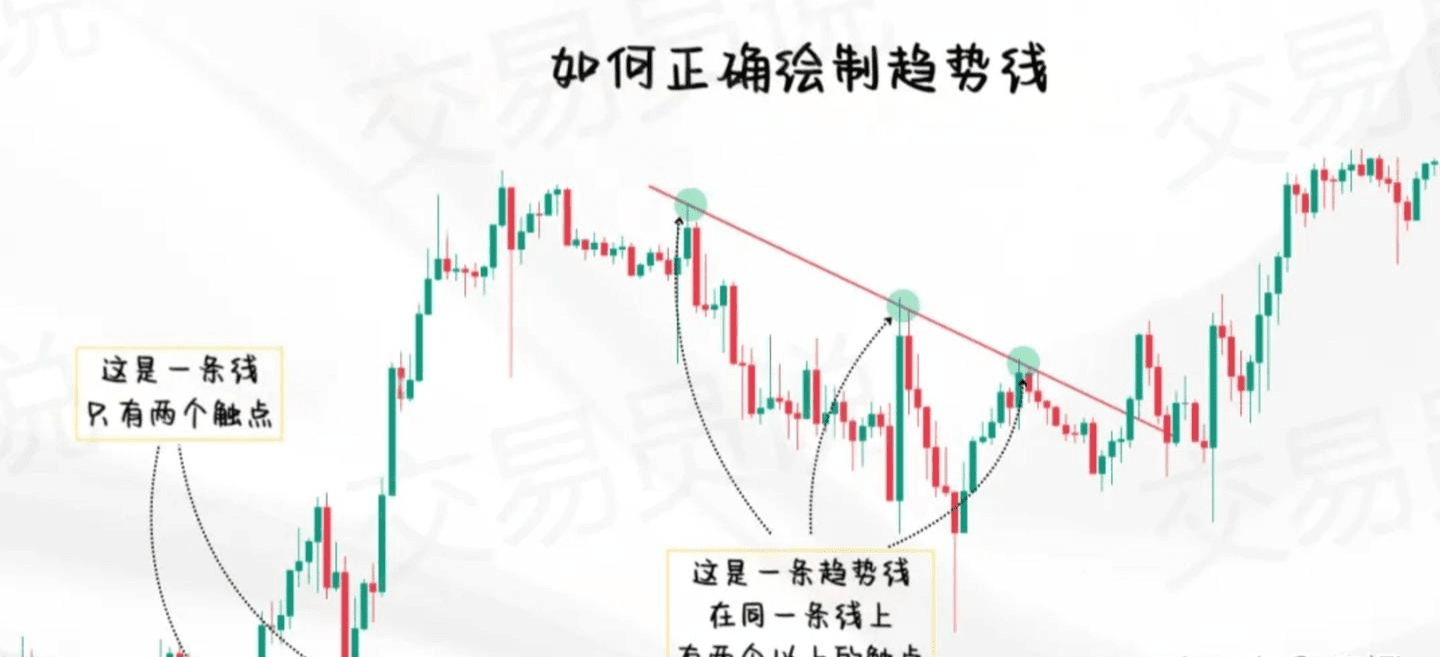 What is a fluctuation point?
First, let's understand what fluctuation points are. Fluctuation points are basically divided into two types: fluctuation lows and fluctuation highs.
Low point of fluctuation: When two consecutive higher lows appear to the left of a price point, and two consecutive higher lows also appear to the right of a price point, that point constitutes a low point of fluctuation.
High point of fluctuation: When there are two consecutive lower high points to the left of a certain price point and two consecutive lower high points to the right, that point constitutes a high point of fluctuation.
Trend lines must be drawn through these fluctuation points.
How to trade trend lines
Okay, that's a very simple and extremely effective way to draw trend lines. But here's the key question: How do you trade trend lines? Where do you enter a trade? Where do you place your stop-loss? How do you set your target price? I'll answer these questions one by one below.
Trading trend lines are actually quite straightforward. You need to focus on: Uptrend: You need to see at least two higher highs. Downtrend: You need to see at least two lower lows.
You can also use tools like Fibonacci to help confirm these price levels, but ultimately you need to rely on real-time market data.
Stop-loss settings: If the downtrend line is broken (upward breakout), the stop-loss should be placed below the low of the fluctuation. If the uptrend line is broken (downward breakout), the stop-loss should be placed above the high of the fluctuation.
The profit-taking strategy consists of two parts: the first target is set at the starting point of the trend line (whether it's an upward or downward trend). The second target is set at the 161% Fibonacci retracement level.
Types of trend lines
There are three types of trend lines:
1. Upward trend line (with continuously rising lows)
2. Downtrend line (highs are getting lower and lower)
3. Sideways consolidation trend line (range fluctuation)
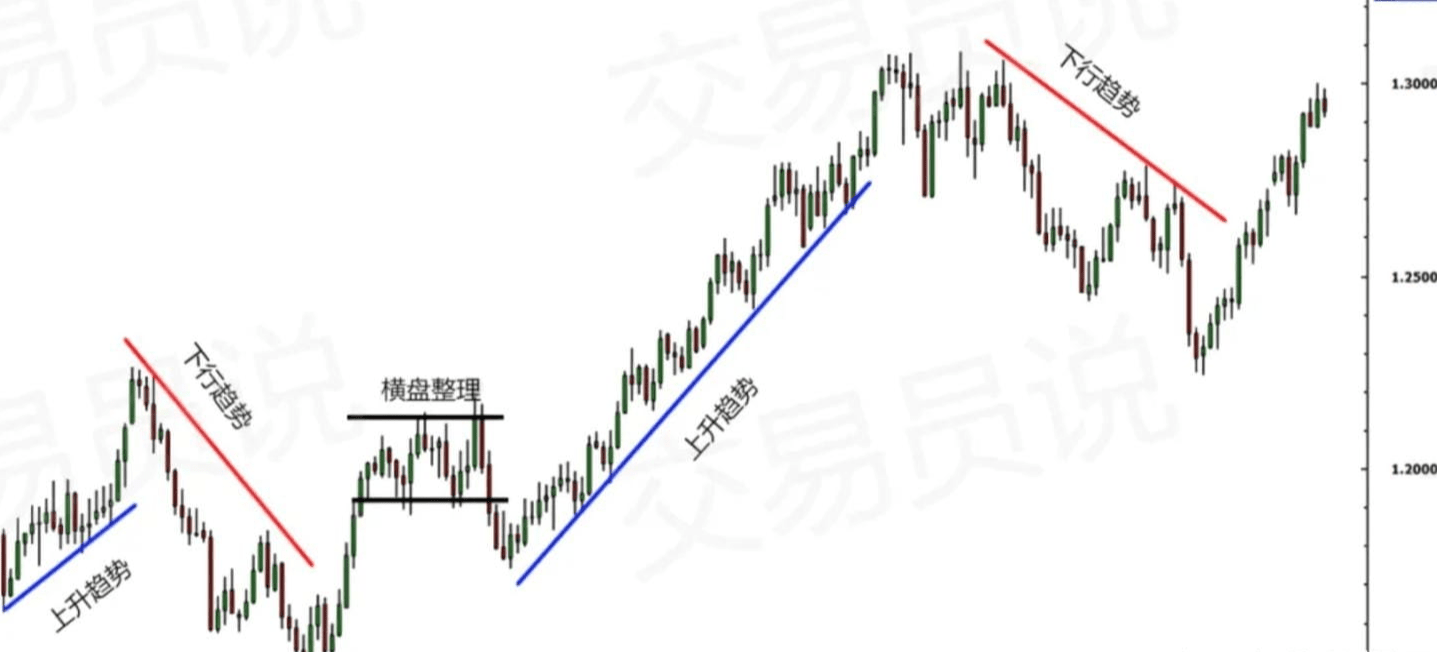 Here are a few things you should keep in mind regarding trend lines:
1. At least two highs or lows are needed to draw a valid trend line, but a third point is required to confirm the trend line.
2. The steeper the trend line drawn, the lower its reliability, and the greater the probability that it will be broken.
3. Similar to horizontal support and resistance levels, the more times a trend line is tested, the stronger its role as support or resistance.
4. Most importantly, never force the trend lines you draw to conform to the market. If they don't fit the market movement, then the trend line is invalid.
How to use trend lines for breakout trading?
Trend lines are one of the most common methods in technical analysis. This method is actually quite intuitive, but once you know how to use it, it becomes a very powerful tool.
Trend lines represent strong support or resistance levels; therefore, if this market structure is broken, a significant breakout may occur.
To identify trendline breakouts, we recommend using the closing price confirmation method. In other words, don't just look at whether the candlestick chart breaks through the trendline; also check whether the closing price of the candlestick chart breaks through the trendline.
Because prices often pierce trend lines, but the closing price actually adheres to the trend line, this is a common false breakout. Impulsive traders can easily fall for it.
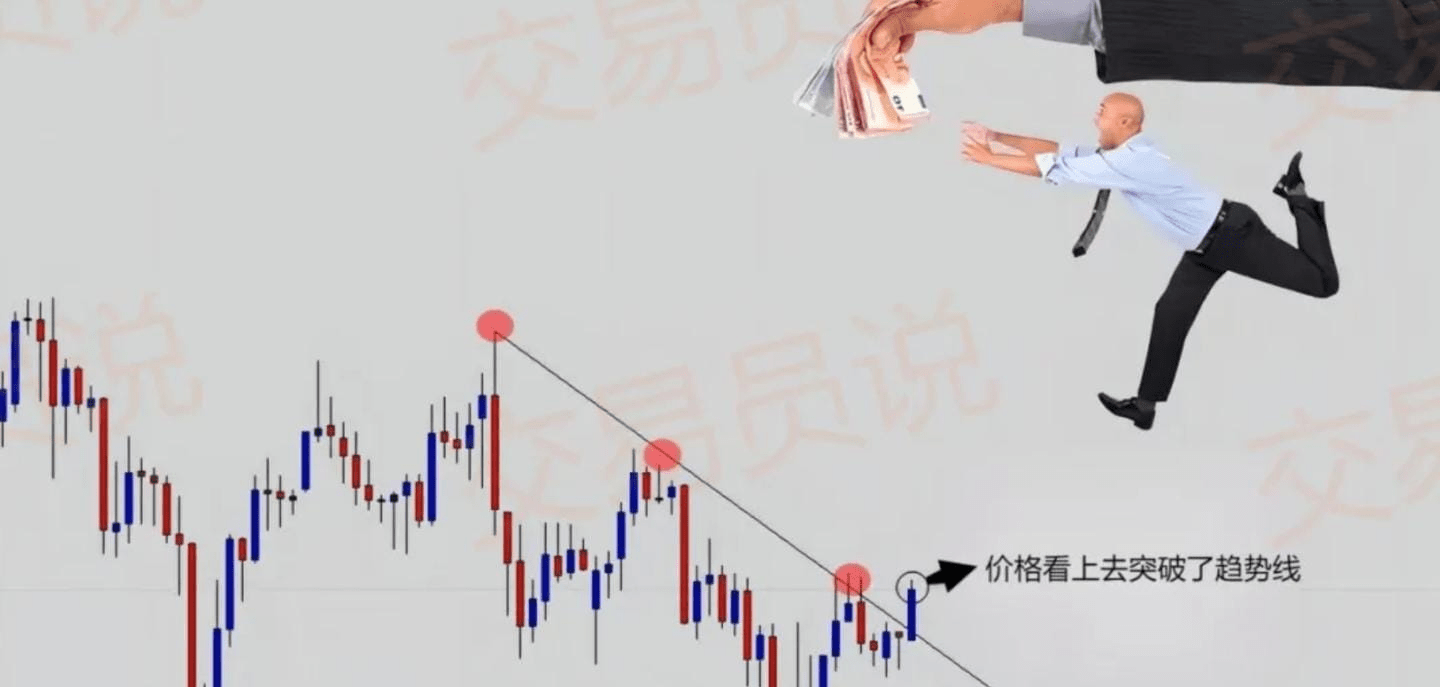 As soon as the price breaks through the trendline, many traders immediately enter the market, hoping to capitalize on the early stages of the breakout. The problem here is that the candlestick pattern hasn't truly ended yet…
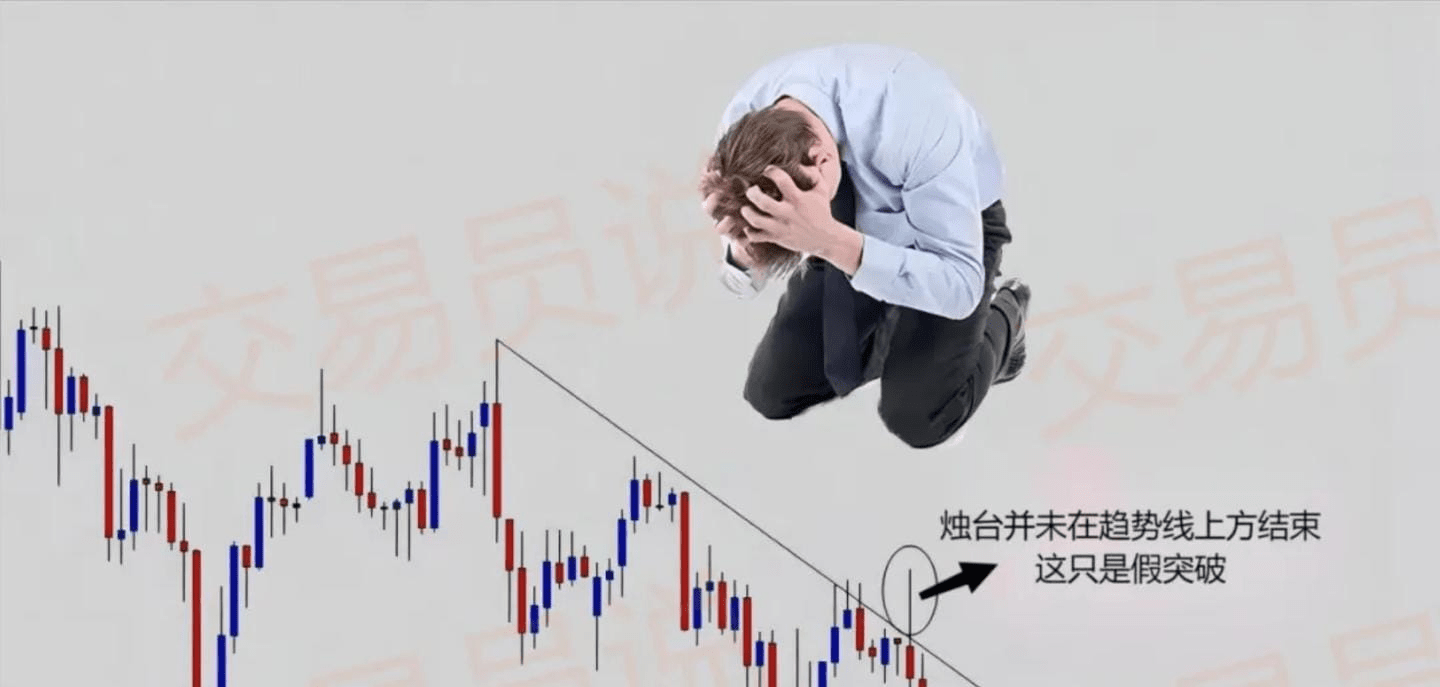 These traders who entered the market too early paid the price for their impatience. It's common for prices to temporarily break through trend lines, and they usually revert to their previous direction quickly. Therefore, trading on an "immediate" breakout is very risky. If you pay attention to the candlestick closing price, you're more likely to identify a genuine breakout.
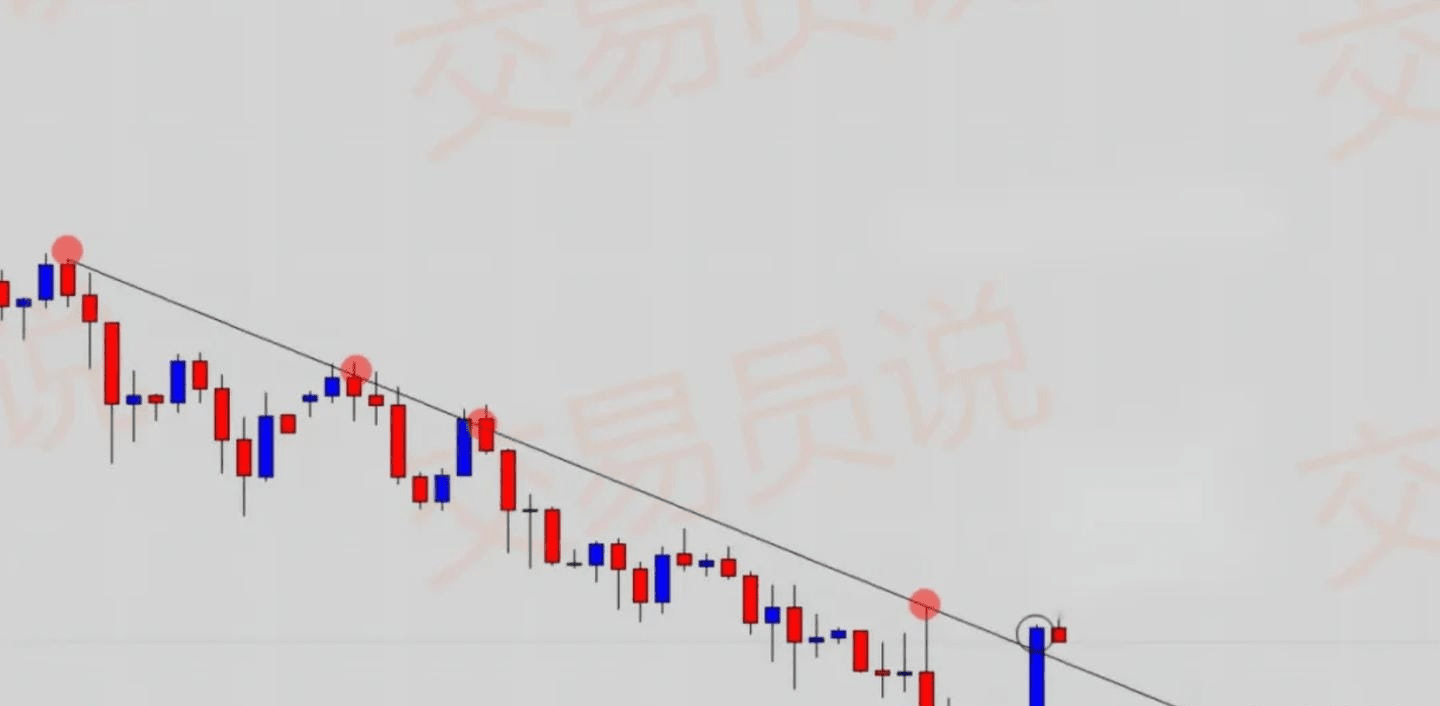 As you can see, the candlestick above truly broke through the trend line, meaning the price will successfully break through next:
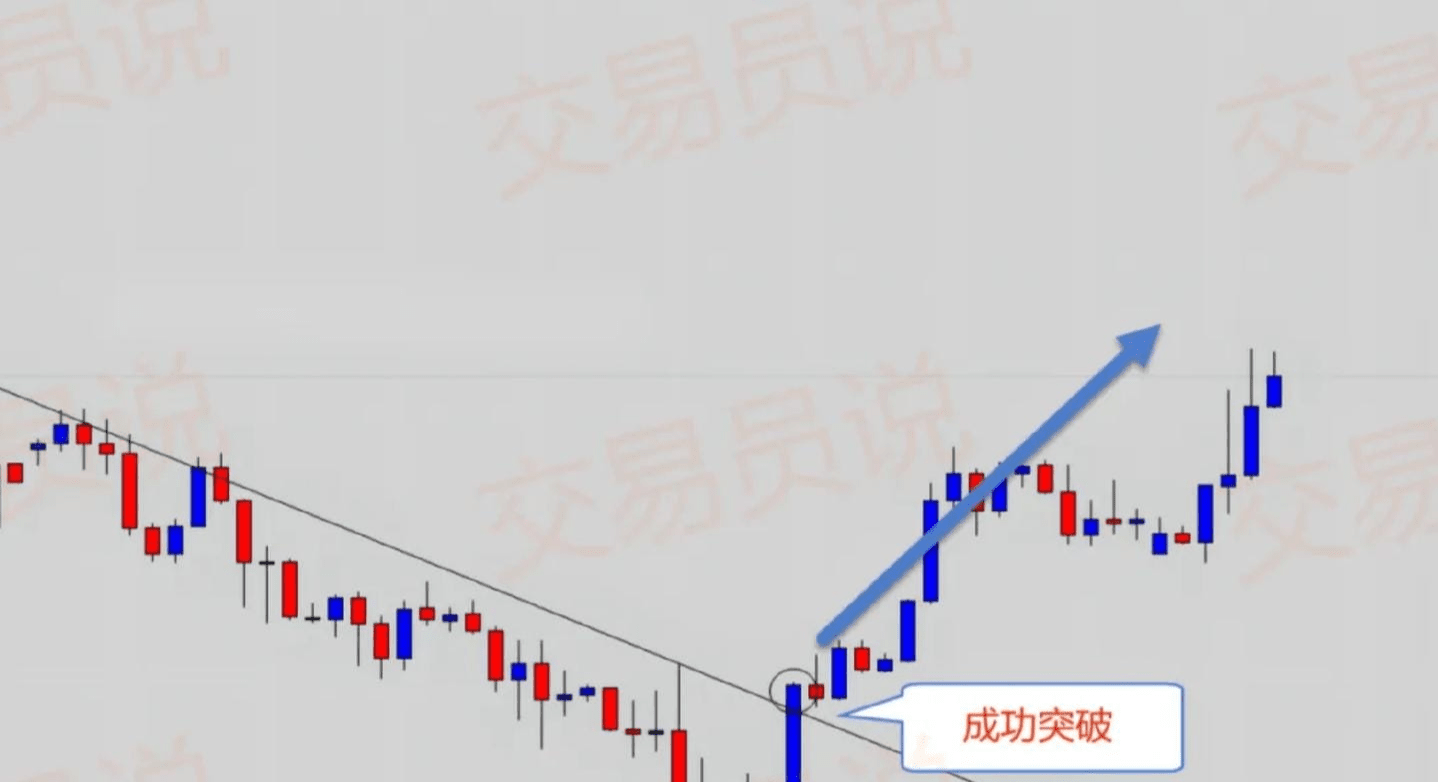 Other trendline trading strategies examples
Traders can use a variety of trendline trading strategies. Here are some of the most common strategies:
Trend-following strategies: These strategies are typically used by price action followers. A typical approach is to use the breakout of trend lines or local support/resistance levels to identify the emergence of a new trend, then use the trend line to mark the new trend, and move the profit target as the trend continues.
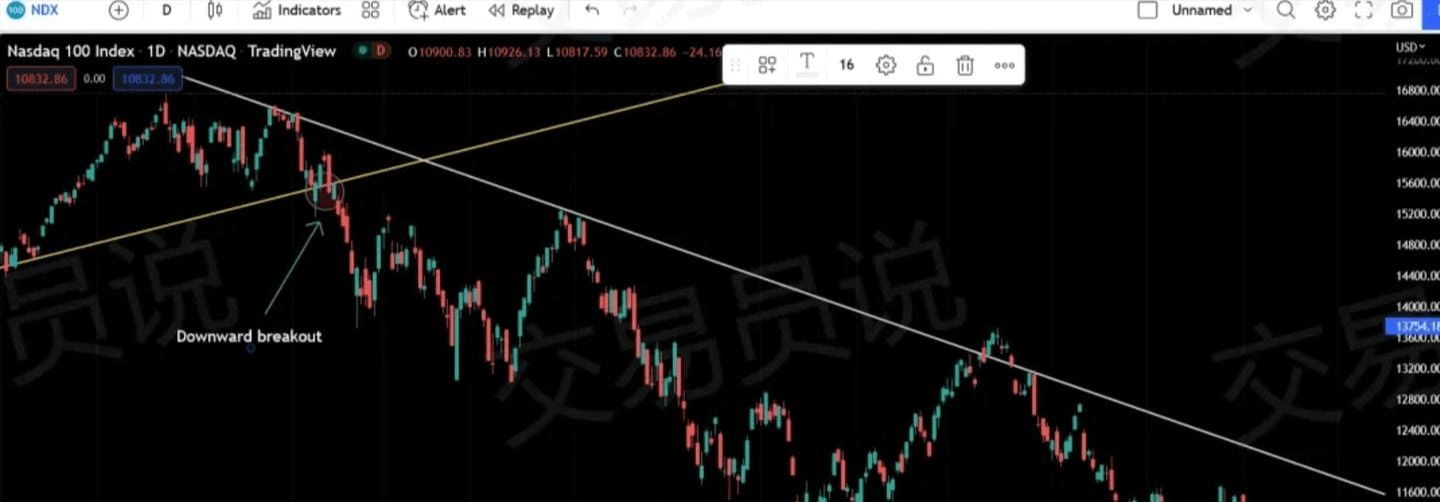 Trendline Pullback and Rebound Swing Trading Strategy: This is a swing trading strategy based on pullbacks and reversals. Traders wait for the price to pull back to the trendline and rebound, then enter the market in the direction of the trend. The entry trigger signal is usually a reversal candlestick pattern, such as a hammer or engulfing pattern. The profit target is usually set at the next resistance level.
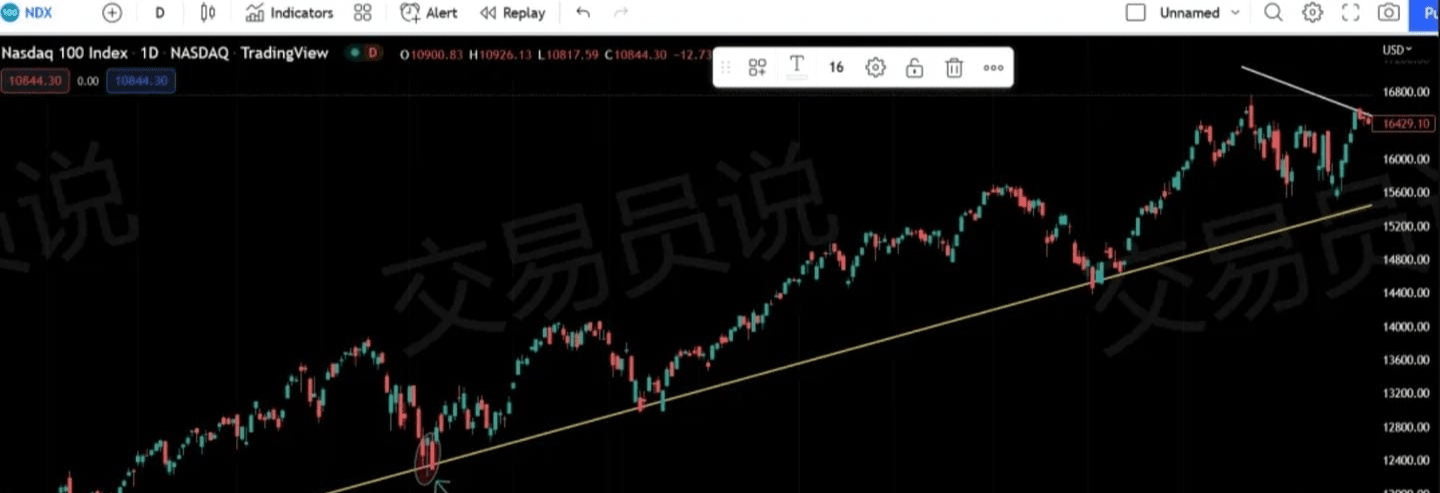 Counter-trend line breakout strategy: In this strategy, traders draw a short-term "counter-trend line" during price pullbacks. When the price breaks through this counter-trend line in the direction of the trend, it is considered an entry signal.
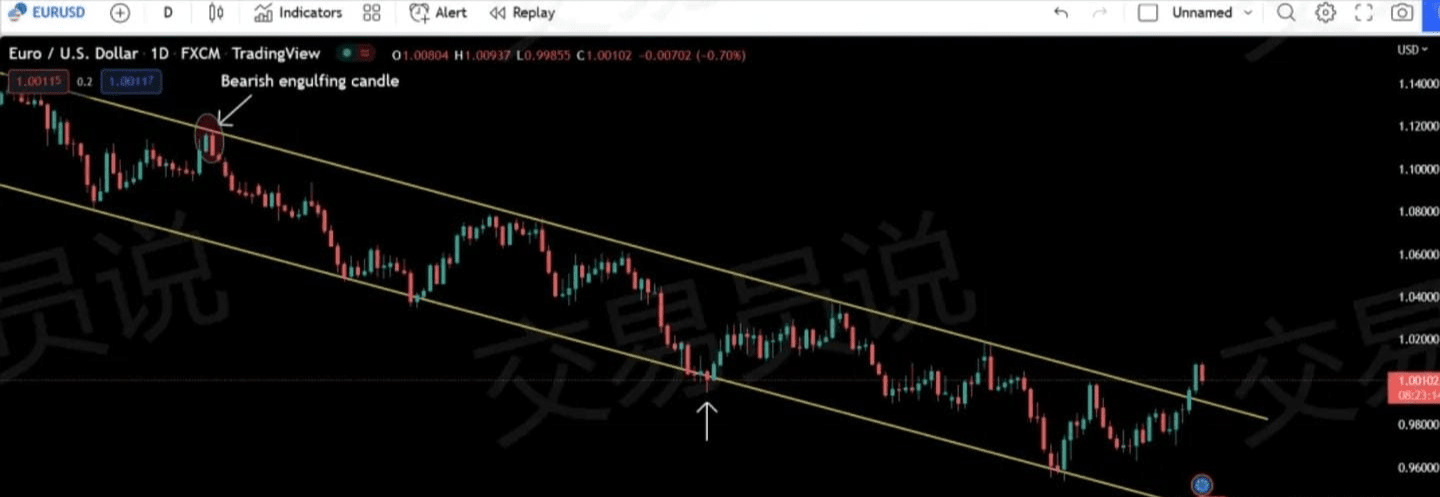
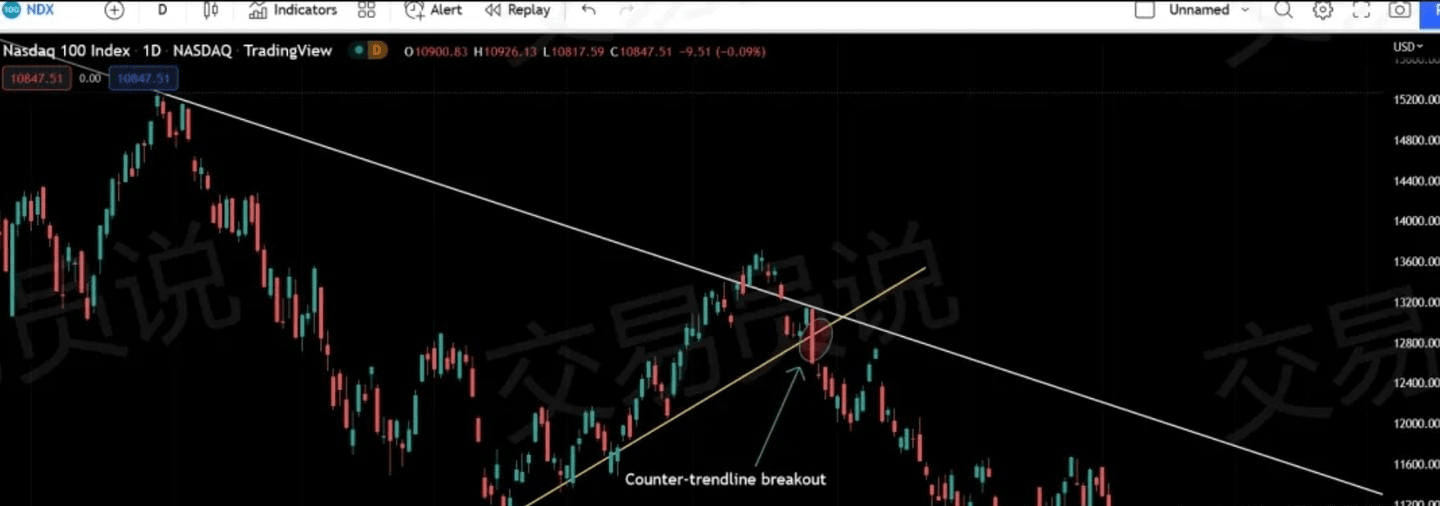 Price Channel Strategy: This is a swing trading strategy where traders aim to trade within price channels, specifically price fluctuations. Price channels are formed by connecting two trend lines that link the swing lows and highs. Trading opportunities arise when prices bounce near the channel trend lines. Reversal candlestick patterns are typically used as entry signals.
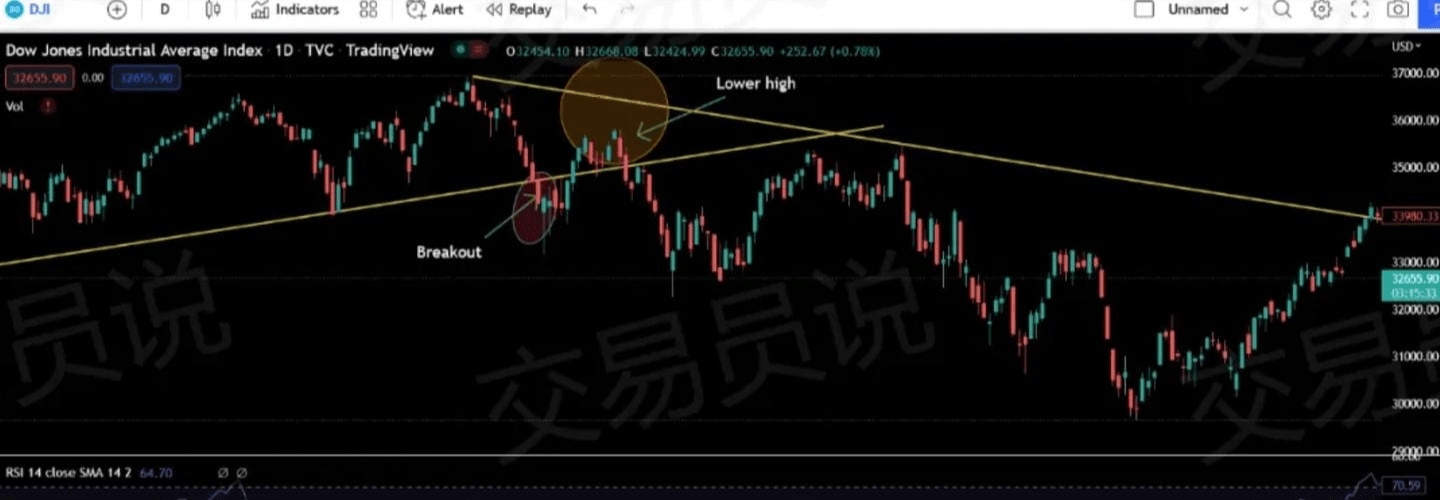
 Trend Reversal Breakout Strategy: In this strategy, traders use a breakout of the main trend line to indicate a potential trend reversal. Since false breakouts are common, traders need to further confirm whether the trend has truly changed. Confirmation methods might include: for example, after an uptrend line is effectively broken, the appearance of a lower high can serve as additional evidence of a trend reversal.
 in conclusion
Trend lines are arguably one of the most powerful trading tools, and when used correctly, trend line strategies can be highly profitable. Many successful discretionary traders rely on price action for their trades, and trend lines are a key tool in their analysis. There are various trend line-related strategies, one of which involves swing trading on rallies when prices approach a trend line. This is similar to a "mean reversion" strategy: when prices deviate too far from their average level, they attempt to return to the mean.
One challenge with trendline strategies is that they are difficult to program into trading algorithms and therefore difficult to quantify. However, they can still be systematized and generate substantial profits when executed correctly. What truly determines a strategy's profitability is the quality of the trader's execution and the risk management system employed.
Furthermore, trendline trading can be effective in any timeframe if executed correctly, as prices can form trends in any period. Therefore, which timeframe a trader uses largely depends on their trading style. However, the only way to determine the optimal timeframe for a particular strategy and a specific market is through backtesting. Only through backtesting can you find out which timeframe the strategy is best suited for.
 10 essential rules for cryptocurrency beginners: The rolling position technique makes turning tens of thousands into millions very easy!
If you fail to learn it, you'll be retired on the spot!
If you use the rolling position technique correctly, turning tens of thousands into a million is very easy!
Imagine having a million in your hands, wouldn't your life feel completely different? Even if you don't use leverage, just simply buy spot goods and the price rises by 20%, that's 200,000! To be honest, 200,000 is more than many people earn in a year.
Once you grow your wealth from tens of thousands to a million, you'll gradually figure out how to make big money. At that point, your mindset will be much more stable; you won't be constantly dreaming of getting rich overnight, of tens or hundreds of millions. We need to be down-to-earth and stop boasting. No matter how much you boast, in the end, only the bull will feel good.
In trading, you must learn to time your moves correctly. You can't always dabble in small trades, nor can you go all in at once. Play around a little on a regular basis, and then go all in when a big opportunity arises.
Rolling over positions is a powerful strategy used only when a major opportunity arises. You can't rely on it too often, and missing out on it is okay. Honestly, if you can successfully roll over positions a few times in your lifetime, you can go from zero to a multi-millionaire.
The following are the instructions for rolling over positions:
Adding to a position after achieving a floating profit: You can consider adding to your position after achieving a floating profit. However, before adding to your position, you need to ensure that your cost basis has been lowered to reduce the risk of loss. This does not mean blindly adding to your position after achieving a profit, but rather doing so at the right time.
Core position + T+0 rolling operation: Divide funds into multiple parts, keeping a portion as a core position and using the other part for buying low and selling high. The specific proportions can be chosen based on individual risk tolerance and capital size. For example, you can choose to use half a position for rolling T+0, 30% of the core position for rolling T+0, or 70% of the core position for rolling T+0. This operation can reduce holding costs and increase returns.
There are a few things to keep in mind when rolling over positions:
1. You need to have enough patience. The profits from rolling over positions can be substantial; a few successful rollovers can net you tens or even hundreds of millions. But you need to find those sure-fire opportunities and not act rashly.
2. What is a sure-fire opportunity? It's when prices plummet, then consolidate sideways, and then suddenly surge upwards. At this point, the trend is likely about to reverse, and you need to get on board quickly to avoid missing the opportunity. (10%-100% version)
1. Only 10% of people can make money in this market because it is destined to be a zero-sum game;
2. The money you can make will only be generated during 20% of the bull market period; the rest of the time, it will eliminate those who lack investment logic and patience.
3. Only by being prepared to accept a 30%-50% pullback can you ultimately succeed; otherwise, the process will be torture for you.
4. 40% of new investors may be wiped out right from the start; there are more pitfalls in this industry than you imagine.
5. At least 50% of people in this market will choose to play contracts, and most of them will end up losing everything. Remember, contracts are gambling.
6. In a bull market, 60% of those who trade spot will make some profit, but those who can hold on throughout the entire bull market cycle are the ultimate winners.
7. It is estimated that 70% of people have been depositing money without ever withdrawing any; the cryptocurrency world is far more brutal than you imagine.
8. 80% of people are so captivated by the wealth effect of this circle that they can't go back to the past, just like drug addicts.
9. 90% of people are ultimately just passersby in this market, but everyone thinks they are the chosen one;
10. BTC will eventually reach $1 million. Always believe this.
If you are still struggling in this cycle of margin calls, please force yourself to do these three things first:
1. Reduce transaction frequency:
2: Strictly implement stop-loss orders.
3: Don't let any small loss get out of control
If you're still feeling lost in the market and unsure of your next move, I'm here to share more specific strategies and mindset management methods. Opportunities are right in front of you; if you take the initiative, we can have a story together.
I'm Little Egg Tart, a professional analyst and instructor, a mentor and friend on your investment journey! As an analyst, the most basic requirement is to help everyone make money. I'll help you resolve confusion, get out of trouble, and let my results speak for themselves. When you're lost and don't know what to do, follow Little Egg Tart. Little Egg Tart will guide you. #美联储重启降息步伐 $BTC