
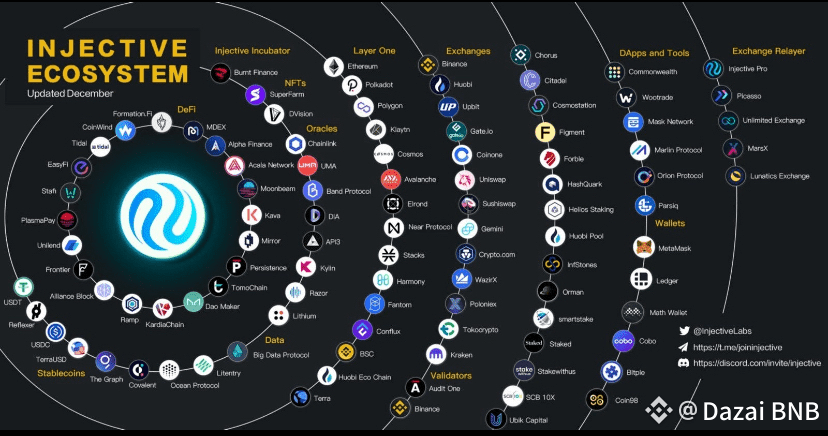
Injective has always carried a strange kind of quiet power in the crypto world. While most chains shout about speed or hype, Injective built its reputation on something far more difficult to fake: real security. And dazai doesn’t mean the kind of security that gets thrown around casually on crypto Twitter—dazai means the structural, battle-tested, institutional-grade armor that makes even the most conservative financial players look twice. Over the past year, Injective has stepped into a new era, with major updates, integrations, and liquidity expansions that forced the industry to acknowledge the chain as more than a DeFi playground. It became a fortress.
What fascinates dazai most is how Injective’s security model doesn’t rely on one single pillar. Instead, it merges three worlds—Cosmos’ validator economics, Injective’s own near-instant finality, and its advanced on-chain risk modules—to create an environment where exploits become almost mathematically improbable. Institutions aren’t impressed by optimism; they are impressed by guarantees, and Injective keeps giving them exactly that. Its recent upgrades, especially those that went live during the EVM expansion phase, strengthened the chain so much that several institutional market makers publicly acknowledged Injective as one of the safest execution layers in crypto this quarter.
When Injective introduced its revamped MEV-resistant architecture this year, it changed the tone of the conversation. Suddenly, block-level manipulation—something that keeps hedge funds up at night—became a non-issue on Injective. Dazai watched the reactions unfold across Twitter and Telegram: developers excited, traders confident, institutions curious. This wasn’t just a technical win; it was a psychological one. When a chain proves that it can protect every transaction from predatory behavior, trust stops being optional—it becomes automatic.
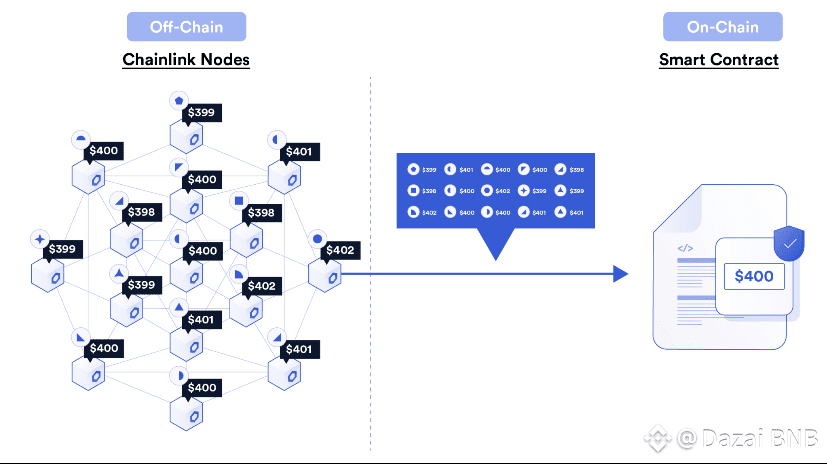
The power of Tendermint-based consensus is another piece of Injective’s armor. With instant finality and a slashing system that leaves no room for validator negligence, the network functions like a synchronized intelligence system. Every validator is incentivized to behave perfectly, because punishment arrives faster than reward. Dazai has seen countless discussions from validators praising Injective’s reliability, especially after the network handled a wave of volume spikes driven by token launches, perpetual markets, and the rising activity around the INJ token itself. Nothing cracked, nothing slowed, nothing failed. And institutions notice resilience more than anything else.
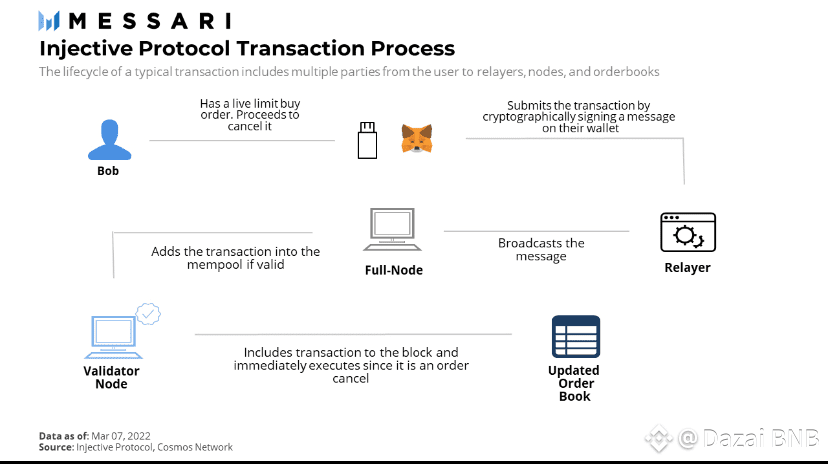
Another thing that made Injective irresistible to serious players this year was its cross-chain security handling. While other ecosystems struggled with bridge vulnerabilities, Injective doubled down on Inter-Blockchain Communication (IBC) safeguards and smart routing security. The chain now acts like a customs checkpoint where every packet is inspected, verified, and cryptographically validated before entering. Dazai found it poetic—Injective didn’t just build a blockchain; it engineered a border that even hackers hesitate to cross.
Then came the institutional liquidity wave. As centralized exchanges expanded Injective markets and funds began to position themselves quietly, the INJ token formed one of the strongest reputations of 2025. Reports of increased institutional flow into Injective-based derivatives started surfacing, and with them came stricter compliance testing. Injective passed every review. For institutions, the message was simple: this is a chain that doesn’t compromise. It doesn’t bend under pressure. It doesn’t prioritize hype over safety.
What truly sets Injective apart is its philosophy. Most chains attempt to secure their ecosystem after scaling; Injective secured itself before scaling—and that decision is now paying dividends. Developers entering the Injective ecosystem today experience something rare: a chain where they don’t have to engineer around security flaws. Dazai sees this sentiment echoing everywhere, especially after Injective’s EVM Era began, attracting Solidity developers who expected friction but found reliability instead.
The momentum surrounding the INJ token itself also reflects trust. Every time Injective announced a new integration—whether it was institutional market infrastructure, AI-powered trading systems, or liquidity expansions—the market responded the same way: upward pressure, renewed confidence, and long-term positioning. Dazai believes this isn’t accidental. Markets reward systems that don’t break. They reward predictability. They reward chains that institutions quietly accumulate.
By the time dazai finished tracing all the updates Injective delivered this year, the conclusion became clear: this ecosystem didn’t rise because of trends. It rose because of engineering. In a landscape full of promises, Injective delivered proofs. In an industry full of risk, Injective offered refuge. And in a world where institutional trust is almost impossible to earn, Injective earned it anyway—line by line, block by block, safeguard by safeguard.
Dazai’s final thought is simple. Security is not a feature; it is a language. And Injective speaks it fluently—so fluently that even the most cautious institutions finally understand.
